Do not iron a transfer onto the suit yourself
Heat, adhesive and stitching all change layers that were tested as a set. Ask the suit maker how that exact garment may be branded, and keep whatever paperwork comes back with it.
Sponsor branding is completely normal in motorsport and the FIA expects suits to be customised. What it sets rules about is how. The three methods below have three different answers, and only one of them can be done at home.
An ordinary transfer can damage the fibres and leaves an undocumented modification behind. Once it is on, no retailer can declare the suit compliant, and that includes us.
Printing, embroidery and badges have different rules
From the FIA safety clothing guidance. The differences matter more than most people expect.
| Method | Who may do it | Layers | Paperwork |
|---|---|---|---|
| Printing and heat transfers | The suit manufacturer or its authorised route only | Outer | Certificate confirming compliance after printing |
| Embroidery | A competent embroiderer, with the maker confirming the method | Outermost layer only, must not pass through | Keep a record, use flame-resistant thread |
| Sewn-on badges and patches | A competent machinist | May pass through, if the materials qualify | Patch and thread must meet ISO 15025 |
| Household iron-on transferNOT PERMITTED | Nobody | Damages them | None exists, and none can be issued afterwards |
The one that catches everyone is that a heat transfer, which is what almost every iron-on graphic is, sits in the manufacturer-only category. It does not matter how tidy it looks or whether the vinyl supplier calls the material fire retardant. The test is on the complete garment with the transfer applied, not on a roll of vinyl, and only the maker can carry that out and certify it.
Embroidery is the route most people end up taking on a suit they already own, and the rule is simple: the needle stays in the outermost layer. Stitch through the whole suit and you have made a heat path straight through the thermal layers, which is precisely what those layers exist to prevent.
Sewn badges are the most permissive of the three, because a patch and thread that both meet ISO 15025 can be stitched through. Get that flame-resistance evidence from whoever supplies the patch before the work starts, not after.
If a transfer is already on there
Do not panic and do not start removing it. Heat and solvents will usually do more damage than the transfer did, and adhesive residue and a scorched outer layer are harder to argue past than a tidy logo.
Start by deciding what the suit is for. For testing, track days and non-regulated use it may well be fine as it is. For anything running to FIA 8856-2018 at scrutineering, the honest position is that without manufacturer documentation the suit may not be accepted, and the manufacturer is the only party who can tell you whether it can be restored.
Buying used, ask who applied the branding and ask for the customisation record. Photograph the collar label and both sides of the branded area before money changes hands. The event official makes the final call on whether the evidence and the condition are good enough, and a cheap suit that gets turned away has cost you the entry as well.
Add the artwork before production, not after
Factory-applied branding is easier to document, cheaper than doing it twice, and it comes back with the paperwork already attached. If a new sponsor or a team change is on the horizon, that is the moment to order rather than after the suit has arrived.
Send the artwork, the colours, the positions and the deadline together when you ask for a quote, and leave real time in the plan. Custom production plus approval plus a fitting is not a two-week job, and the last week of the close season is the worst possible time to discover that.
Send us the suit label and the artwork and we can identify the right route with the manufacturer. What we cannot do is certify work already carried out by an ordinary print or alterations shop, and we would rather say that up front than after you have paid someone.
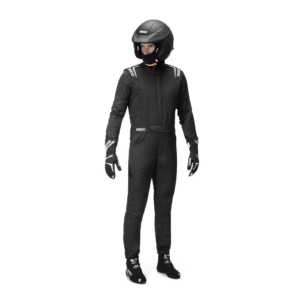
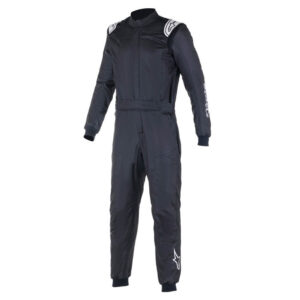
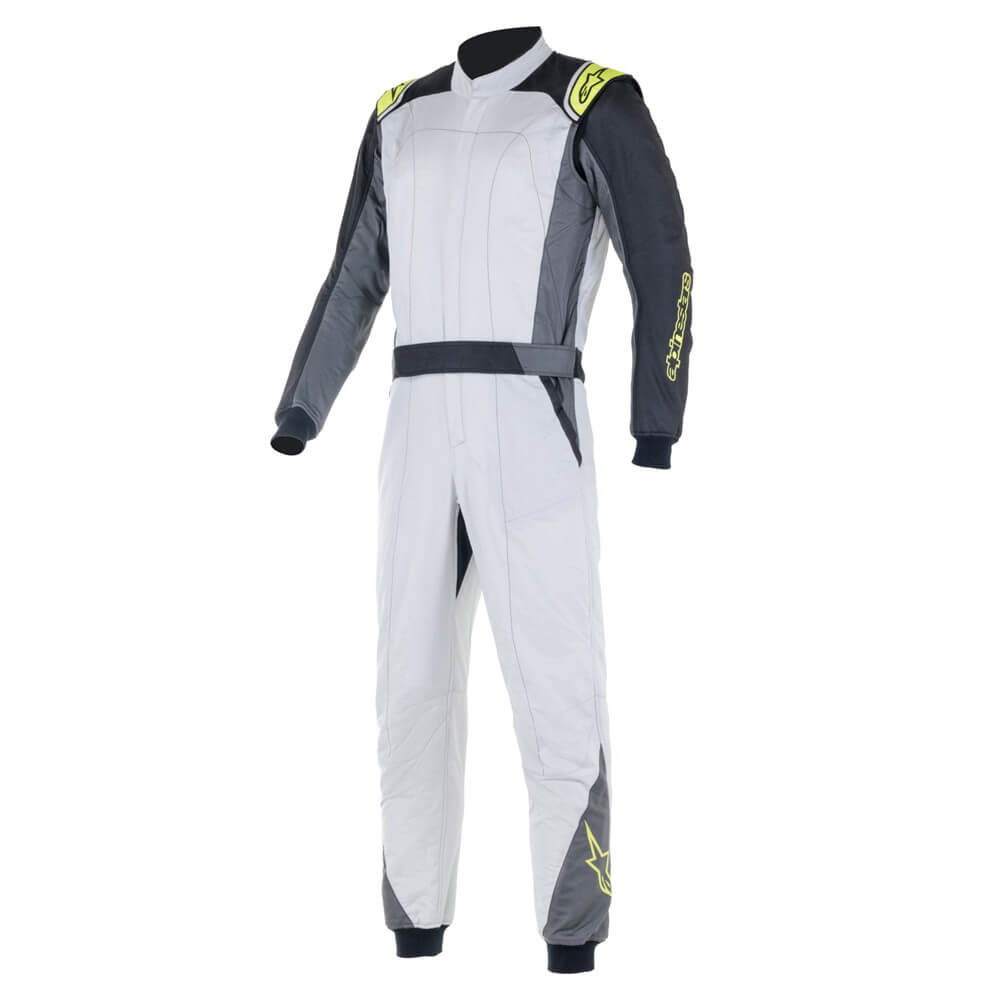
Three FIA suits we keep in the showroom
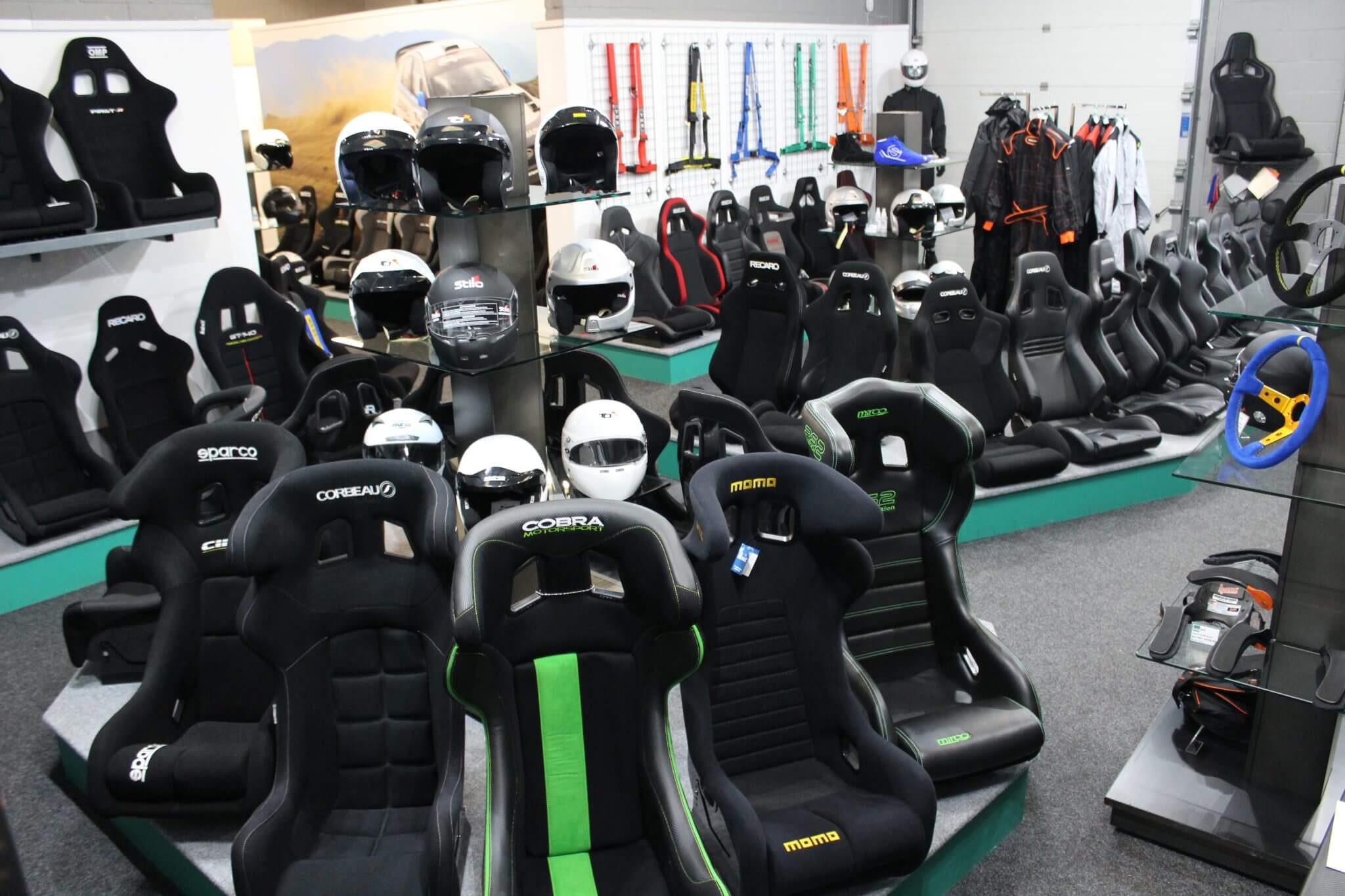
All three FIA 8856-2018, in stock, and available to try in the fitting area before you commit to branding anything.
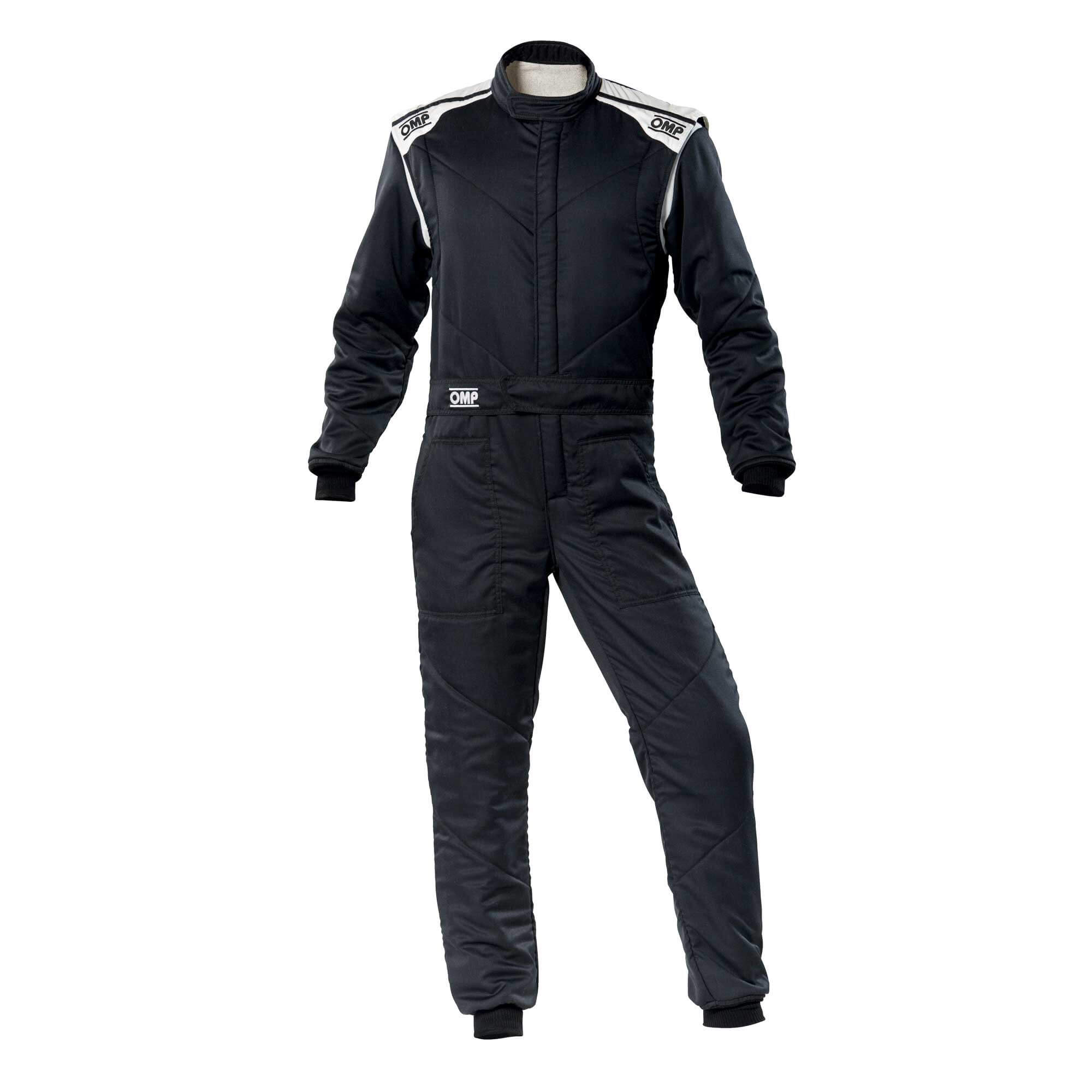
The Sparco Sprint Advanced is the one we hand people first. Two-layer, current standard, and Sparco cut it wide enough that most people fit off the shelf. It has the widest colour choice of the three if the branding is going to have to work with a team scheme.
The OMP First S is the closest thing to a direct alternative and a few pounds under it, in Nomex, with five colours. The Alpinestars Atom is the step up, and it is the one to try if the other two do not sit right across the shoulders.
We display black in store because it is the one everyone wants to see, but all three come in other colours online, and if the plan is a team scheme it is worth choosing the base colour before the logos rather than after.
-
From £320.00 Incl. VATFrom £320.00 Excl. VATPayPal CreditKlarna ReadyTry in-storeSelect options This product has multiple variants. The options may be chosen on the product page
-
From £327.00 Incl. VATFrom £327.00 Excl. VATPayPal CreditKlarna ReadyTry in-storeSelect options This product has multiple variants. The options may be chosen on the product page
-
From £410.00 Incl. VATFrom £410.00 Excl. VATPayPal CreditKlarna ReadyTry in-storeSelect options This product has multiple variants. The options may be chosen on the product page
Race suit branding questions
Can I use a household iron-on transfer?▾
No. A heat transfer may only be applied by the suit manufacturer or its authorised route, and it needs a certificate afterwards. This is the single most common way a suit gets flagged at scrutineering.
Can a local embroidery shop add a badge?▾
Sometimes, and only if the suit manufacturer confirms the method suits that garment. Embroidery must stay in the outermost layer and must not pass through all the protective layers.
What about a sewn-on patch?▾
That is the most permissive route. The patch material and the thread both need to meet ISO 15025, and with that satisfied the stitching may pass through the layers. Get the evidence from the patch supplier first.
Do I need a certificate?▾
For printing and transfer work on FIA 8856-2018 clothing, yes, and you should ask before the work starts. Keep it with the suit, because the person who wants to see it will be a scrutineer at six in the morning.
Can I remove an old transfer?▾
Do not use heat or solvents without written instructions from the manufacturer. Removal frequently causes more damage than leaving it alone.
Will a branded suit definitely fail scrutineering?▾
Not necessarily. Properly documented branding is completely normal. What fails is undocumented work, and the paperwork is the difference.
Which suit should I brand?▾
Whichever fits. All three we stock are FIA 8856-2018 and all three can be ordered with factory branding, so start with the fitting and take the artwork decision second.
We will check the method before the logo goes on
A photograph of the collar label and the artwork you want is enough for us to identify the manufacturer route and roughly what it costs. We cannot retrospectively certify work done by a print or alterations shop, so it is worth asking first.
Browse race suitsContact usBook the showroom