How to pass your IVA
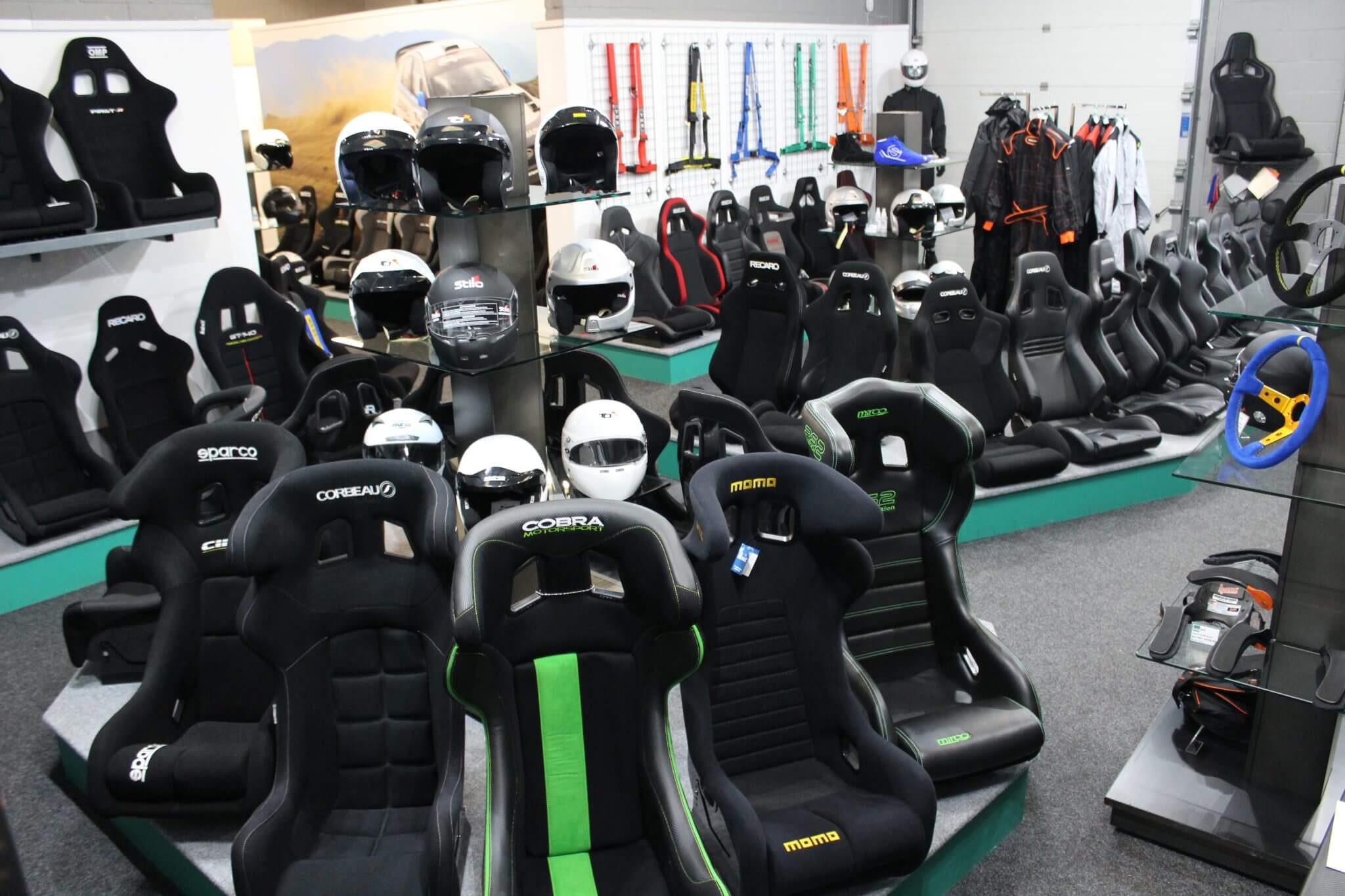
There is no such thing as an IVA approved seat, which surprises people. You do not need a particular brand or type. What the tester cares about is that the seat is properly finished, firmly fixed, and has a head restraint that does its job. Here is what gets looked at, and where people usually come unstuck.
No seat is “IVA approved”. Any suitable seat can pass. The four things that catch people out are sharp edges on GRP shells, insecure fixings, missing head restraints, and harness angles.
Sharp edges and interior projections
The rule is broad, and it applies to your seats as much as anything else.
The design and construction of the vehicle must be such that no immediate danger is present, or likely to be present, for anyone in the vehicle or for other road users. That covers the seating as much as the dashboard.
GRP fibreglass seats
- Often need professionally trimming before they will pass
- No sharp edges anywhere from the base to the top of the headrest
- Corners should be smooth and curved
- Standard shoulder supports work better here than a built in head restraint system
Steel frame seats
- Perfectly suitable for an IVA
- Usually tubular steel, foamed and then trimmed to suit
- The headrest is the part that decides it
- Check the trim covers the frame everywhere a person could contact it
Seat fixings and installation
Fixed or sliding, both pass. It is how well they are bolted down that matters.
Fixed position
You can bolt a seat straight into the vehicle with no movement at all. Seats do not need to slide to pass. What counts is the type of fixings used and how securely they are attached to the chassis.
Sliding position
You can equally bolt the seat to runners so it moves forward and back. The seat and the runners both have to be securely fixed, so this is two joints to get right rather than one.
Use double locking runners
We would strongly suggest a double locking runner. A single locking runner can leave too much play on the unlocked side, so the seat still moves on one side even when it is latched. That is precisely what a tester is feeling for.
Expect it to be shaken hard
The tester will shake the seat vigorously to check it is firmly fixed to the chassis. It is worth taking the time to get this right, because it is the most common reason a good seat fails.
Do you need head restraints?
Yes. This is the one that fails more kit cars than anything else on this page.
Fibreglass bucket, steel framed bucket or sports recliner, all of them must have a head restraint. You will fail your IVA without one. It can be built into the design of the seat or sit on adjustable legs like the seat in an ordinary road car. Either is fine.
The IVA M1 inspection manual sets out what is expected of it. The head restraint must be securely attached to the seat, appropriately positioned, and of adequate strength to fulfil its function. It also specifies a height: the top of the head restraint must sit at least 700mm above the R-point, the R-point being the seating reference point used to measure from in the manual’s own diagram.
Check the current version of the manual before you build to a number off a web page, including this one. The tester applies the manual as it stands on the day, and we are a retailer rather than the body that writes it.
Using harness belts with your seats
You can pass on harnesses. The angle is the thing.
Harness belts are perfectly acceptable for an IVA. What matters is that they are securely fitted to the body or chassis, at the correct angle for the seats you have installed, and that there are no exposed or sharp edges anywhere within the region the webbing occupies.
The Schroth harness installation guide recommends the shoulder straps run no more than 20 degrees downwards from the shoulder. The angle matters because it decides how load is transferred into the seat and into your neck, so it is not a detail worth eyeballing. Follow the fitting instructions that come with your own harness, since mounting points and recommended angles vary between makes.
What we recommend
It depends entirely on the car, so this part is a conversation rather than a list.
Recommendations vary with the vehicle, because the size and shape of every cockpit is different. A Ford GT replica will take very different seats from a Locost 7, and a list that suited one would be useless for the other.
Two measurements get you most of the way. The space between the door sill and the central tunnel, and the space available at your shoulders. Send us those and we will come back with a list that actually fits, rather than a catalogue.
Common questions
Do I need special seats to pass an IVA?▾
No. There is no such thing as an IVA approved seat, and you do not need a specific brand or type. What matters is that the seat you use is suitable, properly finished with no sharp edges, securely fixed to the chassis, and fitted with an adequate head restraint.
Do my seats need headrests?▾
Yes. Every seat needs one, whether it is a fibreglass bucket, a steel framed bucket or a sports recliner. You will fail without. It can be built into the shell or on adjustable legs like an ordinary road car seat.
How high does the head restraint have to be?▾
The IVA M1 inspection manual requires the top of the head restraint to be at least 700mm above the R-point, and says it must be securely attached to the seat, appropriately positioned, and of adequate strength to do its job. Check the current manual, because it is the tester who applies it, not us.
Can I use fibreglass bucket seats?▾
Yes, provided the finish is right. GRP shells often need professionally trimming so there are no sharp edges anywhere from the bottom of the base to the top of the headrest, with smooth curved corners. We would also suggest standard shoulder supports rather than a built in head restraint system.
Do the seats have to slide?▾
No. A seat can be bolted straight to the floor in a fixed position. What matters is the fixings and how securely they are attached, because the tester will shake the seat hard to see whether it moves.
If I do use runners, which type?▾
A double locking runner. Single locking runners can leave play on the unlocked side, which means the seat moves on one side even when it is latched. That is exactly the movement a tester is feeling for.
Can I use harnesses instead of seat belts?▾
Yes, you can pass an IVA using harnesses. They need to be securely fitted to the body or chassis, at the correct angle for the seats, and there must be no exposed or sharp edges anywhere the webbing sits.
What angle should the shoulder straps be?▾
The Schroth installation guide recommends no more than 20 degrees downwards from the shoulder. The angle matters because it decides how load is transferred into the seat and your neck. Follow the fitting instructions supplied with your own harness.
Which harnesses do you recommend for a kit car?▾
TRS Motorsport and LUKE, both made in the UK. We work with both production teams, so harnesses can be cut to the length your car actually needs with the right end fittings, which matters a great deal on a one off chassis.
How do I work out what will fit my car?▾
Measure the space between the door sill and the transmission tunnel, and the width available at your shoulders. Send us those two numbers and we will come back with a list that fits. A Ford GT replica and a Locost 7 are very different problems.
Send us the measurements and we will work it out with you
Kit cars and one off chassis are the fun ones. Tell us what you are building, what space you have, and what you need it to pass, and we will get you there.
Call 0115 9893488Message usBook the showroom