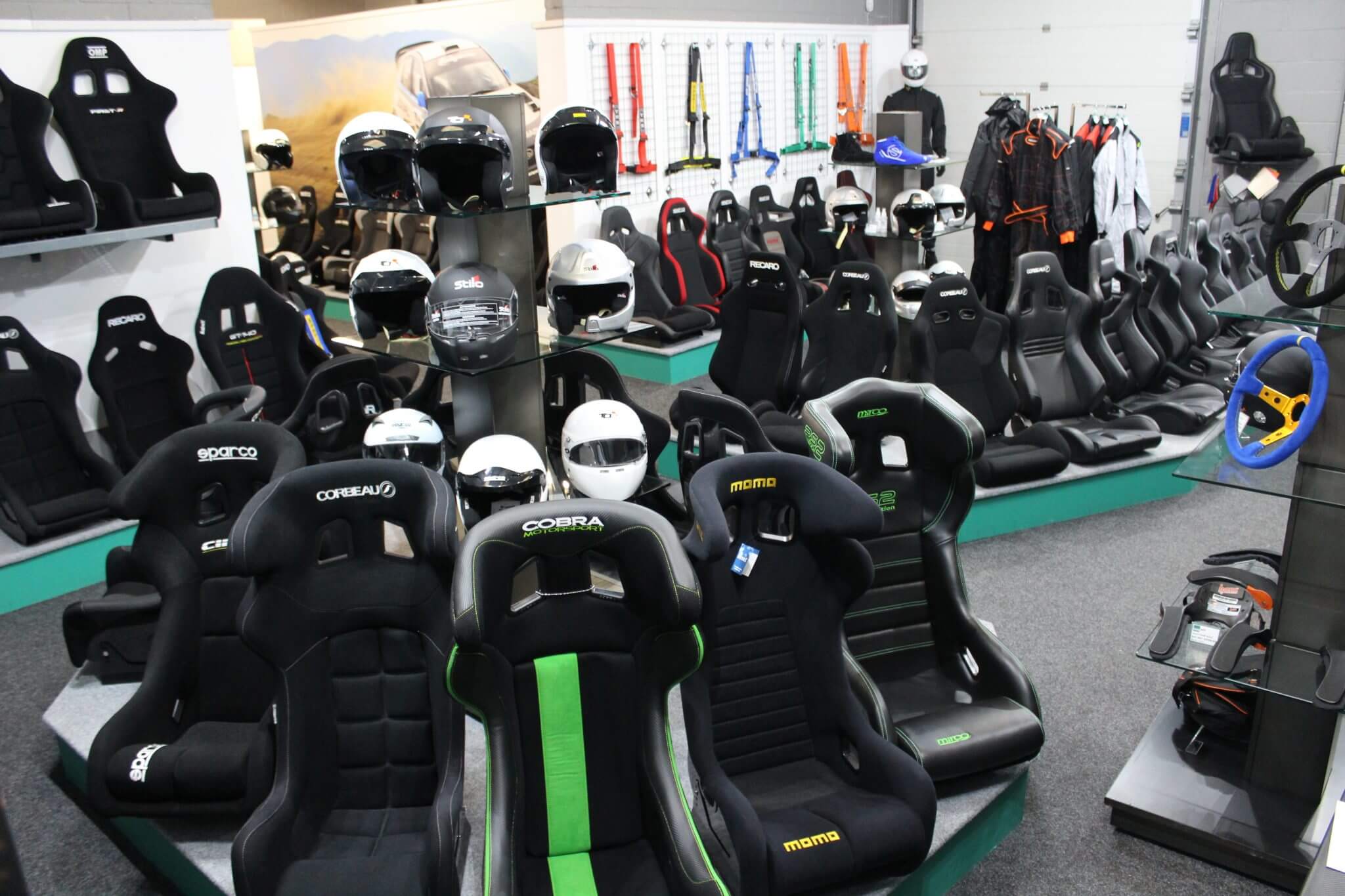
Road harness or FIA harness: what's the difference?
Everyone likes the look of an FIA harness, with its wide webbing and twist buckle. Whether it's the one for you depends on what you do with the car. A road harness has the push-button buckle you know from a standard seat belt, and an E mark. An FIA harness has a rotary buckle and a dated FIA label, and it's made for competition. Here's how to tell them apart, and which one to start with.
- Both buckles photographed on our showroom harness display
- Competition rules read in the Motorsport UK 2026 rulebook on 24 November 2026
- Cameron checks the seat and the mounting points with you before you order
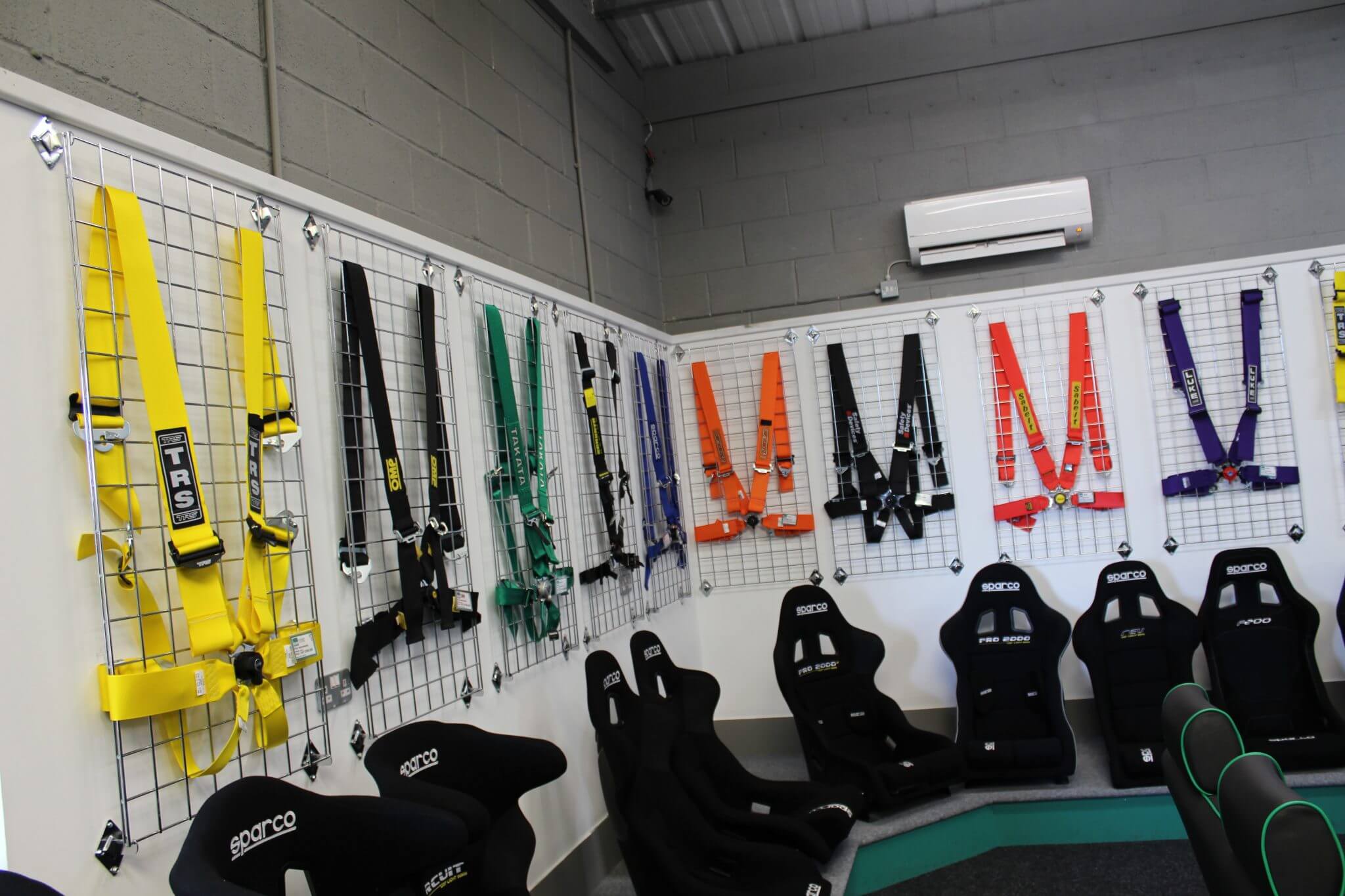
Road harness for a road car, FIA harness for competition
Start with how the car is used, then read the label on the harness itself.
- Road: push-button buckle, mostly 2 inch webbing, E mark
- FIA: rotary buckle, dated FIA label
- HANS device? Look at FIA harnesses made for it
- Track day? Ask the organiser what they accept
Road harnesses
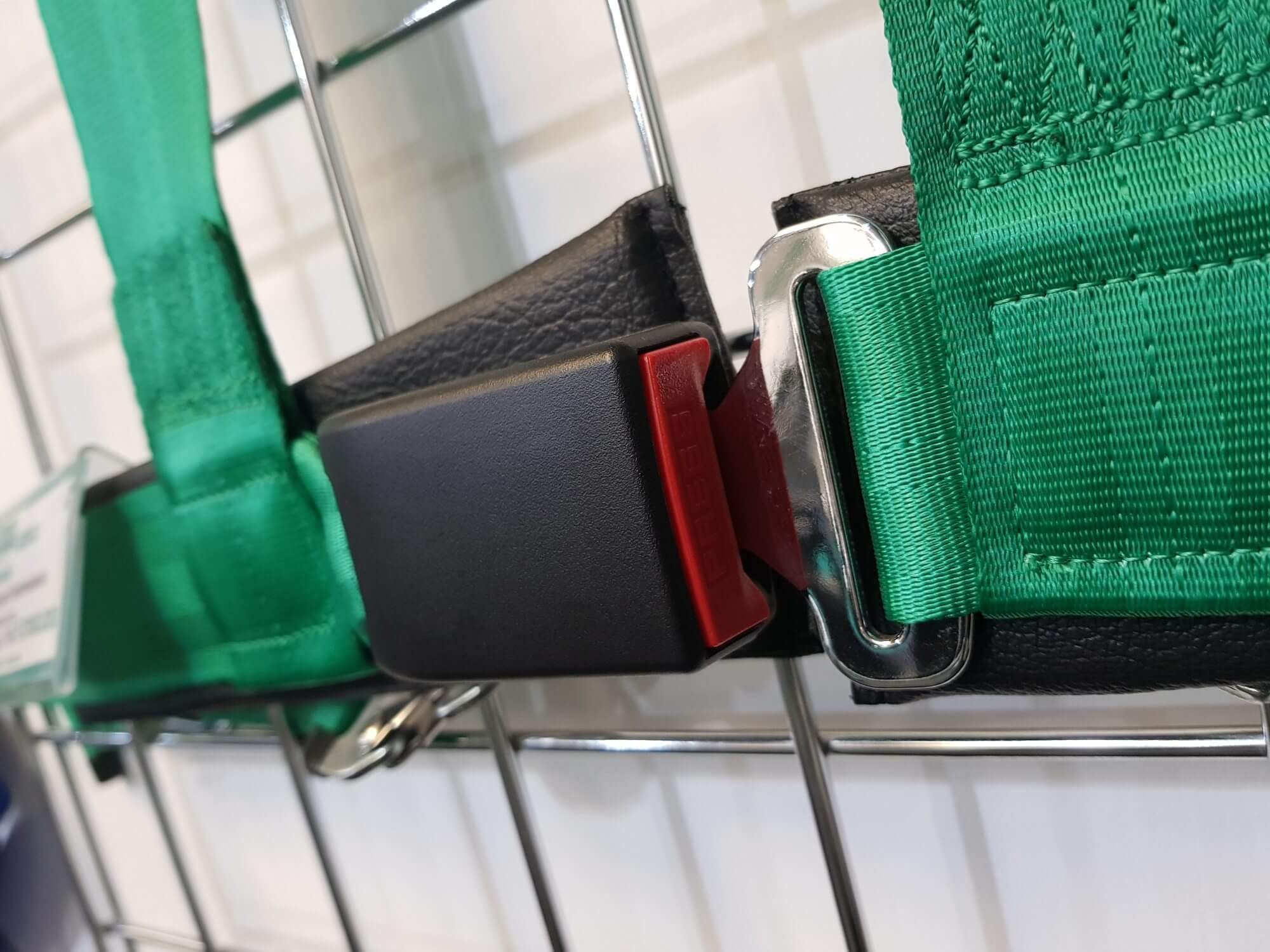
You can spot a road harness by its buckle. It’s the same sort of clip with a red button that you have on a standard seat belt, so anyone who needs to get you out already knows how it works. One shoulder strap and one lap strap are sewn together on each side, and they come away together when you press the button.
Most use 2 inch webbing, the same as a standard belt, although there are a few wider ones.
Look for the label before you buy. An E mark to ECE R16 is the approval a factory belt carries, and it’s sewn to the harness or printed on a tag. Some clip-buckle harnesses are sold without it, so the word road in a listing isn’t enough on its own. Our guide to FIA belts and road belts shows where to find the mark.
If your seat and your car allow it, keep the original three-point belt in place as well. Tell Cameron when you get in touch, because it changes which seat and mounts we’d suggest.
FIA harnesses
An FIA harness swaps the clip for a rotary buckle that you twist to release. Each shoulder and lap strap clips into it separately, and a fifth or sixth strap can run between the legs and clip in at the bottom.
The webbing is 3 inch as standard, which spreads the load across more of your chest and is usually more comfortable without a HANS device. The 2 inch versions are made to sit in the channels of a HANS.
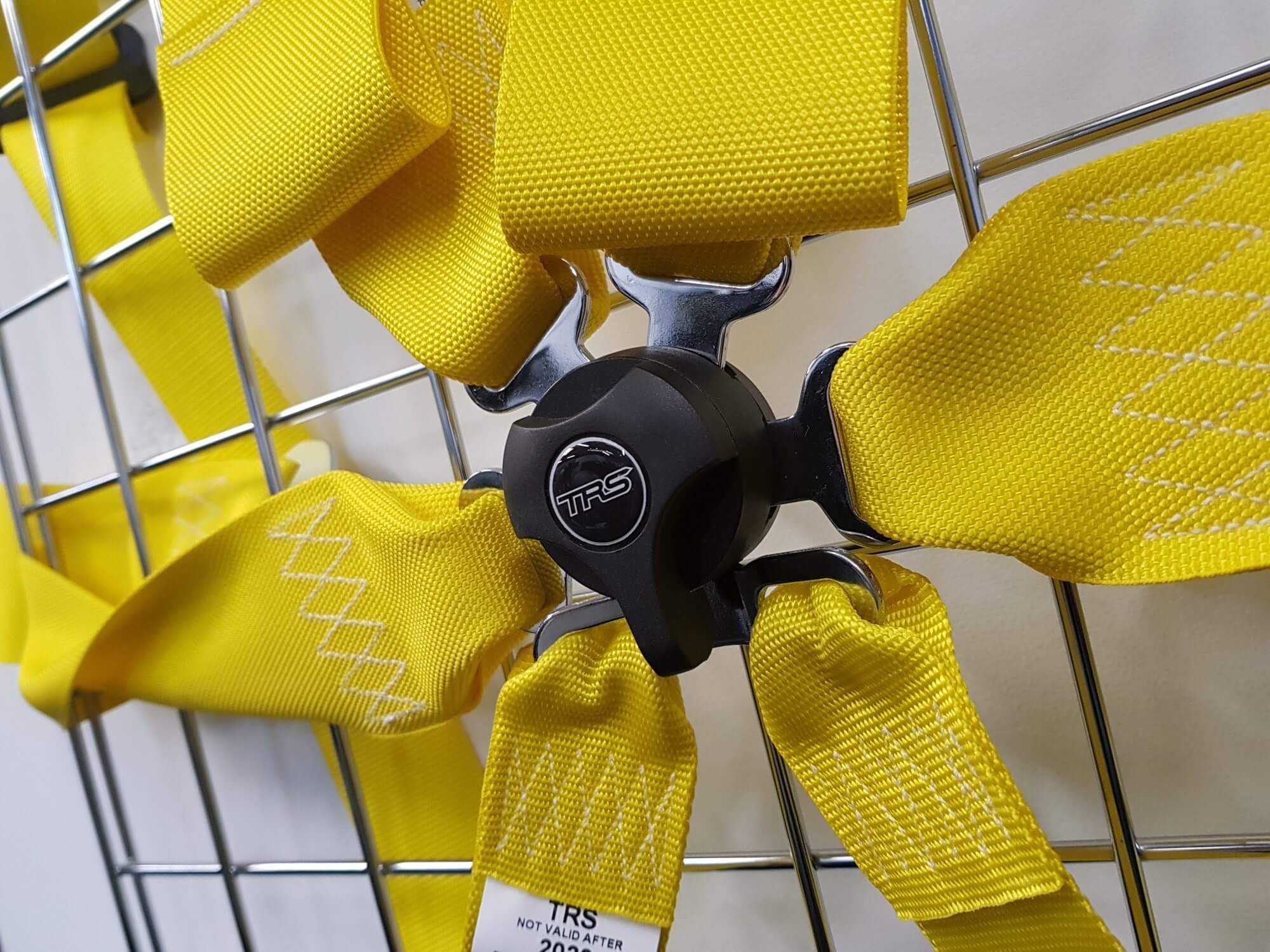
The label is what counts at an event. Motorsport UK says an FIA harness carries it on the left shoulder strap. Where a National event asks for an FIA harness, one to FIA 8853-2016 can be used for up to five years after the year on its label. Harnesses to 8853/98 and 8854/98 can be used until 31 December of the year on theirs. International events and some championships set their own dates, so check your regulations. The wording is in the Motorsport UK 2026 rules, Chapter 7 Appendix 7.
Road and FIA harnesses side by side
| Road harness | FIA harness | |
|---|---|---|
| Made for | Road cars | Competition |
| Buckle | Clip with a push button | Rotary, twist to release |
| Straps | Shoulder and lap strap sewn together on each side | Each strap clips in separately |
| Webbing | Mostly 2 inch | 3 inch, or 2 inch for a HANS device |
| Approval | E mark to ECE R16 | FIA label with a date |
| Extra straps | Three or four point | Four, five or six point |
Track days sit between the two. They aren’t competition, so there’s no single rule. Each organiser decides what they’ll accept. Ask them before you spend the money, and have the seat and harness model to hand.
How harnesses fix to the car
Both types come with three kinds of fixing:
- Bolt-in plates suit tight spaces and a harness that stays in the car.
- Clip-in hooks go onto eye bolts, so you can take the harness in and out.
- Wrap-around shoulder straps go around a harness bar or the rear bar of a roll cage, and only on a harness made for it. Our roll cage fitting guide shows how.
Fitting is a job for someone skilled, because the angles matter as much as the harness. Motorsport UK wants the shoulder straps as near horizontal as possible, and says the rear anchor shouldn’t be on the floor directly behind the driver. Follow the harness maker’s drawing for your model, and check the straps pass cleanly through the seat without running over an edge.
For a road harness, our guide to fitting three-point and bolt-in road harnesses goes through it step by step.
Which harness should you choose?
It depends on the car, the seat and whether you wear a HANS device. A car built for competition needs whatever your regulations ask for, and that’s usually an FIA harness with a HANS.
A seat with a reclining back needs a closer look before you buy any harness, because the shoulder straps need proper openings to run through. Send Cameron the seat model and photos of both lower mounting points and the space behind the seat. Cameron can then tell you which fixings will reach.
Questions about harnesses
Can I use an FIA harness in a road car?
Do I need an FIA harness for a track day?
How long does an FIA 8853-2016 harness last?
Can I mix straps from two harnesses?
Can I bolt the shoulder straps to the floor behind the seat?
Should I replace a harness after a crash?
Garreth and Cameron's view
Garreth
Garreth's top tip
Decide what the car is for first. If it's mostly on the road, buy a road harness with an E mark. If you compete, read your regulations and buy the FIA harness they ask for.
Don't choose on the look of the buckle.
Cameron
Cameron's fitting view
Work out where every strap will go before you order, and send me photos of the mounting points and the space behind the seat.
If you'll wear a HANS device, say so at the start, because it changes the webbing I'd suggest.
Not sure which harness suits your car?
Ring us with the car, the seat and what you use it for. Cally, our digital receptionist, takes your details and Cameron comes back to you.