

 Is it time to replace your race suit? Let’s get you track-ready.
 The Upcoming Caterham Project V: Lightweight Driving Goes Electric
The legendary British maker of the minimalist Seven is stepping into the electric age with Project V, a fully electric 2+1 sports coupé aimed at late 2025 release. This is uncharted territory for Caterham, a brand known for featherweight, open-top track cars, and enthusiasts are naturally asking: can an EV really capture Caterham’s raw driving magic? Project V suggests the answer is “yes,” by marrying a lightweight carbon-fibre chassis, a modest but punchy single rear motor, and Caterham’s no-frills ethos. In this blog, we’ll explore Project V’s technical specs and design philosophy, its anticipated driving experience and track prowess, and even insights from an official Top Gear video walkaround. We’ll also discuss how Caterham is building this EV for both casual drivers and hardcore track enthusiasts, plus what aftermarket upgrades (brakes, tyres, suspension tweaks, power management, safety gear) might let owners push it even further. Let’s dive in and see how Project V plans to deliver pure driver engagement in the electric era.
Technical Overview: Lightweight EV Powertrain and Performance
Caterham hasn’t jumped on the crazy horsepower bandwagon with its first EV; instead, Project V’s numbers emphasize lightness and balance over brute force. On paper, the specs won’t shatter any records, but they’re purpose-built for a true sports car feel. Here’s a rundown of key targets and confirmed figures:
- Powertrain: A single rear-mounted electric motor (268 bhp or 200 kW) drives the rear wheels. No dual-motor AWD complexity here, just classic rear-wheel-drive dynamics with instant electric torque. Caterham deliberately “hasn’t been drawn into the bonkers electric hypercar power war” and kept output modest to stay true to its lightweight ethos.
- Battery & Range: A 55 kWh lithium-ion battery pack (split into two modules front and rear) provides about 249 miles of driving range (WLTP). The pack supports fast charging up to 150 kW, allowing a 20-80% recharge in roughly 15 minutes, so quick pit stops can top you up during road trips or track days. (The battery is cleverly split, one section between the front seats and one under the rear seat, which keeps the driver’s seating position ultra-low and helps mimic the weight distribution of a classic Caterham Seven.)
- Featherweight Chassis: True to form, Caterham focused on cutting mass wherever possible. Project V rides on a carbon fibre and aluminium composite chassis with composite body panels, yielding a target curb weight of around 1,190 kg (2,620 lbs). That’s incredibly light for an EV, about the same as an Alpine A110 sports car and nearly half the weight of a Tesla Model S. A sub-1.2-ton EV coupe is virtually unheard of and crucial to delivering Caterham’s trademark agility.
- Performance: Thanks to its light weight and decent punch, Project V should sprint from 0-60 mph in under 4.5 seconds, with a top speed around 143 mph. Those figures put it firmly in sports car territory, quick enough to be fun and fast, but not an exercise in chasing insane numbers. As Caterham sees it, outright 0-60 times aren’t the focus; the goal is accessible performance that you can enjoy fully on both road and track.
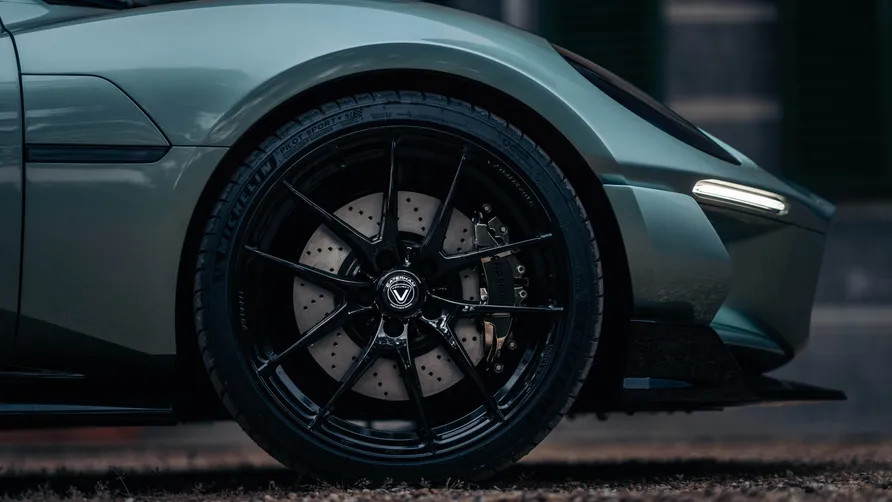
- Suspension & Tires: Keeping things track-ready, Project V features fully independent double wishbone suspension at both front and rear, with adjustable geometry for fine-tuning handling. (It’s effectively a pushrod-style setup like a race car, allowing dampers to be inboard for optimal control.) Sticky Michelin Pilot Sport 4S performance tyres (19-inch front, 20-inch rear) come standard, paired with large high-performance brakes, so this EV should stop and turn as keenly as it accelerates
In short, Project V’s spec sheet reads like that of a classic lightweight sports car, only electric. By keeping weight down and engineering simplicity, Caterham aims to ensure the technology serves the driving, not the other way around. “An electric Caterham of any shape and size has to stay true to what sets us apart from everyone else: being lightweight, simple and offering an unparalleled driving experience; that’s our DNA,” says Caterham boss Bob Laishley. Every technical decision, from the modest battery size to the single-motor layout, supports that mission of a pure, driver-focused machine.
Design Philosophy: A Modern EV Coupe with Classic Caterham DNA
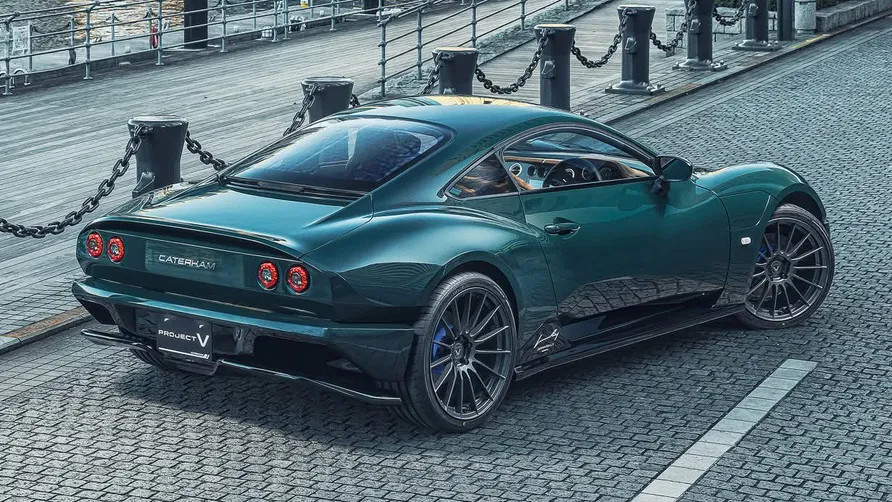
It’s immediately obvious that Project V is not your typical Caterham. For one, it has a roof! In fact, this is Caterham’s first true coupé in decades (the brand’s heritage has almost exclusively been open-top roadsters). The Project V concept, unveiled in 2023, looks like a cross between the never-produced Caterham-Alpine C120 prototype and a Jannarelly Design-1, which makes sense, Anthony Jannarelly (known for designing the retro-styled Design-1) is Caterham’s chief designer and penned the Project V. The result is a sleek, compact 2-door coupe that still telegraphs Caterham’s ethos: minimalism, lightness, and driver-first design.
Every element of Project V’s design philosophy aims to carry forward the spirit of the Seven into a new era. The silhouette is low, lithe, and unfussy, you won’t find active aero flaps or bloated supercar wings here. In fact, the styling was partly inspired by the classic Lotus Elan +2 coupe of the 1960s (a personal favorite of Caterham’s CEO, Kazuho Takahashi). That influence shows in the clean lines and compact proportions. It’s a modern EV, but one with a timeless sports car shape that nods to Caterham’s Lotus roots and British sports car heritage.
Inside, the philosophy of simplicity is even more evident. Caterham intentionally rejected the high-tech clutter we see in many modern cars. The dashboard is flat and basic, featuring just a pair of round digital gauges in front of the driver and a small central infotainment screen for essentials like phone mirroring and the rear-view camera. A few physical knobs and rocker switches handle key functions, and that’s it, no giant touchscreens or elaborate mood lighting. The cabin layout is driver-focused and minimalistic, in line with the idea that “the driving is done by the driver” and not by a maze of electronic aids. As Jannarelly and the Caterham team designed it, form follows function: if a feature didn’t add to the driving experience, it was likely left out.
One very unique aspect of the Project V is its 2+1 seating arrangement. In standard form it’s strictly a three-seater: two seats in front and a single small seat in the rear center of the cockpit. That lone back seat (essentially a jump seat) is positioned in the middle, giving its occupant a clear view straight out the windshield between the front seats, a fun idea for an occasional passenger. Why only one rear seat? It saves weight and space. (Caterham will offer an optional 2+2 configuration with two small rear seats, but in tongue-in-cheek fashion, they note that adding a fourth passenger means extra weight, so you may have to pick your favorite child for the ride!) The 2+1 layout is a clever compromise: it keeps the car slim and light, but still allows bringing an extra passenger or youngster along for the fun when needed.
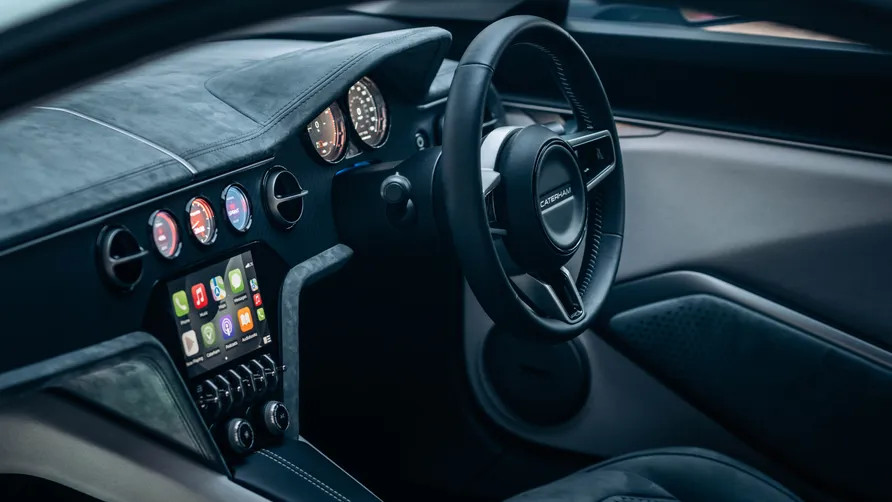
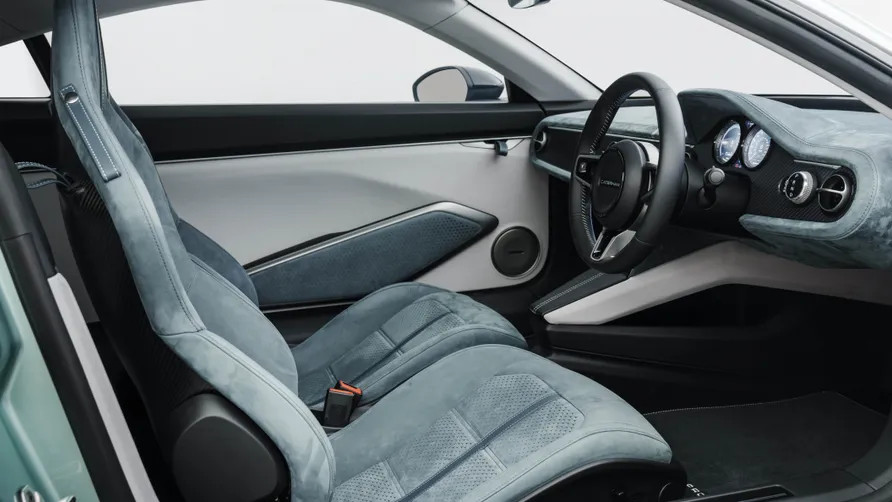
Crucially, Project V’s closed-roof, coupe design isn’t about diluting Caterham’s identity; it’s about broadening it. The car is intended as a complement to the classic Seven, not a replacement. By having a fixed roof, proper doors, and a somewhat more practical cabin, the Project V can be enjoyed in all weather and used for longer drives, track days in the rain, or even daily driving, which were challenges in an open Caterham. It’s a Caterham for the modern age: still spartan and purpose-built, but with a dose of civility and style. As Caterham’s team has emphasized, the goal was to “future-proof” the brand without losing its soul. From the simple interior to the lightweight construction, every design choice reflects Caterham’s core mantra that nothing should get between the driver and the joy of driving.
Driving Experience: Raw, Engaging, and Unfiltered
Caterham has been clear from the start that Project V is about driving feel first, not chasing headline numbers. The goal is to deliver the same sense of connection and involvement that made the Seven so special, even with an electric powertrain. To do that, the engineers have kept electronic assistance to a minimum and focused on making the car feel natural and alive on the road.
Steering and suspension play a big role in this. Project V is designed with very direct steering and strong feedback, with little to no artificial filtering. While the prototype uses electric assistance for practicality, it is tuned to preserve as much road feel as possible. Combined with the car’s low weight and compact size, the result should be a steering response that feels immediate and intuitive.
The driving position is another key factor. Instead of placing the battery under the floor like most EVs, Caterham has mounted it between and behind the seats. This allows the driver to sit very low in the car, keeping the centre of gravity down and improving stability. Weight is also deliberately spread toward the front and rear, giving the car a lively, playful feel through corners that encourages rotation and balance rather than flat, neutral behaviour.
Electronic systems are kept simple. Expect a small number of drive modes and basic traction and stability control that can be dialled back, rather than complex performance software. With a single rear motor and rear wheel drive layout, Project V is designed to reward driver input and feel predictable at the limit.
Despite its simplicity, performance should be consistent and usable. The combination of low weight, instant electric torque, and effective battery cooling means Project V should deliver repeatable performance without overheating or power loss. Whether on a fast road or a track day, the focus is on a car that encourages you to keep driving, not one that steps in and takes control away from you.
Track Use Potential: Built for the Circuit, Ready to Upgrade
Caterham has made it clear that Project V is not just an electric road car. Its debut at events like the Goodwood Festival of Speed shows that track driving has been part of the brief from the start. Much like the Seven, Project V is designed for owners who enjoy track days, hill climbs, and spirited driving, not just commuting.
The lightweight carbon and aluminium chassis provides a strong, rigid base, while the motorsport-style suspension setup allows for proper adjustment. With double wishbone suspension all round, owners will be able to fine-tune camber, damping, and overall balance to suit different circuits and driving styles. The standard Michelin PS4S tyres and high-performance braking setup should already cope well with hard driving, and thanks to the car’s low weight, wear and heat management will be far more manageable than in heavier EVs.
Battery and power consistency is another big plus. Caterham has focused heavily on cooling and durability, meaning Project V should deliver repeatable performance without the power drop off that affects many electric cars on track. The single motor rear wheel drive layout also keeps things simple, reducing heat build up and helping maintain consistent performance across multiple laps.
Project V is also well suited to aftermarket upgrades. Suspension tweaks, brake pads and fluid, wheel and tyre changes, and power delivery adjustments are all areas enthusiasts are likely to explore. Inside, the closed roof layout makes it easier to add harnesses, safety equipment, and track focused accessories compared to an open Seven.
Overall, Project V looks set to be a rare thing: an electric car that is genuinely enjoyable on track but still usable on the road. It offers the flexibility to enjoy a relaxed drive one day and a full track session the next. When it arrives, GSM Performance will be ready to support Project V owners with the right upgrades to help them get the most out of Caterham’s most ambitious project yet.
Video Insights: Top Gear’s First Look at Project V
Top Gear has released a walkaround video titled “FIRST LOOK: Caterham Project V, 268bhp Electrified Lightweight”, giving an early look at what Caterham is aiming to achieve with Project V. The video highlights just how different this car is from anything Caterham has built before, starting with the fact that it is a closed roof coupe rather than an open Seven.
The walkaround shows the car’s compact proportions, clean exterior design, and purposeful simplicity. Despite being a modern EV, Project V keeps a minimal look, with subtle nods to Caterham’s heritage through its lighting and overall shape.
Inside, the focus remains on the driver. The cabin is deliberately simple, with a clear driving position, low seating height, and minimal distractions. Physical switches and a straightforward layout reinforce Caterham’s decision to avoid overcomplicating the interior with unnecessary technology. The 2+1 seating layout is also shown, with a small central rear seat that adds a touch of practicality without compromising the car’s lightweight focus.
Throughout the video, Top Gear underlines Caterham’s decision to prioritise handling and driving enjoyment over headline power figures. With around 268 bhp and a target weight of just under 1200 kg, Project V is positioned as a car that delivers performance through balance rather than brute force. The video also confirms Caterham’s aim to bring Project V to production around late 2025, with an expected price of around £80,000.
For enthusiasts, the key takeaway from the video is clear. Project V is being built as an electric car for people who enjoy driving, not just numbers on a spec sheet.
Caterham Project V: Keeping the Driver at the Heart of the Electric Future
In summary, Caterham’s Project V is shaping up to be a remarkable fusion of old-school driving joy and new-age technology. It’s an electric car with the soul of a classic club racer, lightweight, no-nonsense, and built to make you smile on every corner. Whether you’re a weekend road tripper or a track-day die-hard, Project V promises an experience that’s refreshingly pure in an era of increasingly complex performance cars. Caterham set out to prove that an EV can still offer the unfiltered thrill that made its petrol cars legendary, and all signs point to them succeeding. We can’t wait to see this electrified lightweight hit the roads (and circuits) soon. And rest assured, GSM Performance’s team will be here for it, ready to equip Project V owners with everything from motorsport harnesses and seats to big brake kits, sticky tyres, and suspension upgrades, to help you squeeze every drop of enjoyment from this brilliant little EV. The electric future of driving doesn’t look so dull after all, does it?