Everything You Need to Know About the ARDS Test
Race licence guide
If you want to race cars on a UK circuit, the ARDS test is where it starts. ARDS stands for the Association of Racing Driver Schools, a group of race schools recognised by Motorsport UK, and passing their test is how you get your first Motorsport UK race competition licence.
It is a half day at a circuit: a briefing, a short written test and a drive with an examiner. This guide covers what happens on the day, what you need before you book, how to prepare, and what to sort out once you have passed.
- ARDS is the Association of Racing Driver Schools, recognised by Motorsport UK
- Start with the Motorsport UK Go Racing starter pack, which includes your first year's licence fee
- The day includes a 30 minute written test on flags and the racing regulations
- The track test is in a school road car with an ARDS examiner
- Under 60s need only a vision test; 60 and over need a full medical
- The examiner signs your application form, which you send to Motorsport UK

What is on this page
What the ARDS test is
Motorsport UK, the governing body for four-wheel motorsport in the UK, will not issue a first race licence until you have been assessed by one of the ARDS member schools. There are 13 of them at circuits around the country, and you book directly with the school you choose. Motorsport UK’s ARDS page has the map of schools.
The test is for circuit racing. Rallying, karting and speed events such as sprints and hillclimbs have their own Motorsport UK starter packs and routes to a licence, so check which one fits what you want to do.
Before you book
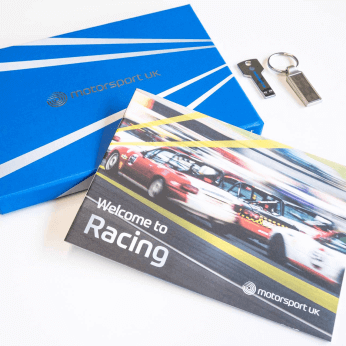
The first step is the Motorsport UK Go Racing starter pack. It contains your competition licence application form, a booklet explaining the next steps, a USB stick with the Motorsport UK Yearbook and an instructional film, and the fee for your first year’s licence is included in the price. We sell the pack, or you can buy it from Motorsport UK directly.
For drivers aged 14 to 59 applying for a first race licence, only a vision test is needed. If you are 60 or over you need a medical as well as the vision test. Drivers under 18 need a parent or guardian to countersign the application, and some championships set their own minimum ages. There are extra rules for some medical conditions, such as epilepsy, so read the medical notes in the pack if they might apply to you.
What happens on the day
The day starts with a welcome briefing and safety guidance. Then comes a 30 minute written test in a classroom, covering Section Q of the Motorsport UK Yearbook, which sets out the general regulations for racing, and the meaning of the flags.
After that you go on track with an ARDS examiner in a road car supplied by the school, so you do not need a car of your own. The examiner wants to see that you can lap the circuit in a safe and controlled manner. It is not a race and it is not timed for speed. The day finishes with a debrief.

How to prepare
Learn the flags until you know them without thinking: what each one means and what you are expected to do when you see it. Then read Section Q of the Yearbook properly, because the written test is drawn from it. The instructional film in the starter pack is a good place to begin.
For the drive, many schools offer tuition before the assessment, and a session or two of coaching or a track day beforehand helps you get used to circuit driving. On the test, be smooth and consistent: brake in a straight line, pick a sensible line through each corner, use your mirrors and react to the flags. Garreth’s advice is not to try to impress the examiner with speed; tidy, predictable driving is what passes.
After you pass
When you pass, the examiner stamps and signs your application form. You complete it and send it to Motorsport UK, and your first competition licence comes back to you. It needs renewing each year.
From there you pick a club and a championship. The clubs that run UK race meetings, such as the BRSCC, BARC, 750 Motor Club and MSVR, publish regulations for each series, including the safety kit you need. Read them before you buy anything.

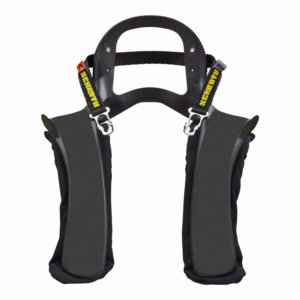
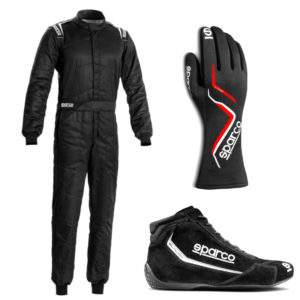
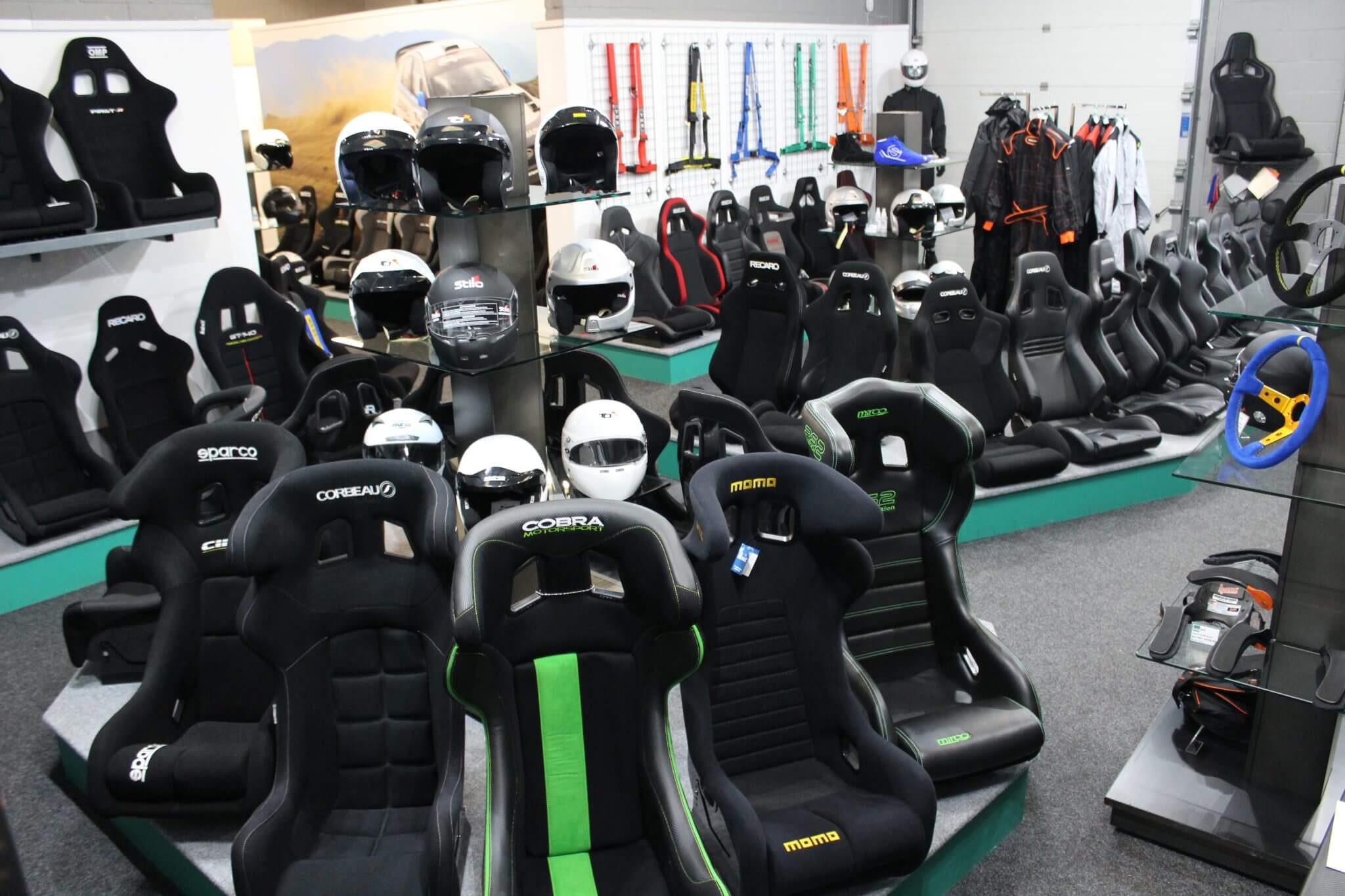
For most car racing you will need an FIA approved helmet, a frontal head restraint such as a HANS device, and an FIA 8856-2018 suit, gloves and boots, with fireproof underwear usually required too. Our guides to choosing a motorsport helmet and choosing an FIA race suit go through each piece.
-
From £404.40 Incl. VATFrom £337.00 Excl. VATPayPal CreditKlarna ReadyTry in-storeSelect options This product has multiple variants. The options may be chosen on the product page
-
From £354.00 Incl. VATFrom £295.00 Excl. VATPayPal CreditKlarna ReadyTry in-storeSelect options This product has multiple variants. The options may be chosen on the product page
-
From £531.24 Incl. VATFrom £442.70 Excl. VATPayPal CreditKlarna ReadySelect options This product has multiple variants. The options may be chosen on the product page
What does ARDS stand for?
The Association of Racing Driver Schools, a group of race schools recognised by Motorsport UK.
Do I need my own car for the ARDS test?
No. The track assessment is done with an ARDS examiner in a road car provided by the school.
What is in the written part of the ARDS test?
A 30 minute written test covering Section Q of the Motorsport UK Yearbook and the meaning of the racing flags.
Do I need a medical for my first race licence?
Drivers aged 14 to 59 need only a vision test. Drivers aged 60 and over need a medical as well.
What do I need to start before booking the ARDS test?
The Motorsport UK Go Racing starter pack, which includes the licence application form and your first year’s licence fee.
Start with the starter pack, learn the flags, then book a school near you.
Tell us what you will be racing and we will put together a helmet, FHR device and racewear that meet your championship's rules.