
Coilovers And A Bucket Seat: What Changes In The Cabin
Coilovers and seats, planned together
Coilovers and a bucket seat are usually bought months apart, priced separately and fitted by different people. Then they meet in the cabin, and neither one prepares you for the other.
Coilovers bring the body down relative to the road. A bucket seat shell typically sits lower than the OEM seat it replaces, depending on the shell and the mounting frame. Both changes move your seating position, and the combination moves it further than most people expect when they plan the two jobs separately.
Cameron gets the same handful of questions after the car is finished: headroom, over the bonnet visibility, pedal reach, door sill height, harness angle. Every one of them is answerable before either modification goes on, if you know what to look for. Garreth's version is blunter, which is that nobody adds the two numbers up first.
- Most BC Racing fitments drop the body 30 to 80mm, depending on car and adjustment
- A shallow shell on a standard height subframe can drop the seat base another 20 to 30mm
- Both changes go the same way, so they add up instead of cancelling out
- Add the two numbers against your headroom over the OEM seat before you order either
- The rearmost slider position is often not as far back as the standard seat went
- Reset both mirrors on the first drive. Everybody forgets, every time
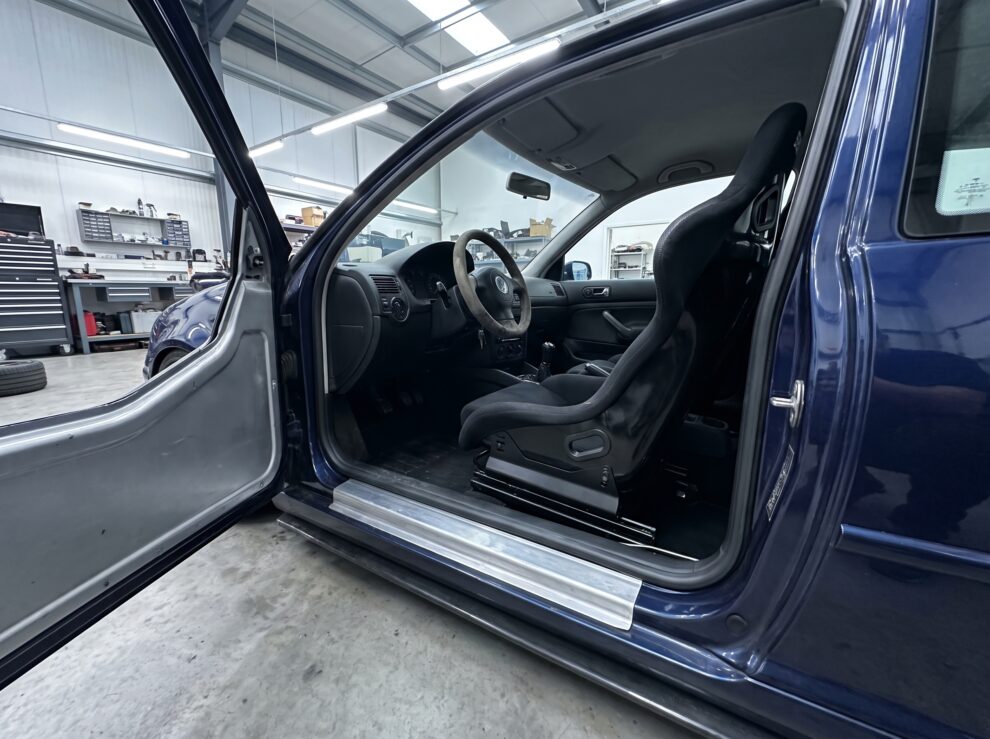
The double drop, and why it stacks
A coilover lowers the car body relative to the road. On most BC Racing fitments that is somewhere between 30 and 80mm, depending on the car and how much of the adjustment range you wind in. That moves the entire cabin closer to the road, but your seating position relative to the floor stays exactly where it was.
A fixed back racing shell sits lower at the base than the OEM seat it replaces, on most mounting frames. How much lower depends on the shell, the subframe and the car, but a shallow shell on a standard height subframe can drop the base of the seat 20 to 30mm below stock.
The body drop is on top of that. Both changes go in the same direction and neither one knows about the other.
| What moves | Typical amount | Which way |
|---|---|---|
| The body, relative to the road (coilovers) | 30 to 80mm | Down |
| The seat base, relative to the floor (shell and subframe) | 20 to 30mm | Down |
| You, relative to the road | The two added together | Down |
Two separate purchases, one direction of travel. Add them up before you order, not after they are both fitted.
Sightlines, the bonnet and the mirrors
At a lower seating position the top of the bonnet sits higher in your forward view than it did at standard height. On most cars the adjustment is small enough that it makes no practical difference at all.
On longer nosed cars, or anything with a high bonnet line, some drivers find the car harder to place in tight gaps, because the forward sightline to the road surface in front of the car is cut off a little earlier.
Getting in and out
Entry and exit change when the car is lowered and the seat is a fixed shell. The sill is higher relative to where you are sitting, because the body has come down and the seat base has come down with it.
On an OEM seat at standard height, sill clearance is calibrated into the car’s design. On a lowered car with a fixed back shell the geometry is different, and for some car and seat combinations it is noticeably different.
For a road car or a club track day car this is mainly a comfort consideration that becomes familiar within a week. For a competition car where the driver has to get out quickly, confirm the sill height and the egress path with the car finished and the seat in, not beforehand on paper.
Pedal reach and wheel reach
Most fixed back shells mount on a slider that gives a useful range of forward and back travel, but the rearmost position is often not as far back as a standard OEM seat will go. If you are tall, or you run a long arm reach to the wheel, confirm the maximum rearward position of the subframe before ordering.
Some shells also sit with a shallower backrest rake than the standard seat, which changes the angle of reach to the wheel independently of the fore and aft position. Two separate things, and people conflate them.
Sit in it on the frame
The place to find this out is in the seat, on the subframe, before the car goes in for the installation. Ten minutes in a showroom beats a return.
Ask for the rearmost figure
Be specific with the supplier about the car, the frame and the measurements that matter, and ask where the slider ends up at its furthest back.
Consider an adjustable back
An adjustable back shell resolves the rake question outright, and is worth considering on a car used regularly on the road where the OEM rake suited you well.
Harness routing and shoulder angle
Coilovers lower the car but do not affect where a harness sits relative to the seat. The harness route is set by the seat shell, the pass through slots and the mounting points the car has, whether those are the OEM belt anchors with an adaptor or a separate harness bar.
What the lower seating position can affect is the shoulder strap angle, because a lower shell against a fixed height harness bar means the belt leaves the pass through at a steeper downward angle than intended.
What to settle before you order
- The published shell dimensions, from the seat manufacturer
- The floor to base height of the subframe, including the mounting frame
- The headroom your car has over the OEM seat position, measured
- How far back the slider goes at its rearmost setting
- Whether the shell rake suits your reach to the wheel, sat in it
- For a competition car, the egress path with everything fitted
Six numbers and one sit down. Between them they answer every question at the top of this page, and all of them are available before anybody spends anything.
Where to go next
For the coilovers, the BC Racing coilover series guide covers what each series is built for and what separates the BR, RM and the rest. The BMW guide, the Honda guide and the Nissan guide cover fitment detail and what to check on a listing before ordering for each of those makes.
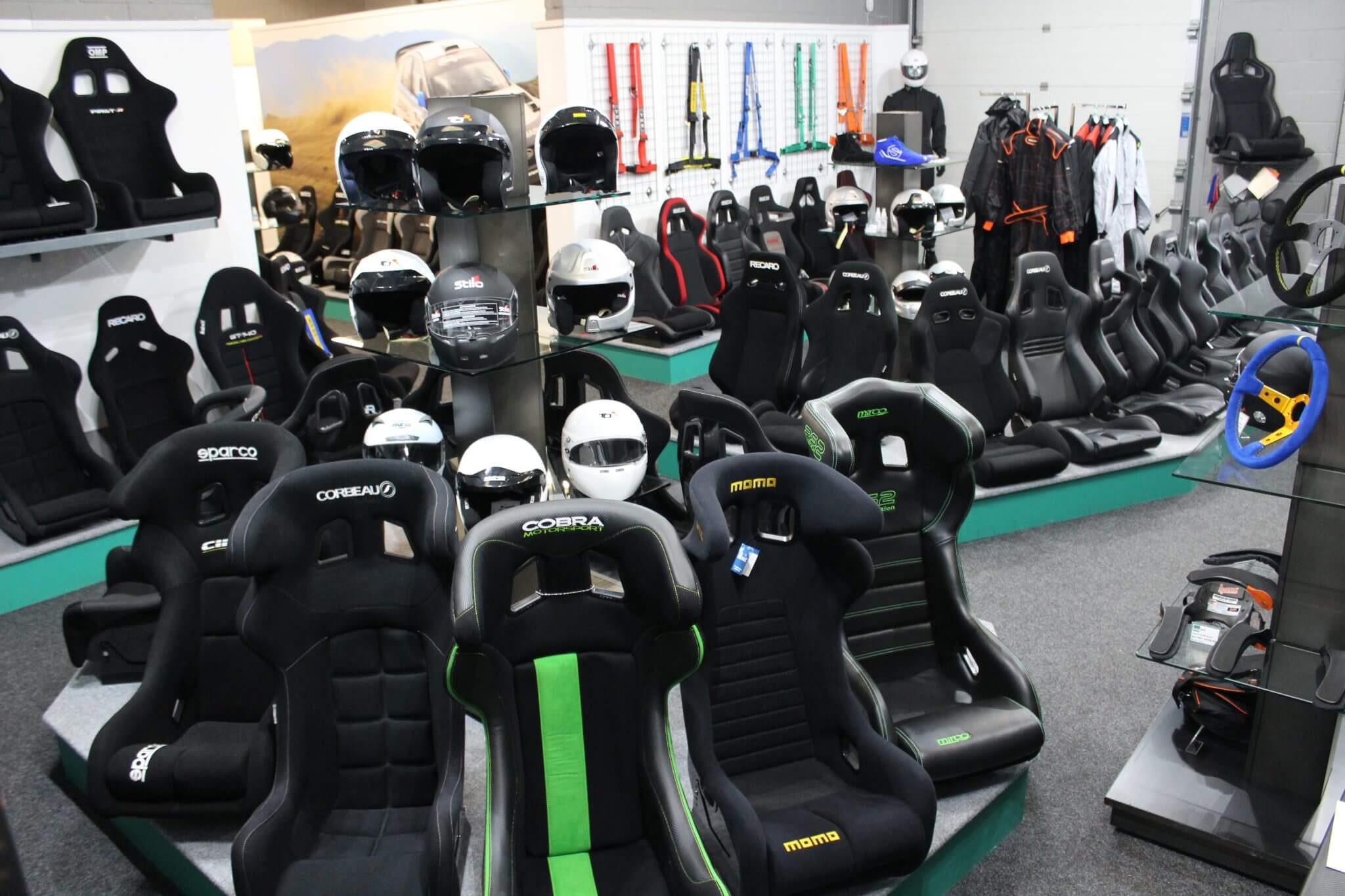
For the seats, they live on our sister site. The road car bucket seat range covers fixed back shells from Cobra, Corbeau, Sparco, Recaro and others, with mounting frame compatibility listed per seat and per car. The FIA motorsport seat range carries the homologation detail.
Browse the coilovers
The whole BC Racing range by car, or straight to the BR Series and the RM Series.
Browse the seats
Fixed back shells and subframes are on SportSeats4u, with the mounting frame listed against each car.
Or just ring us
Give Cameron the car, the shell and the subframe and he will do the height sum with you on the phone. 0115 9893488.
Common questions
How much lower will I actually end up sitting?
Add the coilover drop to the seat base drop. On most BC Racing fitments that is 30 to 80mm of body, and a shallow shell on a standard height subframe can be another 20 to 30mm. Both numbers are published before you buy, which is the whole point of this page.
Will I still fit with a helmet on?
That is exactly the sum to do first. Take the headroom you have over the OEM seat, subtract the combined drop, and compare what is left against your helmet. In a low roofed hatchback or coupe this is the question that decides the whole specification.
Do coilovers change my harness angle?
Not directly. The harness route is set by the shell, the pass through slots and the mounting points. What the lower seating position changes is the shoulder strap angle against a fixed height bar, so check it with the belt routed once the seat and frame are in.
Will the seat go back far enough for me?
Often, but not always. The rearmost slider position on a subframe is frequently not as far back as the standard seat went. If you are tall or you like a long reach to the wheel, get that figure confirmed before ordering.
Which do I fit first?
It makes no difference mechanically, and that is rather the trap. Because they can be done months apart in either order, people never add the two height figures together. Do that part first, whatever order the spanners come out in.
Final thoughts
The two modifications work well together, and the cabin feels different in a good way once both are properly set up. Getting there without surprises means treating them as one job: add up the combined height numbers before ordering, confirm reach and rake on the seat before it goes in, and sort the mirrors on the first drive.
Every problem on this page is avoidable in advance, and every one of them is a phone call rather than a measurement you have to take yourself. Garreth’s standing offer is that we will do the arithmetic with you, because we would far rather do it now than hear about it afterwards.
Cameron will add the height numbers up with you and tell you what headroom you are left with before you order either part.
With those three we can add the height numbers up with you before anything is ordered, and tell you whether the combination leaves you the headroom you need. It is a five minute conversation that saves an expensive afternoon.