The Bugatti Destrier: a Bolide gone full sculpture, and I cannot stop looking at it
I lost a good half hour to the internet this week, and I am not sorry. Bugatti has quietly put out a one-off called the Destrier ahead of Monterey Car Week, and it is the best thing I have seen on a screen in a long time. It is a Bolide, the mad track-only thing with the quad-turbo W16, stripped of its wings and splitters and rebodied as something closer to a piece of gallery sculpture.
This is me passing on what I have read, because none of the motoring press has been let near the actual car yet either. It broke cover online in early August and made its public debut at Pebble Beach on 16 August.
I am writing about it because I think it is genuinely important, in the way the Type 57SC Atlantic was important. Bugatti clearly thinks so too, because the Atlantic is all over this project.

What the Destrier actually is
The Destrier is the third one-off from Programme Solitaire, the coachbuilding arm Bugatti runs out of Molsheim for clients who want a single car built around them. The first two, the Brouillard and the F.K.P. Hommage, were based on the Chiron. This is the first one built on the Bolide, which is a far stranger and more exciting starting point, because the Bolide was never meant to be beautiful. It was meant to be fast around a circuit and nothing else.
The name is a medieval one. A destrier was the warhorse a knight took into battle, the strongest and best-bred animal in the stable, and the stance of the car is meant to carry that. Having stared at the photographs for longer than I should admit, it does.
The bit I love: they took things off
Almost every car in this corner of the market gets more aggressive as it gets more expensive. More wing, more splitter, more vents. The Destrier goes the other way. The Bolide’s enormous rear wing and splitter are gone, the tail is smoothed into a long teardrop, and the whole car stands barely a metre tall. Bugatti’s designers talk about the Type 57SC Atlantic as the reference, and there is a laser-engraved plate in the car showing the Atlantic alongside the Type 57G Tank racer, the two sides of the same 1930s idea: one built to win, one built to be looked at.
- Bespoke multi-layer Sapphire Celeste blue with a sparkle worked into the paint
- Widened horseshoe grille and a C-shaped signature line down the flank
- Tinted carbon and polished aluminium in place of racing addenda
- Hand-hammered aluminium brightwork around the engine bay
Somebody sat with a hammer and textured the metal by hand, on a car with 1,578bhp. That combination is the whole story for me. It is the same instinct as a properly finished TIG weld on a roll cage, craft applied where most people will never look.
The numbers, for what they are worth
Bugatti has been open that outright performance was not the brief, which is easy to say when the starting point is the Bolide. The spec that has been published looks like this.
| Item | Detail |
|---|---|
| Engine | 8.0-litre quad-turbocharged W16 |
| Power | 1,578bhp (1,600PS) |
| Chassis | Bolide carbon fibre monocoque |
| Height | Barely a metre tall |
| Wheels | 20-inch front, 21-inch rear, in place of the Bolide’s 18-inch centre-locks |
| Aero | The Bolide’s wing and splitter deleted, tail smoothed out |
| Build | One-off, Programme Solitaire, number three in the series |
| Debut | Online early August, public debut at Pebble Beach on 16 August |
No weight figure, no top speed claim, no lap time. On this car I do not think the omission is coy. The numbers genuinely are not the point.
The cabin sounds even better than the outside
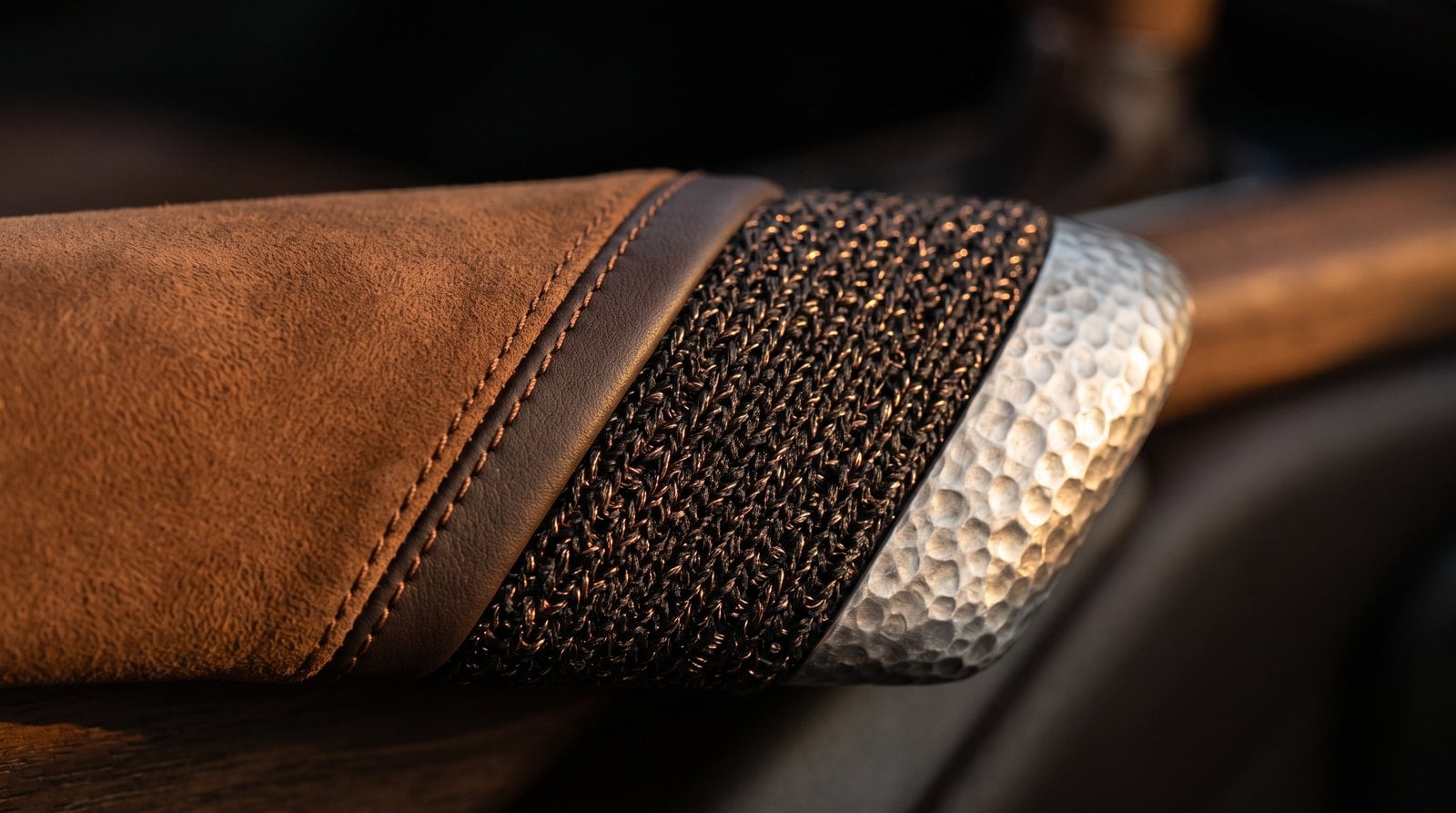
The interior is trimmed in a warm brown called Ambre Voyageur, mixing smooth leather with nubuck. The detail that got me is the fabric: a 3D-knitted textile across the dash and doors with real copper threads woven through it. Copper wire, in the upholstery, because it catches the light the same way the hammered metal does.
The door openers, the vents and the steering wheel hub carry the same hand-hammered finish as the engine bay, and the oil filler cap is engraved 1/1.
We spend our working week around race trim, where every gram and every fixing has to justify itself. Reading about a cabin where somebody wove copper into cloth purely because it would look right in the evening light is a proper palate cleanser.
Is it actually road-going? Honest answer: unclear
Most of the coverage calls the Destrier the road-going Bolide, and losing the racing aero points that way. Worth knowing before you repeat it at the pub: Bugatti’s own material does not state road certification anywhere, and sharper-eyed outlets noticed the previous Solitaire car carried a type approval pending note that this one does not.
Why I am telling you about a car none of us will buy
Because the thinking scales down, honestly. The Destrier is what happens when someone decides the point of a car is how it makes you feel, and specs it without apology. Every good build we see in the workshop starts with the same decision at a smaller number: the seat that fits you properly, the wheel that sits right in your hands, the cage finished like somebody cared. The Destrier is that instinct with an unlimited budget, and I find it genuinely cheering that the car it produced is calm, low and beautiful instead of louder and angrier.
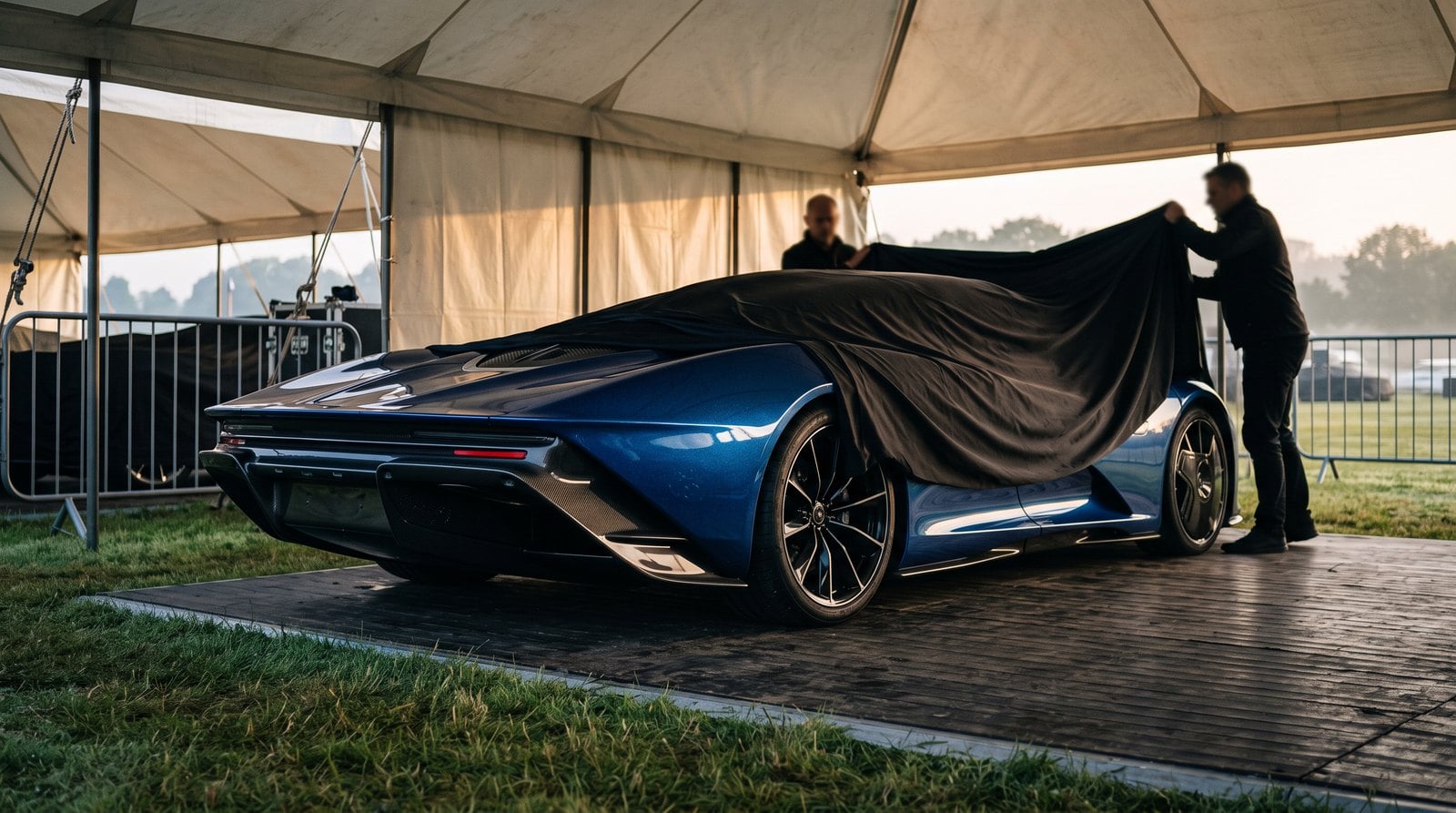
The photographs are all over the motoring press this week and the car had its moment on the lawn at Pebble Beach on the Sunday. Go and lose your own half hour to the photographs. Cameron.