Fast Road Or Track: Choosing The Damping On A Set Of Coilovers
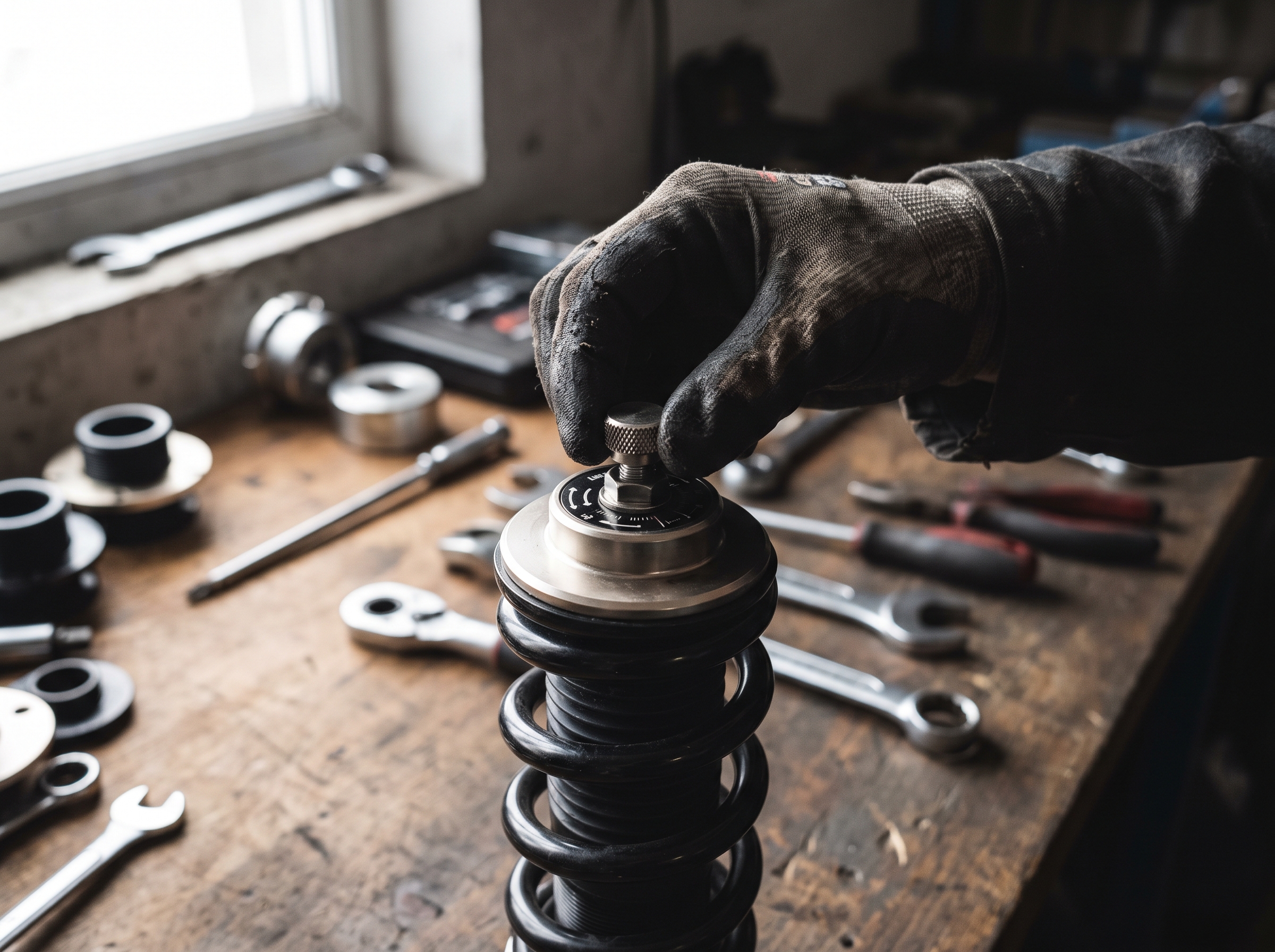
Every clicker on a BC Racing damper does something, but not every kit gives you the same clickers to turn. Wind the dial on a BR strut and you’re adjusting rebound and compression together, one 30-way range covering both. Move to an ER kit and there are two separate dials on the strut, one for compression and one for rebound, because that range is built for people who want to set the two apart on purpose. Knowing which one you’re holding changes how you go about setting the car up for the road, and how you’d change it again for a track day.
Rebound and compression are two different jobs
Compression is how hard the damper resists the strut compressing, the wheel moving up into the arch over a bump. Rebound is the return stroke, how the damper controls the strut extending back out afterwards. Left to the spring alone the wheel would keep bouncing after every bump. The damper is what stops that and settles it back down in one movement instead of several.
Firm up compression and the car resists diving into a bump or loading up hard under braking. Firm up rebound and the wheel comes back down slower and under more control instead of springing straight back at the rate it went in. Neither adjustment touches the spring rate itself, that’s a separate thing fitted to the car before the damper ever gets involved.
How many dials you're turning depends on the series
On BR, our biggest range by a long way, one 30-way dial sets rebound and compression together. Move it up the scale and the whole damper firms up, move it down and the whole damper softens, in a single adjustment. That’s the series most customers land on, and it works because most cars on a BR kit are being set up for one job at a time, not switched between two through the week.
ER splits that single dial into two, a rebound adjustment and a compression adjustment fitted separately on the strut. That lets you firm up how the car resists diving into a bump without also firming up how it settles afterwards, or the other way round. ZR goes a step further again, a three way adjustable damper built for competition use rather than a road car that occasionally sees a track day. HM adds a remote reservoir alongside its own adjustment range, aimed at track and race use where sustained hard driving heats the damper oil more than a road session ever will.
Setting up for fast road use
For a car doing most of its miles on the road, running the damping towards the softer end of the range is usually where you want to be. A softer setting lets the strut move more freely over the imperfections a normal road throws up, expansion joints, potholes, speed bumps, without every one of them landing in the cabin. It also keeps the tyre in contact with the road surface over broken tarmac, which does more for grip on a daily drive than the small amount of extra body roll you’d feel through a corner you’re not pushing hard through anyway.
Setting up for track use
On track the priorities flip. A stiffer compression setting resists the car diving under braking and loading up through a fast corner, keeping the chassis flatter and the geometry closer to what it was set up to do. Stiffer rebound stops the car pitching back after a bump or a kerb strike, settling the wheel again quickly instead of leaving it still moving as the car turns into the next corner. None of that comes free. A car dialled in firm for a track day rides noticeably harder on the road afterwards, and that’s the trade being made, not a fault in the kit.
If the car does both jobs
Most cars we fit these to do both jobs, road all week and a track day now and then, so the practical approach is a road setting for daily driving and a firmer setting dialled in before a track session. The clicker is there for exactly that. Count how many clicks you move away from where the car came set, keep a note of it, and go back to that number afterwards. That way a track setting is always a known number of clicks from the road setting you already know works, not a guess started fresh every time.
Where to go next
For what each BC Racing series is built for beyond the damping dials, the series guide covers BR, RM, ER and the rest side by side. If you’re fitting to a BMW, the BMW coilover guide lists which series each model in the range comes in.
Final thoughts
Whether it’s one dial or two, the point of an adjustable damper is that you’re not locked into the setting the kit arrived on. Start softer for the road, know how many clicks a track setting is away from that, and change it back afterwards. If you’re not sure which series is under your car or how many adjustments it actually has, ask us before you start turning anything.
Cameron, GSM Performance