OMP Fire Extinguisher Fitted Into A Classic Mini
The car in the photos belongs to one of our regulars, who picked up an OMP 2.8L mechanical fire extinguisher kit from us and fitted it himself into a beautifully restored Classic Mini. He sent these pictures over once it was in, and they made our morning. The paint, the wiring, the way the bottle has been tucked in without ruining the look of the cabin, it’s a proper job. Cameron passed his phone round the showroom so half the team could have a look.
We get sent build photos most weeks and we always enjoy them, but a Classic Mini install is a particular kind of satisfying. There isn’t much room behind the seats, the bulkhead is a known pain to route through, and most of the fire safety kit on the market is designed around modern saloon and GT bodyshells. Getting a plumbed in system to sit cleanly in a Mini takes some thinking. This customer nailed it.
We thought we’d use the post to do two things. First, give the install the credit it deserves. Second, walk through the bits that catch people out when they fit a fire extinguisher to a small classic car, because we get the same questions on the phone every few weeks. If you’re planning a similar build, this is what we’d tell you over the counter.
Why a plumbed in fire extinguisher belongs in a Classic Mini
A handheld extinguisher under the passenger seat is better than nothing on a road car. On a competition Mini, or a Mini that sees track days, it isn’t enough. Fires in small classics almost always start in one of two places, the fuel line where it runs along the floorpan, or the wiring loom behind the dash. Both of those are exactly where you can’t reach with a handheld while you’re still strapped in. A plumbed in system has nozzles already pointing at those areas, with a pull cable inside the cabin and a second pull on the outside that a marshal can reach without opening a door.
The other reason we steer customers toward a proper plumbed kit is competition eligibility. If the car is ever going to do an MSUK rally, sprint, hillclimb or stage event, the regs want a system off the FIA Technical List, mounted to spec, with the right plumbing and the right activation. A handheld in a clip might pass a road MOT but it won’t pass a scrutineer at a championship event. Buying the plumbed kit once is cheaper than buying a handheld now and a plumbed kit a year later when the licence application turns up.
Top plumbed in picks for a Classic Mini
The OMP 2.8L mechanical kit we supplied
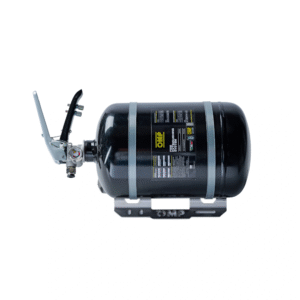
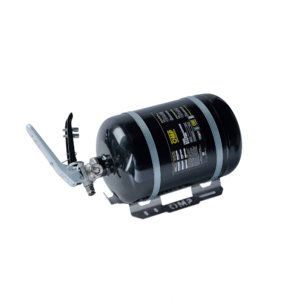
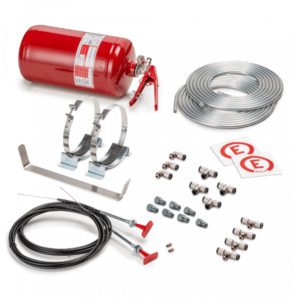
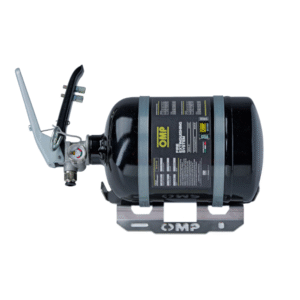
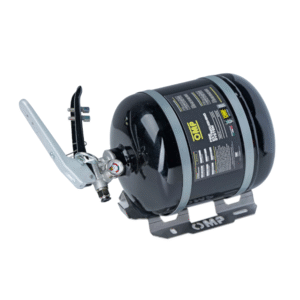
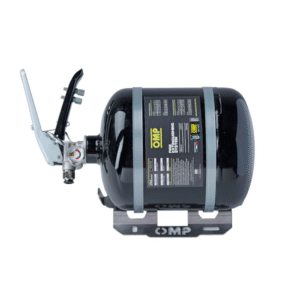
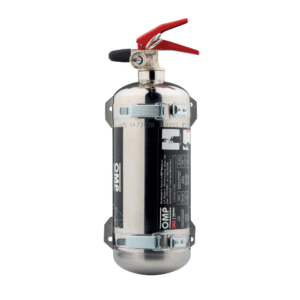
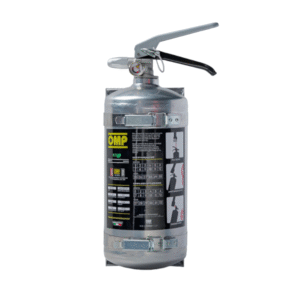
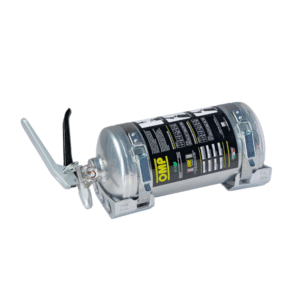
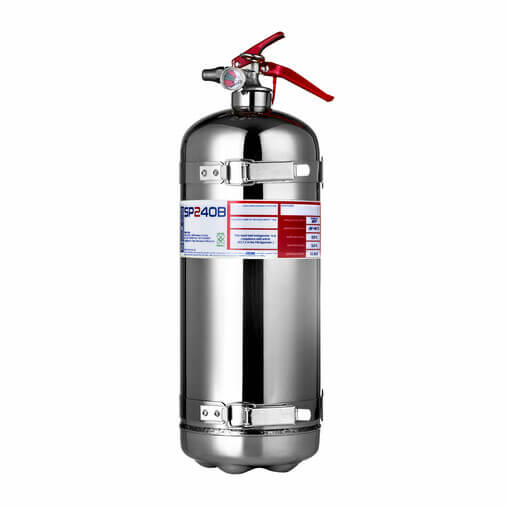
The kit fitted in this Mini is the OMP 2.8L mechanically activated steel bottle system, part of OMP’s Black Collection range. It’s a foam based extinguisher charged with EcoLife, OMP’s environmentally friendlier foam forming liquid, in a 160mm diameter steel bottle. The activation is mechanical, which means there’s no electronics to fail and nothing to wire in. You pull the cable, a striker punches the bottle, and the foam goes down the pipework to the nozzles. Two pull cables come in the kit, one for inside the cabin within reach of the driver, one for an external pull on the outside of the bodyshell. Stainless mounting brackets, alloy plumbing tube, T pieces and the right nozzles are all in the box.
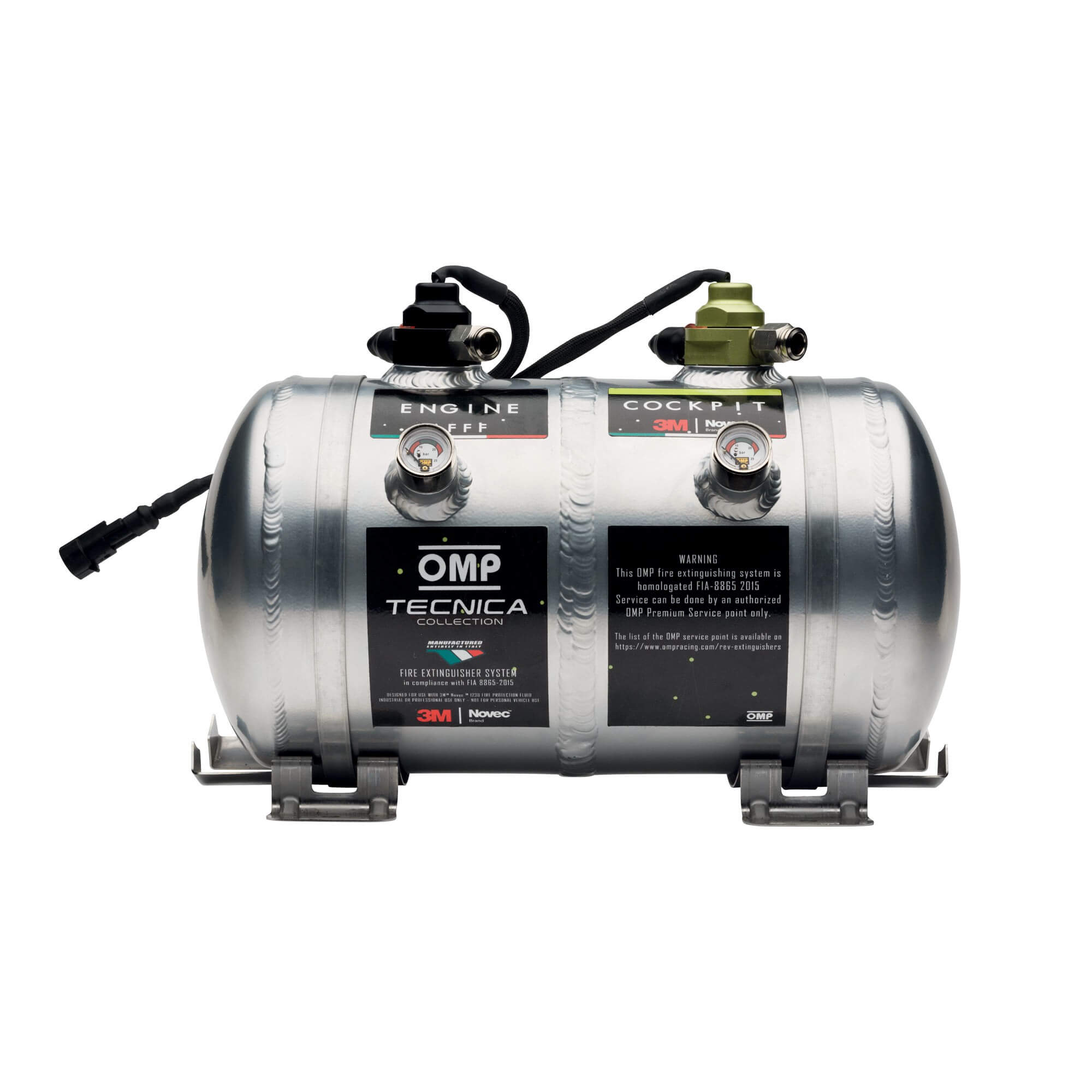
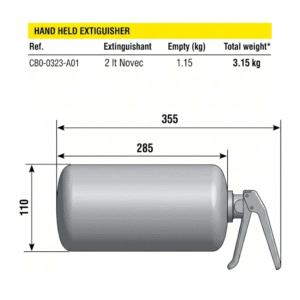
For the customer in these photos, the 2.8L was the right size. It clears the FIA mandatory minimums for closed cockpit saloons and rally cars, the bottle is small enough to fit in a Mini without eating the passenger footwell, and the price is on the friendlier side of the range. If we were specifying the same install for a customer ringing in today, we’d usually point them at the current OMP SST6 2kg steel bottle plumbed in system as the direct equivalent. That kit uses a clean gaseous agent (FK-5-1-12, the same family as 3M Novec 1230) rather than foam, total system weight is around 3.55kg, bottle is 210mm long by 130mm diameter, and it’s on FIA Technical List 16. If you want more capacity for a longer stage car, the OMP SST6 3kg is the same kit with a bigger bottle. If the car is electric or hybrid, that’s a different conversation, you want the OMP CESAL5 range and we’ll spec that with you.
Today's direct equivalent
The current OMP SST6 2kg steel bottle is the natural successor to the 2.8L kit fitted in this Mini. Same plumbed in format, smaller and lighter, FIA Technical List 16 approved, charged with a clean gaseous agent that leaves no residue on the wiring or trim.
Other plumbed in kits in the OMP range
Mounting and routing the kit in a Classic Mini
In a Classic Mini there are really three places the bottle can live, none of them brilliant. Passenger footwell is the most common, mounted forward against the bulkhead with the brackets bolted through (not screwed into) a captive plate behind the panel. Behind the passenger seat against the rear bulkhead works on cars with the back seat removed, but it eats space and pushes the centre of gravity rearward on a car that’s already nose heavy when the engine is in. Boot mounting looks tidy but the pipe run gets long and you can lose discharge time, plus you need a sealed bulkhead between the cabin and the bottle.
Whichever position the bottle ends up in, the rules are the same. The bottle needs hard mounted brackets that bolt through the floor or bulkhead to a load spreading plate on the other side, not self tappers into a single skin panel. The pipe run should be alloy or steel, not rubber, because rubber will burn through before it discharges. Nozzles want to be aimed at the two highest risk areas, one in the cabin pointed at the driver’s footwell where the steering column and fuse box live, and one in the engine bay aimed at the carburettor or fuel rail and the alternator. The two pull cables run to where a person, the driver inside and a marshal outside, can reach them without opening a door. On a Classic Mini we’d usually run the external pull through the A panel or just below the windscreen on the scuttle, somewhere a scrutineer can find without asking.
The customer’s install in these photos has the bottle mounted low and forward, the cables routed properly, and the nozzles pointed where they should be. If you’re doing your own and you’re not sure on a detail, drop us a photo of the mock up before you drill anything. We’d rather answer the question on a Tuesday afternoon than read about an MOT or scrutineering fail later.
Handheld alternatives for road and trackday cars
FIA Technical List 16, MSUK and what you actually need
The plumbed in kits we sell are FIA Technical List 16 approved, which is the list that covers Eco friendly fire suppression for circuit, rally and historic competition. If the car is going to be entered into anything sanctioned by MSUK (Motorsport UK, the old MSA), the Blue Book Q section is what you want to read for your discipline. The short version is that closed cockpit saloons, GT cars and rally cars want a plumbed in kit off Tech List 16, with the bottle in date, properly mounted, with the two pulls clearly labelled. Handheld extinguishers are still mandatory in addition to the plumbed system in most disciplines, not as a replacement.
For a road registered Classic Mini that isn’t being competed, you’re not strictly bound by the FIA list. You’re bound by common sense. The plumbed kits we sell aren’t more expensive than a half decent handheld plus the brackets and the regret of having to climb out of a burning car to use it. If the car is road only and you genuinely don’t want a plumbed system, we’ll point you at a Sparco or OMP Novec handheld in a quick release clip and a fire blanket, and tell you where to mount them. We don’t talk people out of safety kit, but we also don’t sell people kit they don’t need.
If you’re not sure which list your discipline is on, ring us. Garreth has been doing this since 2003 and Cameron has the Blue Book on the desk most weeks.
Servicing, refills and the date that catches people out
The bit most owners miss is the service date. Foam extinguishers (AFFF and EcoLife) need a service every two years to stay on the FIA list. Clean agent gas bottles (Novec 1230 and the FK-5-1-12 family) need a pressure test on the same kind of cycle. Every bottle leaves us with a tag on it showing the next service date. After that date, the bottle is still useful as a paperweight and probably still useful as an extinguisher, but it won’t pass scrutineering and your insurance position gets weaker if you ever need to argue it.
We arrange refill and service through the manufacturers’ UK service partners. Send us the bottle, we send it on, you get it back recharged, recertified and tagged. Lead time is usually two to four weeks depending on which brand, so the time to think about it is when you’re booking the car in for its winter rebuild, not the week before the first round.
Questions we get on these
What size bottle for a Classic Mini, 2kg or larger?
A 2kg steel bottle clears the regs for a Mini sized closed cockpit saloon. Most customers go 2kg on a road or track day Mini, 3kg if it’s a stage rally car or if the engine bay has aftermarket fuel system work that increases risk. Bigger isn’t always better, the bottle has to live somewhere and a 3kg in a Mini footwell is tight.
Foam or gas?
Foam (AFFF, EcoLife) gives longer discharge, leaves a residue you’ll need to clean off but does a better job on running fuel fires. Gas (Novec 1230, FK-5-1-12) discharges fast, leaves no residue, friendly to wiring and ECUs, but the discharge window is shorter. Most modern competition cars run gas. Historic and budget builds often run foam. We’ll talk it through with you.
Can I fit it myself?
Yes. The kits include everything you need and the instructions are clear. The bits to be careful with are the bracket mounting (use the spreading plate, not self tappers) and the pipe run (no rubber, no kinks). If you want a sanity check before you drill anything, photos to the showroom email.
How long is the pull cable?
Standard cables in the OMP and Sparco kits are around 1.5m, which is enough for a Classic Mini install if the bottle is in the passenger footwell. If the bottle ends up in the boot or behind the seat you may need an extension. We stock them.
Send us your build photos
Thanks again to the customer for sending these photos over, the Mini looks the part and the install is tidy. If you’ve got something in build and you want a hand spec’ing the fire suppression side, the easiest way is to call Garreth or Cameron on 0115 9893488, or send the build photos and a couple of lines about the car to the showroom email. We’ll work out which kit is right and which is overkill, and you’ll get the same advice we’d give a friend dropping in to the unit.
And if you’ve already fitted yours, send us the photos. We always enjoy seeing them, and they help the next person planning the same job.