Call Garreth, Cameron & CallyAI: 0115 9893488

Free UK shipping on orders over £100.00 FREE gifts on checkout

Useful Links
Your Account

Talk to us

Garreth, Cameron & CallyAI · Mon to Fri
Call 0115 989 3488Free advice on your build
Thanks, that’s with us. We reply the same working day.
That didn’t send. Please give us a call instead.

Useful Links

Quick Access

Want to chat?

Call Garreth, Cameron, CallyAI
Today On: 0115 9893488
Click Here For Our Contact Form
Buy gift vouchers today


Social
FacebookXInstagramTikTokYouTubePinterest

Open Face Or Full Face? What The Rules Say For Open And Closed Cars

The eye protection rule, quoted, with article numbers

A customer rang last week with a Caterham and a question he had already been given four answers to. Everyone kept telling him he needed a full face helmet, and he wanted to know whether that was a real rule or just what people say. Cameron gets a version of it most months, usually from someone who has already bought the helmet they did not want, so we went and read the rulebook properly instead of repeating the received wisdom.

Here is what we found. Motorsport UK does not ask for a full face helmet in a car, open or closed. It asks that your eyes are covered, by a visor or by goggles, unless you are in a closed vehicle. Garreth put it best when we showed him: the rule and the habit have drifted apart, and plenty of people are buying to the habit. This page is the rule, quoted, with the article numbers so you can check us.

  • Motorsport UK asks for a visor or goggles unless you are in a closed vehicle, Chapter 9 Article 11.1
  • Nothing in the car rules specifies open face or full face, only that your eyes are covered
  • Fit a hard top, even temporarily, and the rulebook defines the vehicle as closed
  • The one place a full face is mandatory is karting, Chapter 18 Article 3.3
  • FIA international open cockpit goes further again, to the ABP helmets
  • Track day organisers write their own rules and many are stricter than the NCR
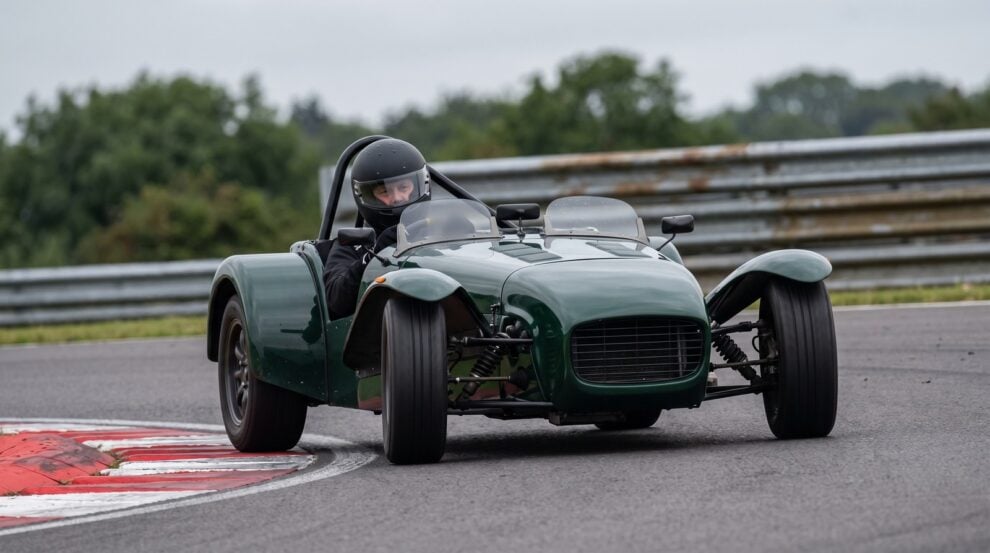
Open cockpit two seater club racing car mid corner on a British circuit, the driver wearing a plain full face crash helmet with the visor down
The pairing this page is about: no roof, no screen worth the name, and a full face helmet with the visor down. Worth knowing that the rulebook asks for the visor, not the chin bar, and that a set of goggles would satisfy it just as well.

The short answer

If you compete under a Motorsport UK permit, the requirement in an open car is eye protection, not a particular shape of helmet. An open face helmet with goggles meets it. A full face helmet with its visor down meets it. In a closed car with the windscreen in use, the rulebook does not ask for either.

That is the whole answer, and everything below is the evidence for it plus the places where the picture genuinely does change.

One rule in an open car, two ways to meet itjaw and chin left openOpen face plus gogglesEyes covered, so the rule is met.The rally and classic route.the chin bar is the only differenceFull face with its visorEyes covered, so the rule is met,and your jaw is inside the shell.Chapter 9 Article 11.1 asks for a visor or goggles. Both of these qualify.

Both of these satisfy Motorsport UK Chapter 9 Article 11.1 in an open car, because the rule is written about your eyes. Which one you want is then a question about the car, the discipline and what you like wearing, and that is what the rest of this page is for.

What Motorsport UK actually asks for

Chapter 9 of the National Competition Rules covers Competitor Personal Safety Equipment. Helmets are Articles 5 to 9, and eye protection is Article 11. Article 11.1 reads, word for word:

Chapter 9, Article 11.1Either a visor or goggles must be worn at all times during training Practice and Competition unless in a closed Vehicle. That is the article in full, word for word.

Read it again and notice what is missing. There is no mention of a full face helmet, an open face helmet, or a chin bar. The rule is about what is in front of your eyes. Article 11.5 adds that visors or goggles must be clear or neutral density filters, which rules out a dark tint for night stages, and Articles 11.2 and 11.3 name the recommended goggle and visor standards.

The helmet articles themselves are just as quiet on shape. Article 5 asks that the helmet carries an ASN approval sticker, is built to a currently specified standard, fits properly and is in serviceable condition. Article 7.1 then lists the standards accepted at all Motorsport UK national events. Face coverage is not mentioned anywhere in the list.

What counts as a closed vehicle

This is where the practical answer lives, and the rulebook is more precise than most people expect. The defined term is in the front of the book:

Definitions: Hard Top, quoted in fullAn accessory manufactured in rigid material used in place of or to replace collapsible fabric cockpit hoods on open Vehicles. When a hard top is fitted to a Vehicle (even temporarily) the Vehicle is then defined as closed and must have a rear window installed, unless otherwise stated in Official Documents.

So a convertible with the hard top on is a closed vehicle as far as the rules go, and the phrase even temporarily is doing real work there. That single definition answers the question people argue about most on the forums.

The individual discipline chapters then tighten it further, and they all tighten it the same way: they bring the windscreen into the test. Chapter 12 Race, Appendix 12, Article 3.1.b asks for goggles or a visor of splinter-proof material, unless you are in a closed vehicle with a full-size windscreen in use. The Autocross and Clubcross regulations use almost identical words. Elsewhere the technical regulations say that where a plastic screen is perforated for viewing, goggles or visors must be worn, and the Cross Country chapter ties it to a laminated glass or minimum 4mm plastic screen being fitted.

Put together, the pattern is consistent and worth remembering: it is the windscreen that decides, more than the roof. Take the screen out of a closed car for a track weekend and you are back to needing your eyes covered, roof or no roof.

What each configuration has to haveClosed carfull size screen in usescreen in placeNo separate eye kitthe screen does that jobConvertiblehard top fittedscreen in placehard top fittedCounts as closedthe rulebook says soOpen carscreen off or perforatedaeroscreen or noneVisor or goggleseither one satisfies itOpen single seaterFIA internationalnothing in front of youABP helmets at the topF1, F2, F3 and FE

The rulebook works down this ladder by how exposed you are, not by what shape your helmet is. The first two configurations count as closed, so no separate eye kit is asked for. The third needs your eyes covered by something. The fourth is the FIA international single seater case, where the top championships go further again.

The one place a full face is mandatory

There is exactly one rule in the National Competition Rules that makes a full face helmet compulsory, and it is not about cars at all. Chapter 18 covers karting, and Article 3.3 states plainly that full face helmets complete with visor are mandatory. We searched all 827 pages for both spellings to be sure of this before writing it down. The only other appearances of the phrase are notes about officials in safety and lead cars needing intercoms, which is a communications point and not a driver requirement.

Karting also has its own helmet standards list, and drivers under 15 along with Cadet and Bambino have a tighter list again with a 1550g weight limit. If you are buying for a kart driver, ring us and we will work from the karting list, because it is a different set of standards to the car one.

Where open cockpit really does change things

Everything above is Motorsport UK national competition. Go up to FIA international single seaters and the picture changes, because that is the one environment where a piece of debris can reach your head at closing speed with nothing in the way at all.

Two standards on the accepted list carry the letters ABP, which stands for advanced ballistic protection: FIA 8860-2018-ABP and FIA 8859-2024-ABP. The helmet makers describe ABP as extra reinforcement across the forehead where the shell meets the visor, tested against a projectile of around 225g arriving at 250km/h, and it was developed for open wheel and open cockpit racing. Formula 1 has required it since 2019, and F2, F3 and Formula E sit in the same bracket. Those figures are the makers’ own, quoted here as theirs.

That is the honest version of the idea that open cockpit needs more helmet. It is true, it is real engineering, and at the level where it is cars are doing speeds no club competitor is doing. It is not the reason a Caterham on a Motorsport UK sprint permit needs a full face, because that requirement does not exist.

Track days are a different contract

A track day is not a competition and it is not run under a Motorsport UK permit, so Chapter 9 does not apply. The organiser writes the rules and you agree to them when you book, which is why the answers you find online contradict each other so cheerfully. Plenty of organisers do require a full face helmet in an open or convertible car, and some ask for a fixed roof instead. Others accept an open face in anything.

There is no way to reason your way to the answer, because it is a policy and not a regulation. Read the organiser’s own page for the day you have booked, and if it is ambiguous, ring them. Cameron’s standing advice to anyone buying their first helmet for track days is to check that page before you order, because it is the one rule that can differ between two events at the same circuit in the same week.

The open face helmets we stock

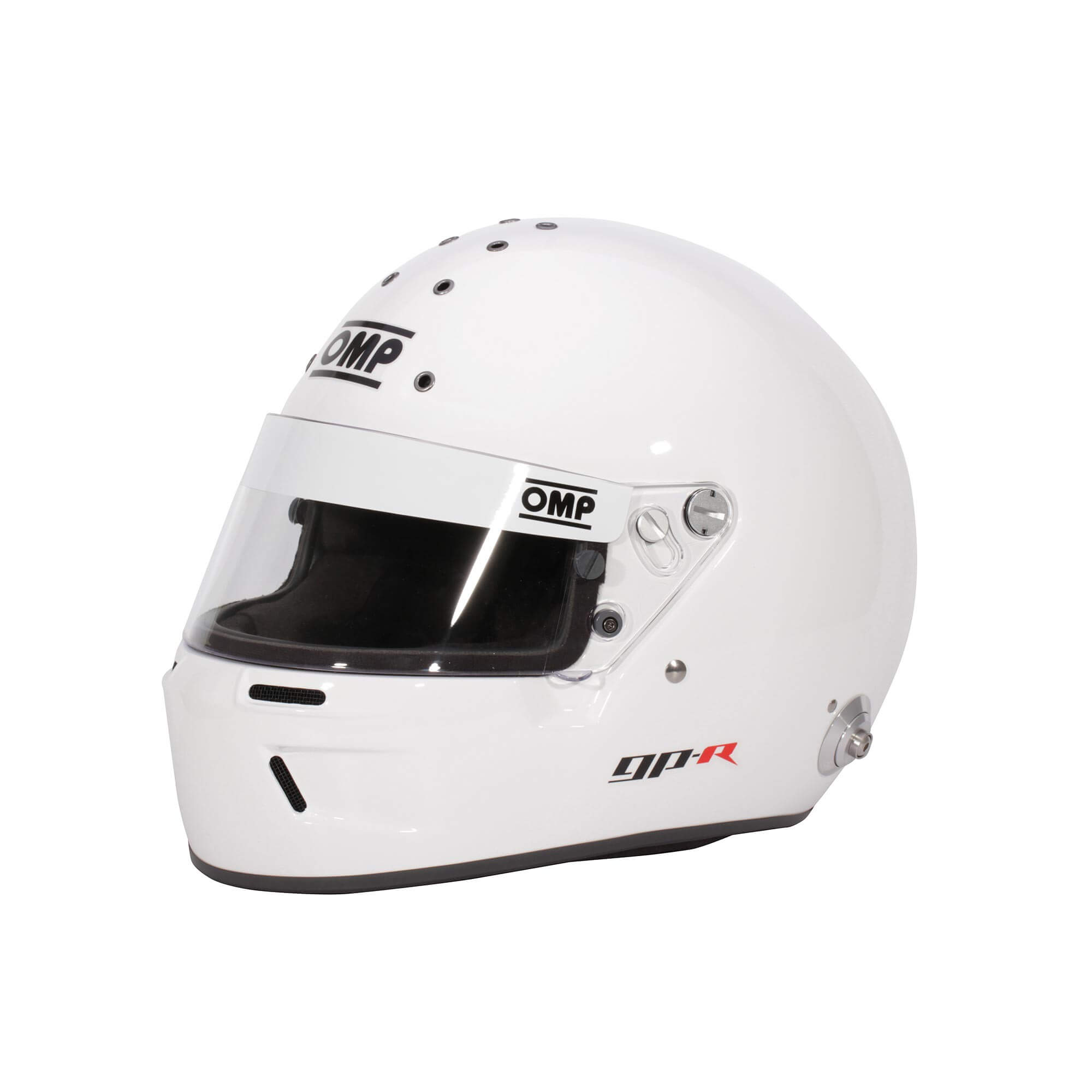
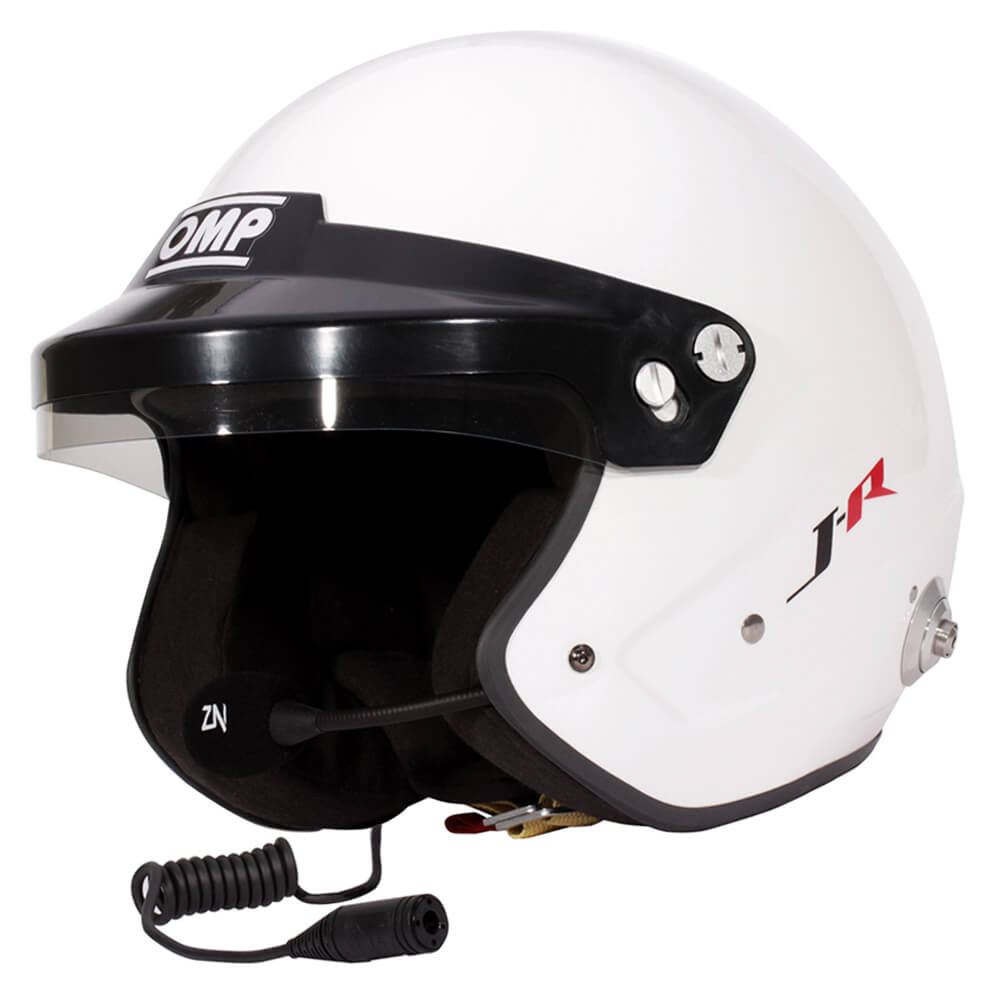
Open face suits rally crews who want to hear the car and their co-driver, classic competitors, anyone in a closed car with the screen in place, and drivers who simply find a full face claustrophobic on a long day. The examples below all carry current FIA approvals and start a shade over three hundred pounds.

  • From £258.00 Excl. VAT
    0% pay-in-3Try in-store
    Select options This product has multiple variants. The options may be chosen on the product page
  • From £276.00 Excl. VAT
    0% pay-in-3Klarna Ready
    Select options This product has multiple variants. The options may be chosen on the product page
  • From £280.00 Excl. VAT
    0% pay-in-3
    Select options This product has multiple variants. The options may be chosen on the product page
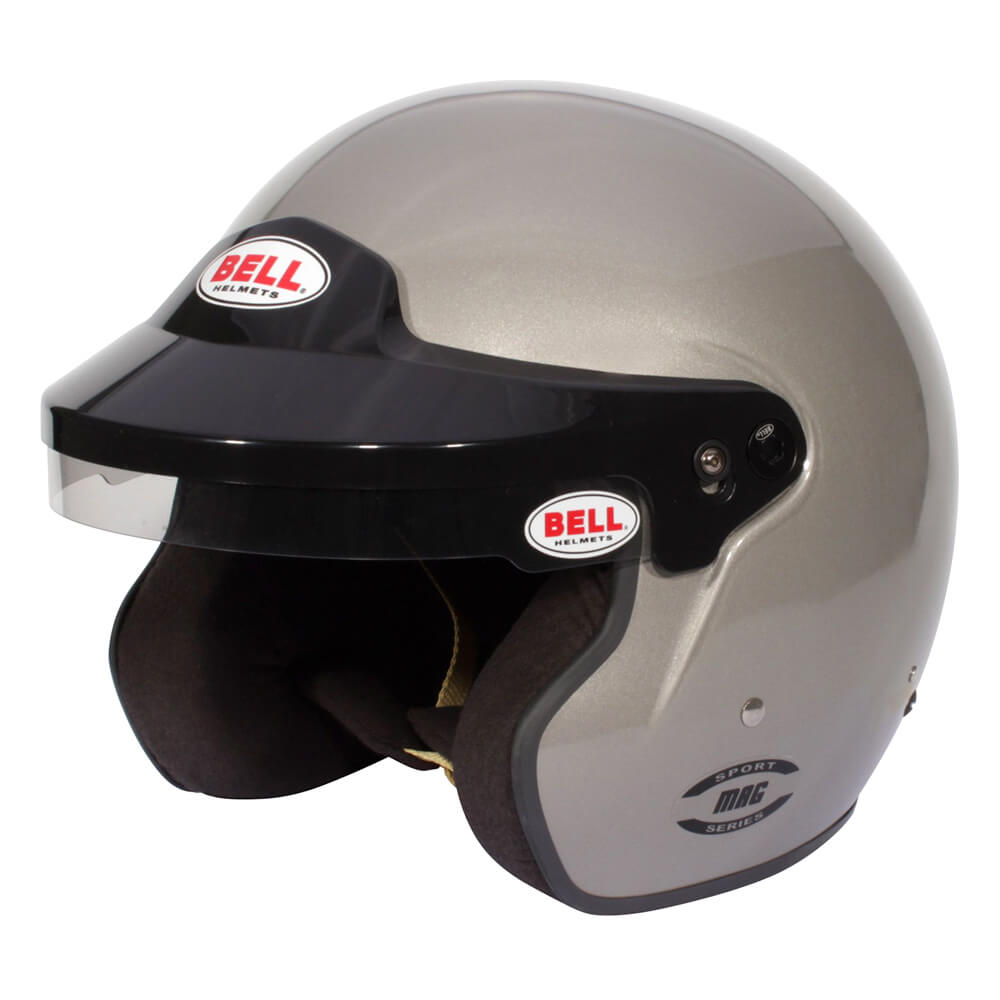
  • From £315.00
    Klarna Ready
    Select options This product has multiple variants. The options may be chosen on the product page
Those four are counter picks, not the shelf. We stock a good deal more across open face motorsport helmets, in several shell sizes and a long list of colours, plus a separate track day open face range that starts under ninety pounds. Ring us with your discipline and your hat size and we will shortlist from all of it.

The full face helmets we stock

Full face is the right buy if your discipline or organiser asks for one, if you want your jaw inside the shell, or if you are running an open car and would rather have the protection whatever the rulebook permits. It is also the shape most FHR devices are designed around, so if you are running a HANS the choice is usually made for you.

  • From £337.00 Excl. VAT
    Klarna ReadyTry in-store
    Select options This product has multiple variants. The options may be chosen on the product page
  • From £338.00 Excl. VAT
    Klarna ReadyTry in-store
    Select options This product has multiple variants. The options may be chosen on the product page
  • From £415.00 Excl. VAT
    Klarna Ready
    Select options This product has multiple variants. The options may be chosen on the product page
  • From £519.00 Excl. VAT
    Klarna Ready
    Select options This product has multiple variants. The options may be chosen on the product page

Four examples again, chosen to span the money. The full range sits in full face motorsport helmets and the cheaper track day full face range, and there are helmet and HANS bundles if you are buying both together. Our helmet buying guide walks the whole range by budget.

Which approval you need for what

The shape of the helmet and the approval it carries are two separate questions, and mixing them up is the other half of the confusion. A helmet is accepted for Motorsport UK competition because of the standard on its label, not because of its shape.

Where you are goingWhat the helmet needsEye protection
Motorsport UK competition, closed car with the screen in useA helmet on the Ch.9 Art.7.1 list with an ASN stickerNot separately required
Motorsport UK competition, open car or screen removedA helmet on the Ch.9 Art.7.1 list with an ASN stickerVisor or goggles, clear or neutral
Motorsport UK kartingThe karting standards list, and a full face complete with visorThe visor, per Ch.18 Art.3.3
FIA international open cockpitThe top championships specify the ABP standardsThe visor
Track dayWhatever the organiser specifies, often ECE 22-06 or an FIA standardPer the organiser

The accepted list for all Motorsport UK national events at 2026 Edition 3 is FIA 8860-2010, 8859-2015, 8860-2018, 8860-2018-ABP, 8859-2024, 8859-2024-ABP, and Snell SA2015, SA2020 and SA2025. Of those, SA2015 is the one carrying a date: it is shown as not valid after 31 December 2026. Our track day helmets carry ECE 22-06, which is the right approval for organiser run days. Standards get reviewed and superseded, so check the current NCR before an event and ring us if you want a second pair of eyes on a label.

Common questions

Under Motorsport UK national competition rules, yes, provided your eyes are covered by a visor or goggles and the helmet itself is on the Chapter 9 Article 7.1 list with an ASN sticker. Your championship or club can always add its own requirements on top, so read the supplementary regulations for your series as well.

The rulebook defines a vehicle with a hard top fitted as closed, and says so even where the top is fitted temporarily. A fabric hood is not a hard top. The discipline chapters also bring the windscreen into it, so a closed car with a full size screen in use is the configuration that needs no separate eye protection.

Because at the top of the sport that is close to true, and because many track day organisers require it as their own policy. Both of those are real. Neither of them is the Motorsport UK national competition rule, which is about eye protection.

Not at the moment, so if the goggles route is the one you want, buy those elsewhere and come to us for the helmet. We would rather tell you that than sell you a full face you did not need. Ring us and we will make sure the helmet you choose suits goggles properly.

For Motorsport UK competition the helmet has to be on the Chapter 9 list, which is FIA and Snell SA motorsport standards. Track day organisers set their own policy and some accept ECE road helmets, which is what our track day range carries. Check the day you have booked.

The current list shows SA2015 as not valid after 31 December 2026, which makes it the one standard on the list with a date attached. Everything else on the Article 7.1 list is open ended for now. Standards do get superseded, so check the NCR of the day before a big event.

💬
Before you buy the wrong shapeTell us the car, the discipline and whether you wear an FHR

Those three answers settle the helmet in about a minute, and they stop people buying a full face for a rule that does not exist or an open face for an event that will not take it. Cameron will check the standards list against your series and Garreth will tell you honestly where the money stops making a difference.

If you want the standards themselves explained, our standards guide covers what each approval means and when yours runs out. For the design argument about why an open cockpit car suits a full face shell, the Bell HP77 and HP10 piece makes it properly. And the sizing guide is the one to read before you order anything. Ring 0115 9893488 with your car and your series and we will get the right hat on your head first time.

📞
Not sure which device fits?Tell us the car, the belts and the helmet

Give Garreth and Cameron those three facts and they will confirm the right device and every bit of helmet hardware before you spend anything. If the answer is the Hybrid S, that is the same call.

What our customers say

Free UK Shipping

On all orders above £100

In-Store Shopping

Try before you buy

Easy Delivery Tracking

Aftership Tracking Updates