
Servicing And Rebuilding A Set Of BC Racing Coilovers
A BC Racing coilover is a serviceable, rebuildable unit. Parts of it wear, and most of what changes on a strut over time shows up somewhere you can see if you know where to look: the seal at the top of the damper body, the threaded section the ride height collar runs on, and the mount where the strut meets the chassis. Checking a strut every so often catches most of this early, while it’s still a seal kit and a small job.
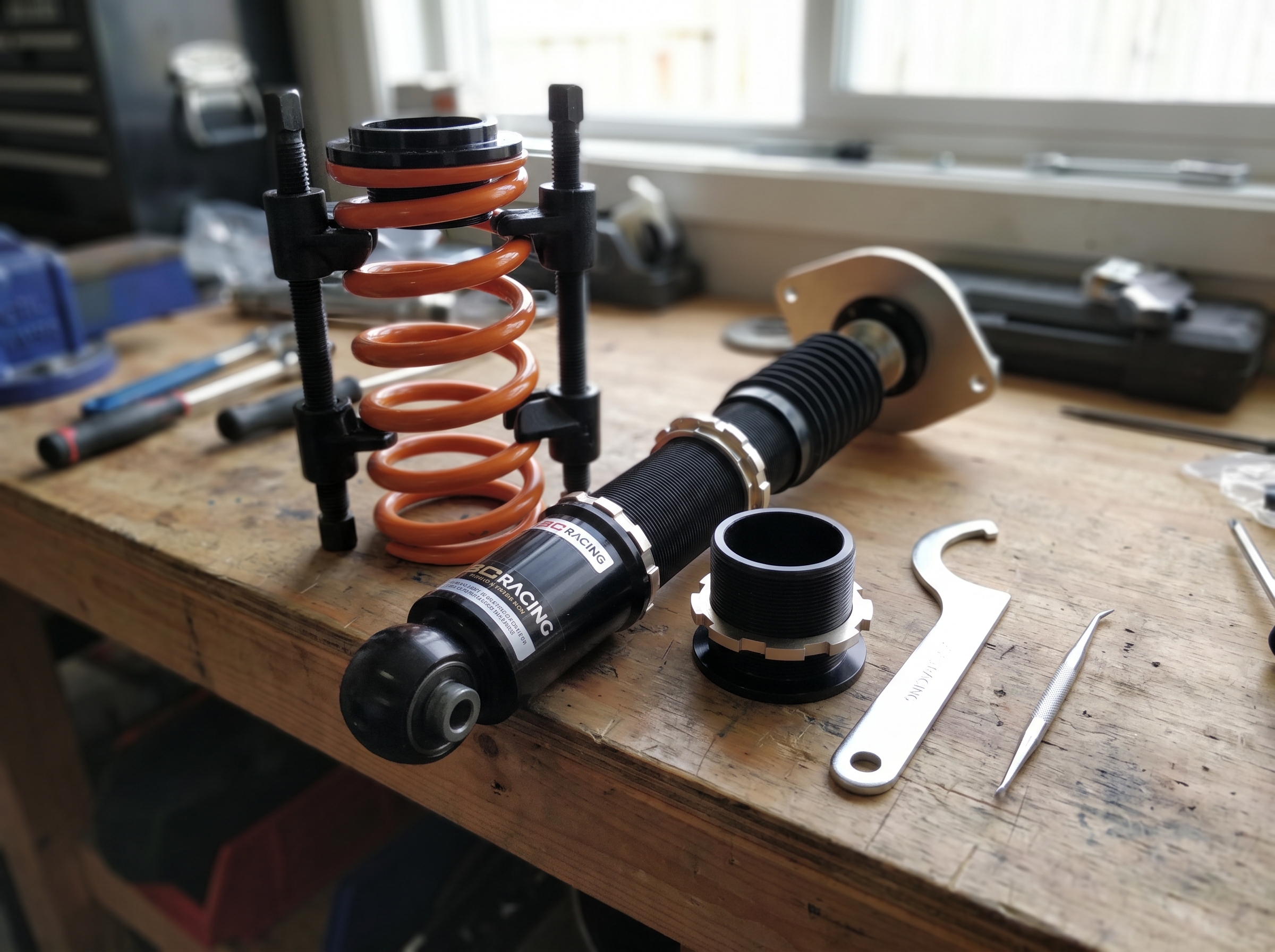
Oil weep and seal wear on the damper body
Each BC Racing damper is a sealed tube with a shaft running through it, and the oil inside is what the clicker adjustment is actually controlling. The seal where that shaft passes through the top of the body is the point most likely to show wear first. A light film of oil around the shaft, or a damp line running down the body, is oil weep, and it means the seal is starting to let go. It doesn’t happen overnight, and a small amount early on isn’t an emergency, but it’s worth checking for on a strut that’s been on the car a while, particularly one that’s covered a lot of miles or seen a lot of track time.
Once a seal is weeping properly, the damper loses oil and loses damping control along with it. That often shows up as the ride feeling looser or less controlled than it used to, before there’s an obvious puddle under the car.
Corrosion on the threaded body and the height adjustment
The lower part of a coilover strut is threaded so the collar that sets ride height can wind up and down it. That thread is exposed to whatever the road throws at it, road salt included, and if it isn’t kept clean it corrodes. A corroded thread rarely fails outright. It gets harder to turn over time, and eventually the collar can seize solid in one position. At that point you’ve lost the ability to adjust height at all, purely down to corrosion on the outside of the strut, and the damper underneath it can still be perfectly sound.
Keeping the thread clean and running a bit of grease along it when the car’s up on a ramp is the difference between a collar that still turns freely after a few years and one that needs freeing off, or in a bad case, one that’s corroded to the point it won’t hold the collar securely and the strut needs replacing on that basis alone.
Spring seat and top mount wear
The top mount is what bolts the strut into the chassis, and on most of the range it’s also where the spring seat and a bearing sit. That bearing is what lets the strut turn as the wheel steers. On a camber plate there’s more movement built into the mount by design, since the plate is meant to let the top of the strut travel across a slot. Both wear with age and use. A worn bearing shows up as noise or a notchy feel through the steering, and a worn spring seat can let the spring sit slightly off its intended line instead of square in the seat.
It’s a slower wear item than the seal or the thread, but it’s worth checking at the same time as the rest of the strut, especially on a car that’s covered a lot of miles on the same set of mounts.
When a rebuild makes sense, and when it doesn't
BC Racing kits are built to be rebuilt rather than thrown away the first time a seal goes. If the damper body is straight and the strut hasn’t been physically damaged, a seal and oil rebuild brings a tired damper back to how it performed when it was new, and it’s the cheaper, quicker route in most cases.
A straight replacement makes more sense where the damage is to the body itself: a bent shaft, a body that’s dented or corroded to the point a new seal won’t seal against it properly, or a thread that’s corroded past holding the collar. In those cases no amount of rebuilding gets the strut back to a state that seals and adjusts correctly, and the strut needs to come off the car.
How often to check, road use against track use
A road car doesn’t need the strut off the car regularly. A visual check at each service, looking for weep at the seal and making sure the height collar still turns, catches most of what’s likely to go wrong before it becomes a bigger job. A car that only sees the road and normal mileage will go a long time between anything more than that.
Track use changes the picture. The damper works harder on a single lap than it does across a lot of road driving, so seals and oil age faster, and the threaded body picks up more grit from being run lower and closer to the track surface. A car doing regular track days is worth checking after every event, not because something’s likely to be wrong every time, but because catching a seal starting to weep before the next session is easier than dealing with it mid-way through a track day.
Final thoughts
None of this needs specialist tools to check, just eyes on the strut and a hand on the collar every so often. If a strut on your car is weeping oil, seized on the thread, or has developed play in the top mount, that’s a rebuild conversation worth having with us before it turns into a full strut replacement. The BMW guide and the series guide both go into what’s actually fitted across different ranges, if you want to see how the parts that wear compare between BR, ER and the rest of the range.
Cameron, GSM Performance