A lighter suit helps, but it is not the whole answer
Fabric construction, fit and stretch all affect comfort. So do the underwear you wear, cockpit airflow, hydration, and how long you stand around fully dressed before the session starts.
An earlier version of this page compared two suits using fabric weights and layer counts that we could not stand behind. Sparco describe the Competition as a two-layer construction, not the three-layer sandwich that table claimed. The figures are gone. The advice that survives is below, and it starts cheaper than a suit.
Wear every item the event requires and use the suit as supplied. Cutting linings, rolling cuffs or skipping mandatory underwear reduces protection and can breach the rules, and it is the thing people do first when they are uncomfortable.
Use current specifications, not an old model table
Manufacturers revise products, fabrics, colours and size runs, and they do it without renaming the suit. A spec table written two seasons ago is not evidence about the garment in the box today, and we have had to correct our own page for exactly that reason.
Two suits can both meet FIA 8856-2018 and feel completely different, because the standard sets a minimum for heat transmission and flame resistance rather than describing a construction. Layer count on its own predicts almost nothing: a well-made lightweight two-layer suit can be more comfortable than a heavier three-layer one.
So compare the current technical sheet, and then compare the suits themselves with your hands and by sitting in them. That is a more reliable test than any number either of us can quote.
Change the base layer before you change the suit
A fifth of the price of a new suit, and for most people it is the bigger difference.
This is the advice we give across the counter more than any other, and it did not survive either version of this page. If you are overheating, the layer against your skin is doing more of the work than the outer suit is, and it is far cheaper to change.
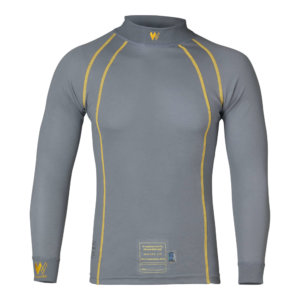
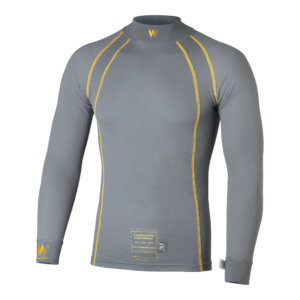
Ordinary flame-resistant underwear traps sweat against you. Walero is built specifically around the problem: the yarn carries phase-change microcapsules which the manufacturer says absorb excess heat and release it back when you cool, holding you near 37 degrees. We are quoting Walero on the mechanism rather than testing it ourselves, but the drivers who buy it come back for the rest of the range, which tells you something.
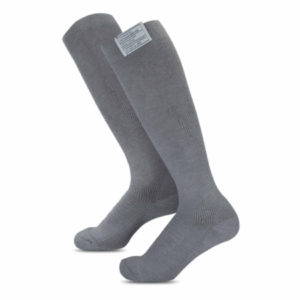
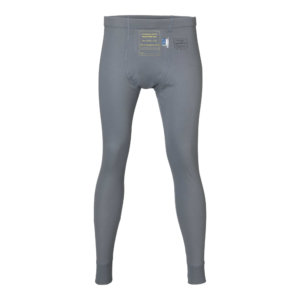
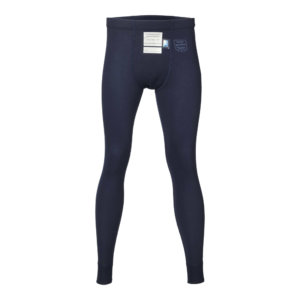
The long sleeve top and long johns carry FIA 8856-2000 and SFI 3.3, and the 2.0 socks are on the newer FIA 8856-2018. Motorsport UK accepts both standards, so check your own championship regulations if you compete internationally. There is more on which underwear an event actually requires in our underwear rules guide.
-
From £67.20 Incl. VATFrom £56.00 Excl. VAT Select options This product has multiple variants. The options may be chosen on the product page
-
From £100.80 Incl. VATFrom £84.00 Excl. VAT Select options This product has multiple variants. The options may be chosen on the product page
-
From £109.44 Incl. VATFrom £91.20 Excl. VAT Select options This product has multiple variants. The options may be chosen on the product page
The ladder we stock, and what the money buys
All FIA 8856-2018. What separates them is weight, cut and how much they let you move.
| Suit | Approval | What you are paying for |
|---|---|---|
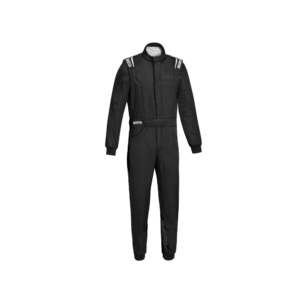
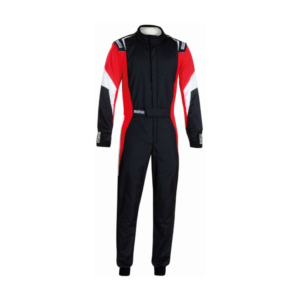
| Sparco Sprint Advanced | FIA 8856-2018 | The entry point. Two layers, generous cut, widest colour choice |
| OMP First Evo | FIA 8856-2018 | A different cut. Worth trying if the Sparco pulls across the shoulders |
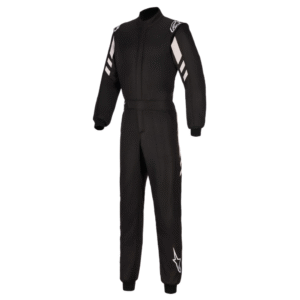
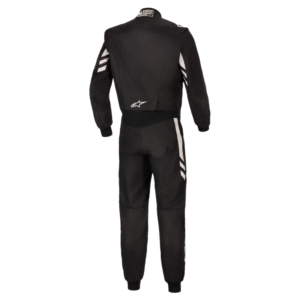
| Alpinestars GP Race V3 | FIA 8856-2018 | Lighter feel, more stretch through the back and underarms |
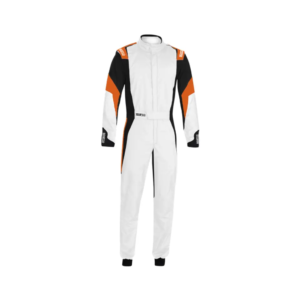
| Sparco CompetitionTHE UPGRADE | FIA 8856-2018 | Lightweight Meta and Para Aramid, ultralight seams, floating sleeves, soft knitted cuffs |
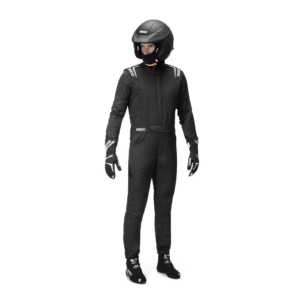
The Competition is the one to look at if the suit genuinely is the problem. Sparco describe it as a two-layer Meta and Para Aramid built as a compromise between weight and breathability, with ultra-lightweight seams, floating sleeves and pre-formed arms, and an elasticated cuff with no seam in it, which sits better under a glove. The quilting is what moves air through it.
What we will not tell you is that it is a fixed percentage cooler than something else, because we cannot measure that and neither can anyone quoting a figure at you. What we can say is that lighter, better-cut suits reduce the effort of moving in the car, and less effort is less heat generated. That part is real.
If your current suit is a Sprint or a Sprint Advanced and it feels hot on a fifteen-minute club run, it is doing its job and the suit is not your problem. If you are doing hour stints in July, the upgrade is worth the money.
-
From £392.40 Incl. VATFrom £327.00 Excl. VAT Select options This product has multiple variants. The options may be chosen on the product page
-
From £507.60 Incl. VATFrom £423.00 Excl. VAT Select options This product has multiple variants. The options may be chosen on the product page
-
From £547.20 Incl. VATFrom £456.00 Excl. VAT Select options This product has multiple variants. The options may be chosen on the product page
-
From £576.00 Incl. VATFrom £480.00 Excl. VAT Select options This product has multiple variants. The options may be chosen on the product page
Freedom of movement reduces wasted effort
Try suits wearing the underwear you actually intend to use, and try them sitting down in a driving posture rather than standing at a mirror. Reach for a wheel, reach for the lever, reach for the belts.
What you are looking for: does it pull across the shoulders when your arms come up, is the crotch length right so it is not dragging you down in the seat, does the waist bunch under a lap belt, and does the cuff overlap your glove properly. Stretch panels and floating sleeves only do anything when the size and the body length are right underneath them, so a badly sized premium suit is worse than a well sized cheap one.
Bring your gloves and your boots. The cuff and ankle overlaps are the two things nobody checks in the shop and everybody notices in the car.
Control the heat before it reaches the suit
Most of the heat you are fighting was not generated by the suit. Hydrate before the session rather than during it, get shade over the car and over yourself in the assembly area, and do not put the outer suit on until you need to. Standing around fully dressed for forty minutes in a paddock is the single most avoidable heat load in the sport.
Then talk to whoever built the car about cockpit ventilation. A NACA duct feeding the driver, a scoop, or simply the fact that the heater matrix is still plumbed in and radiating at your feet, all of those move the needle more than a suit change.
Session timing matters too where you have any choice about it. And if you or anyone in your team shows symptoms of heat illness, stop and get qualified medical help. That is not a kit question.
A clean, dry suit performs better and feels better
Follow the care label on the garment you own, not a general rule. Air and dry the suit after every use rather than leaving it in a bag, then look over the seams, the cuffs, the closure and the fabric while it is hanging.
Do not use fabric softener, stain treatments or heat unless the maker permits them. Softener in particular coats the fibres and can affect how the fabric behaves, and over-washing is specifically flagged in the rules as grounds for rejecting a suit at scrutineering.
If a suit gets contaminated with fuel or chemicals, stop and ask the manufacturer before washing it. That is one where guessing can quietly ruin an expensive garment.
Race suit heat questions
What is the cheapest thing I can do about overheating?▾
Change the base layer and manage your hydration and time spent dressed. Temperature-regulating underwear costs a fraction of a suit and for most drivers it makes the bigger difference.
Is a three-layer suit always cooler than a two-layer suit?▾
No. Layer count on its own predicts very little. Sparco build the Competition, which is the lighter and more breathable of our Sparco pair, as a two-layer construction.
Can I skip the underwear on a hot day?▾
Follow the event rules. Where FIA underwear is required it is part of the protective system. Where it is only recommended, wearing something built to regulate temperature beats wearing nothing under a suit.
Will a more expensive suit stop me overheating?▾
It may improve weight, movement and airflow, which reduces the effort of driving and therefore the heat you generate. It will not fix a hot cockpit, dehydration, or standing in the sun in full kit.
How should I compare two suits?▾
Current manufacturer specifications, then try them seated with your intended underwear and driving position. Ignore any weight or layer figures quoted in an article, including the ones this page used to carry.
Is the Walero approval good enough?▾
The top and long johns are FIA 8856-2000 and the 2.0 socks are 8856-2018. Motorsport UK accepts both. Check your championship regulations if you compete internationally, since some events specify 8856-2018.
My suit is only a couple of years old, should I replace it?▾
Probably not for heat alone. Try the base layer and the cockpit first. If you are doing long stints in summer heat and the suit is a heavy entry-level one, then the upgrade is justified.
Compare movement as well as weight
Tell us the event, the stint length, the cockpit and exactly where your current suit bothers you. We will narrow it down properly rather than inventing a universally coolest model, and we will tell you if the base layer is the cheaper fix.
Browse race suitsBrowse racing underwearBook the showroom