Spring Rates On BC Racing Coilovers, And What To Ask For When You Order
Every BC Racing kit on the site has a spring rate built into it, front and rear, and you will not find the number on our listing page. It is set by BC to match that specific fitment and it is on their build sheet, not ours. Most buyers never need it. Some do, because they are going lower than standard, adding power, or setting the car up for track days, and for that you want to know what you are starting from before the box arrives, not after.
What the rate number actually tells you
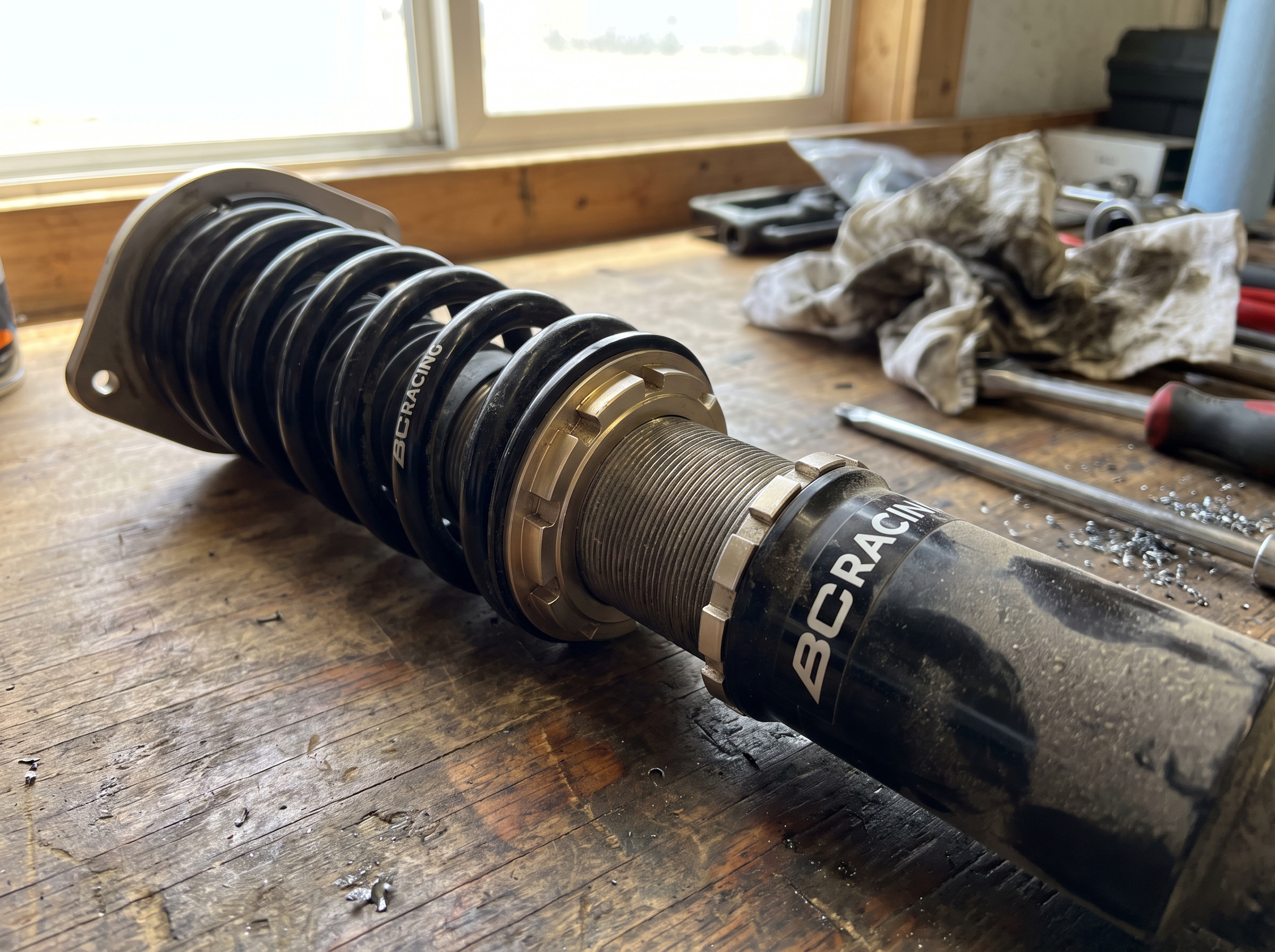
A spring rate is usually given in kg/mm: the force needed to compress the spring by one millimetre. A higher number is a stiffer spring. It moves less for a given bump, so more of what the road does gets passed straight into the chassis instead of being soaked up by the spring itself. That is what keeps a car flatter under braking and through a fast corner, and it is also why a stiffer spring rides harder over a pothole.
Spring rate is not the same thing as the clicks on a BR or ZX damper. The clicks adjust how the damper controls the spring’s movement, how quickly it lets the spring compress and rebound. The spring rate is fixed once it is fitted. You can run the damper soft or firm on a given spring, but you cannot dial the spring itself softer or stiffer without physically swapping it.
Front and rear rates, and why they rarely match
Front and rear rates are set separately because the weight over each axle is never the same, and neither is what happens to that weight under load. A front-wheel-drive hatchback usually carries more static weight over the front axle, so the front spring is doing more work at rest before you have even turned a corner. A rear or all-wheel-drive car spreads that differently again. Our own range makes the point without needing a single number: the BMW range alone runs the same BR series across a front-heavy X3 on all-wheel drive and a rear-drive M5, and BC do not spec those two kits the same way, because the car underneath them is not the same either.
There is no fixed rule that the rear is always the softer end or the front always the stiffer one. It comes down to what sits over each axle, how the car transfers weight under braking and cornering, and what BC has settled on for that fitment. If you want the actual figures for your car, ask before you order and we will get them from BC instead of guessing.
Stock rate or a custom rate, what to tell us when you order
Every listing ships at BC’s standard rate for that fitment, set up for road and fast road use on a car in roughly standard trim. That covers most orders and most people never think about it again once the kit is on.
If you are building for track days, running noticeably more power than standard, or the car is carrying weight BC would not expect for that model, tell us before the order goes in, not after. The useful information is the intended use, roughly how the weight sits on the car, and anything about the setup that is not standard for that fitment. We pass that to BC and they can spec the kit with a different rate at the point of build. Asking afterwards means pulling the kit apart and sourcing new springs separately, which costs more and takes longer than getting it right at the order stage.
Ride height and spring rate are two different adjustments
Winding the lower locking collar up or down changes where the spring perch sits on the strut body, which changes ride height. It does not touch the spring rate. The spring fitted to the car is the same spring whether the car is sitting at standard height or dropped.
Where the two interact is at the extremes. Drop a car a long way on a spring rate that was never meant to go that low and you can run the spring close to coil bind, where the coils stack solid against each other before the suspension runs out of travel, or you can run out of usable bump travel before the damper does. That is a setup problem rather than a spring rate problem on its own, and it is exactly the sort of thing worth flagging when you order if you already know you are going low.
Final thoughts
If none of this changes what you are ordering, that is fine, the stock rate is there because it works for most cars and most uses. If you know you are outside that, the BMW guide shows how this plays out fitment by fitment on one range, and the series guide covers what actually changes between BR, RM and the rest of the BC range beyond the spring itself. Either way, ask before the kit is built, not after it lands.
Cameron, GSM Performance