Three CMR Kart Helmets, One Approval: What Does The Extra Money Buy?
Three new junior kart helmets landed with us this year. Two Bell KC7-CMR special editions, one in Lewis Hamilton colours and one in Lando Norris colours, and the Sparco Stealth CMR.
All three carry exactly the same approval. Snell-FIA CMR-2016, the standard written for drivers of fifteen and under. The cheapest of them is £258 and the dearest is £737.
That price spread is the question parents put to us more than any other, usually phrased as some version of “is the expensive one safer”. It is a fair question, and the answer is more interesting than yes or no.
What the CMR approval tells you
CMR-2016 is a pass or fail test. A helmet either meets it or it does not. There is no bronze, silver and gold version of it, and no extra credit for clearing it by a margin.
So when three helmets all say Snell-FIA CMR-2016, that line tells you they have cleared the same bar. It does not tell you which is better, because it is not measuring that.
Practically: if your club or championship requires CMR, any of these three gets your child on the grid. The scrutineer is checking the sticker inside the shell and all three have it. Everything after that is fit, weight, running costs, and how much your child cares what the helmet looks like, which at that age is not nothing.
Worth clearing up while we are here because it comes up every time. None of the three has FHR posts, and that is by design. Karts do not run head restraints, so posts would be dead weight. If you need a lid with posts, what you actually need is a car helmet.
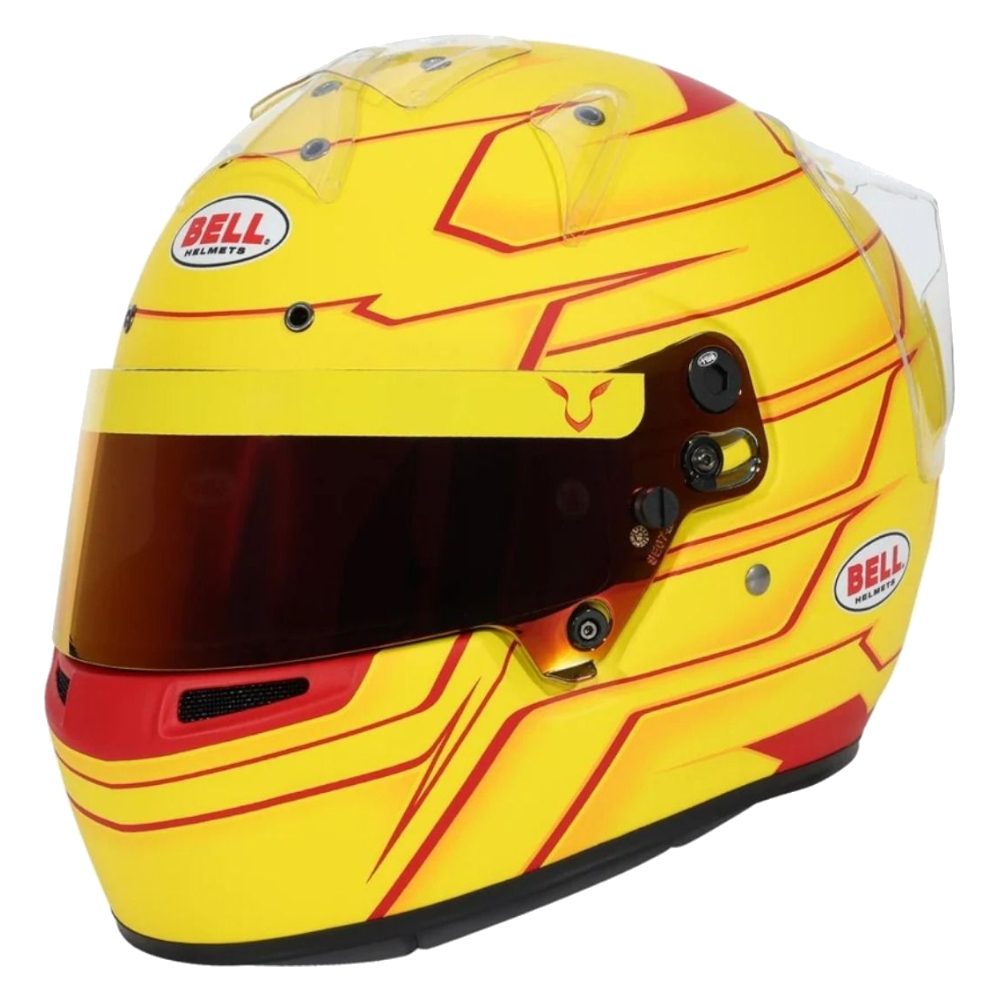
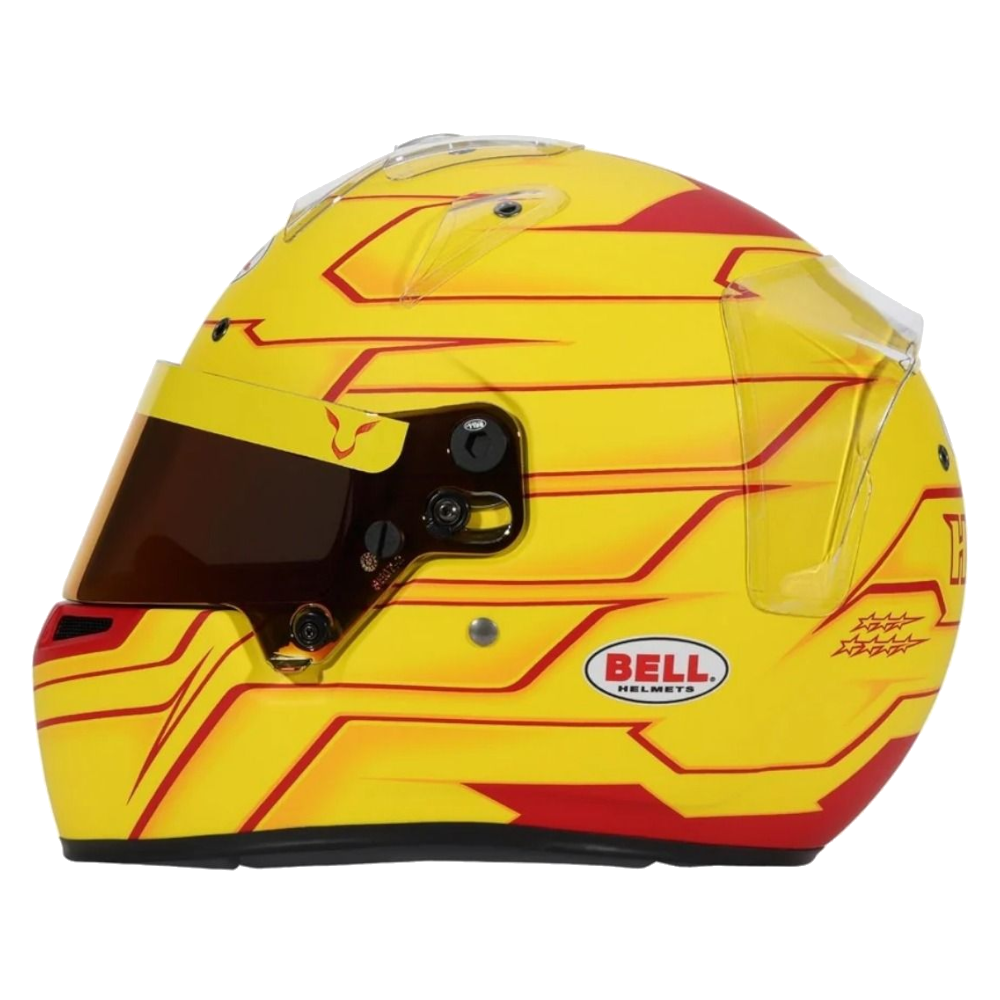
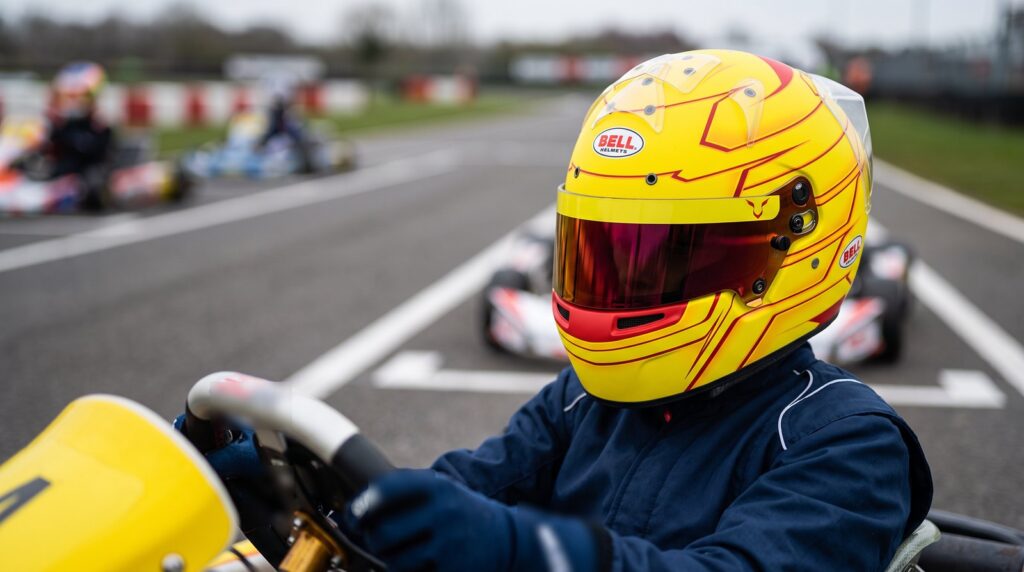
Bell KC7-CMR, Lewis Hamilton 2026
The KC7-CMR shares its shell design with Bell’s HP7, which is a proper top level car helmet, and it is hand laid in a carbon, Kevlar and fibreglass mix. Pick one up next to a budget kart lid and you notice it. The Bell has that dense, even feel a good composite shell has, and the difference is obvious with one in each hand.
Bell publishes weights, which we appreciate because most manufacturers do not. Sizes 54 to 56 cm come in at 1185 g and 57 to 59 cm at 1230 g, both plus or minus three per cent. On a twelve year old’s neck, a hundred grams is a real number over a thirty minute session.
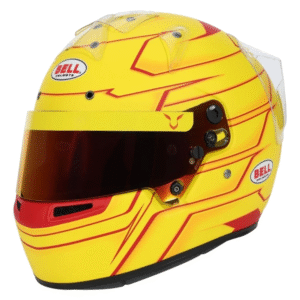
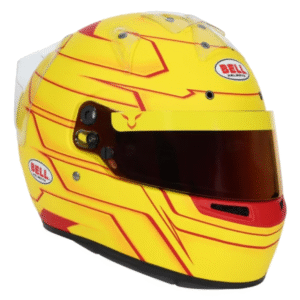
The paint follows Hamilton’s F1 helmet, yellow with red detailing and his signature elements, and it is done in Bell’s own paint shop. It comes with a 2 mm multi-layer red clear anti-fog visor, the aero parts including the rear spoiler, and a Bell bag. Bell puts that accessory pack at over £250 and having priced those parts separately, that is not marketing nonsense.
- Snell-FIA CMR-2016 approved
- Hand laid carbon, Kevlar and fibreglass composite shell
- Sizes 54 to 59 cm in 1 cm steps
- Fourteen intake and extraction channels
- From £737
-
£737.00 (No Tax)PayPal CreditKlarna ReadySelect options This product has multiple variants. The options may be chosen on the product page
-
£737.00 (No Tax)PayPal CreditKlarna ReadySelect options This product has multiple variants. The options may be chosen on the product page
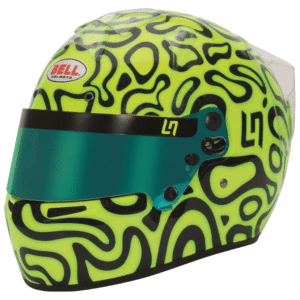
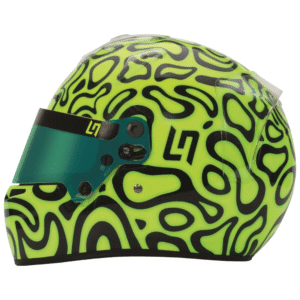
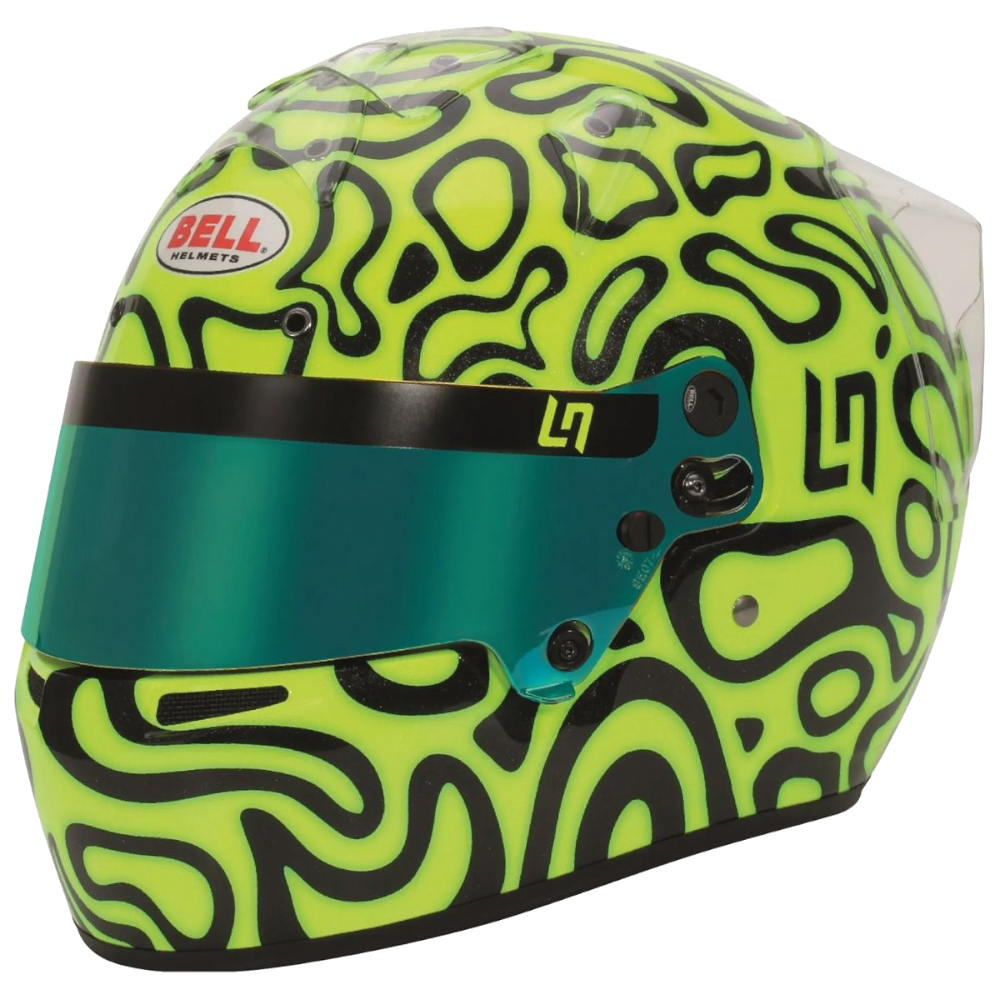
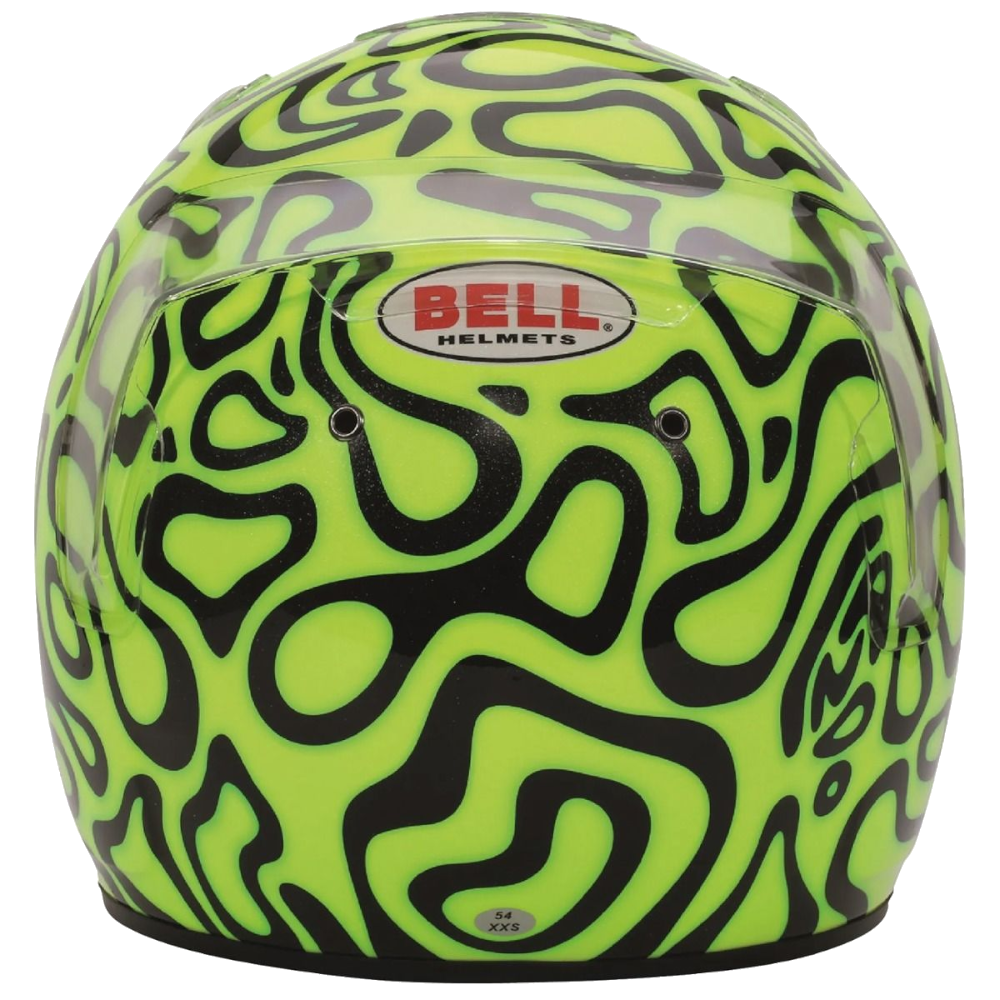
Bell KC7-CMR, Lando Norris 2026
Mechanically this is the same helmet as the Hamilton. Same shell, same weights, same ventilation, same accessory pack, same price. What changes is the paint and the visor tint.
The Norris is fluro yellow and black and ships with a 2 mm multi-layer green light smoke visor in place of the red clear one. Worth knowing before you order. Light smoke is lovely on a bright day and mildly annoying on a grey November afternoon at a UK circuit, so budget for a clear spare if you race through the winter.
One more check before you order: the design follows Norris’s 2024 McLaren helmet. If your child has a particular season in mind, check that first. If they are buying it because it looks good, which is the more common reason, it does.
- Snell-FIA CMR-2016 approved
- Identical shell and construction to the Hamilton edition
- 1185 g at 54 to 56 cm, 1230 g at 57 to 59 cm
- Green light smoke visor fitted as standard
- From £737
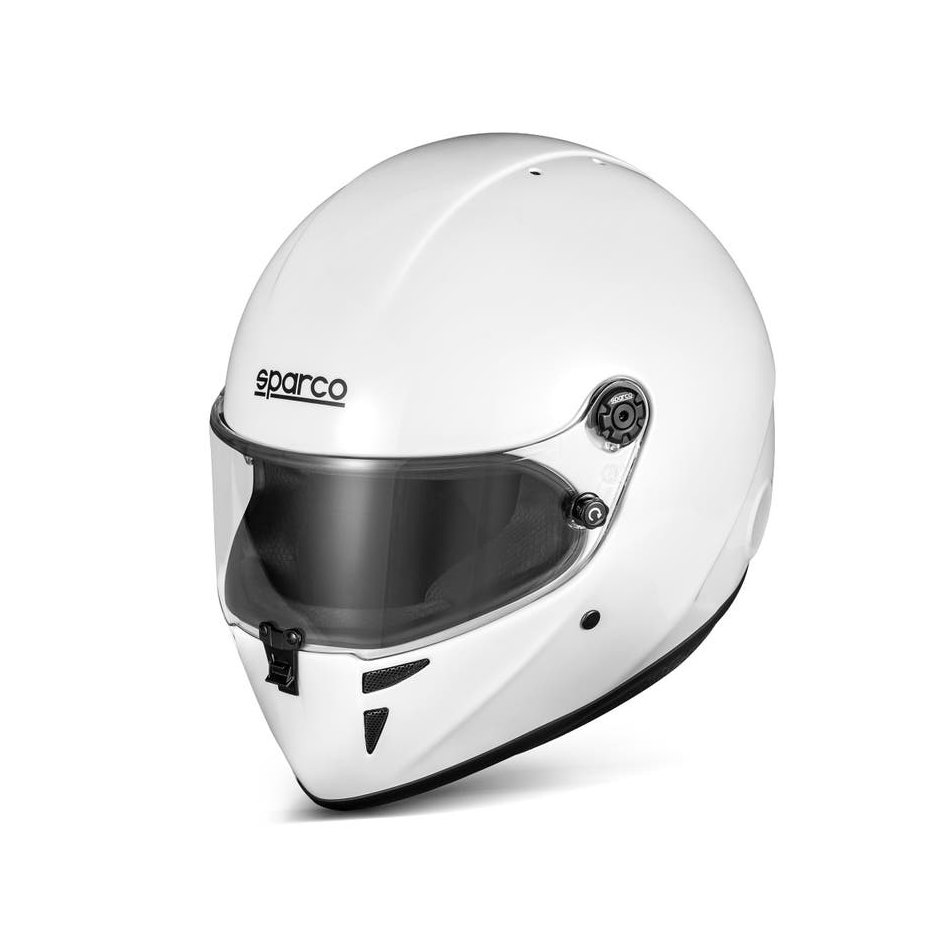
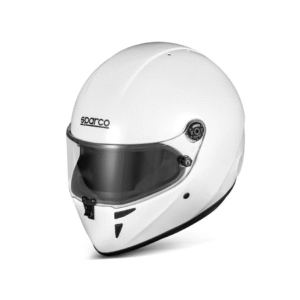
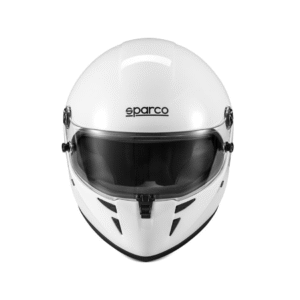
Sparco Stealth CMR
The Stealth is the interesting one, because it is a third of the price and it clears the same test.
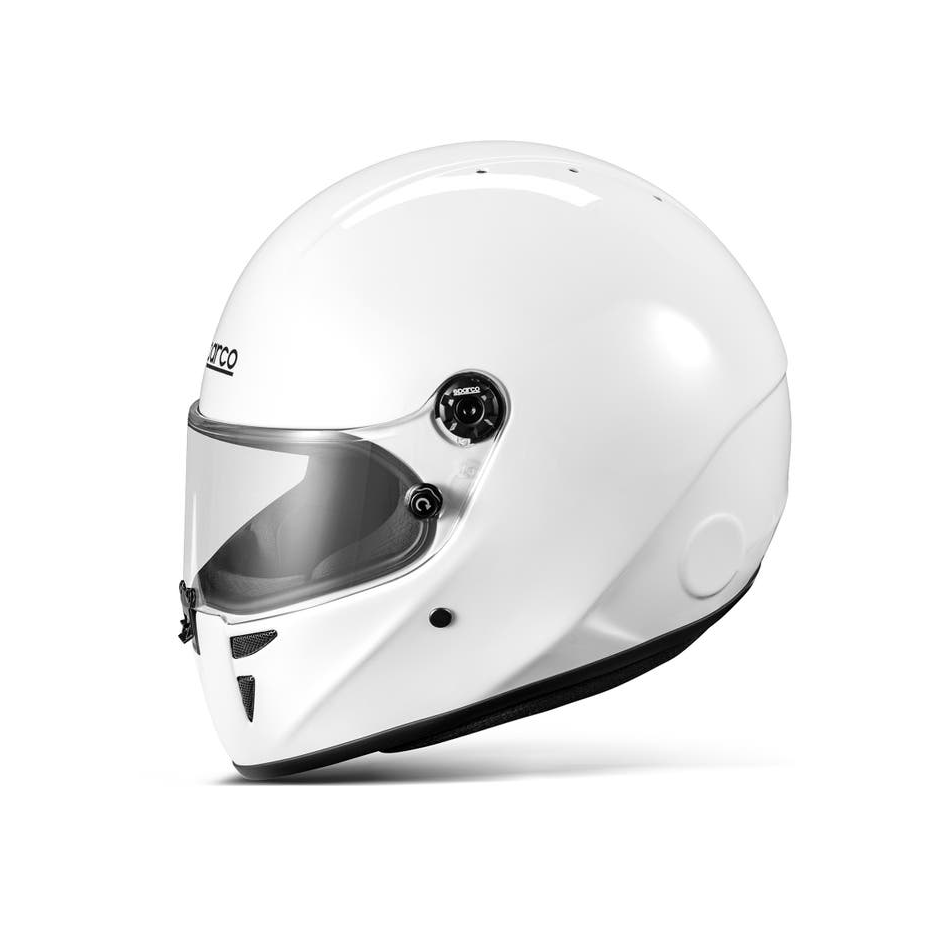
The shell is carbon fibre reinforced GRP rather than a full composite lay up. That is the honest difference and it is where the money goes. Sparco does not publish a weight for it, so we are not going to invent one or imply it is heavier than the Bell by some specific amount. With one in each hand Cameron reckons the Bell is the lighter of the two, but that is a hand test and we are not going to dress it up as data.
What the Stealth has, and the Bells do not advertise, is a fully removable and washable interior. If you have ever been handed a kart helmet by a thirteen year old at the end of a hot day in July you will understand why we keep bringing this up. Across three seasons that liner is worth more to most families than the paint.
It also has a three position central visor lock, so you can crack the visor open a notch for airflow on the grid without it flapping about. Simple thing, used constantly.
- Snell CMR2016 approved
- Carbon fibre reinforced GRP shell
- Four size bands: XS 53-54, S 55-56, M 57-58, L 59 cm
- Fully removable and washable lining, clear visor included
- From £258
-
£258.00 (No Tax)PayPal Credit0% pay-in-3Select options This product has multiple variants. The options may be chosen on the product page
Where they actually differ
| Bell KC7-CMR Hamilton | Bell KC7-CMR Norris | Sparco Stealth CMR | |
|---|---|---|---|
| Approval | Snell-FIA CMR-2016 | Snell-FIA CMR-2016 | Snell-FIA CMR-2016 |
| Shell | Carbon / Kevlar / fibreglass | Carbon / Kevlar / fibreglass | Carbon reinforced GRP |
| Published weight | 1185 g / 1230 g | 1185 g / 1230 g | Not published |
| Sizing | 54-59 cm, 1 cm steps | 54-59 cm, 1 cm steps | Four bands, XS to L |
| Visor supplied | 2 mm multi-layer red clear | 2 mm multi-layer green light smoke | Clear |
| Removable washable liner | Not stated | Not stated | Yes |
| In the box | Visor, aero kit, spoiler, Bell bag | Visor, aero kit, spoiler, Bell bag | Clear visor |
| FHR posts | No | No | No |
| From | £737 | £737 | £258 |
Sparco does not publish a weight for the Stealth, so that cell stays empty; we are not putting a guess in it.

The bit nobody tells you: they grow
Here is the thing that changes the whole calculation and almost never gets mentioned in a helmet review.
A child racing CMR classes is somewhere between about eight and fifteen. Heads grow through that. Cameron has sized the same driver three times in four seasons more than once, and the jump is usually two or three centimetres.
So the real question becomes how many helmets you are buying before they age out of CMR and move to a car helmet or a senior kart lid. If the answer is three, spending £737 each time is a very different proposition to spending £258.
The other half of that is fit. A helmet bought a size big so it will “last” is not doing its job. It moves, it lifts under braking, and it lets the visor bang about. We would rather sell a cheaper helmet that fits properly now than an expensive one a child will grow into next year.
Bell’s 1 cm size steps help here, because they let you buy the size the child actually is. Sparco’s four bands are wider, so there is more chance of landing between two.
Common questions
What does Snell-FIA CMR-2016 actually mean?
Do any of these need FHR or HANS posts?
How do I measure my child for a helmet?
Should I buy a size up so it lasts longer?
What comes in the box with the Bell helmets?
Can the interior be washed?
What we would actually buy
If your child is nine or ten and still growing quickly, the Sparco Stealth. It clears the same standard, the liner comes out and goes in the wash, and when they outgrow it in eighteen months you have not lost £737. Spend the difference on a second visor and a decent helmet bag.
If your child is fourteen, near the top of the size range, and racing seriously enough that the helmet will see two full seasons and then follow them into senior karting, the Bell is easy to justify. Better made, lighter, the accessory pack is worth real money, and the size steps let you fit it properly.
Between the two Bells, buy whichever one they want. They are mechanically identical, so this is a taste call and the only technical difference is the visor tint in the box. If you race a lot in winter, take the Hamilton for the clear visor, or budget for a spare either way.
Both cleared the same test, so buy on fit, weight and how many seasons the helmet needs to last.
Final thoughts: fit first
Come and try them if you can. Helmet fit is not something you can do off a size chart alone, and twenty minutes here saves a return and a lot of second guessing. If you cannot get to us, measure round the head just above the ears with a soft tape and message us with the number.
The full range is in full face karting helmets, and if you are moving up out of CMR classes it is worth reading what the standards look like on the car side in our guide to what Motorsport UK requires in 2026. Snell’s own explanation of the CMR standard is at smf.org.
Send us a message and we will get you sorted.
What's the best karting helmet for 2026, Bell or Sparco?
CMR approval is pass or fail, so a Bell KC7-CMR and the Sparco Stealth CMR meet exactly the same safety requirement. The price gap comes down to construction and extras: published weights, precise 1cm sizing increments, and an aero kit on the Bell (£737), which suits an older, serious racer who needs an exact fit.
The Sparco Stealth CMR (£258) has a fully removable, washable interior and covers the same standard for a third of the price, making it the better call for a younger child who’s still growing through sizes. Either way, buy for the fit your child needs now, a loose helmet shifts under braking.