Hillclimb and Sprint Racewear: What Motorsport UK Actually Requires in 2026
If you are thinking about entering your first hillclimb or sprint, the kit question is usually the one that stalls people. I am Cameron, by the way, and if you ring GSM Performance about racewear there is a good chance you will get me. The call I take most weeks goes something like: “I’m doing my first event at the end of the month in my own car. What do I actually have to buy?”
The honest answer is that it depends which class your car lands in, and the difference is bigger than most people expect. In the road-going classes you need less than you think. One class up, nearly everything on the list becomes compulsory. And the rulebook moved this season, so some of the advice floating around forums is now out of date.
Everything below comes from the current Motorsport UK National Competition Rules, the 2026 edition. Speed events (sprints, hillclimbs and hot lap challenges) are covered by Chapter 14, and the kit standards themselves live in Chapter 9. You can check the wording yourself in the current National Competition Rules on the Motorsport UK site rather than take my word for it. One caveat before we start: every event also publishes its own supplementary regulations, and a championship can ask for more than the national minimum. Read the SRs for your event. They win.
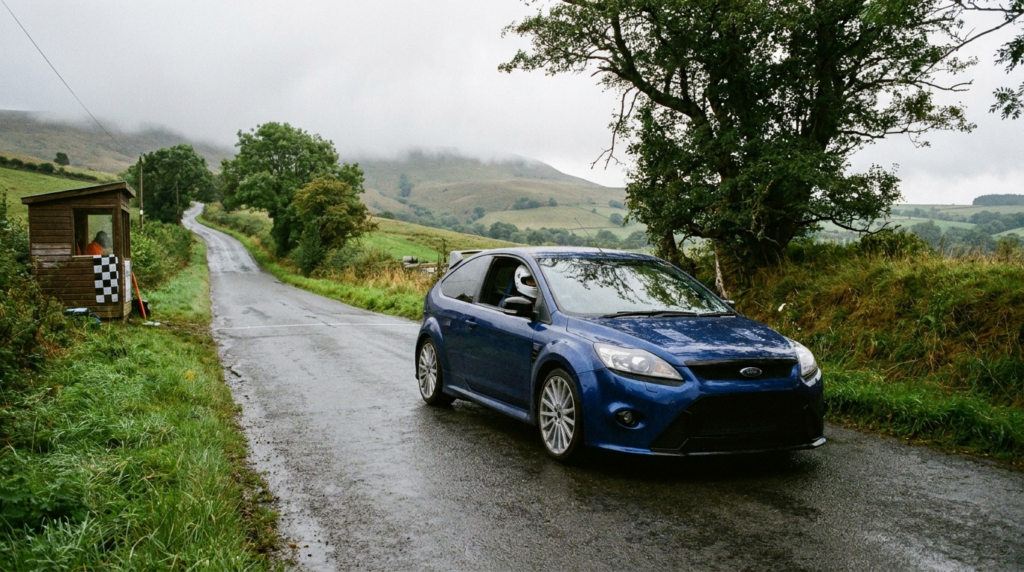
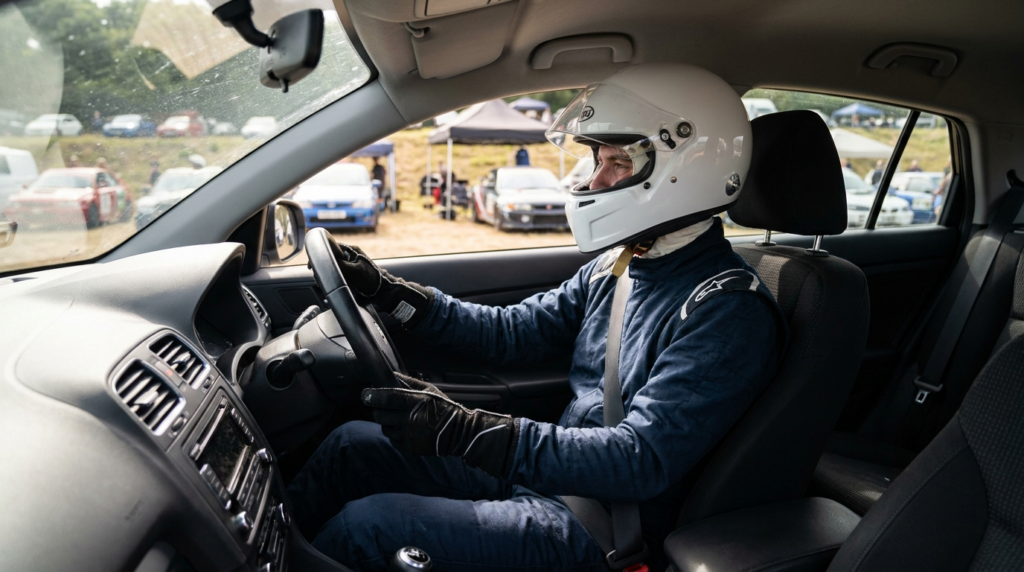
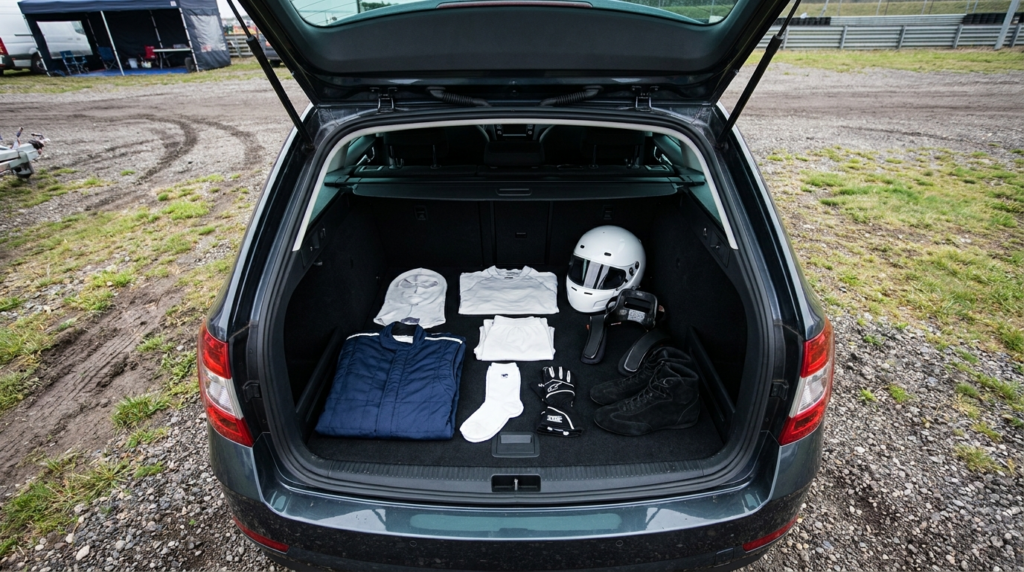
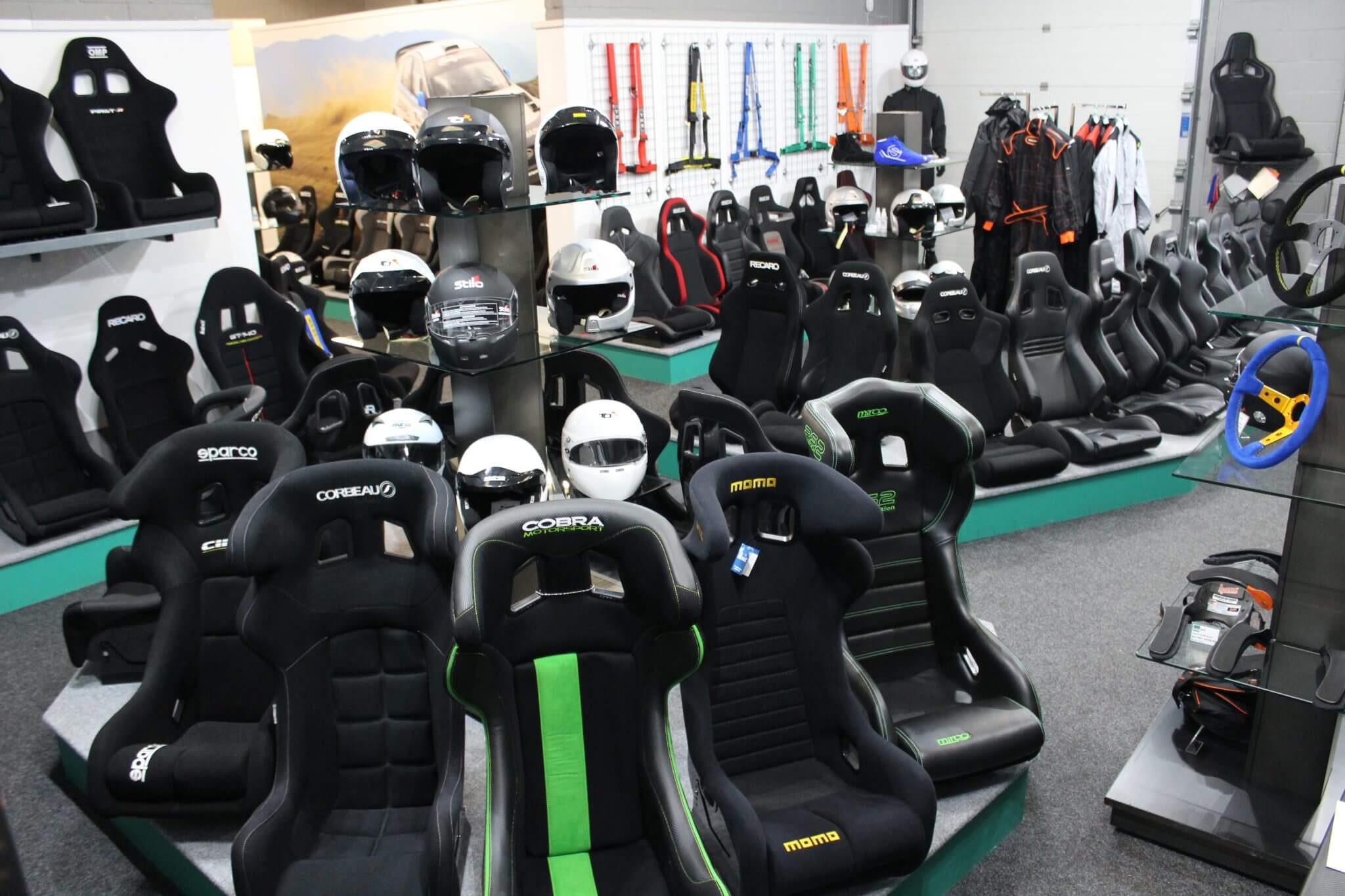
A note on the photos: the scene-setting images on this page are illustrations we generated rather than photographs from a real event. The product photography is the actual kit from our racewear range.
The five classes, in plain English
Motorsport UK splits sprint and hillclimb entries into five categories, and your car’s category decides your kit list. From the 2026 rules (Chapter 14, Appendix 4):
Standard Cars are exactly what they sound like: showroom-specification cars on List 1A tyres with almost no modifications permitted.
Road Cars are production cars (built in quantities of at least 1,000 a year, or 20 a year for specialist production) that still have to compete in road-legal condition. You can change the front seats for fully trimmed competition versions, but the car must remain road legal.
Modified Cars, Sports Libre and Racing Cars are the escalating stages beyond that, through to single seaters.
The first two are what the paddock calls the road-going classes, and they are where nearly everyone starts. They are also the classes the rulebook treats completely differently on racewear.
What is mandatory and what is just recommended
This is the part worth printing out. Chapter 14, Appendix 2, Article 4 sets the driver requirements for every sprint and hillclimb in the country.
| Kit item | Standard Cars | Road Cars | Modified, Sports Libre and Racing |
|---|---|---|---|
| Helmet (approved standard, ASN sticker) | Mandatory | Mandatory | Mandatory |
| Race suit | Recommended (arms and legs must be covered) | Mandatory, wider list of accepted standards | Mandatory, FIA homologated |
| Flame-resistant gloves | Recommended | Recommended | Mandatory |
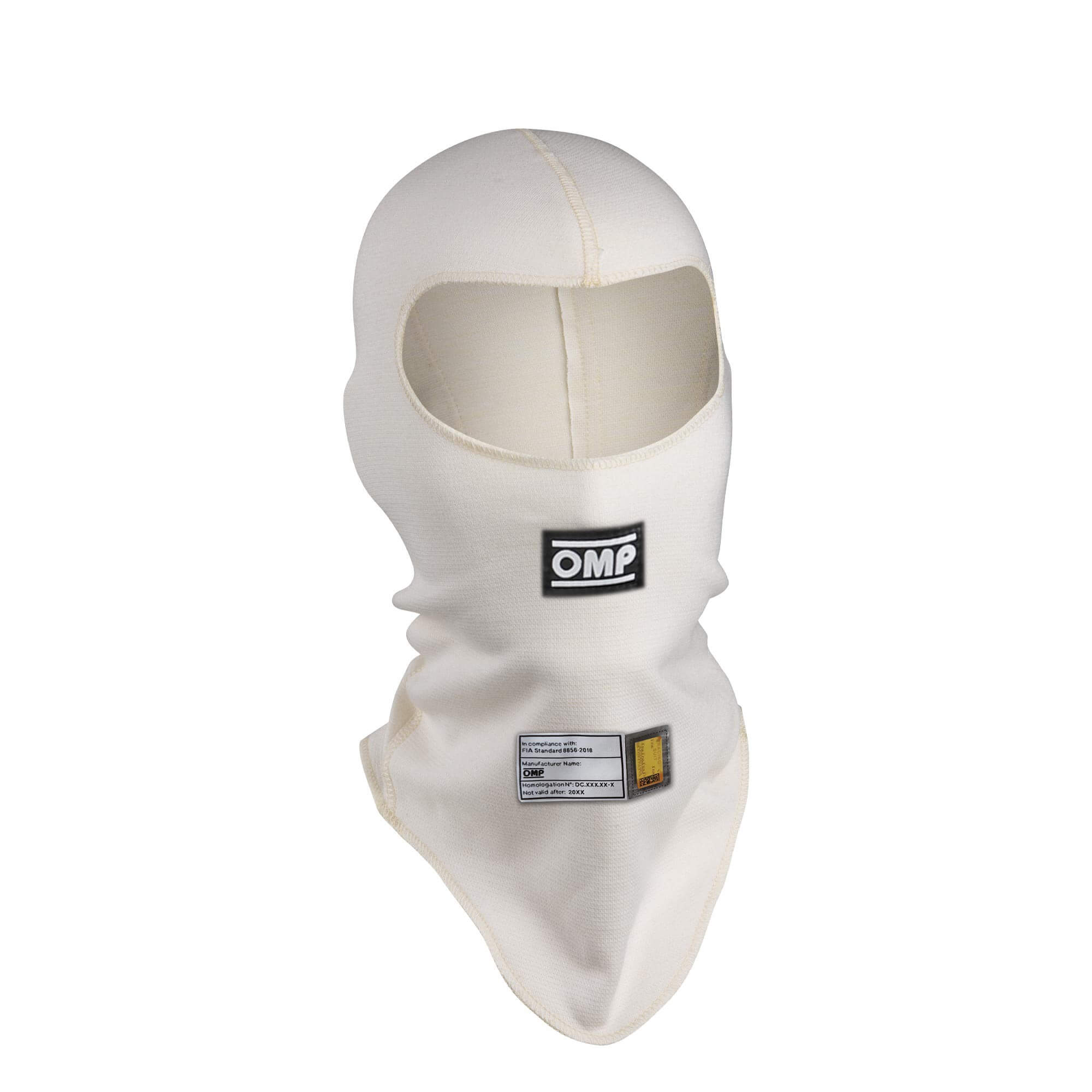
| Flame-resistant balaclava | Recommended | Recommended | Mandatory (new for 2026) |
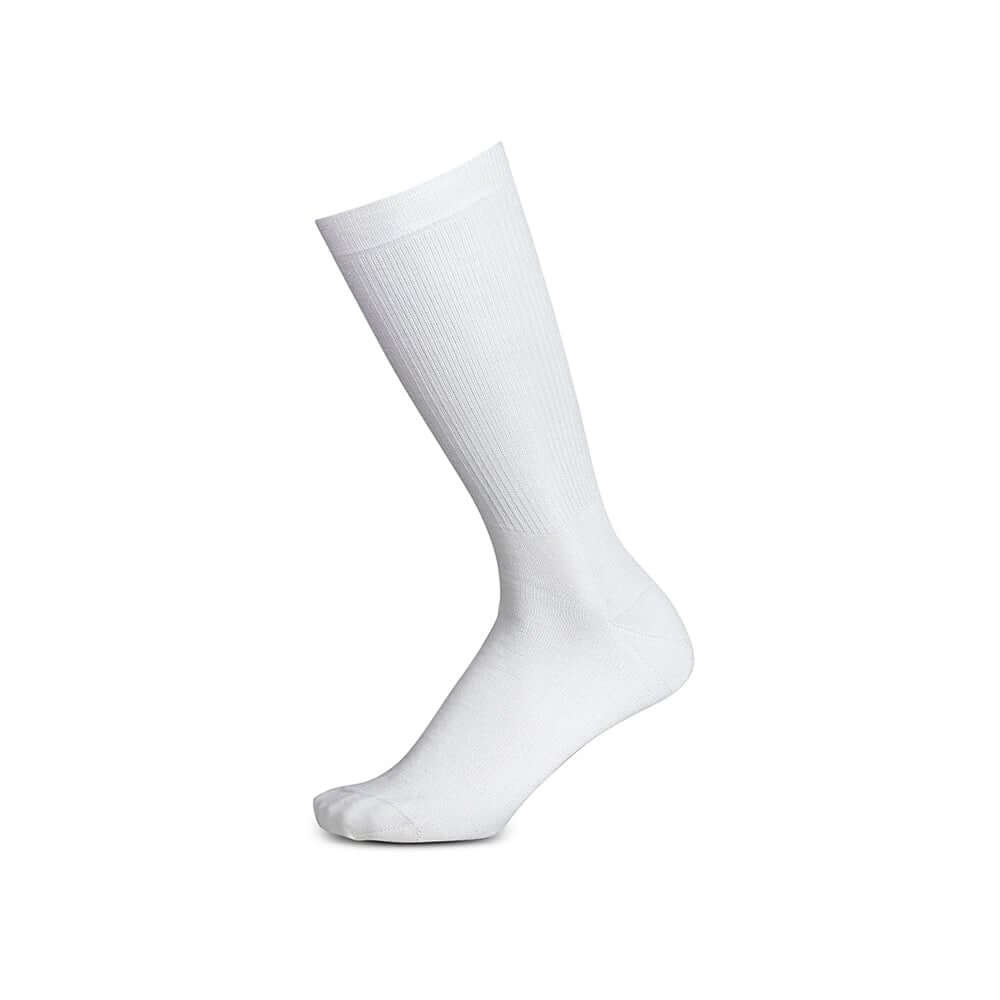
| Flame-resistant underwear and socks | Strongly recommended | Strongly recommended | Strongly recommended |
| Racing boots | Recommended | Recommended | Recommended |
| FHR device (HANS) | Recommended | Recommended | Mandatory |
A few details behind that table, because the wording matters.
In a Standard Car, the only compulsory items are an approved helmet and clothing that covers your arms and legs. Flame-resistant kit is recommended throughout.
In a Road Car, overalls are compulsory, but the accepted list is wider than the FIA-only list that applies further up. Chapter 9, Article 3.3.f accepts suits to BS6249 Part 1 Index A or B, EN533, ISO 14116 and all the FIA standards. So a Road Car driver has a choice the Modified driver does not.
From Modified Cars upward, the suit must be FIA homologated (8856-2018, 8856-2000, or the old 1986 standard), gloves are compulsory, the balaclava is compulsory, and an FIA-approved FHR device is compulsory. That last one still surprises people who assume HANS devices are a circuit racing thing.
Underwear and socks are the one line that never becomes mandatory. The rulebook strongly recommends them for every class and leaves it there.
The bits catching people out this season
The balaclava rule is new for 2026. Motorsport UK’s board approved it last summer and it took effect on 1 January. The reasoning given was fires that resulted in facial burns. If your car runs in Modified or above and your last event was 2025, this is the change you need to know about. In the road-going classes it stays a recommendation.
Snell SA2015 helmets stop being valid after 31 December 2026. They are still on the accepted list today, but this is their last season. If you are buying second-hand kit, check the label before you hand money over, because an SA2015 lid is worth very little with a few months of legality left. The current accepted standards include FIA 8859-2015, FIA 8859-2024 and Snell SA2020 and SA2025.
The older FIA 8856-2000 suit standard is still accepted at UK national speed events. Plenty of good used suits carry it. Buy new, though, and it should be 8856-2018, because that is the standard that will carry on being accepted the longest.
And the one I had wrong myself until I sat down with the rulebook: “recommended” in the road-going classes does not mean the cheap version of the kit ticks a box, because there is no box to tick. It means you are choosing your own level of protection. Which leads to the way I think you should actually buy.
Buy for the class you will be in, not the class you are in
Here is the pattern I see over and over. Someone starts in a Road Car class, buys the minimum, enjoys it, and within two seasons the car has grown a cage and a set of buckets and moved to Modified. At that point the suit, gloves, balaclava and FHR all flip from recommended to mandatory, and the shopping list starts again.
The recommended list for a road-going class is the mandatory list one class up. Buy FIA-spec kit on day one and you only buy once.
One warning on the budget end, because this catches people. We sell single-layer flame-resistant suits at around half the price of an entry FIA suit. They are approved to SFI 3.2A/1, an American standard, and they are honest kit for what they are; we sell them mainly as mechanics and pit crew suits. But SFI is not on Motorsport UK’s accepted list for speed events, not even the wider Road Car list. A scrutineer reading labels is within their rights to turn one away. If the suit is for driving at a UK speed event, the label needs to say FIA 8856 or one of the BS/EN/ISO standards, and by the time you have found one of those, the FIA suit is usually the same money.
A suit that covers every class
You can get into a proper FIA 8856-2018 suit for a little over £300, which is not much more than the club-standard options and covers you for every class on the hill including a future you have not planned yet.
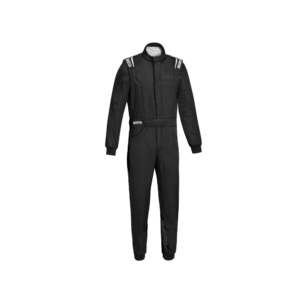
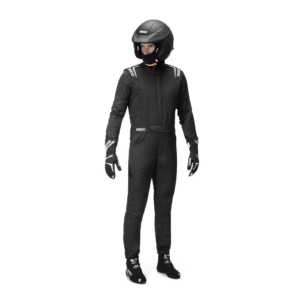
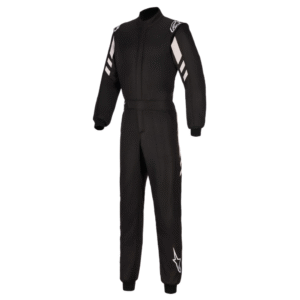
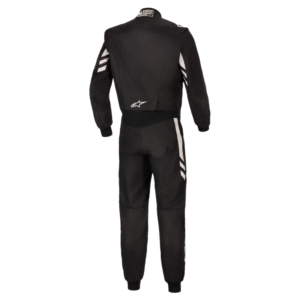
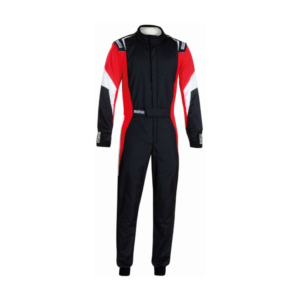
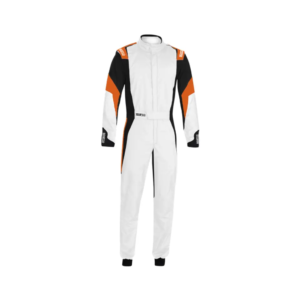
The Sparco Sprint Advanced is the one I hand people first. Two-layer construction, FIA 8856-2018 label, and Sparco’s sizing runs wide enough that most people fit off the shelf. The OMP First Evo and the Alpinestars GP Race V3 sit just above it, both 8856-2018 two-layer suits, and the choice between the three genuinely is fit and colour rather than specification. Try them on if you can, because a suit you can move your arms in at full lock matters more than the badge. The full range is in our race suits category.
-
From £547.20 Incl. VATFrom £456.00 Excl. VAT Select options This product has multiple variants. The options may be chosen on the product page
-
From £392.40 Incl. VATFrom £327.00 Excl. VAT Select options This product has multiple variants. The options may be chosen on the product page
-
From £507.60 Incl. VATFrom £423.00 Excl. VAT Select options This product has multiple variants. The options may be chosen on the product page
-
From £576.00 Incl. VATFrom £480.00 Excl. VAT Select options This product has multiple variants. The options may be chosen on the product page
Underwear, socks and the balaclava
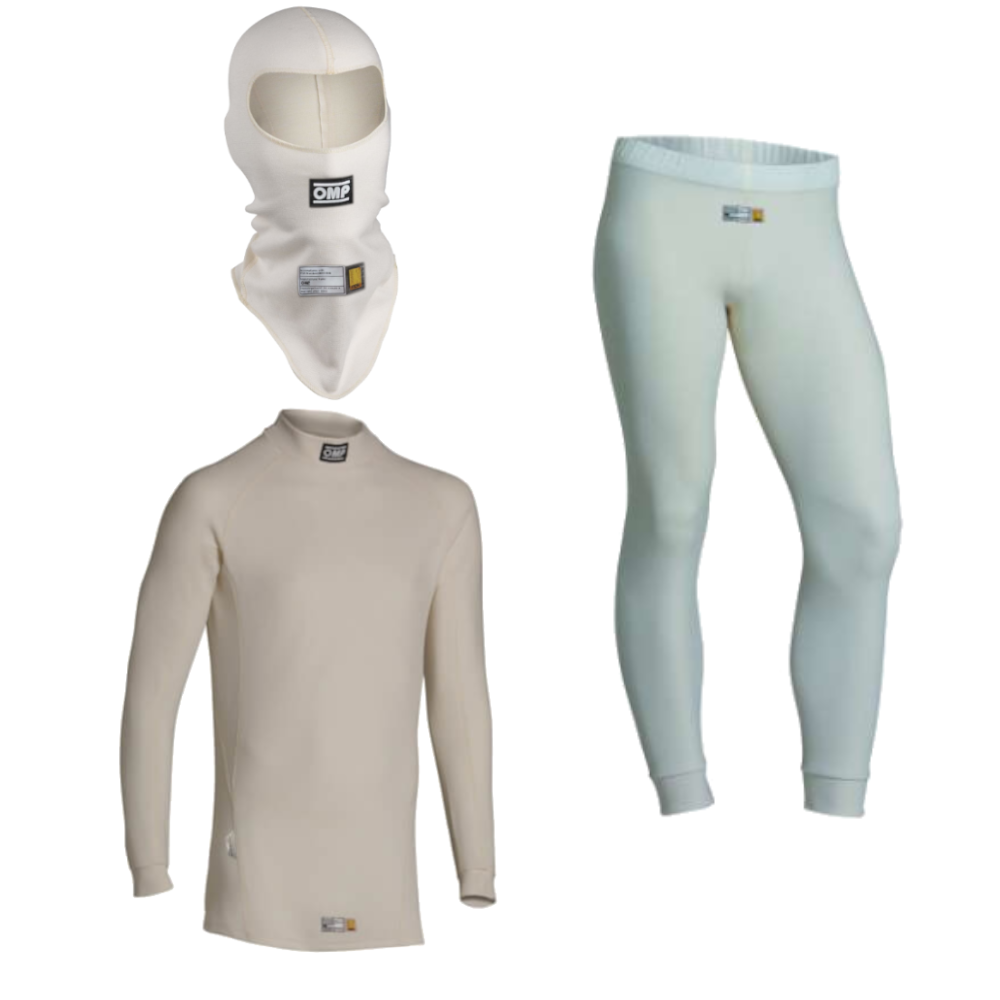
Flame-resistant underwear never becomes compulsory at UK speed events, and I will be straight about that rather than pretend otherwise. But the whole system works on layers: every extra flame-resistant layer between you and a fire buys escape time, which is why the rulebook singles underwear out as strongly recommended for every class rather than staying quiet about it. It also solves the sweat problem, and anyone who has peeled off a race suit at the top of a hill in August knows exactly what I mean.
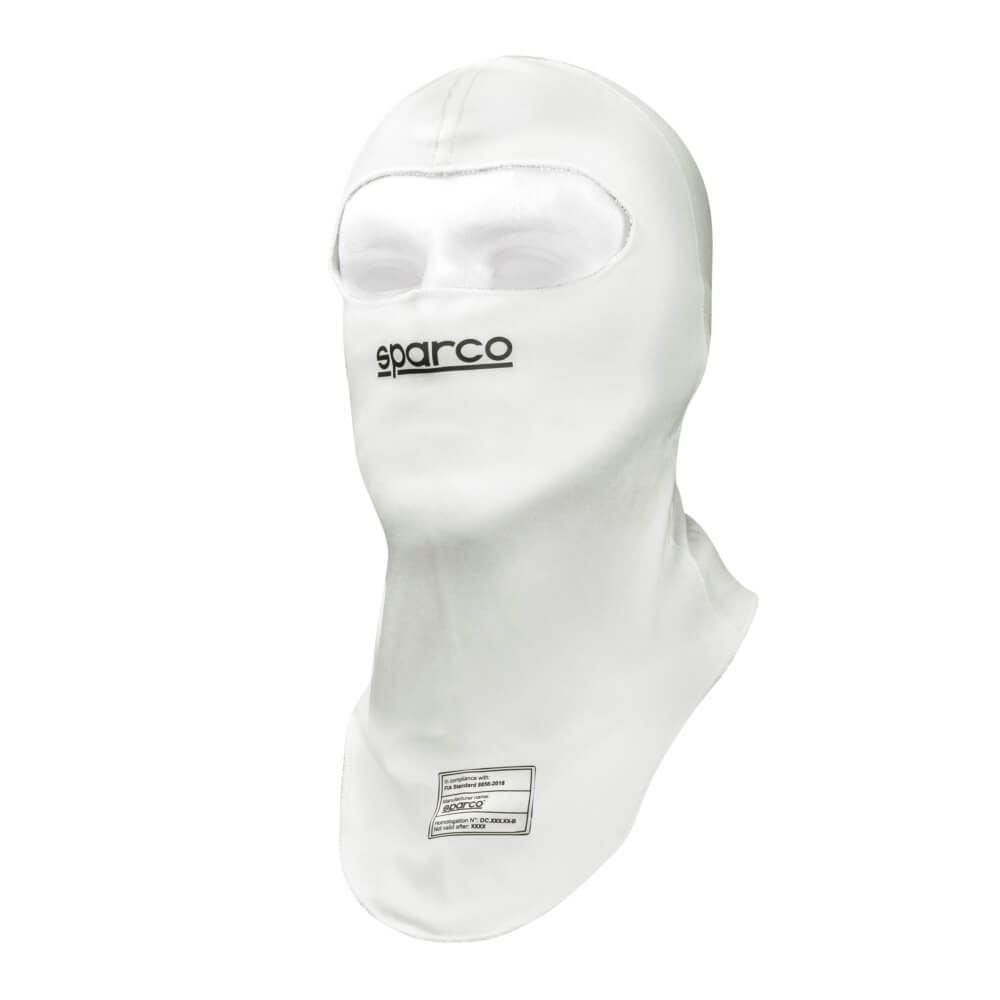
On balaclavas, one specific thing. Balaclavas that look identical sit either side of the line. We sell a single-layer one with no FIA label and, within a pound or two of it, one homologated to FIA 8856-2018. If there is any chance your car ends up in Modified, or you race anywhere the balaclava is compulsory, buy the one with the label. Same money, right ticket. The rulebook also wants it long enough to tuck inside the suit collar, which the proper ones are.
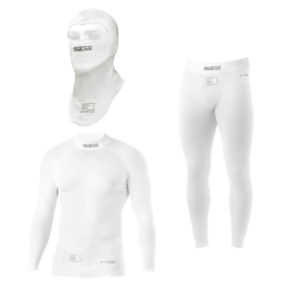
The underwear bundles are the sensible route: top, long johns and balaclava together, all 8856-2018.
-
From £174.00 Incl. VATFrom £145.00 Excl. VAT Select options This product has multiple variants. The options may be chosen on the product page
-
From £183.00 Incl. VATFrom £152.50 Excl. VAT Select options This product has multiple variants. The options may be chosen on the product page
-
From £26.40 Incl. VATFrom £22.00 Excl. VAT Select options This product has multiple variants. The options may be chosen on the product page
-
From £37.20 Incl. VATFrom £31.00 Excl. VAT Select options This product has multiple variants. The options may be chosen on the product page
Gloves and boots
Gloves become compulsory the moment you leave the road-going classes, and they are the item I would least want to skip anyway. Your hands are on the wheel, nearest the front of the car, and the first thing you use to get out. The Sparco Land and the OMP First are both FIA 8856-2018 and both wear well; between the two it is a fit call, and Sparco and OMP size their gloves differently enough that it is worth trying both.
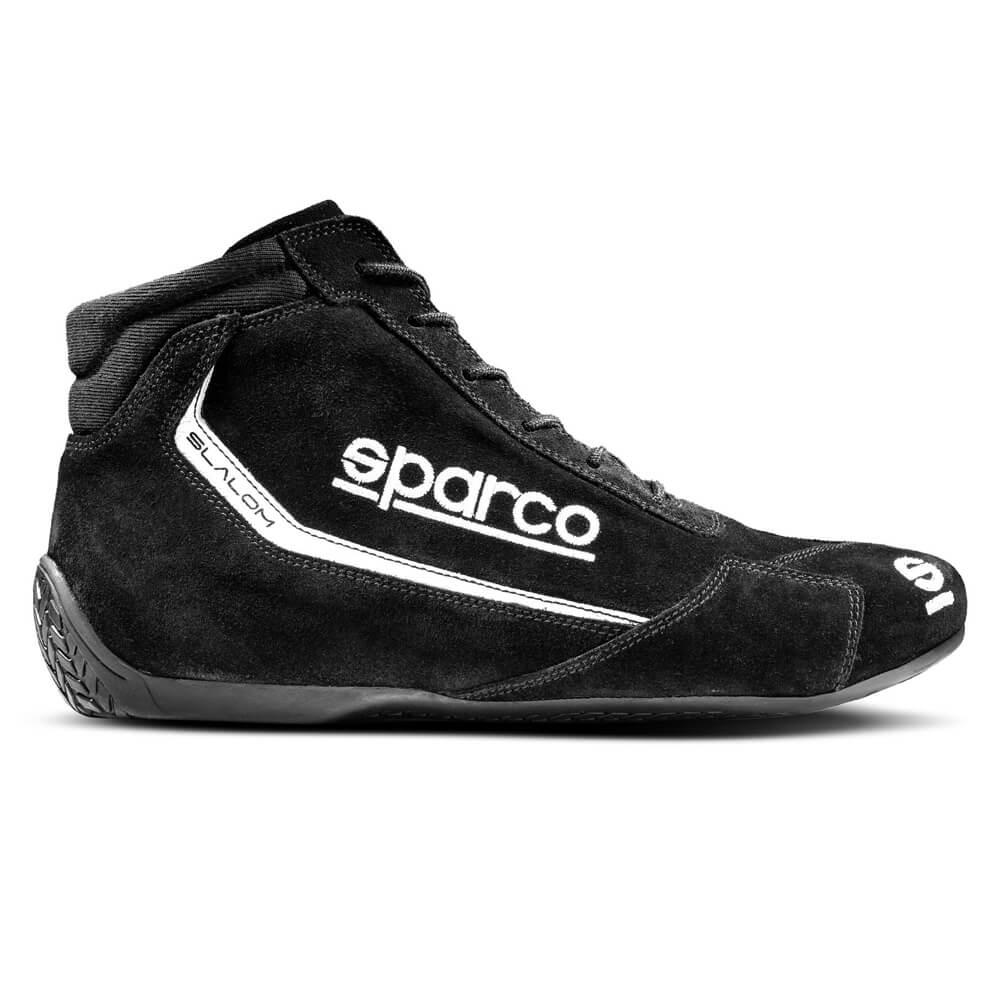
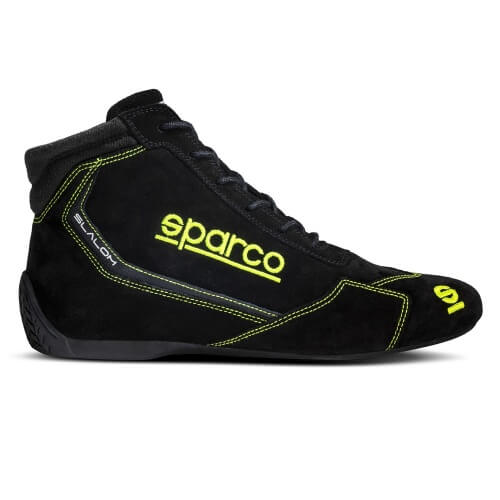
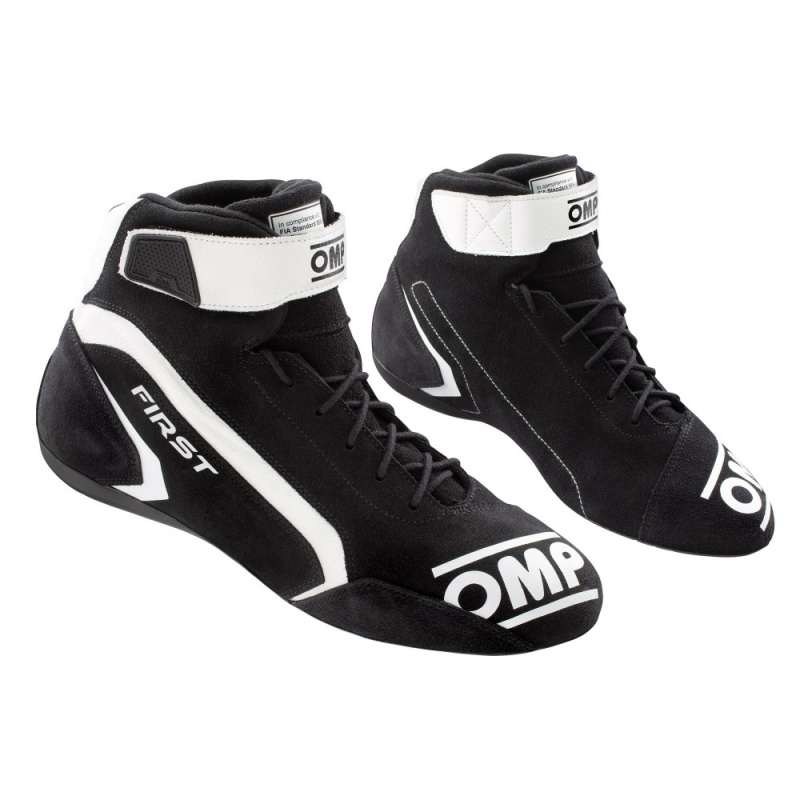
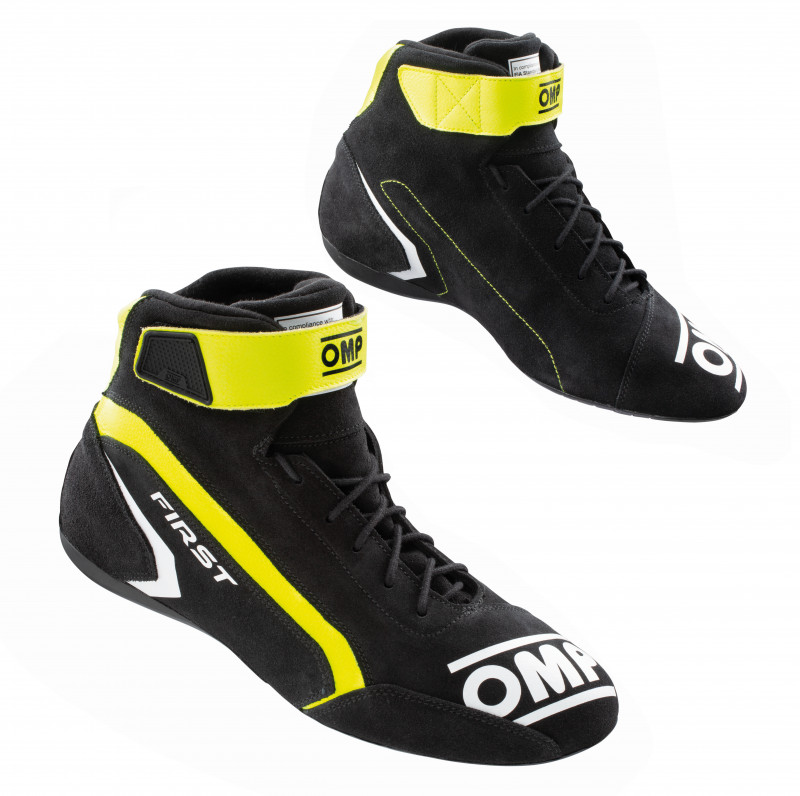
Boots never become compulsory, but Chapter 9 warns against combustible soles during competition, and pedal feel in a proper narrow-soled boot is a genuine lap time gain on a busy footwell. The Sparco Slalom is our best selling boot in the shop, and the OMP First is the equivalent from the other side of the aisle. All the boots below carry the 8856-2018 label.
-
From £78.00 Incl. VATFrom £65.00 Excl. VAT Select options This product has multiple variants. The options may be chosen on the product page
-
From £141.60 Incl. VATFrom £118.00 Excl. VAT Select options This product has multiple variants. The options may be chosen on the product page
-
From £88.80 Incl. VATFrom £74.00 Excl. VAT Select options This product has multiple variants. The options may be chosen on the product page
-
From £108.00 Incl. VATFrom £90.00 Excl. VAT Select options This product has multiple variants. The options may be chosen on the product page
FHR devices, and the road car question
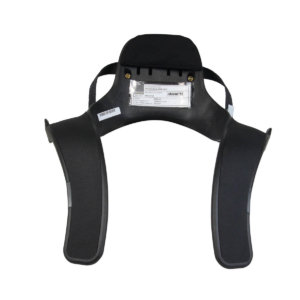
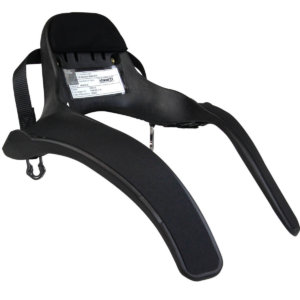
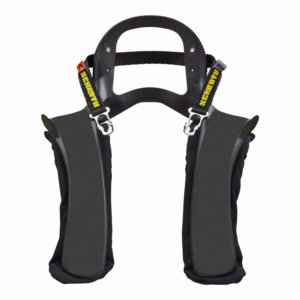
From Modified upward an FIA-approved FHR device is compulsory at speed events, and every device we sell is homologated to FIA 8858-2010. The Stand21 Club Series and the HANS IV are the value picks, the Schroth Super Sport XLT is the lightweight step up.
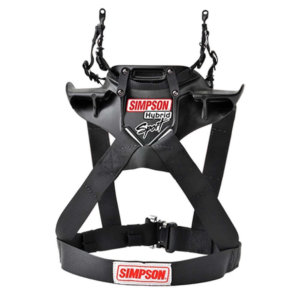
The road car question is the interesting one. A conventional HANS device braces against harness shoulder straps, so in a Standard or Road Car on a standard three-point belt it has nothing holding it down, which is a practical reason FHR stays in the recommended column for those classes. If you want head and neck protection in a car without a harness, the style to look at is the Simpson Hybrid, which straps to your torso rather than relying on the belts to locate it. Which Hybrid model suits your car and belts is exactly the sort of thing to ring us about before ordering, because getting that pairing right matters more than the brand.
-
From £324.00 Incl. VATFrom £270.00 Excl. VAT Select options This product has multiple variants. The options may be chosen on the product page
-
From £234.60 Incl. VATFrom £195.50 Excl. VAT Select options This product has multiple variants. The options may be chosen on the product page
-
From £354.00 Incl. VATFrom £295.00 Excl. VAT Select options This product has multiple variants. The options may be chosen on the product page
-
From £696.00 Incl. VATFrom £580.00 Excl. VAT Select options This product has multiple variants. The options may be chosen on the product page
Helmet and HANS in one go
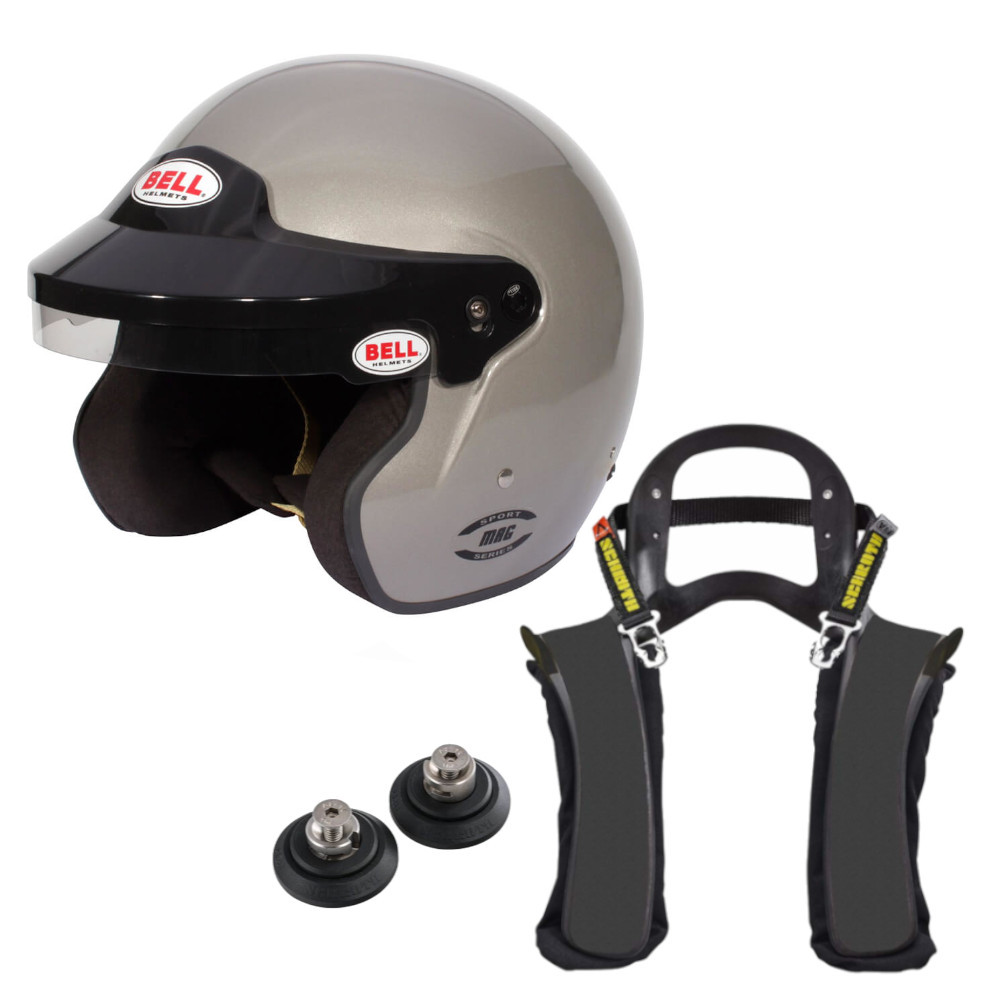
Every class needs an approved helmet, open or closed car, and it needs the blue Motorsport UK approval sticker on it, which a scrutineer fits after checking the standard label. If you are buying a helmet and FHR together, the bundles below pair an FIA-approved lid with a Schroth or Simpson device, with the HANS posts already fitted. The Sparco Flux RJ in these bundles is homologated to FIA 8859-2024, the newest standard on the accepted list, which is as future-proof as a helmet gets in 2026.
What scrutineering will actually check
Article 4.5 of the speed event regulations says all required items must be produced for inspection and approval at scrutineering. In practice that means the labels get read. A few things worth knowing before you queue up:
Your helmet needs the standard label and the ASN approval sticker. If it does not have the sticker yet, the scrutineer can fit one, and there is a small fee, so it is worth sorting at your first event. FHR devices get a sticker on the yoke the same way.
The suit should be clean and undamaged. The rulebook specifically flags worn patches, broken stitching and over-washing as grounds for rejection.
Counterfeit kit is a real problem, and scrutineers are empowered to impound it and can ask for proof of purchase. Buy from an authorised dealer, keep the receipt, and this is never your problem. We are authorised dealers for everything on this page, which is exactly why I can put the approval standards in writing next to each product.
The short version
| Kit item | Road-going classes | Modified and above | Label to look for |
|---|---|---|---|
| Helmet | Mandatory | Mandatory | FIA 8859 / Snell SA2020 or SA2025 |
| Suit | Standard: arms and legs covered. Road: overalls mandatory | Mandatory | FIA 8856-2018 |
| Gloves | Recommended | Mandatory | FIA 8856-2018 |
| Balaclava | Recommended | Mandatory since 1 Jan 2026 | FIA 8856-2018 |
| Underwear and socks | Strongly recommended | Strongly recommended | FIA 8856-2018 |
| Boots | Recommended | Recommended | FIA 8856-2018 |
| FHR device | Recommended (torso-strapped Hybrid style for cars without a harness) | Mandatory | FIA 8858-2010 |
Final thoughts: cheap to start, sensible to do properly
The road-going classes are the cheapest way into real motorsport in this country, and the rulebook keeps them that way on purpose. You genuinely can do your first sprint with a helmet, a suit off the wider list and sensible clothing. But the recommended column is not padding. It is the same kit that becomes compulsory one class up, it is the kit the safety committee keeps nudging into the mandatory column year by year, and the price gap between ticking the box and doing it properly is smaller than a set of tyres.
If you are not sure which class your car lands in, or whether the suit you have been offered second-hand is still legal, ring us before you buy anything and ask for me. I would rather spend ten minutes on the phone than see you turned around at scrutineering. And take the rulebook’s own advice: check your event’s supplementary regulations, because they always have the final word.