Call Garreth, Cameron & CallyAI: 0115 9893488

Free UK shipping on orders over £100.00 FREE gifts on checkout

Useful Links
Your Account

Talk to us

Garreth, Cameron & CallyAI · Mon to Fri
Call 0115 989 3488Free advice on your build
Thanks, that’s with us. We reply the same working day.
That didn’t send. Please give us a call instead.

Useful Links

Quick Access

Want to chat?

Call Garreth, Cameron, CallyAI
Today On: 0115 9893488
Click Here For Our Contact Form
Buy gift vouchers today


Free UK delivery over £100
Klarna available at checkout
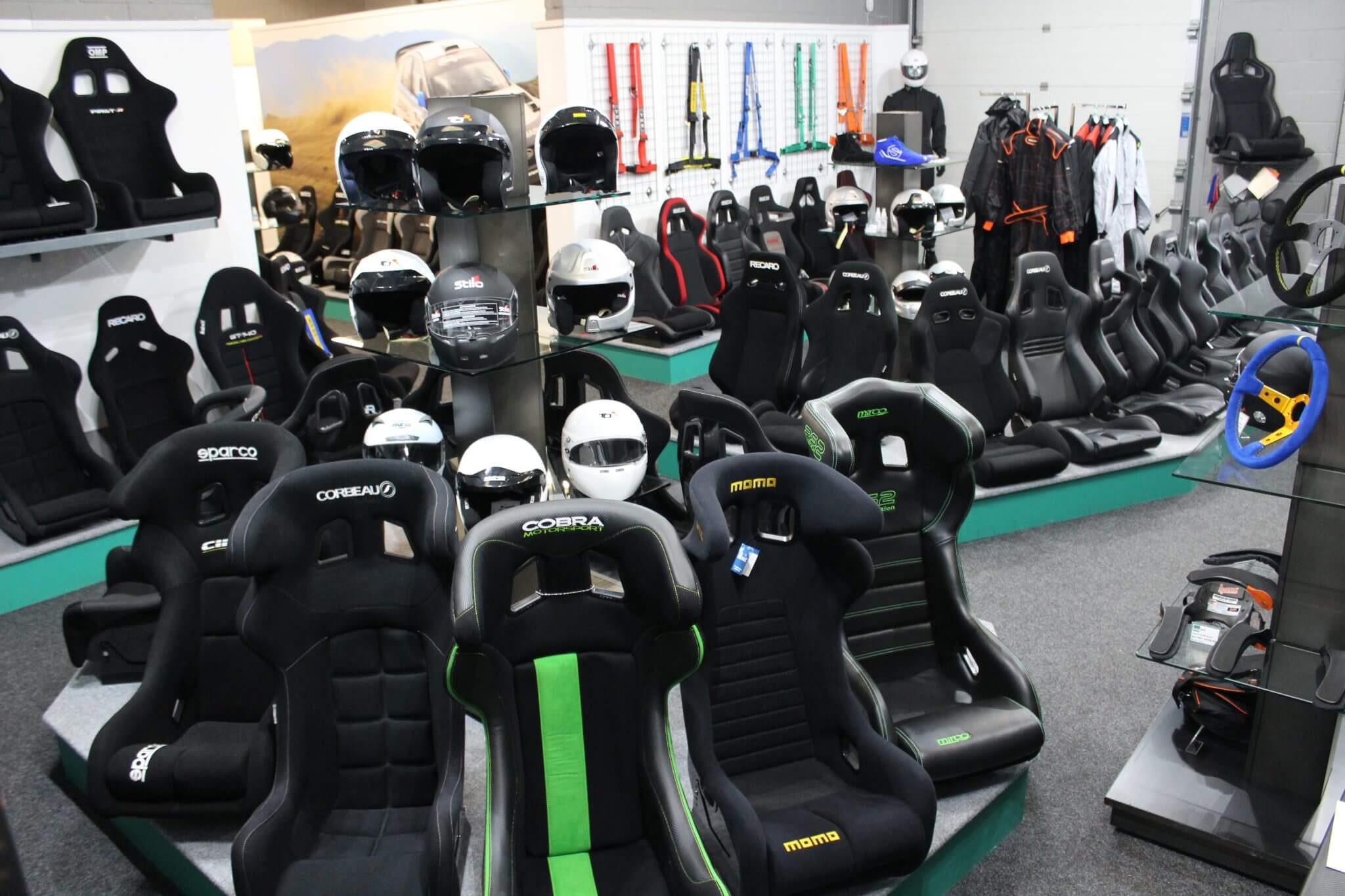
Established 2003, Nottingham showroom
Call the team: 0115 989 3488

HANS Device vs Hybrid Head & Neck Restraint: Which Should You Buy?

If you already know you need a HANS device but not which model, we have covered that separately in which HANS device do I need. This guide is a step back from that: whether you should buy a traditional HANS-style frontal head restraint at all, or go for the Simpson Hybrid instead.

Both are FIA 8858-2010 approved frontal head restraints (FHR) and both do the same fundamental job, they stop your head snapping forward relative to your torso in a frontal impact. Where they differ is how they attach to you and the car, and that difference changes what you need to check before you buy either one.

We are not going to tell you there is a single right answer here, because there is not one. It depends on your seat, your harness, and how much you value being able to get out of the car quickly.

  • Both device types are FIA 8858-2010 approved, the approval standard is not the deciding factor
  • A traditional HANS-style device rests on rigid yoke arms under your harness shoulder straps and needs anchor posts on the seat or a specific harness routing
  • The Simpson Hybrid uses its own integrated torso straps and can be used with a 3-point road-legal seatbelt as well as a harness, no seat posts required
  • Prices correct on 6 September 2026
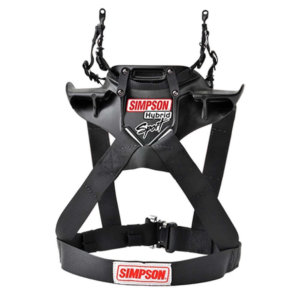
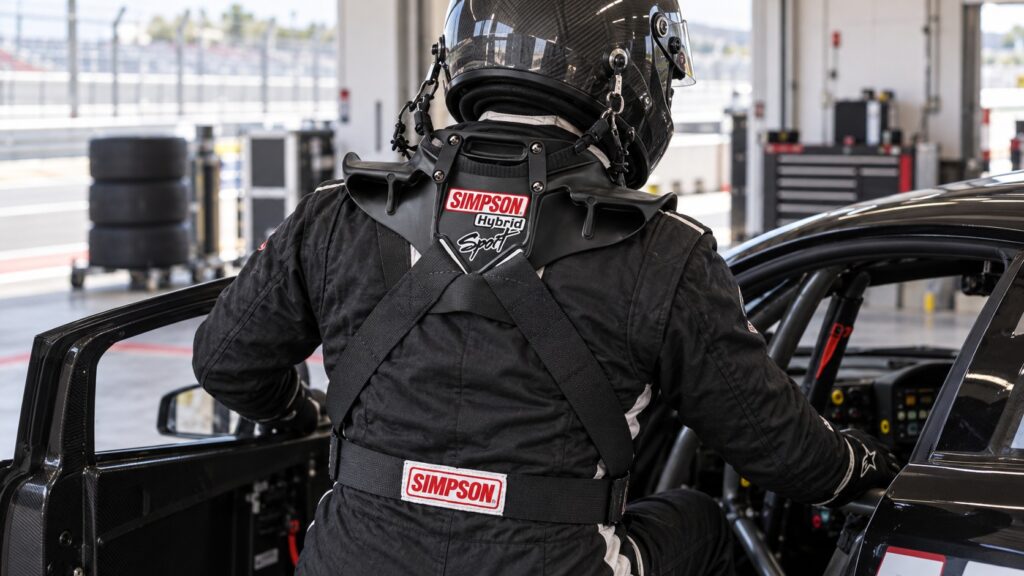
Helmeted racing driver wearing a Simpson Hybrid Sport head and neck restraint beside a race car
The Simpson Hybrid Sport worn correctly with a helmet and its integrated torso straps.

How the two designs actually differ

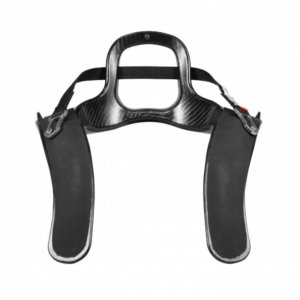
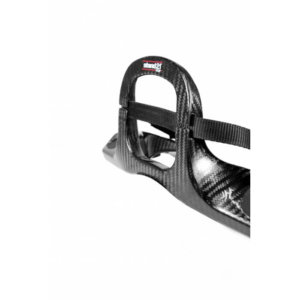
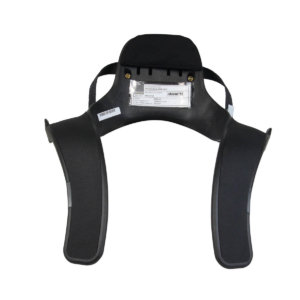
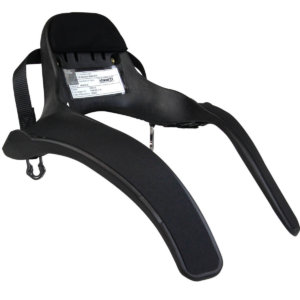
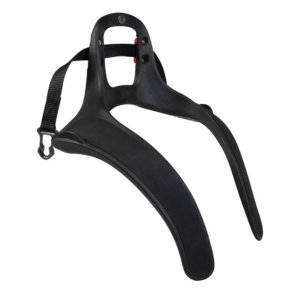
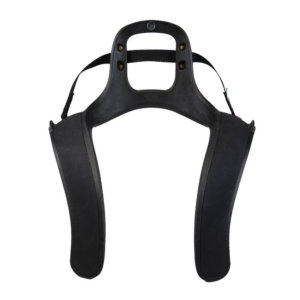
A traditional HANS-style device is a rigid collar, usually composite or carbon fibre, that sits over your shoulders with two arms extending forward. Your harness shoulder straps run over the top of those arms and hold the device down against your chest, and tethers connect the device to your helmet. For this to work properly, the device needs to sit at the right angle for your seat’s recline, which is why HANS devices are sold with a recline spec, 20 degree being the most common for a fixed-back race seat, with some models offering a 30 degree option for a more reclined driving position.

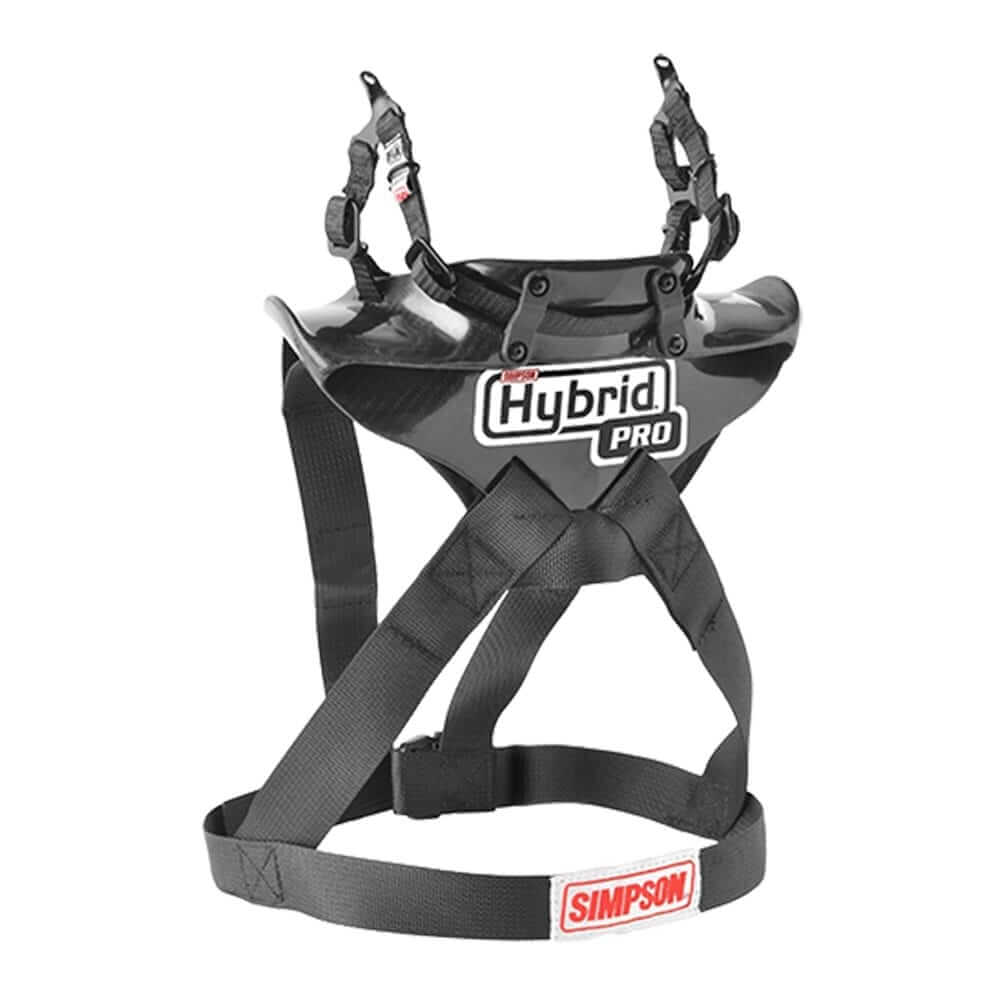
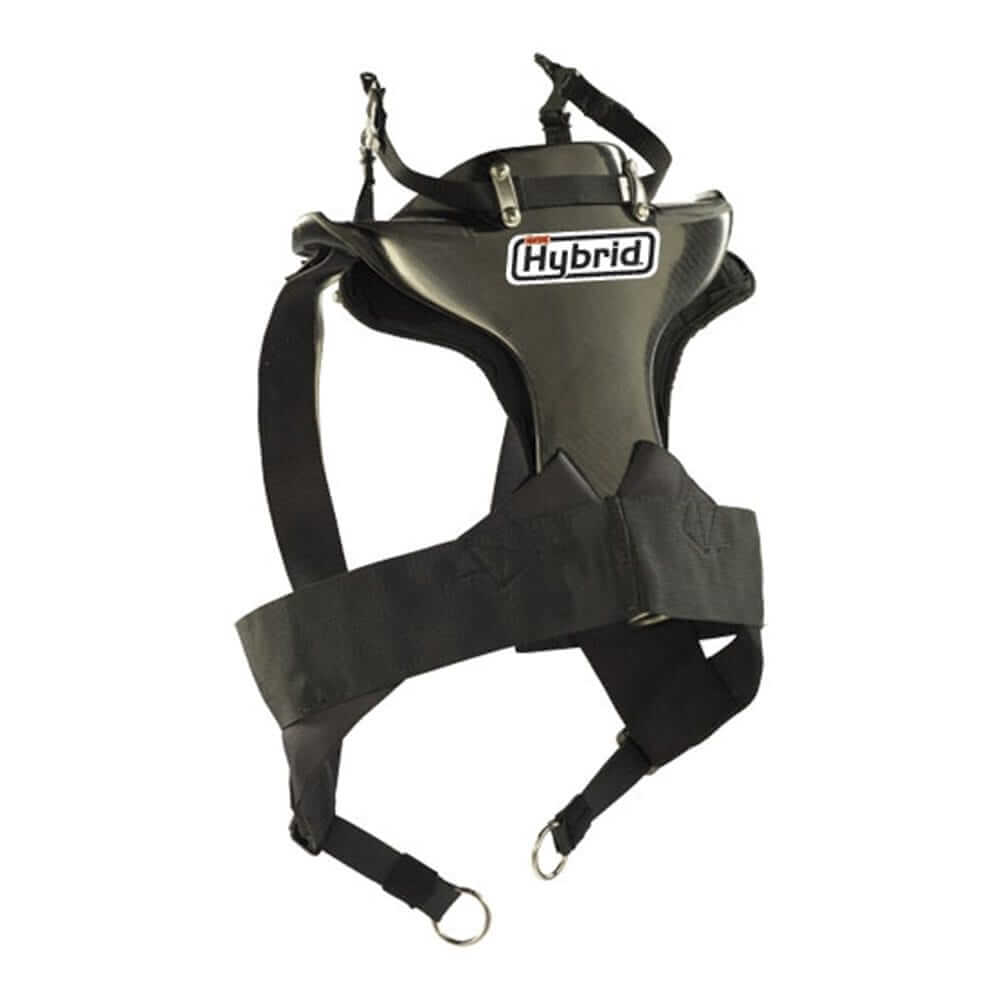
The Simpson Hybrid is a different shape entirely. It has its own set of torso straps built into the device, which route over your shoulders and down to your existing harness or seatbelt mounting points, so the restraint itself is doing some of the holding rather than relying purely on your harness straps pressing it down. Because of this, Simpson’s Hybrid range is approved for use with a normal 3-point road seatbelt as well as a full harness, which no traditional HANS-style device is.

Traditional HANS-style devices

The entry point here is the Stand21 Club Series 1 at 195.50 pounds, a 20 degree recline device with full FIA 8858-2010 approval at the most affordable price we stock. The Stand21 Club Series 3 at 250 pounds and the HANS IV at 270 pounds sit just above it, the HANS IV being 10 percent lighter than its predecessor with taller wings for better strap retention. All three are composite construction and aimed at club and clubman racers rather than professional teams.

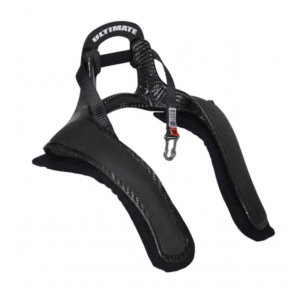
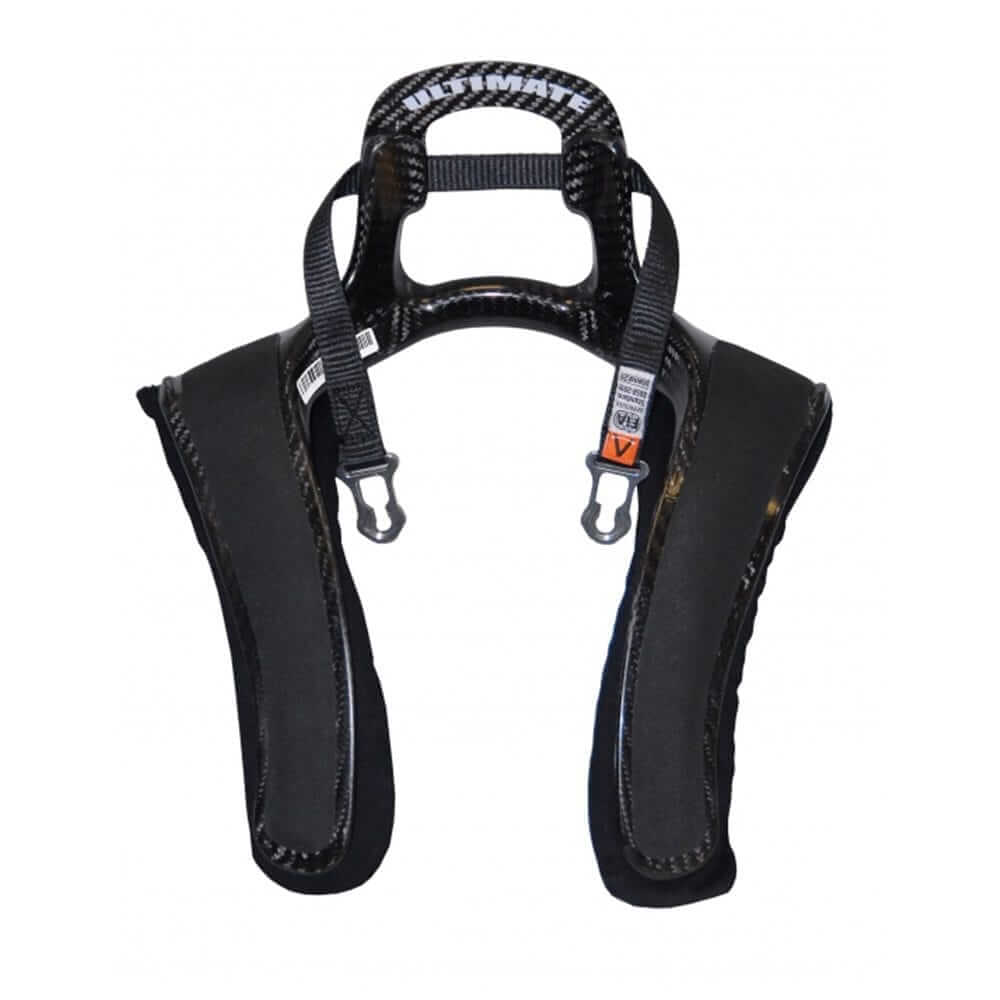
At the top end, the Stand21 Ultimate Series at 1,075 pounds and the Stand21 Featherlite at 1,289.50 pounds are carbon fibre devices built to save weight instead of cost, the Featherlite weighs 310 grams. These are aimed at drivers doing enough racing, or a demanding enough class, that the weight saving on your neck over a race distance is worth the outlay.

ModelPriceMaterialRecline
Stand21 Club Series 1195.50Composite20 degree
Stand21 Club Series 3250.00Composite20 degree
HANS IV270.00Composite20 degree
Stand21 Ultimate Series1075.00Carbon fibre20 or 30 degree
Stand21 Featherlite1289.50Carbon fibre20 or 30 degree

Prices correct on 6 September 2026

The Simpson Hybrid range

Simpson’s Hybrid devices are the only FIA approved head and neck restraints on the market rated to protect in front, offset and side impacts, according to Simpson, instead of the frontal impact the classic HANS geometry is built around. The Hybrid Sport at 580 pounds is the entry point, available with either the M61 quick release fitting or standard HANS posts, and in five sizes from XS to XL.

The Hybrid Endurance at 890 pounds and the Hybrid Pro Lite at 1,142 pounds sit above it, aimed at longer stints and more demanding use respectively. All three share the same basic idea: the device rests on your back and shoulders instead of depending entirely on the harness pressing it down, and Simpson positions the whole range around being quicker and easier to get out of than a rigid HANS-style collar, since there are no rigid arms to clear on the way out.

Cost and compatibility, the practical trade-offs

Money is the obvious first difference. A basic HANS-style device starts under 200 pounds, where the cheapest Simpson Hybrid we stock is 580 pounds. If budget is the main constraint and your seat and harness set-up is straightforward, a Stand21 Club Series device gets you FIA approval for a lot less outlay.

Compatibility is where it gets more specific to your car. A traditional HANS-style device needs the right recline angle for your seat and, in most installations, dedicated anchor posts fitted to the seat or a harness routed to hold the device correctly. If you are running a HANS device without the matching posts, using standard harness routing over the yoke arms is the usual approach, but it is worth checking with whoever supplies your seat and harness that the geometry works together before you buy. The Simpson Hybrid sidesteps a lot of this because its own straps do the anchoring, and because it is rated for use with a 3-point belt it suits cars that are not set up with a full harness at all.

Ease of exit is the other genuine trade-off. Getting out of a car quickly with a rigid HANS-style device on is something drivers learn and get used to, but it is a two-handed process, release the harness, clear the tethers and yoke arms, then get out. Simpson markets the Hybrid specifically on being faster and simpler to exit in, which matters more if you are doing endurance racing with driver changes, or if you have any concern about a quick exit in an incident.

Check your regulations before you buySome championships specify which type of FHR device is permitted, or require specific seat and harness combinations to go with it. Check your series technical regulations before choosing between the two, and if your seat does not have HANS anchor posts fitted, sort that out with your seat supplier first.

Common questions

Is a Simpson Hybrid better than a HANS device?

Neither is universally better, they solve the same problem differently. The Hybrid is generally easier and quicker to exit and does not need seat anchor posts, but costs considerably more than an entry-level HANS-style device.

Can I use a Simpson Hybrid with a normal seatbelt?

Yes, Simpson's Hybrid range is approved for use with a 3-point road-legal seatbelt as well as a full harness, which sets it apart from traditional HANS-style devices.

What recline angle HANS device do I need?

It depends on your seat's fixed recline angle. Most fixed-back race seats use a 20 degree HANS device, some more reclined seating positions need a 30 degree option. Check with your seat manufacturer if you are not sure.

Do I need special anchor posts for a HANS device?

Most HANS-style installations use dedicated anchor posts fitted to the seat, sold separately, though some setups route the harness over the yoke arms instead. Confirm with your seat and harness supplier which approach your car uses.

Why is the Simpson Hybrid so much more expensive than a basic HANS device?

The Hybrid's own integrated strap system and the engineering behind its wider impact protection claim add cost over a simpler rigid collar design. You are paying for the different mounting method, not just a brand premium.

Are both types FIA approved?

Yes, every device in this guide carries FIA 8858-2010 approval. Approval status is not what should decide which one you buy, fit and compatibility with your seat and harness is.

What we would buy

If you are running a fixed-back seat with proper HANS anchor posts already fitted and you want to keep costs down, the Stand21 Club Series 1 at 195.50 pounds is the sensible starting point, it is fully FIA approved and does the job without the outlay of a Hybrid. If you are not sure your seat is set up for a rigid device, or you want the fastest exit and are happy to spend more, the Simpson Hybrid Sport at 580 pounds is the one we would point you to first in that range.

We would not recommend buying either one on price alone without checking it against your actual seat and harness. Ring us with your seat make and model before you order and Garreth can confirm what will actually fit.

Final thoughts

Not sure which one suits your car? Call 0115 9893488 and Garreth will talk through your seat and harness set-up before you commit to either device.

What our customers say

Free UK Shipping

On all orders above £100

In-Store Shopping

Try before you buy

Easy Delivery Tracking

Aftership Tracking Updates