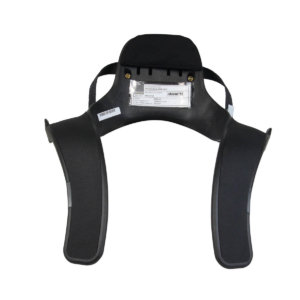
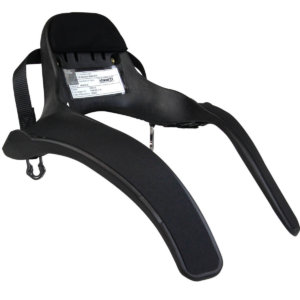
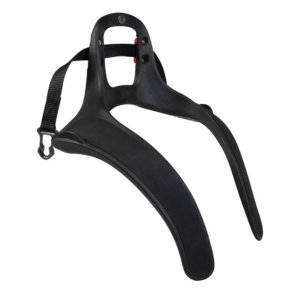
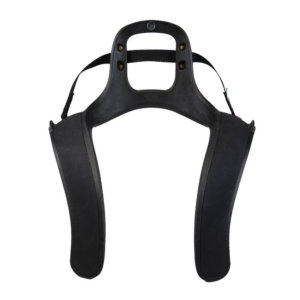
Helmet, device, tethers and shoulder belts work together
Clipping the tethers to the helmet is one part of it. The device also has to suit the seat angle, sit under the shoulder belts, and stay where it should when the belts are pulled tight.
Bring the helmet, the device and your racewear when you test a setup. We can check physical compatibility and fit, but the device and belt manufacturer instructions are the installation reference. Neck length, torso build and how upright you sit all change the answer.
Use a helmet and anchorages approved for the device. Drilling a shell ends the helmet approval and leaves the tether system untested, which is the one part of the assembly holding your head.
Read all three labels, not just the device
Three components each carry their own approval and all three have to line up: the FHR device, the helmet, and the anchorages on the helmet. Confirm each appears in the applicable FIA documents, and read the labels on the actual items rather than the specification on a website.
Then look at the hardware. Check the tether webbing for fraying or contamination, check the clips engage cleanly and release cleanly, check the posts are tight in the shell, and look over the device body for cracks or crushing. Anything damaged, mismatched or unidentifiable does not go in the car.
Every FIA device we sell is homologated to FIA 8858-2010, which is the current standard for head and neck restraints. If you are working out whether you need one at all, our speed events kit guide covers which classes make it mandatory.
Device first, then the belts over the yoke
The order matters. Getting it wrong is the most common fault we see.
Suit up first
Put the device on over your race suit, not over a t-shirt. The suit changes how the yoke sits on your shoulders by a surprising amount and it is the only fit that counts.
Sit the yoke properly
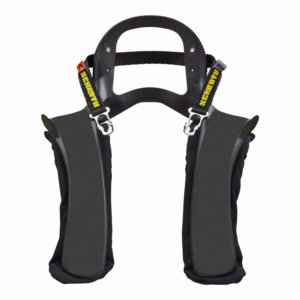
The rigid yoke rests on the shoulders with the collar behind the neck. It should sit flat, not perched, and not pressing into the collarbone. Follow the device instructions for your specific model.
Shoulder belts OVER the device
The harness shoulder straps route over the yoke on the specified bearing surfaces, never underneath it. Under the yoke and the device does nothing at all in an impact, because there is nothing holding it down.
Tighten in the maker sequence
Tighten the restraint in the order the manufacturer specifies. Tight enough that the device cannot shift, not so tight that it is pressing into your collarbone or restricting your breathing.
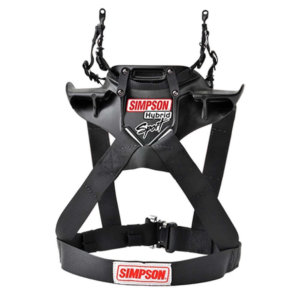
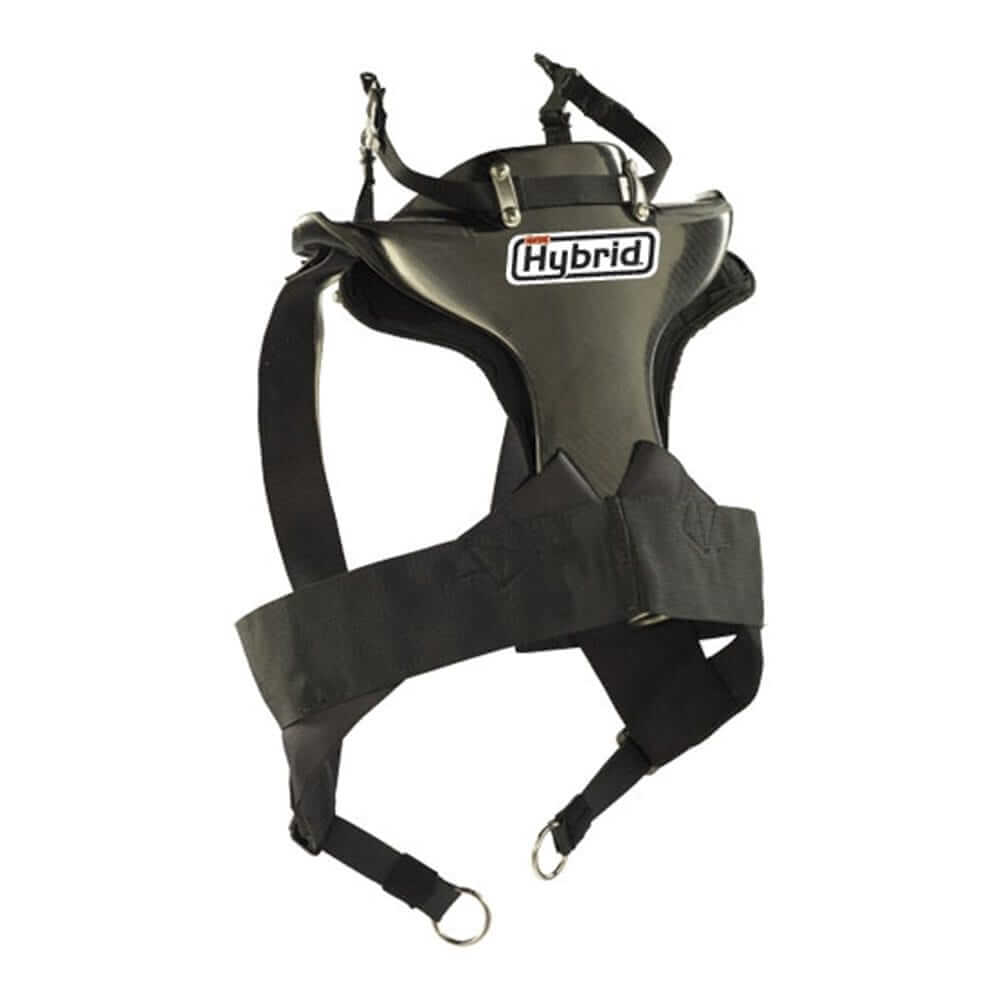
A conventional HANS is held down by harness shoulder straps. It does not work on a factory three-point belt, which is why FHR stays in the recommended column for road-going classes at speed events. If your car has no harness, the torso-strapped Simpson Hybrid style is the one to look at.
Two clips, both engaged, every time
Connect both tether end fittings to the approved helmet anchorages and check each one has actually engaged rather than just being pushed on. Give them a gentle pull. The FIA guidance is explicit that the tethers must remain connected for the device to restrain the head at all, and a single connected side is not half the protection, it is a system that has not been tested.
Then check your movement. Turn your head fully both ways and look down at the pedals and up at the mirror. You should have usable range without a tether twisting, catching on the collar or trapping itself under the yoke. If a tether is fouling, the length or the post position is wrong and it needs sorting before you drive, not on the grid.
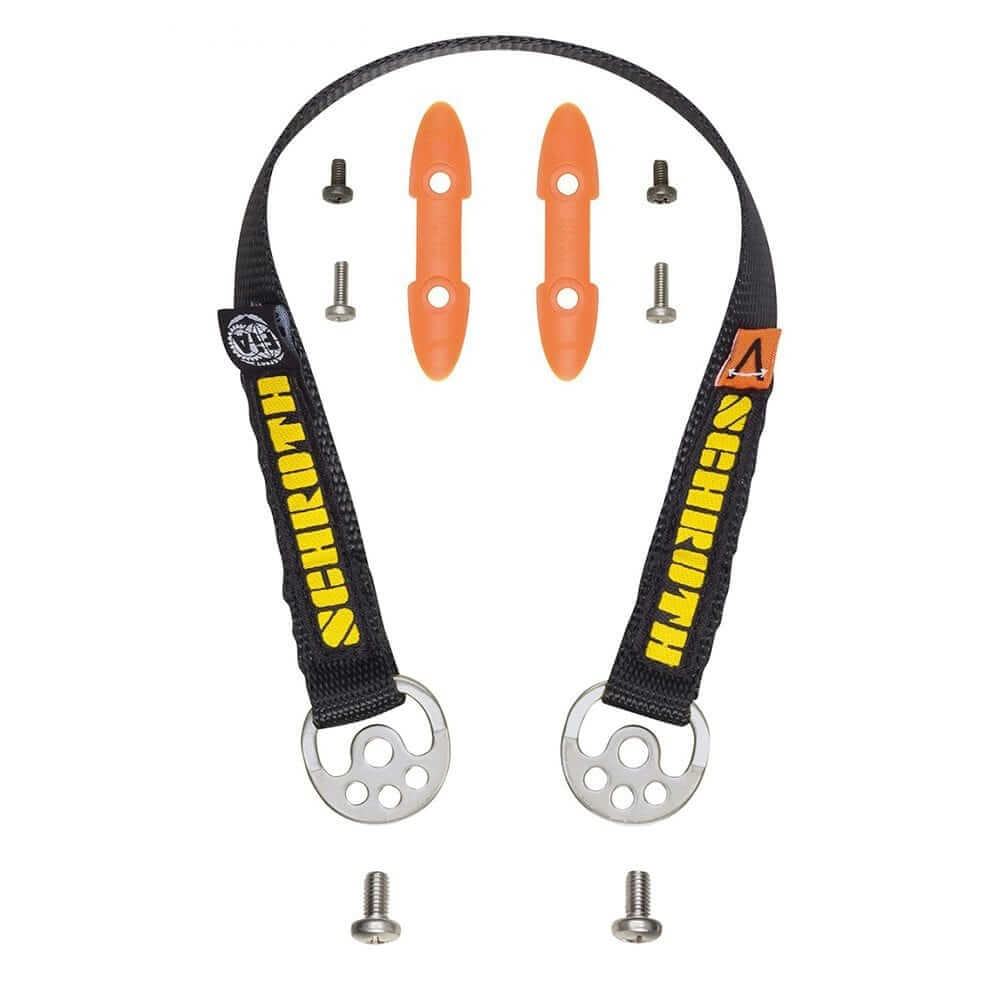
Sliding tethers are worth knowing about here. Schroth make both a twist-anchor sliding set and a Vision Advantage Plus set, and they give noticeably more head movement than fixed tethers, which is the usual complaint from rally drivers and anyone who has to look a long way into a corner.
The angle on the device has to match how you sit
This is the specification most people never look at, and it is the one that decides whether a device is comfortable.
| Device | Approval | Angle | Suits |
|---|---|---|---|
| Stand21 Club Series 1 | FIA 8858-2010 | 20 degree | Upright saloon and single-seater positions |
| Stand21 Club Series 3 | FIA 8858-2010 | 20 degree | As above, lighter build |
| HANS IVMOST SOLD | FIA 8858-2010 | 20 degree | The mainstream club choice |
| Schroth Super Sport XLT | FIA 8858-2010 | 20 degree | Lightweight step up, around 800g |
| Simpson Hybrid Sport | FIA 8858-2010 and SFI 38.1 | Hybrid, torso strapped | Cars without a harness, rally, off-road |
| Stand21 Ultimate Series | FIA 8858-2010 | 20 or 30 degree | Reclined seating, professional use |
A 20 degree device is built for a fairly upright seat and a 30 degree one for a reclined position. Put a 20 degree device behind a laid-back seat and the collar digs into the back of your neck within a stint. It is not a safety failure, but it is the reason people stop wearing something they paid three hundred pounds for.
Two devices in our range are not FIA homologated and we would rather say so plainly than let anyone find out at scrutineering. The Schroth SHR Flex carries SFI 38.1 only, and the HANS III Youth is not FIA either. Both have their uses. Neither is for an FIA-sanctioned event.
The way to settle it is to sit in your own seat with the belts tight and the helmet on. Come and do that here if the car is local, or send us the seat and the recline angle and we will narrow it down.
-
From £195.50 Incl. VATFrom £195.50 Excl. VAT Select options This product has multiple variants. The options may be chosen on the product page
-
From £250.00 Incl. VATFrom £250.00 Excl. VAT Select options This product has multiple variants. The options may be chosen on the product page
-
From £270.00 Incl. VATFrom £270.00 Excl. VAT Select options This product has multiple variants. The options may be chosen on the product page
-
From £295.00 Incl. VATFrom £295.00 Excl. VAT Select options This product has multiple variants. The options may be chosen on the product page
-
From £580.00 Incl. VATFrom £580.00 Excl. VAT Select options This product has multiple variants. The options may be chosen on the product page
-
From £890.00 Incl. VATFrom £890.00 Excl. VAT Select options This product has multiple variants. The options may be chosen on the product page
Anchorages, clips, tethers and padding
The bits that wear out, get lost, or turn out not to match. All FIA 8858-2010 where the part carries an approval.
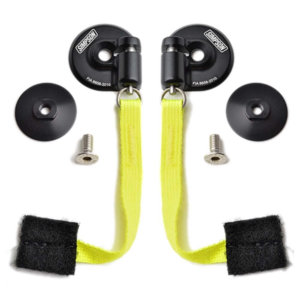
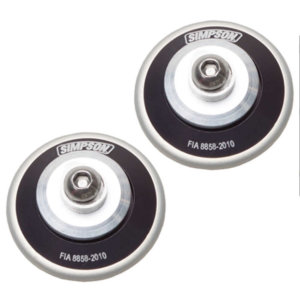
Posts are the part people most often need and least often think about. If your helmet was supplied without them, Bell posts and Simpson M61 quick-release anchors both fit helmets built to take them. Built to take them is the important part: if there is no provision in the shell, the answer is a different helmet, not a drill.
Clips are brand-specific and this is where most mismatches happen. Stilo and Simpson clips are not interchangeable, and a device from one maker with posts from another needs the right clip in between. Bring both parts in if you are not sure.
Tethers and padding are consumables. A replacement tether set is far cheaper than a device and the webbing does age, and a padding kit will often fix a device that has become uncomfortable rather than one that never fitted.
-
From £42.00 Incl. VATFrom £42.00 Excl. VAT Select options This product has multiple variants. The options may be chosen on the product page
-
From £53.00 Incl. VATFrom £53.00 Excl. VAT Select options This product has multiple variants. The options may be chosen on the product page
-
From £64.17 Incl. VATFrom £64.17 Excl. VAT Select options This product has multiple variants. The options may be chosen on the product page
Check the whole assembly in the seat, with the belts tight
Everything above can be right on the shop floor and wrong in the car. Sit in the installed seat, in your suit, with the helmet on and the harness properly tightened, and then look at four things: where the shoulder belts actually contact the yoke, whether the device has shifted, how much head movement you have left, and whether you can still reach the harness release.
That last one matters more than people give it credit for. A setup you cannot get out of quickly is not a safe setup, however good the impact numbers are.
Use the FIA and manufacturer installation guidance as the reference throughout. We can check physical fit and compatibility and tell you when something looks wrong, but the instructions that came with your device and your belts are the document that governs the installation.
HANS and FHR questions
Can I add HANS posts to any helmet?▾
No. The helmet and its anchorage arrangement must be approved for FHR use. If there is no provision in the shell, drilling it ends the helmet approval and the answer is a different helmet.
Can I use just one tether clip?▾
No. Both sides must be correctly connected. The device only restrains your head with both tethers engaged.
Do the shoulder belts go over or under the device?▾
Over, on the specified bearing surfaces. Under the yoke there is nothing holding the device down and it does not work.
Does every HANS suit every seat angle?▾
No, and this is the specification most people skip. A 20 degree device suits an upright seat and a 30 degree one a reclined position. Choose for the installed seating position.
Can I wear one with a normal road three-point belt?▾
A conventional HANS relies on harness shoulder straps to hold it down, so no. For a car without a harness, look at the torso-strapped Simpson Hybrid style instead.
Are all your FHR devices FIA approved?▾
Not all. Nine of the eleven are FIA 8858-2010. The Schroth SHR Flex carries SFI 38.1 only and the HANS III Youth is not FIA approved, so neither is suitable for an FIA-sanctioned event.
Are clips from different brands interchangeable?▾
No. Clips are brand-specific and a device from one maker with posts from another needs the correct clip between them. Bring both parts in and we will match them.
How much movement should I have?▾
Enough to check mirrors and apexes without a tether twisting or catching. If you feel restrained turning your head, look at sliding tethers before you assume the device is wrong.
We will test the complete driving position
Add the seat and the restraint system if you can, or send us the seat model and the recline angle. Checking the assembly as a whole is the only way to catch a tether that fouls or a yoke that sits wrong, and it takes twenty minutes.
Browse HANS and FHRBook the showroomContact us