Race boots for wider feet: how to check the fit
Race boot fitting guide
Need more room across the front of a race boot? Start by comparing the shape of the exact models, with the socks you will drive in. A bigger size can add unwanted length without solving the width problem.
There is more to check than a brand name or a “wide” description: the model code, size chart and fit on your own foot all matter.
- Check width and length separately
- Try the intended racing socks
- Compare different models, not just sizes
- Keep the approval your event requires
What is on this page
Why a race boot can feel different
Race footwear uses features such as thin soles and close-fitting closures for pedal control. The models in this guide achieve that with different uppers, ankle shapes and fastenings. None of those features tells you how much room your forefoot will have.
A UK or EU size marking is not a width measurement. Use the manufacturer’s chart for the exact model and try it with your intended socks; there is no reliable rule that all racing boots need half a size or one size more than your everyday shoes.
Compare the actual pairs without assuming that one country’s footwear is narrow or one brand always fits wider than another.
Check forefoot room, heel hold and pedal clearance
Cameron’s fitting advice is to fasten both boots as you would for driving, then check them seated. Your heel should feel held without relying on excessive lace tension. Check that you can move your ankle and reach the pedals without the boot feeling loose.
Pressure across the forefoot and excess space at the toes are different problems. If the next size adds length but still squeezes the same area, try another model. Do not buy a painfully tight boot on the assumption that it will stretch into the right shape.
Check clearance in your own pedal box before using a new pair on track, with the car stationary and made safe for a fitting check.
What the manufacturers actually say about width
OMP’s 2024 racewear catalogue describes the One-S IC0-0822-A01 as having a “wide shape”. It shows a leather upper, ankle strap and thin laces, with FIA 8856-2018 approval. This is a useful model to compare if you need more forefoot room.
That description is not a published EE width measurement or a promise that it will fit every wide foot. Our linked One-S listing uses the abbreviated code IC/822. If comparing it with a One-S advertised as EE or Wide elsewhere, ask us to confirm the exact version before treating them as the same boot.
See the OMP catalogue, printed pages 68–69, for that model description and its construction details.
| Model and reference | Verified construction | Fitting check |
|---|---|---|
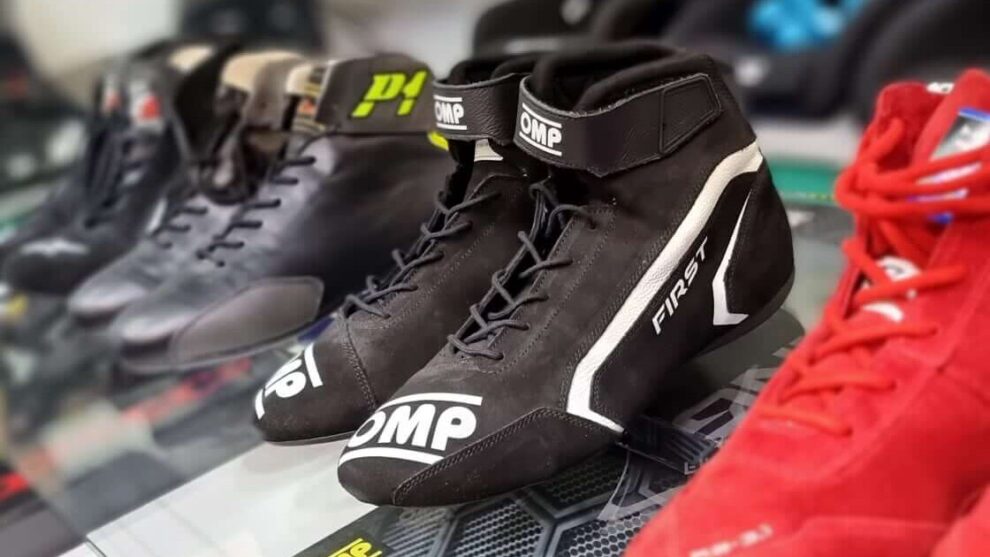
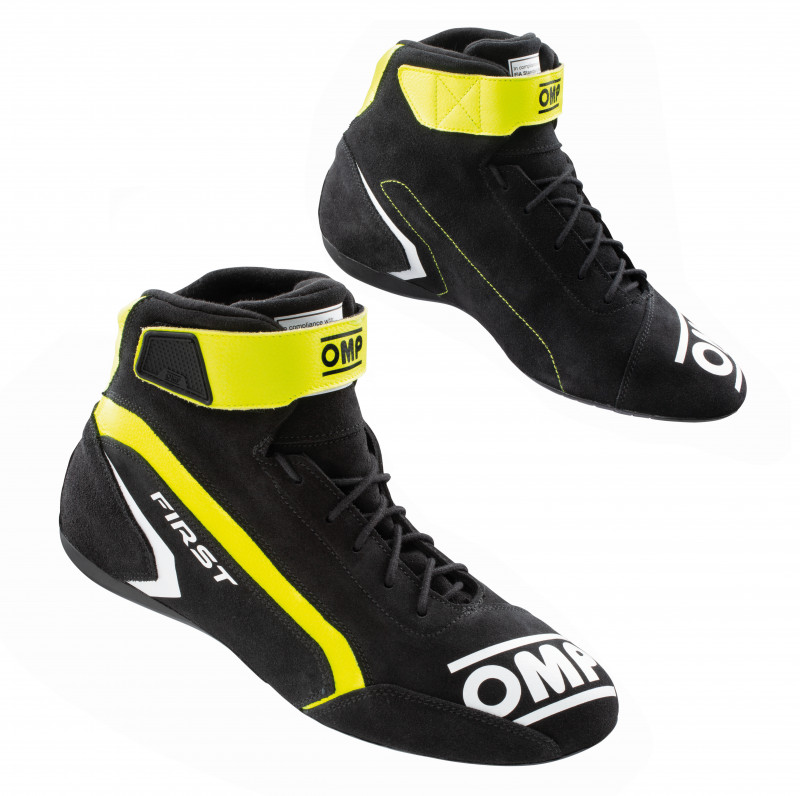
| OMP First IC0-0824-A01 | Suede upper and ankle strap | Check forefoot pressure with the boot fastened. |
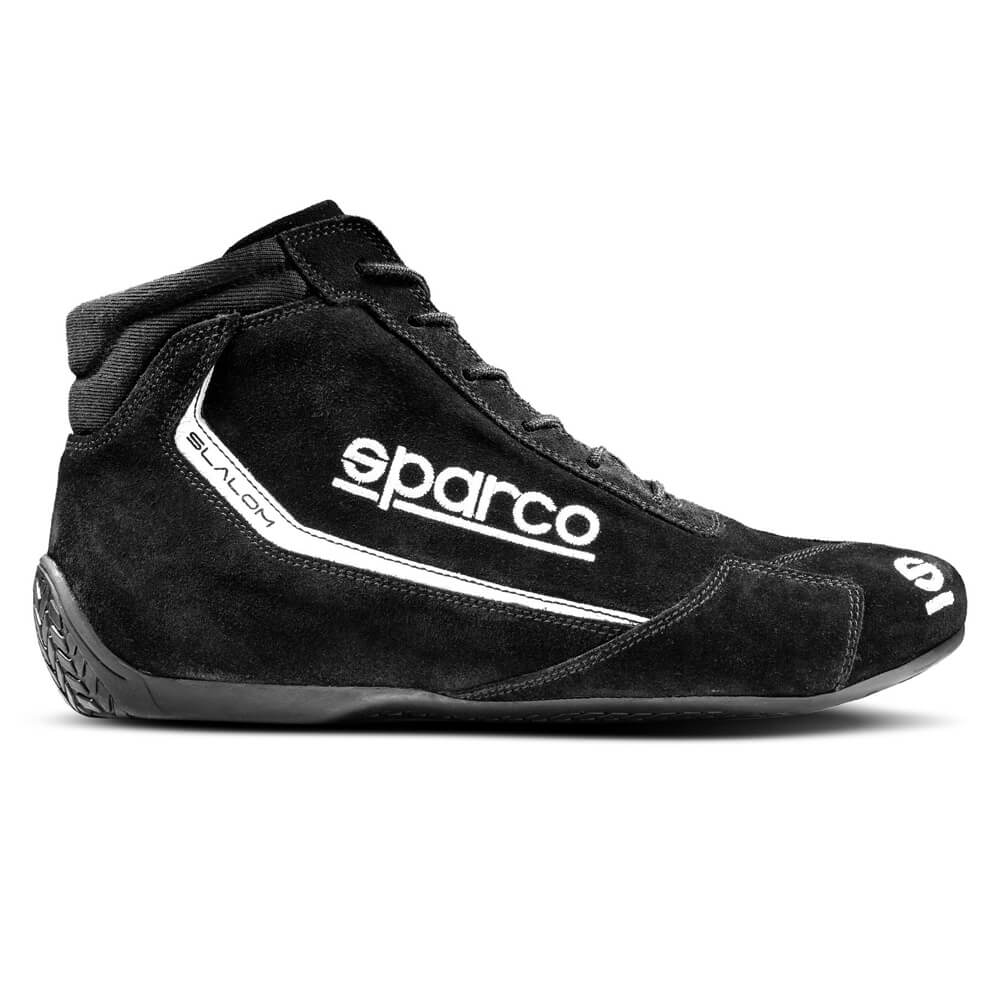
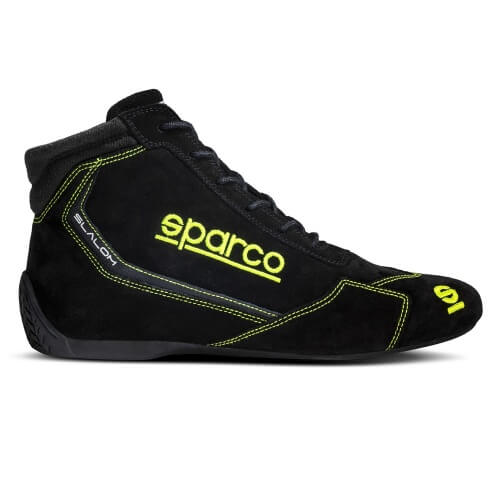
| Sparco Slalom 001295 | Suede upper and lace fastening | Compare the shape without assuming suede will widen to fit. |
| Alpinestars SP+ 2710723 | Suede/leather upper, laces and adjustable strap | Check the exact model’s size chart and heel hold. |
| OMP One-S IC0-0822-A01 catalogue model | Leather upper; OMP describes a wide shape | Confirm the supplied version; no EE measurement is stated here. |
The table identifies manufacturer model references, not measured widths. Check the actual footwear label against your event’s rules as well as checking the fit.
Compare the construction, then try the fit
The OMP First and Sparco Slalom use suede uppers; Alpinestars specifies a mix of suede and full-grain leather for the SP+. These material descriptions do not provide a width rating or a guaranteed amount of stretch.
Garreth’s advice is to compare suitable models side by side before choosing a colour or paying for a different finish. Tell us where the pressure occurs and which size you have tried so we can narrow down the next comparison.
The cards below show current prices and selectable sizes, which may differ from September 2025 when this guide was first published; contact us to check a particular pair before travelling.
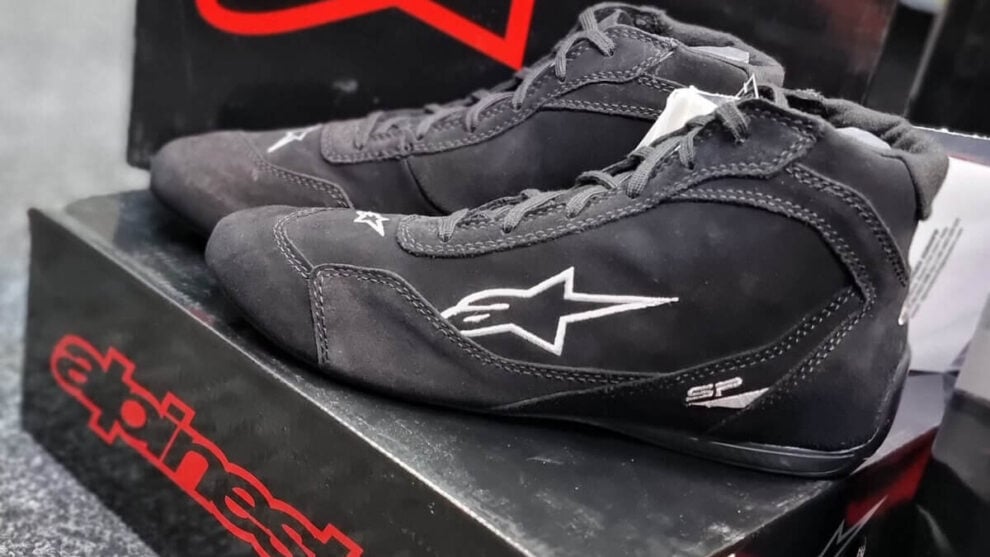
-
From £141.60 Incl. VATFrom £118.00 Excl. VATPayPal Credit0% pay-in-3Select options This product has multiple variants. The options may be chosen on the product page
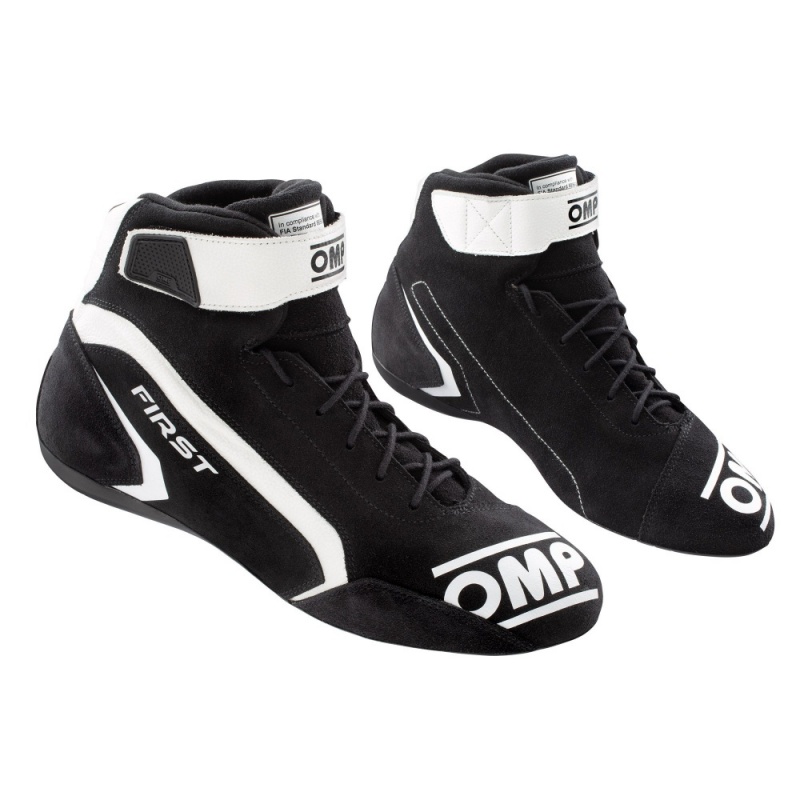
-
From £108.00 Incl. VATFrom £90.00 Excl. VATPayPal Credit0% pay-in-3Try in-storeSelect options This product has multiple variants. The options may be chosen on the product page
-
From £196.80 Incl. VATFrom £164.00 Excl. VATPayPal Credit0% pay-in-3Try in-storeSelect options This product has multiple variants. The options may be chosen on the product page
-
From £228.00 Incl. VATFrom £190.00 Excl. VATPayPal Credit0% pay-in-3Select options This product has multiple variants. The options may be chosen on the product page
Before you choose a pair
Bring the socks you will use
Try the same fire-resistant racing socks you intend to drive in, where those are required. Do not use extra-thick socks to disguise a loose boot or assume all racing socks are thicker than everyday socks. Our racing socks guide explains the options.
Check both length and width
Compare your usual size with the model’s chart and the actual fit, without following a blanket size-up instruction.
A comfortable standing fit is a starting point; check the seated position, fastening and pedal clearance before deciding whether the pair suits you.
Avoid forcing a width change
Follow the manufacturer’s care and fitting instructions. Do not cut the boot, use stretching tools or apply heat to force more room without the manufacturer confirming what is permitted. Ask about any insole change too, particularly if you need a specific insert.
Keep the required approval
Where an event requires approved fire-resistant footwear, ordinary trainers are not a substitute for that approval. Check the label on the actual boots; a comfortable fit alone does not prove eligibility.
Related reading
Compare the models in our FIA race boots buying guide. If you also drive karts, our car racewear and kartwear approval guide explains why approval details need checking for each discipline.
Do racing boots come in a wide fit?
OMP’s 2024 catalogue describes One-S IC0-0822-A01 as having a wide shape. That is not an EE measurement or a guarantee for every wide foot; confirm the exact supplied version and try it.
Should I size up in race boots if I have wide feet?
There is no fixed size-up rule. Check the exact model’s chart, then compare the length, forefoot room and heel hold with your intended socks. More length does not necessarily solve pressure across the width.
Do race boots always run small?
No universal size conversion establishes the fit of every model. Follow the specific manufacturer’s chart and try the actual boots, allowing for the socks you intend to use.
Will suede race boots stretch enough for wider feet?
Do not rely on a material name or break-in period to fix a painfully narrow boot. The complete construction affects how it fits, and no width increase is guaranteed here.
Can I wear ordinary shoes if approved boots are too narrow?
Where your event requires approved fire-resistant footwear, ordinary shoes do not replace that requirement. Compare other suitable models and check their labels against the event rules.
Tell us where your current boots feel tight
Send Garreth and Cameron the model, size and area of pressure, plus the event you need them for, so we can help compare suitable options before a visit.