Motorsport Fire Extinguisher Regulations: A UK Guide To Plumbed-In And Hand-Held Systems
Fire safety guide
Fire extinguisher rules catch people out because there is no single rule for every car. What you need depends on your discipline, your class, your championship and the event itself, and the answer can be a plumbed-in system, a hand-held extinguisher, both, or neither.
This guide sets out how the UK rules work, what the FIA homologation on a bottle means, and what to check on installation and servicing. We are a retailer, not the governing body, so always read the current Motorsport UK Yearbook and your championship regulations before you buy.
- Requirements depend on discipline, class, championship and event
- Where Motorsport UK requires a plumbed-in system, it must be FIA homologated
- FIA Technical Lists 16, 52 and 97 cover different fire system standards
- A system's homologation sets its capacity and nozzle layout
- Hand-held minimums set by Motorsport UK in 2022: 2.4 litres AFFF, or 2 kg gas or powder
- FIA systems are serviced by the maker or its appointed agent
What is on this page
Start with the rule for your car
The Motorsport UK Yearbook has general vehicle rules and separate requirements for each discipline, such as racing, rallying and speed events. On top of that, championships and individual events can add their own requirements in their regulations. The right extinguisher is the one that satisfies all three for your car, so read them in that order before you choose.
Garreth’s advice is simple: find the paragraph that applies to your class, and bring it to us with your car details. It is much easier to match a system to a written rule than to a general idea of what is needed.
Plumbed-in systems and FIA homologation
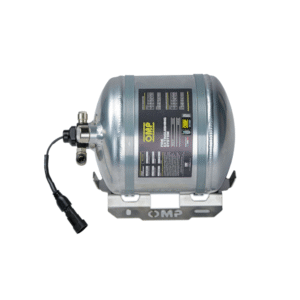
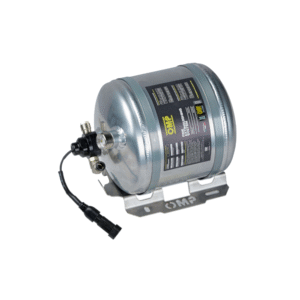
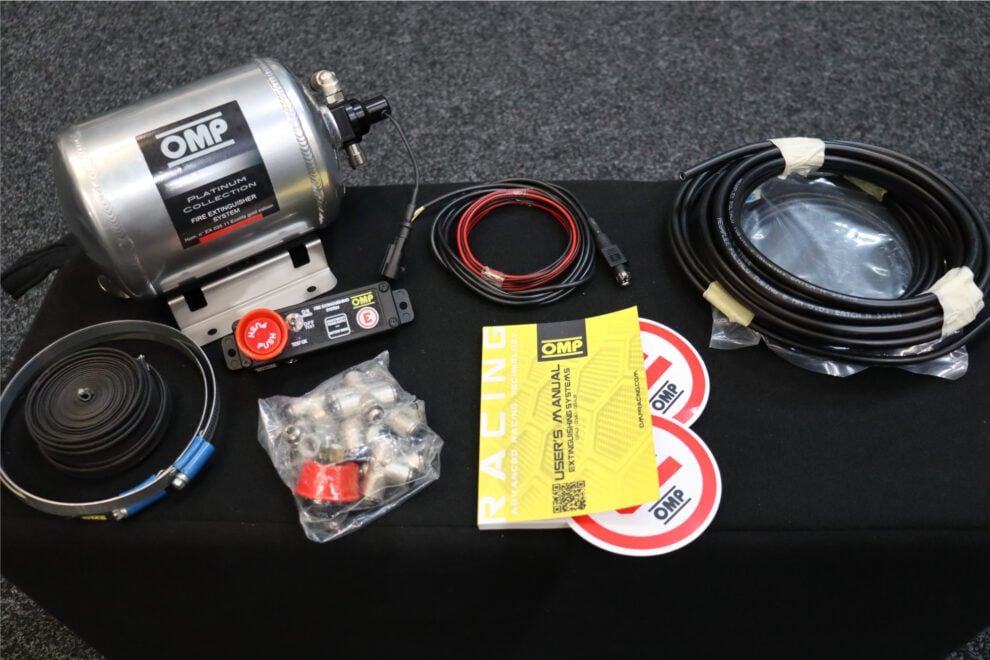
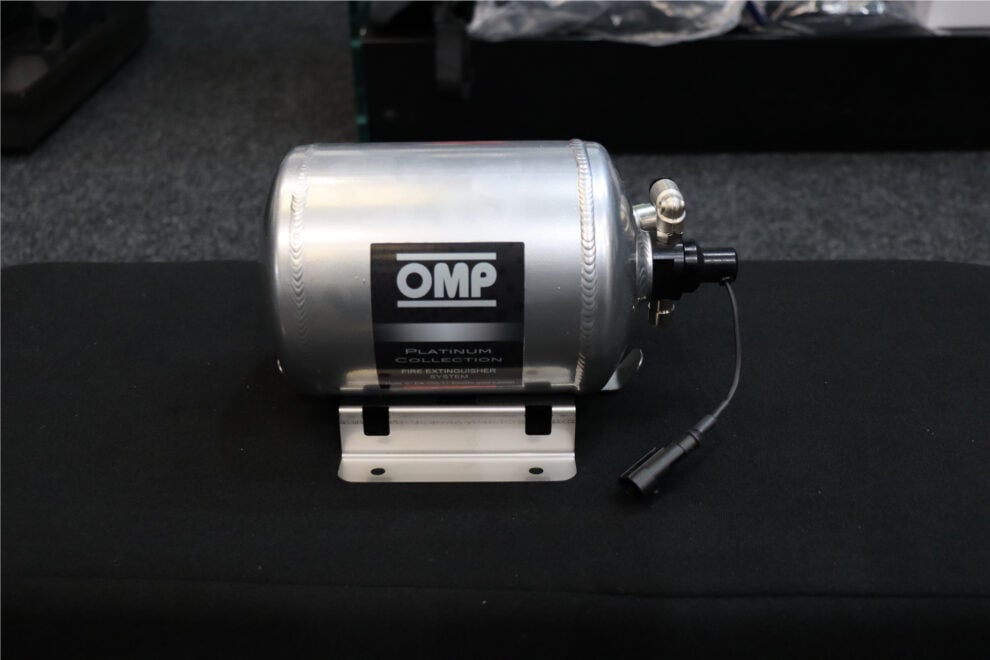
A plumbed-in system is a bottle fixed in the car, piped to nozzles in the cockpit and, usually, the engine bay, and fired by a pull cable or an electrical button. Since 2022, Motorsport UK has required that where its regulations call for a plumbed-in system, it must be an FIA homologated one.
The FIA publishes the approved systems in technical lists, and each covers a different standard:
- Technical List 16: systems homologated to the FIA 1999 plumbed-in standard.
- Technical List 52: systems homologated to FIA 8865-2015.
- Technical List 97: plumbed-in suppression systems homologated to FIA 8876-2022, which is aimed at open-cockpit cars.
The capacity of a plumbed-in system and the positions of its nozzles are defined by that system’s homologation, not by a general minimum. Motorsport UK does set some discipline extras: for example, stage rally systems must have nozzles in both the cockpit and the engine bay, and its 2022 update gave rally gas systems a 3 kg minimum. Our guide to FIA fire extinguisher homologations goes into the lists in more detail.
Hand-held extinguishers
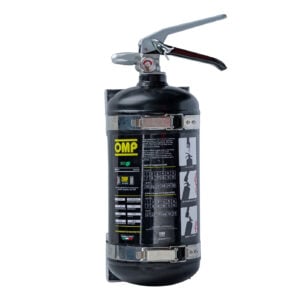
Some disciplines ask for a hand-held extinguisher instead of, or as well as, a plumbed-in system. When Motorsport UK updated its rules in 2022, it set the minimum hand-held capacity at 2.4 litres for AFFF foam, or 2 kg for gas and powder. Check the current Yearbook for your discipline, because a championship can ask for more.
Track days are not competition, so the organiser sets the rules. Many drivers still carry a hand-held extinguisher in the car, securely mounted where the driver can reach it.
Mechanical or electrical activation
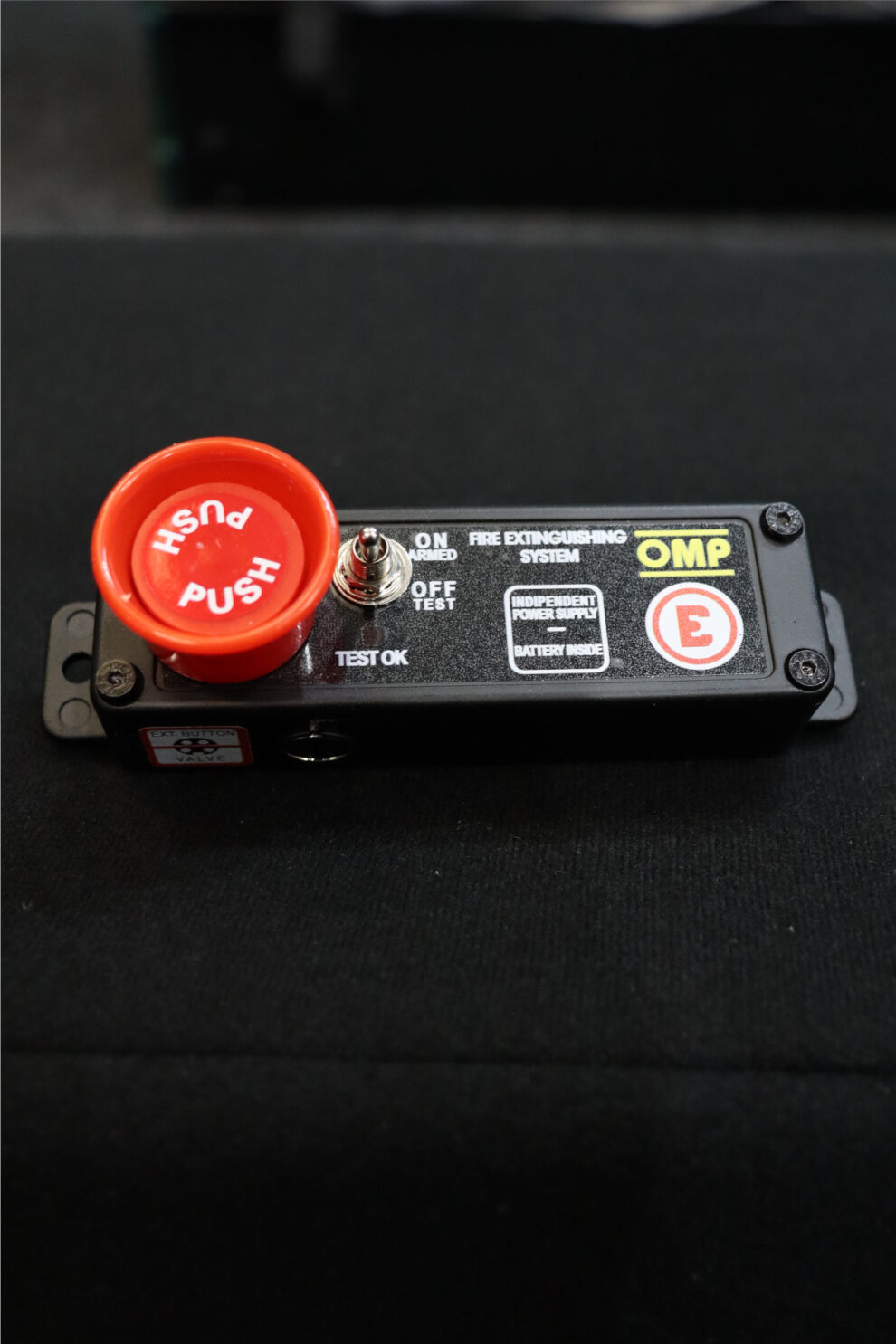
Mechanical systems are fired by pulling a cable, and need no power from the car. Electrical systems are fired by a button, with wiring in place of cables, which makes them neater to fit and easy to give more than one trigger point.
Both types are available with FIA homologation, so the choice comes down to your rules, your car and your budget. Our guide to mechanical and electrical extinguishers compares them side by side.
Fitting the system
An FIA system is approved as a complete kit: the bottle, valve, trigger, tubing and nozzles, in the layout shown in its manual. Fit it exactly as the manufacturer’s manual for that homologation says, and do not add nozzles or mix in parts from another kit, because the layout is part of the approval and extra nozzles can reduce the pressure at each one.
The bottle must be mounted securely with metal fixings and anti-torpedo tabs so it cannot move in an accident, and the triggers must be where the rules require them. If your system has a safety pin or lock to stop it firing by accident, follow the manual on when it must be removed and refitted.
Servicing and homologation dates
Motorsport UK states that FIA homologated systems must be serviced by the manufacturer or its appointed agent, to the manufacturer's schedule. Keep the service and approval labels readable, because a scrutineer who cannot read them cannot pass the system.
Motorsport UK also allows an FIA homologated system to be used after its homologation end date, as long as the manufacturer's service schedule is kept up. Our guide to servicing a motorsport fire extinguisher explains how to find the right agent.
Does every UK competition car need a plumbed-in fire extinguisher?
No. It depends on your discipline, class, championship and event, so read the current Motorsport UK and championship regulations for your car.
Does a plumbed-in system have to be FIA homologated?
Where Motorsport UK regulations require a plumbed-in system, it must be an FIA homologated one.
What is the minimum size for a hand-held motorsport extinguisher?
Motorsport UK’s 2022 rules set 2.4 litres for AFFF foam, or 2 kg for gas and powder, but check the current Yearbook and your championship rules.
Can I use my extinguisher after its FIA homologation date?
Motorsport UK allows it, provided the system is kept to the manufacturer’s service schedule.
Who can service an FIA fire extinguisher?
The manufacturer or its appointed agent, following the manufacturer’s schedule.
Match the system to the written regulation for your car, then fit it exactly as its manual says.
Tell us your discipline, class and car, and we will help you find a system that matches the regulation.