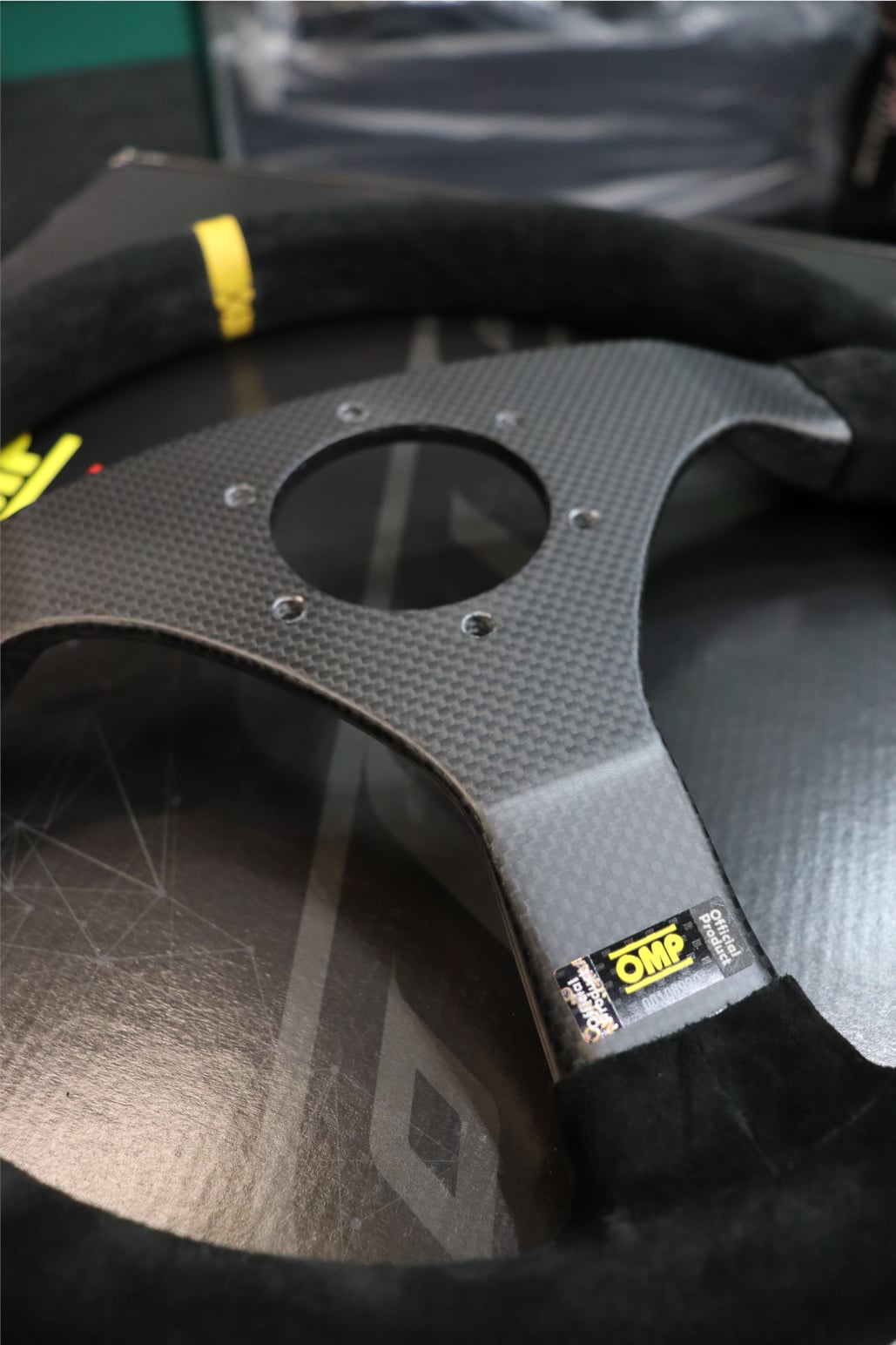
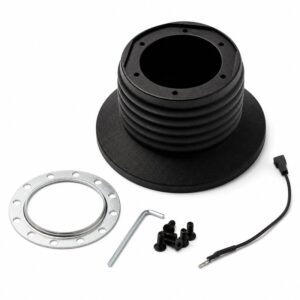
The Complete B-G and MOMO Honda Steering Wheel Hub Guide
Honda sold more cars in Britain than most people remember, and the boss kit catalogue reflects that. Between B-G Racing, MOMO and OMP we carry 55 Honda hubs covering everything from early 1980s Civics through to late-model Accords and the S2000. The range is wider than it looks because Honda kept a consistent 6x70mm bolt pattern across decades, which means one wheel choice works across nearly all of them.
The part that catches people out is the Civic. It has run through six different boss kits depending on the generation, and several of those kits also appear on the Ballade, the CRX and the Integra. The best-selling hub here is MOMO MK4903, which I have handled more times than I can count. It covers seven Honda model families from 1983 to 1999, including the City, the Legend, the Prelude and the Integra. The coverage chart halfway down the page shows exactly which models and years it serves.
What follows is the full listing broken down by brand, with part codes and fitment notes. Honda and Rover shared production platforms through the 1980s and 1990s, which is why MC4905 and MC4917 appear in Rover listings as well as Honda ones. If you are still working out which part you need, the chart is the fastest way to find it.
Why you need a B-G or MOMO boss kit
Boss kits come in two types: collapsible and non-collapsible. A collapsible hub has a breakaway joint that crumples on impact, which is a factory requirement on cars built from the mid-1980s onward. All MOMO and all OMP Honda hubs are collapsible. B-G Racing carries both types depending on the model, because a pre-1983 Honda needs a solid hub and a later car usually needs a collapsible one. BG8050, which covers eleven pre-1983 models in one part number, is non-collapsible for exactly that reason.
Fitting an aftermarket wheel on a Honda requires the boss kit to be correct for the car, not just any Honda hub. A Civic from 1988 takes a different part from a Civic from 1996. The listings state the year range clearly, and the chart below brings them together so you can find your generation without reading through 55 individual pages.
It joins two different fittings
Your column has splines. The back of the wheel has a bolt pattern. The hub is the only part that speaks both.
It sets how far the wheel sits
The hub decides the distance from the dash, which changes your reach to the stalks and the clearance over your knees, and on a Civic or Integra with a fitted bucket seat, those few millimetres count.
Nothing else to buy
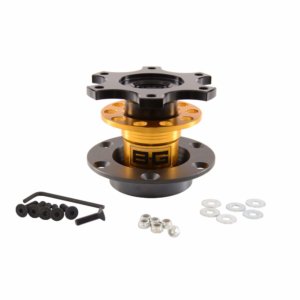
The fixing screws, the Allen key and the horn button retaining ring are all in the box, so nothing stops you halfway through the job.
Seven models, one hub
Find your model in the second column, then read the part code to the left. Every green row is the same part, MOMO MK4903. Where a bar fades out the listing says onward rather than naming an end year. The Civic alone has run through six different boss kits, so find yours, then confirm the year on the listing before you order.
Two things to confirm before you order. First, the year: several part codes only cover a single generation of the same model name, and the Civic alone has run through six of them. Second, the spline count on pre-1983 cars: BG8050 covers eleven models in one part, but confirm your specific car against the listing.
Honda and Rover shared production platforms through the 1980s and 1990s. MC4905 (Civic 1988 to 1991) and MC4917 (Accord and Vigor 1993 to 1995) appear in Rover 200, Rover 400 and Rover 600 listings as well. The same part fits both. If you find your part on a Rover listing, that is the correct hub for your Honda.
Steering wheel installation explained
So how does a Sparco wheel end up on a MOMO hub? Because nearly every aftermarket motorsport wheel is drilled to the same pattern, six bolts on a 70mm circle, written as 6 x 70mm PCD. MOMO, Sparco, OMP, Simoni Racing and the Mountney M-Range all use it. The hub is chosen by your car, the wheel is chosen by you, and nothing locks you into one brand.
MOMO, Sparco, OMP, Simoni Racing and the Mountney M-Range.
Nardi, Personal and Raid.
Fitting it, in order
- 1Hub onto the column
- 2Wheel onto the hub
- 3Horn wire onto the tab
- 4Retaining ring holds the horn button
How each brand drills its hubs
The MOMO Honda hub range
MOMO carries 25 Honda hubs, the widest single-brand Honda range we stock. The key part is MK4903, which covers seven model families: Civic and Ballade and CRX from 1984 to 1987, City and Jazz from 1983 to 1996, Accord and Vigor from 1984 to 1989, Prelude from 1984 to 1992, Legend from 1986 to 1992, Integra from 1986 to 1999, and Today from 1995 to 1998. One hub, sixteen years, seven families. MC4905 and MC4917 also appear in Rover listings because Honda and Rover shared platforms during those years, and the steering column is the same part.
The rest of the MOMO range covers later Civic and Accord generations. MC4911 takes the Civic and Ballade and CRX from 1992 to 1995. MC4920 covers the 1996 Civic and Accord. MK4929R covers the 2001 Civic and Accord through to 2015. MK4931R covers the 2006 to 2011 Civic and the 2013-onward Accord. MK4930R is the S2000 hub from 2001 onward. Every MOMO Honda hub is collapsible.
All 25 MOMO Honda hubs are below. They are ordered by product ID, not by year or model, so scan the full range rather than assuming the first result is the most recent one.
The B-G Honda hub range
B-G Racing lists 17 Honda hubs, the second-largest Honda range we carry. The standout part is BG8050, which covers eleven pre-1983 Honda models in a single non-collapsible hub. That is the broadest coverage of any single part in the Honda catalogue. B-G also produces dual-drilled hubs for several models, fitting both the 6x70mm and 6x74mm bolt patterns, which gives you more wheel options on older cars.
The later B-G Honda range covers specific generations with dedicated part numbers. BG8175 covers the Civic Type R EP3 from 2001 to 2005. Where B-G offers both a collapsible and a non-collapsible version for the same fitment, the listing states which clearly.
All 17 B-G Honda hubs are below. The dual-drilled versions are worth knowing about if you want to run a non-standard PCD wheel on an older car.
OMP and Sparco Honda hubs
OMP carries 10 Honda hubs, all non-collapsible and drilled to 6x70mm. The range covers four Civic generations, four Accord generations, the Prelude and a combined listing. Sparco adds three more, covering the Civic from 1992 to 2000, the Civic from 2001 to 2006 and the Accord from 2003 to 2007. Together the 13 hubs cover models where the MOMO and B-G ranges thin out, particularly on mid-2000s cars.
OMP and Sparco hubs are non-collapsible, which makes them a track choice rather than the default road option. On a car with no airbag fitted and a replacement column, that is fine. On a standard road car the collapsible option from MOMO is usually the better spec. The listings state non-collapsible clearly.
Made in Italy. BG8050 covers eleven pre-1983 models in one non-collapsible part. Dual-drilled versions fit both 6x70mm and 6x74mm, giving more wheel options on older cars.
View the B-G Racing Honda hubsAll collapsible. MK4903 alone covers seven model families from 1983 to 1999, the widest single-hub coverage in the Honda catalogue. Every MOMO Honda hub drills to 6x70mm.
View the MOMO Honda hubsNon-collapsible and 6x70mm throughout. Covers four Civic generations, four Accord generations, the Prelude and a combined listing. Track-biased and solid.
View the OMP Honda hubsWhy not add a steering wheel quick release kit
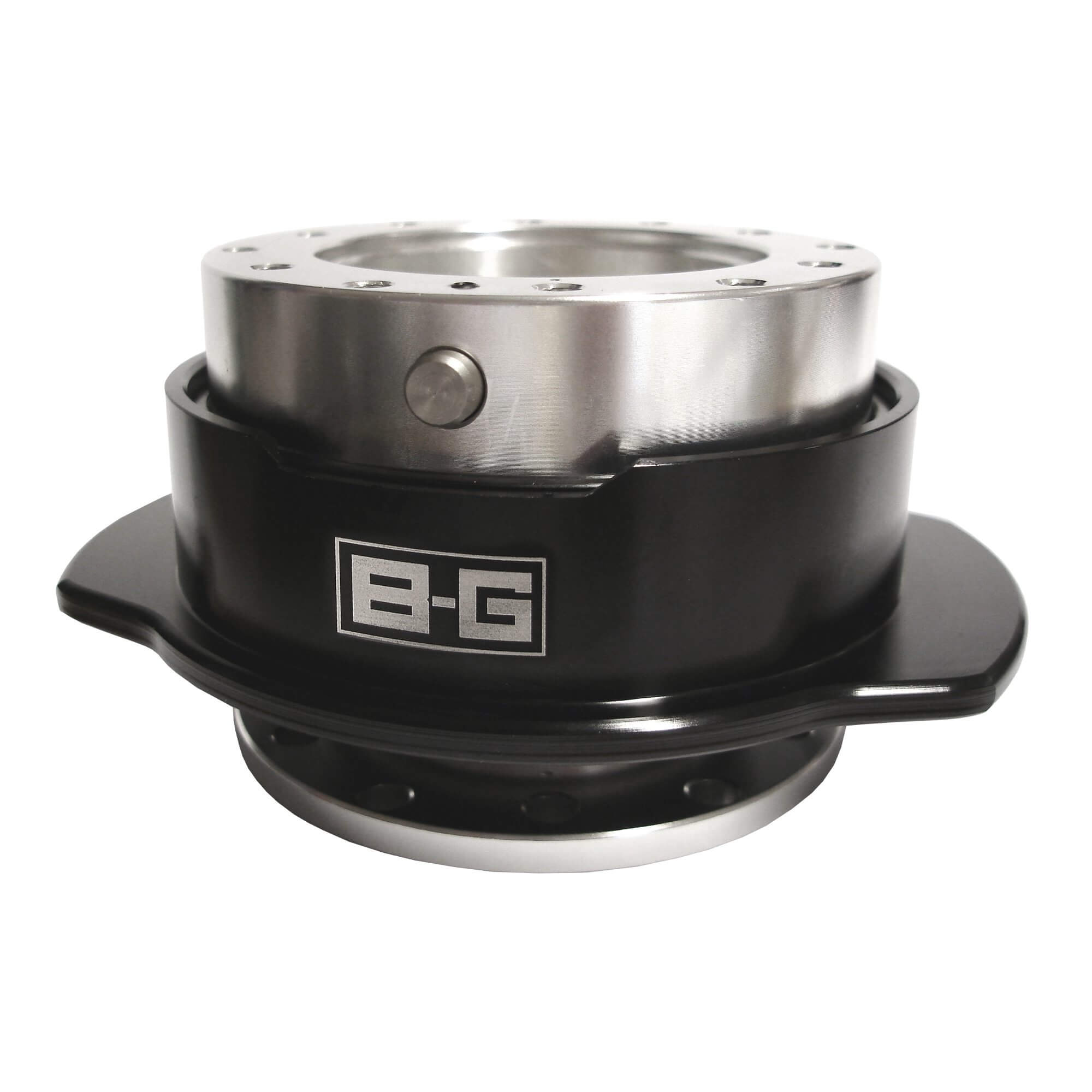
A quick release sits between the boss kit and the wheel and lets you pull the wheel off the column in a second. On a Honda used on track, particularly an older Civic or Integra with a fixed-back bucket seat, taking the wheel off makes entry and exit considerably easier. You do not need one for road use, but once you have fitted one you tend to keep it.
The four quick release kits below work with any hub on this page because they all share the 6x70mm bolt face. Pick the quick release first, then the wheel, then the hub. The order does not matter for fitment, but it is the sequence that avoids buying things twice.
All four take the same 6 x 70mm wheels as everything else on this page, so the wheel you choose further down will fit whichever one you pick.
-
From £99.00 Incl. VATFrom £99.00 Excl. VAT Select options This product has multiple variants. The options may be chosen on the product page
-
From £119.50 Incl. VATFrom £119.50 Excl. VAT Select options This product has multiple variants. The options may be chosen on the product page
Pair your boss kit with a high performance steering wheel
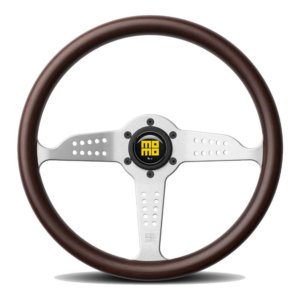
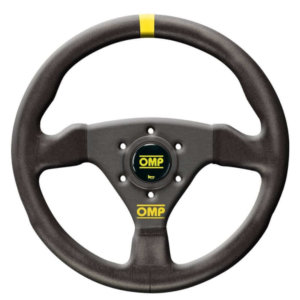
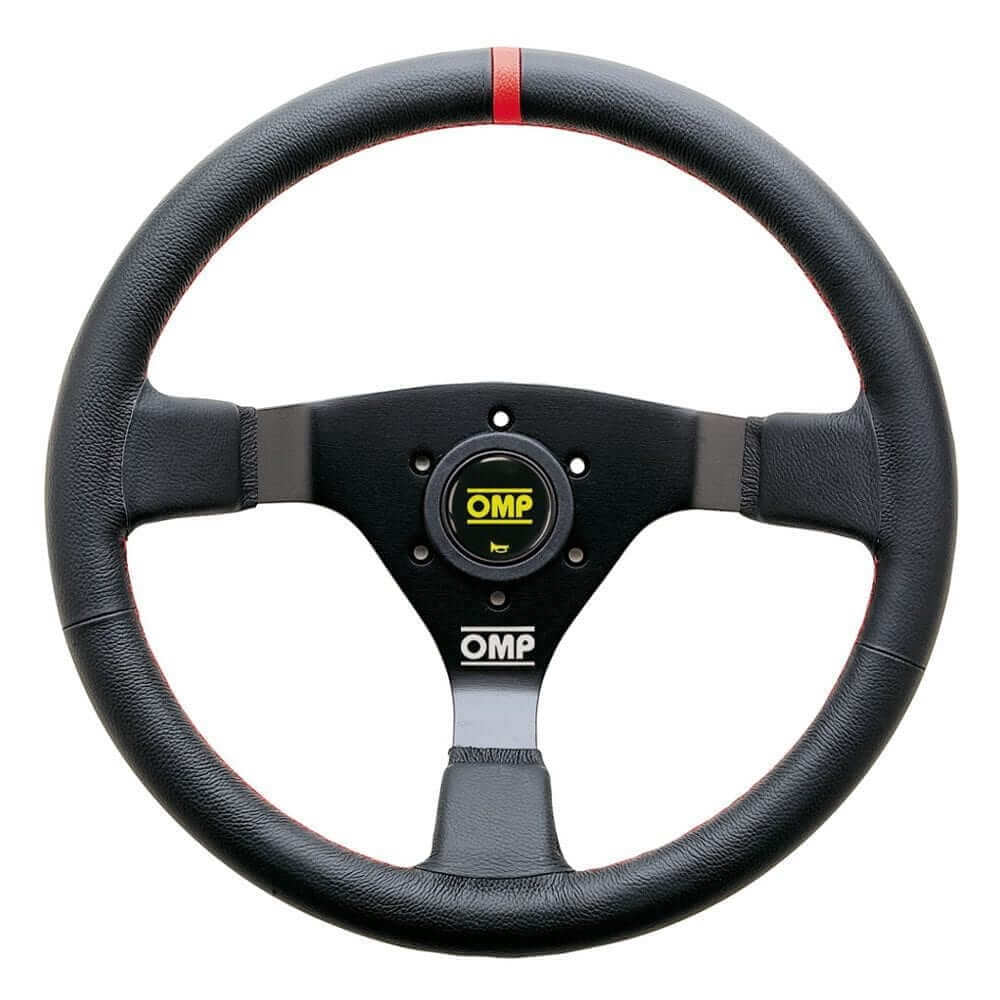
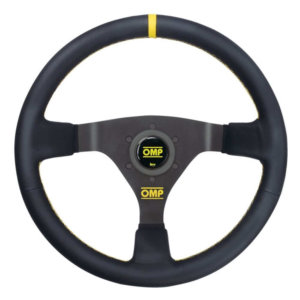
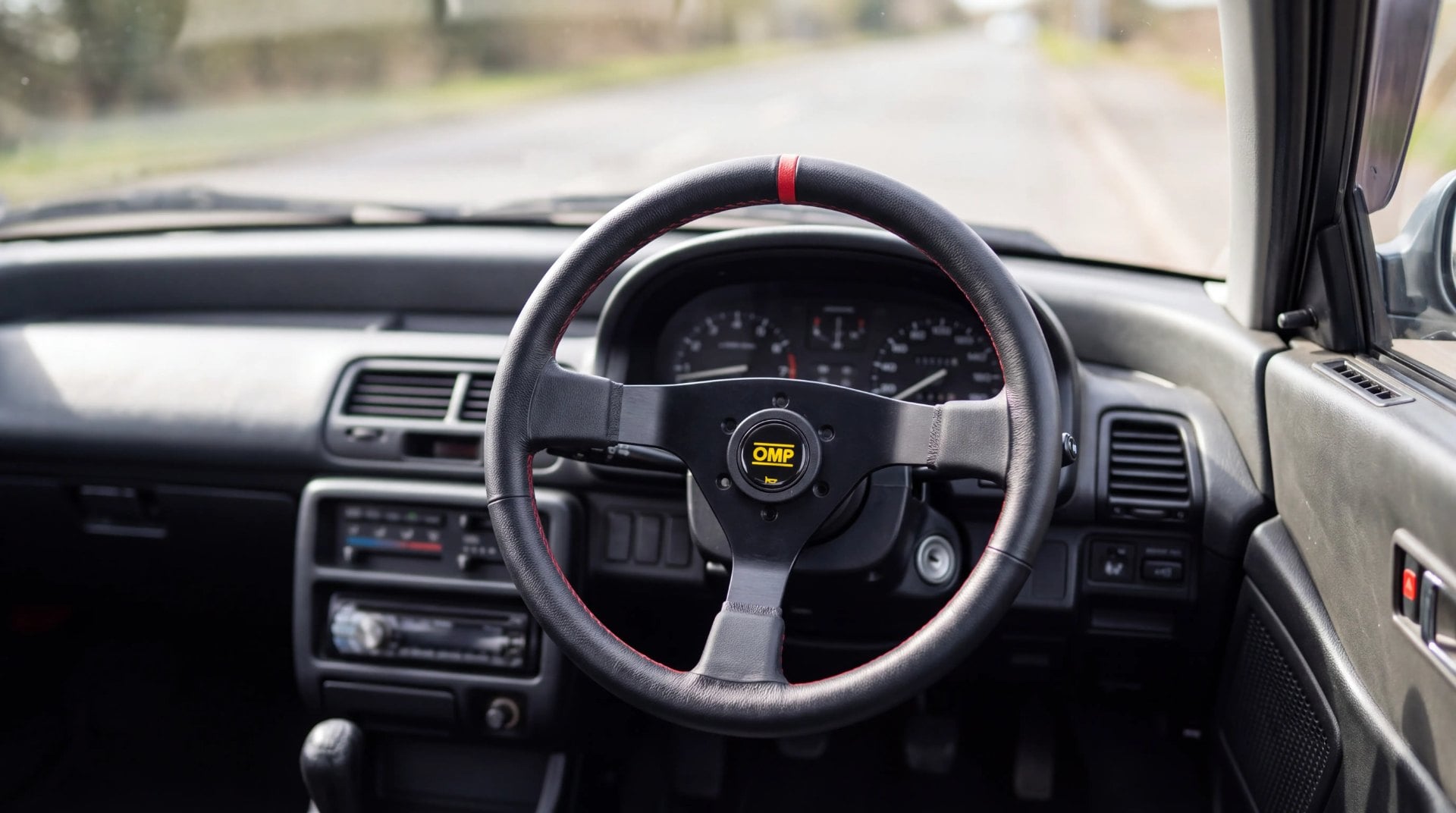
Every hub on this page drills to 6x70mm, and so does every aftermarket motorsport wheel we stock. That means your wheel choice is not constrained by the hub. Pick the wheel you want for grip diameter, dish and material, then pair it with the Honda hub that covers your year.
-
From £237.99 Incl. VATFrom £237.99 Excl. VAT Select options This product has multiple variants. The options may be chosen on the product page
-
From £287.99 Incl. VATFrom £287.99 Excl. VAT Select options This product has multiple variants. The options may be chosen on the product page
-
From £110.00 Incl. VATFrom £110.00 Excl. VAT Select options This product has multiple variants. The options may be chosen on the product page
-
From £159.50 Incl. VATFrom £159.50 Excl. VAT Select options This product has multiple variants. The options may be chosen on the product page
Every wheel we sell is drilled 6 x 70mm, so any of them will bolt to any of the hubs above. The only real decision is diameter and dish, which changes how heavy the steering feels and how close the rim sits to your chest.
Final thoughts
Honda turns out to be a straightforward make to shop for once you know the generation. The 6x70mm bolt circle runs through nearly the whole range, so one wheel works across all of it. The variation is in the hub itself, particularly on the Civic, which has changed enough across the years that each decade has its own part code.
MOMO is the widest range and MK4903 is the part I would point most people toward first, because it covers seven model families from 1983 to 1999. The B-G dual-drilled range is worth knowing about on older cars and for anyone who wants more wheel options. OMP and Sparco fill in the later generations where the others thin out.
If you are not certain of your generation, the coverage chart halfway up the page is the fastest way to find it. Cameron, GSM Performance.