The Complete Renault Clio Mk2 Steering Wheel Hub Guide
The Clio II is the car that taught a generation of people what a front wheel drive chassis could do, and it is still cheap enough that most of them get modified. The interior has not aged as well as the way it drives. The wheel is the first thing you touch and usually the first thing that looks tired.
Changing it is straightforward. The only part that needs thinking about is the hub, and on this car that comes down to one question about the year.
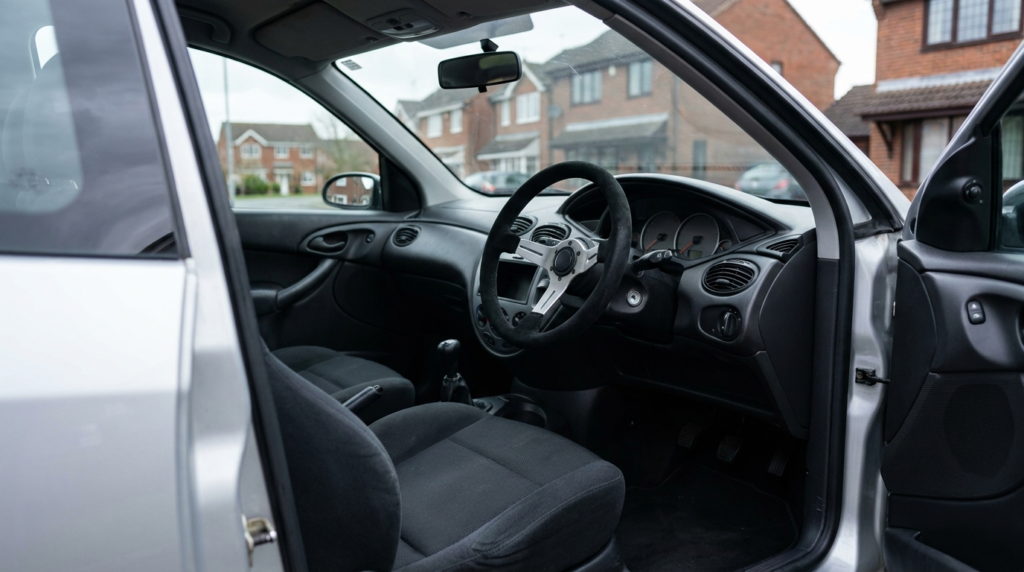
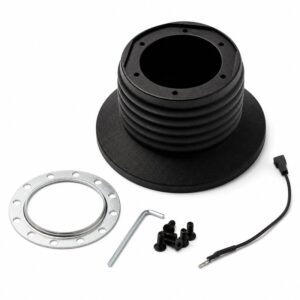
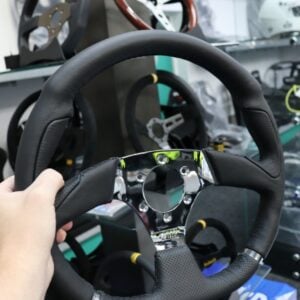
Everything below is kit we stock. The boss kits are the four listed for a Clio 2 rather than a generic Renault fitment, and prices sit on the live product cards so they stay right. The interior shot above is an illustration rather than a photograph of a customer car, and the product photography is our own.
The bit that makes all of this easy: 6x70mm PCD
Worth clearing up first, because it removes most of the worry. MOMO, OMP, Sparco and Sabelt all drill their wheels and their boss kits to the same six bolt pattern, 6x70mm PCD, and our own listings say so. The Sabelt SW-633 is described as having a six bolt fitment that gives mounting options for most cars. The Sparco 325 listing says it fits all standard MOMO, OMP and Sparco type boss kits.
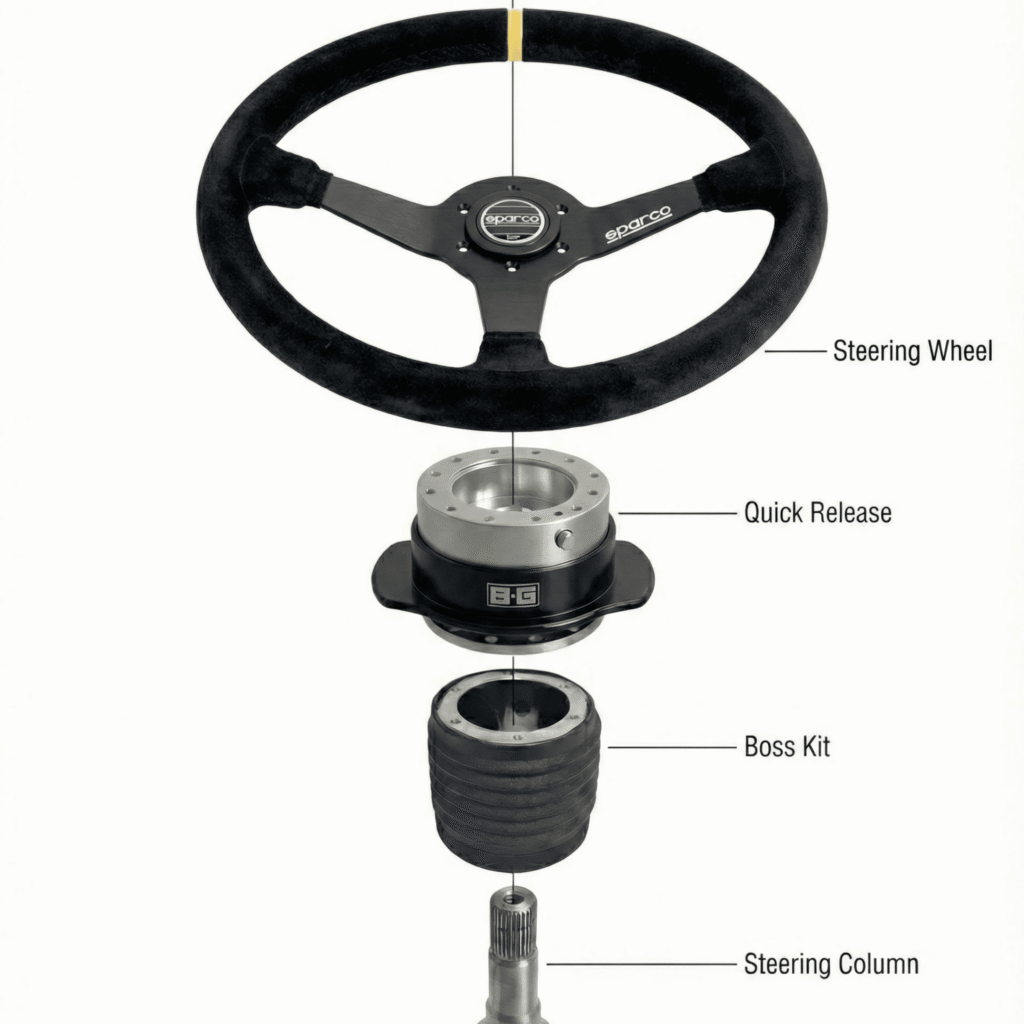
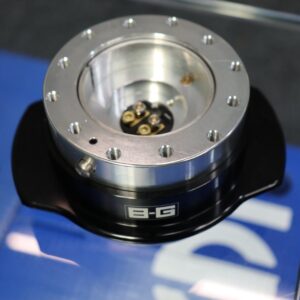
So the hub and the wheel are separate purchases and neither locks the other in. A MOMO boss will take a Sparco wheel. An OMP boss will take a Sabelt one. A quick release goes between the two and works with either, and the B-G universal is drilled for both 6x70mm and 6x74mm so it covers the odd one out.
Three decisions, and none of them constrain the others:
- The boss kit, which is chosen by the car
- The wheel, which is chosen by you
- The quick release, which is optional and chosen by how you use the car
Only the first one has a right answer, so it goes next.
Which boss kit fits a Clio Mk2
Four are listed for this car, and the year narrows it down quickly.
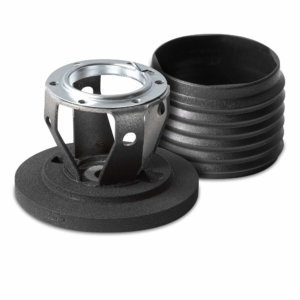
MOMO cut two, either side of the 2001 facelift. The MK7217R is listed for 1998 to 2001 and the MK7218R for 2001 onward, so the registration year settles which one you want. If your car sits right on the change, go by the build date rather than the plate.
OMP list two as well, both for a Clio 2 after 98. The difference between those two is the column rather than the year, so it is not something you can read off a registration document. Send us the reg and we will confirm which of them your car takes before you order.
All four are drilled 6x70mm, so whichever one fits your car, every wheel further down this page bolts straight to it.
MOMO split this car at the facelift
Renault built the Clio II from 1998 to 2005 and MOMO cut two hubs for it, one either side of the 2001 facelift. The bars below are drawn to scale against the years, so find where your car sits and the hub is decided.
The five wheels I would put in a Clio Mk2
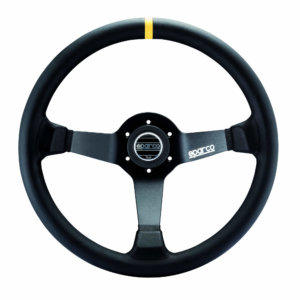
1. Sparco 325
The one I would fit. 350mm, so the steering weight barely changes, but with a full 95mm dish that drags the rim a long way back towards you. In a Clio the seat sits high and the wheel sits away from you, and 95mm closes that gap more than any amount of diameter would. Suede on an oval grip, and it comes in a few trims.
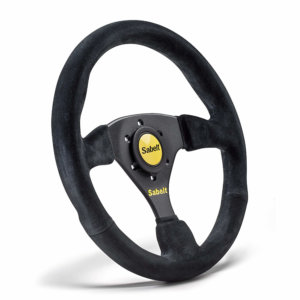
2. Sabelt SW-633
The sensible middle. 330mm, flat faced, suede on a comfortable oval grip, aluminium spokes. Sabelt make the point that the six bolt fitment gives mounting options on most cars, which is true here. If you want the car a bit sharper without committing to anything dramatic, this is it.
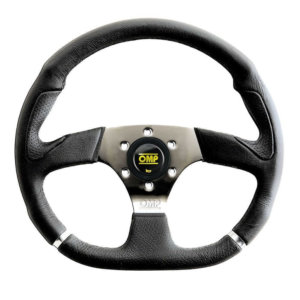
3. OMP Cromo
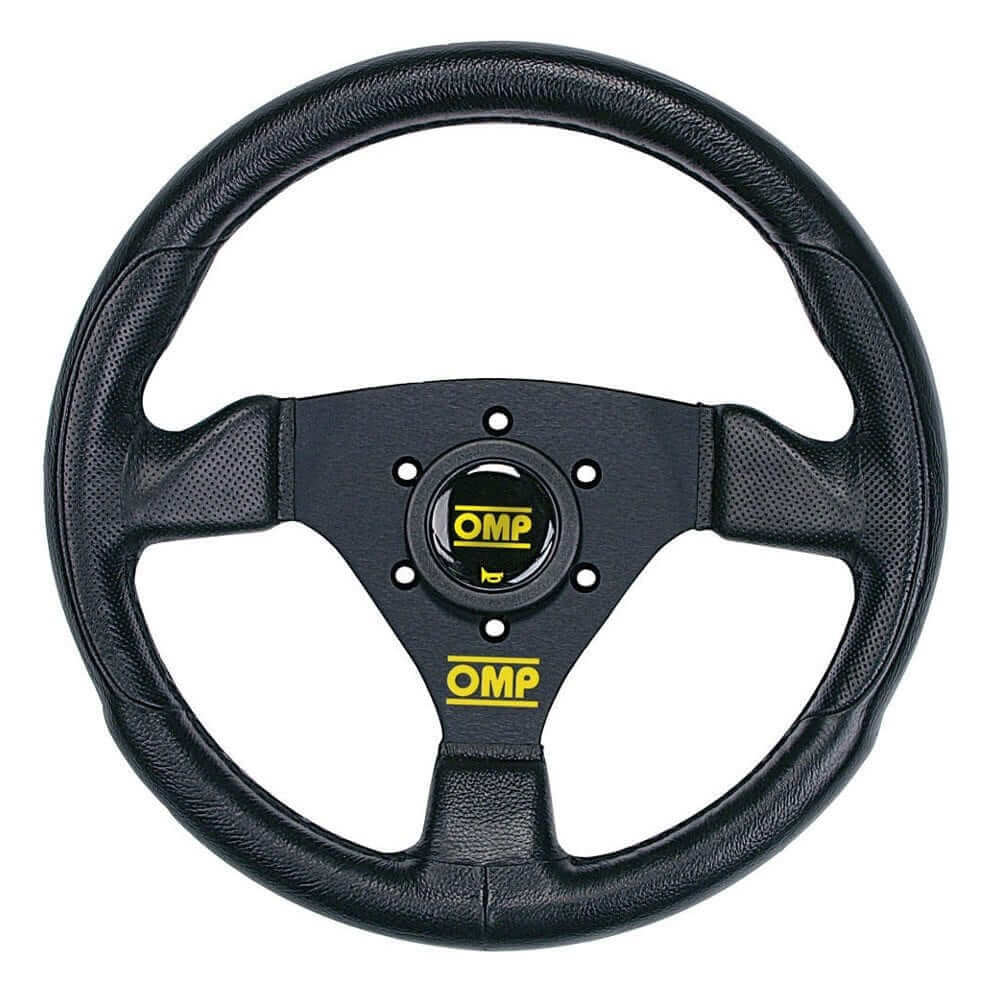
The entry point of the five and the only one here with chrome spokes rather than brushed or black. 350mm, flat, and trimmed in leather and perforated leather rather than suede, which wears better if the car is a daily and lives outside. It is the least expensive way of getting the standard wheel out.
4. OMP Trecento Uno
The smallest at 300mm, and the cheapest thing on the page. Polyurethane and perforated leather on an anatomical grip, flat faced, aluminium spokes. Three hundred millimetres in a car this light makes the steering very quick and the parking noticeably heavier. In a stripped track Clio that is exactly the trade you want.
5. MOMO Competition Evo
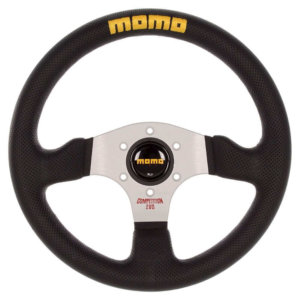
The dearest of the five and the one that looks the part in a 172 or 182. 320mm, flat, with the competition evo logo picked out in red on the spokes. Twenty millimetres down from 350 is a change you feel on turn in without it becoming hard work at low speed, which for a fast road Clio is about the right place to land.
How much smaller is it, really?
Every rim below is drawn at true relative size, 0.6 px per mm, measured against the 350mm wheels on the left. The percentages are leverage rather than a measured figure: effort at the rim rises as the wheel gets smaller, because your hands sit closer to the centre.
baseline
approx 6% more effort
approx 9% more
approx 17% more
Quick release, and whether you actually need one
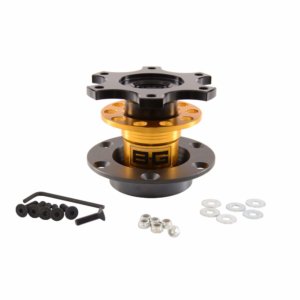
A quick release sits between the boss kit and the wheel and lets you lift the wheel off the column. On a Clio there is one reason that holds up and one that does not.
The one that holds up is getting in and out. Once there is a bucket seat and a harness in it, or a cage with a door bar, the wheel is genuinely in the way, and lifting it off makes the car usable rather than a nuisance. Security is the other reason people give, and it is a weaker argument than it used to be.
If your Clio is standard inside apart from the wheel, you probably do not need one.
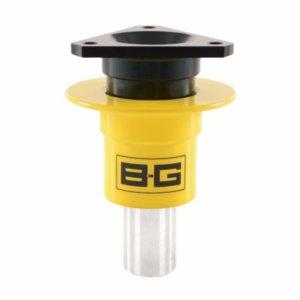
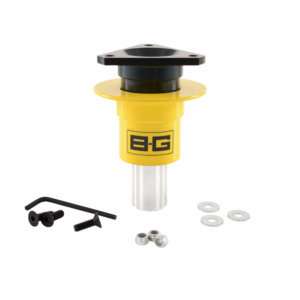
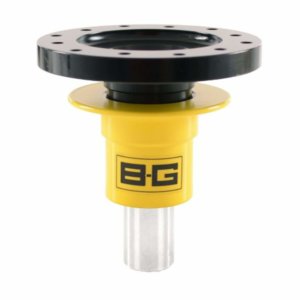
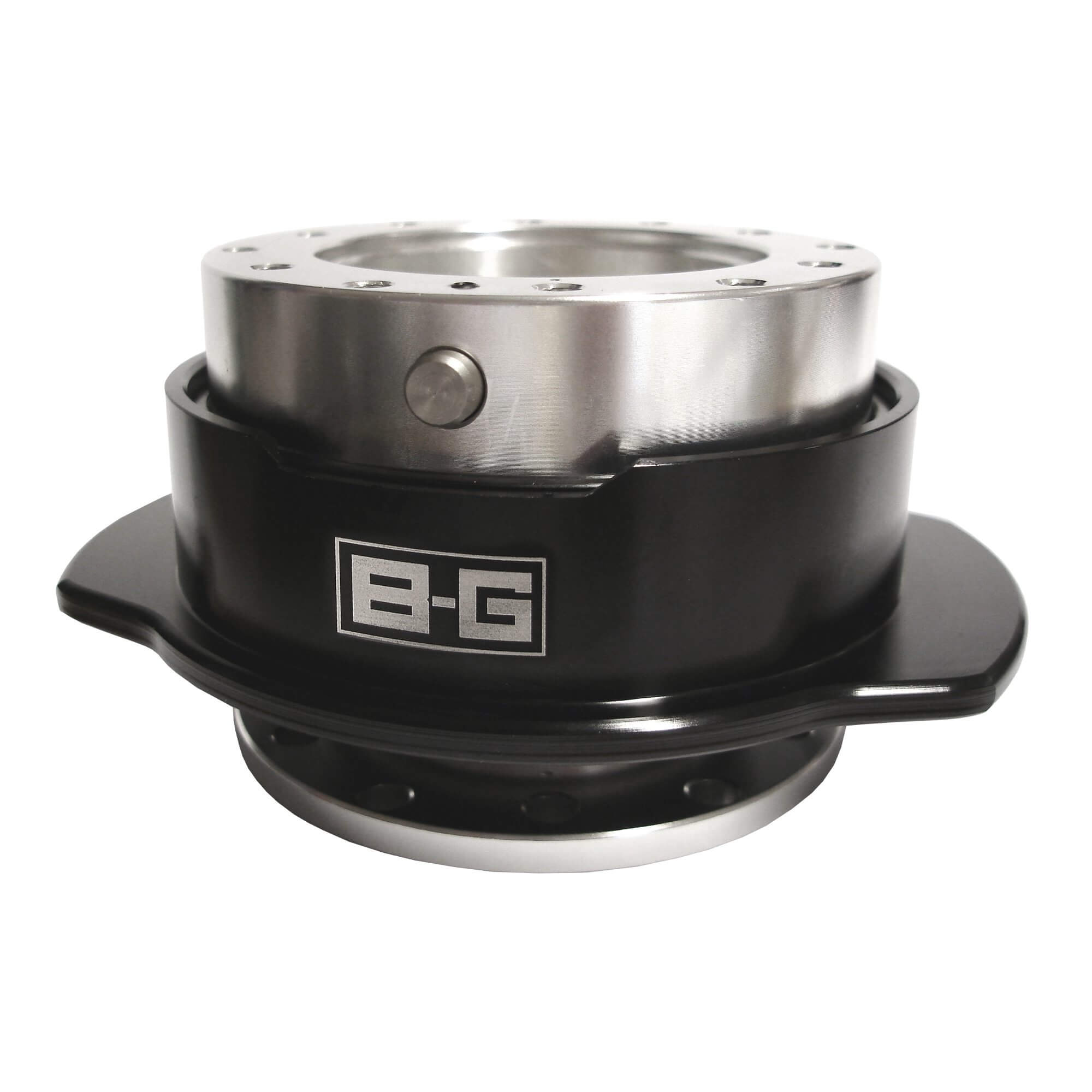
Weld-on units are cheaper, but the column has to be machined, so that is a job for someone who has done it before. Bolt-on units cost more and go straight on. The B-G universal is drilled for both common patterns, so it will move to another car later.
-
From £118.80 Incl. VATFrom £99.00 Excl. VAT Select options This product has multiple variants. The options may be chosen on the product page
-
From £143.40 Incl. VATFrom £119.50 Excl. VAT Select options This product has multiple variants. The options may be chosen on the product page
Fitting it
An evening, in this order:
- Battery disconnected first, so the horn behaves when it all goes back together
- Standard wheel off, then the boss kit onto the column splines
- Mark the column and the wheel before the centre nut comes off, so the new one goes back on straight
- The horn wiring runs through the boss kit, so there is nothing to cut
- Torque the centre nut properly and check the wheel is centred with the road wheels straight before you drive it
If you would rather we did it, we fit these in-store.
What I would actually buy
For a Clio that still does the commute: the MOMO hub for your year and the OMP Cromo. Leather rather than suede, 350mm, and the steering feels the same as it did.
For a fast road 172 or 182: the same hub and the Sparco 325. The 95mm dish is the single biggest improvement you can make to where you sit in this car.
For a track Clio: the OMP Trecento Uno at 300mm and a B-G quick release, and go in knowing parking will ask more of you.
Final thoughts: the year decides it, then you do
There is one thing to get right on this car and it is the hub. MOMO split it at the 2001 facelift, so the year on the V5 usually answers it on its own, and if you are on the boundary or you are looking at the OMP pair, send us the registration and we will check it for you.
Everything after that is taste, because all of it shares the same 6x70mm pattern. The only steer I would give is on where the rim sits rather than how big it is. This car puts the wheel further from you than the seat suggests, so a dished wheel does more for the driving position than dropping fifty millimetres of diameter ever will.
Working out those combinations is my job here, so if you are stuck between two of them, email us with the year and what you use the car for and I will tell you which to buy. I am Cameron, by the way.