Top Steering Wheel and Boss Kit Recommendations for the Land Rover Defender
Nothing about a Defender driving position is an accident, it is just old. The wheel is big and close to your chest, the column is nearly vertical, and the seat puts you nearer to it than any modern car would. People change the wheel to claw some of that room back, and because the original one has usually gone shiny.
The catch is that a Defender is not one car. It ran for thirty-three years, and the part you need is decided by something you cannot see from the driver seat.
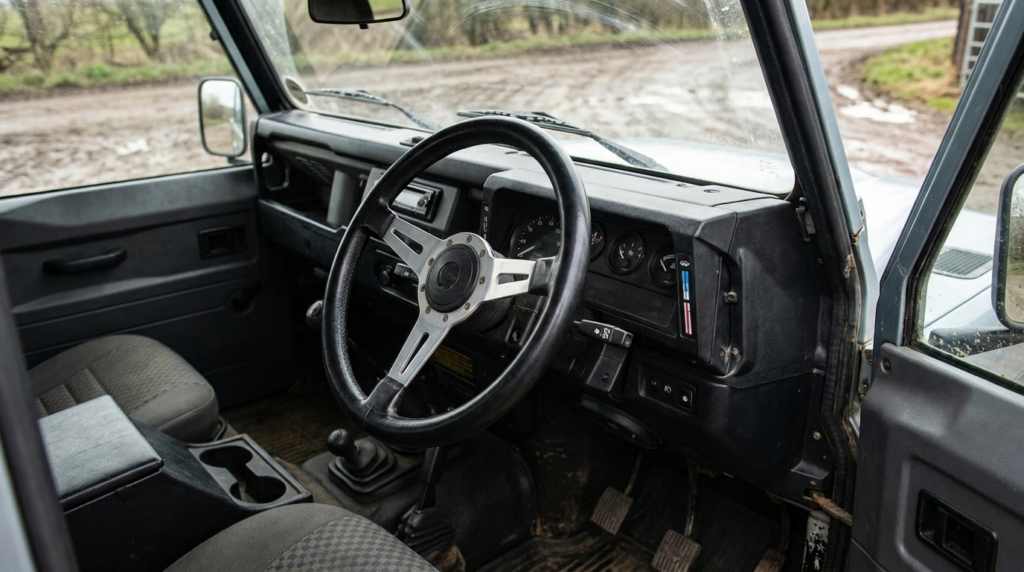
Everything below is kit we stock. The boss kits are MOMO’s, because those are the ones I can tie to a specific steering column, and prices sit on the live product cards so they stay right. The interior shot above is an illustration rather than a photograph of a customer car, and the product photography is our own.
The bit that makes all of this easy: 6x70mm PCD
One thing first, because it takes the pressure off everything after it. MOMO, OMP, Sparco and Sabelt all drill their wheels and their boss kits to the same six bolt pattern, 6x70mm PCD, and our own listings say so. The MOMO Retro is described as pre-drilled six hole. The Sparco 345 listing says it fits all standard MOMO, OMP and Sparco type boss kits.
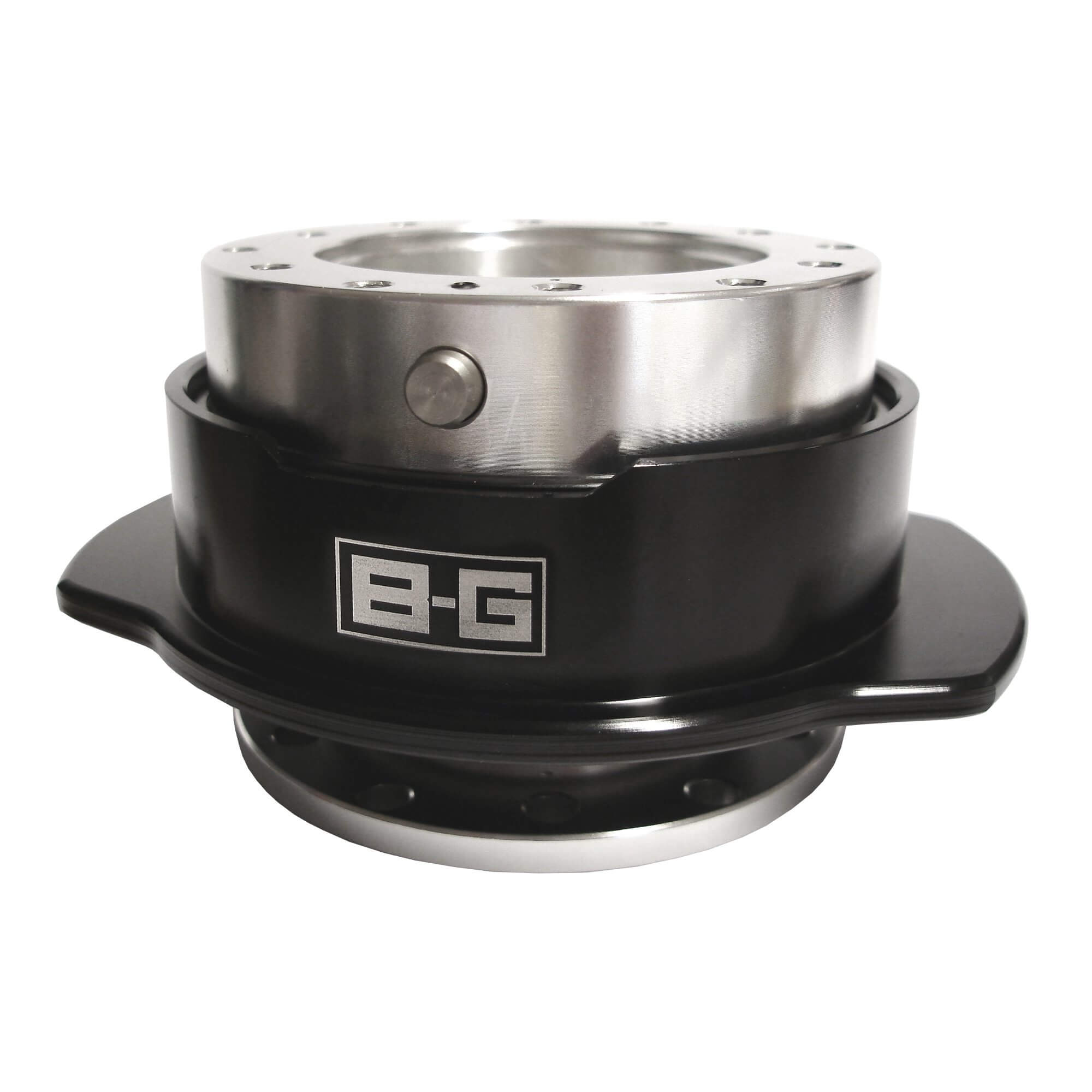
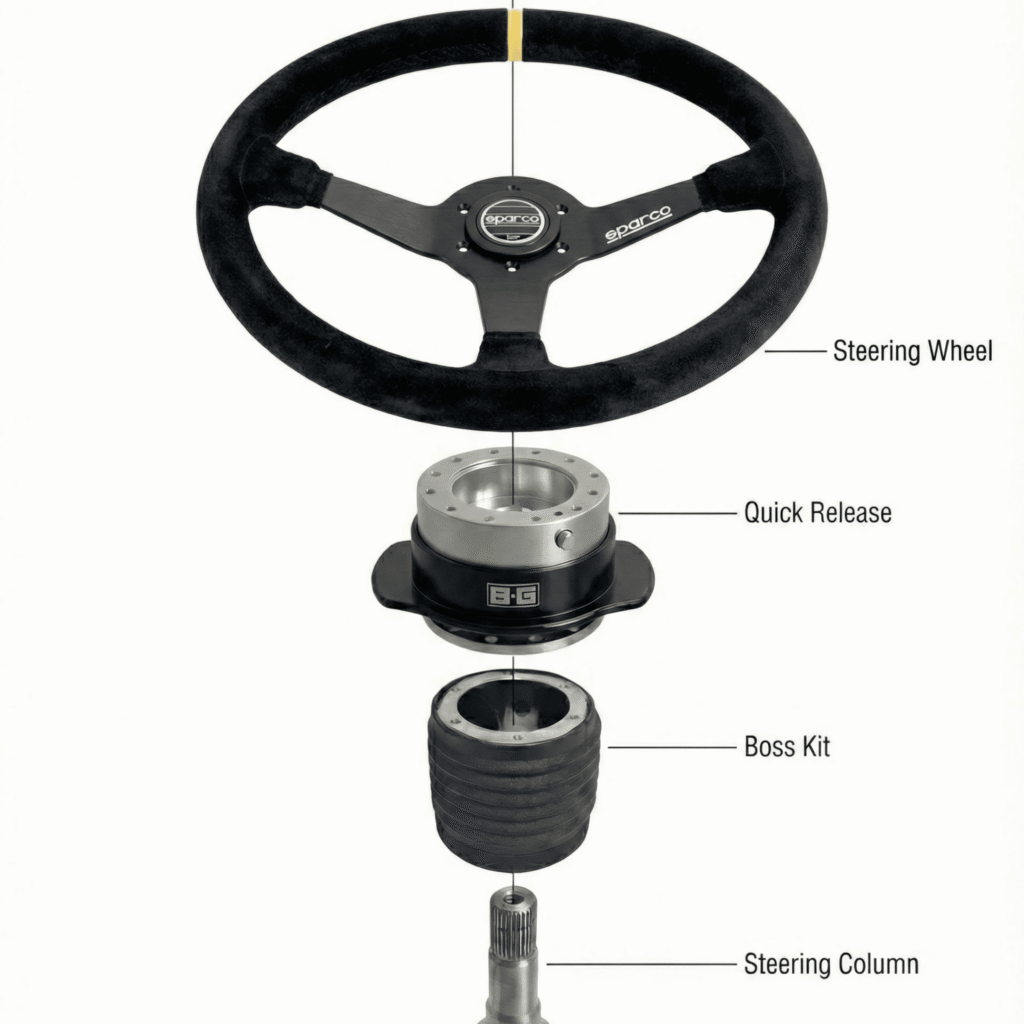
So the hub and the wheel do not have to wear the same badge. A MOMO boss will take a Sparco wheel and the other way round. A quick release goes between the two and works with either, and the B-G universal is drilled for both 6x70mm and 6x74mm so it covers the odd one out.
Three decisions, and none of them constrain the others:
- The boss kit, which is chosen by the column
- The wheel, which is chosen by you
- The quick release, which is optional and chosen by how you use the car
On most cars the first of those is settled by the year. On a Defender it is not, which is what the next section is about.
Which boss kit fits a Defender
Three MOMO hubs cover the Defender, and choosing between them comes down to the steering column rather than the year.
The MK5607 is cut for the small column, 17.5mm across with 36 splines. The MA5805 and the MK5602 are both for the large column, 18.5mm with 48 splines, listed for 2008 to 2014 and for 2015 onward. The MA5805 is MOMO’s non collapsible hub and the other two are the collapsible design.
OMP list Defender hubs as well, under year bands rather than column types. If you know your car’s year exactly they are worth a look, and we will check the fitment for you before you order.
All three MOMO hubs are drilled 6x70mm, so whichever column you have, every wheel further down this page bolts straight to it.
Count the splines, not the years
The Defender ran for thirty-three years and used two different steering columns, so the boss kit is decided by which column you have rather than by the year on the V5. Both are drawn below at true size, 12 px per mm, with every spline in place. They look much the same until you count the teeth.
MOMO MK5602 (2015 on)
The five wheels I would put in a Defender
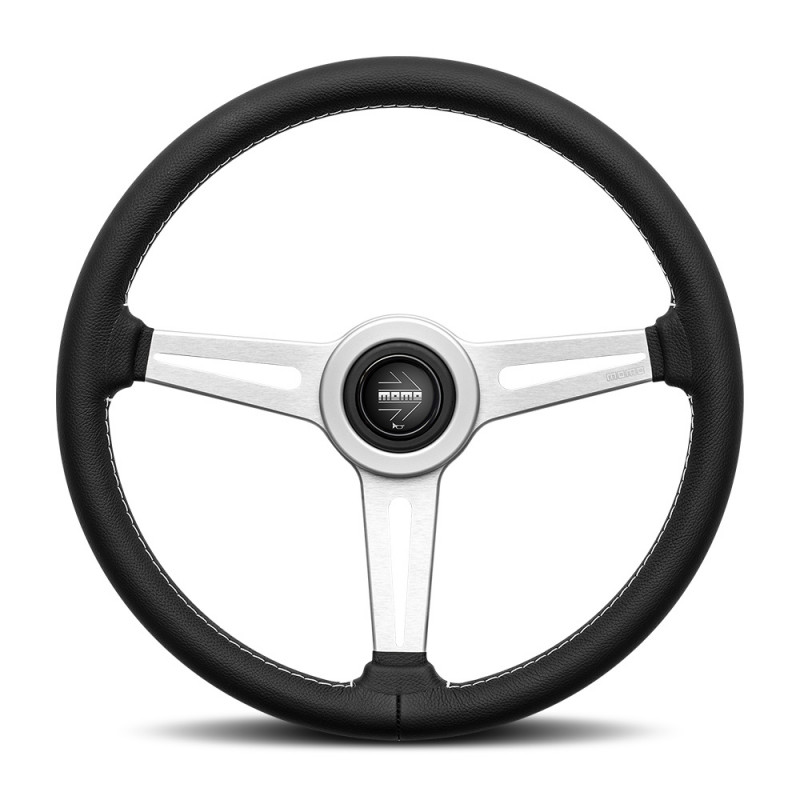
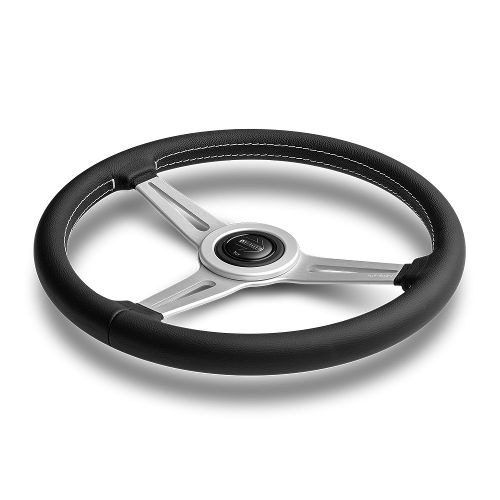
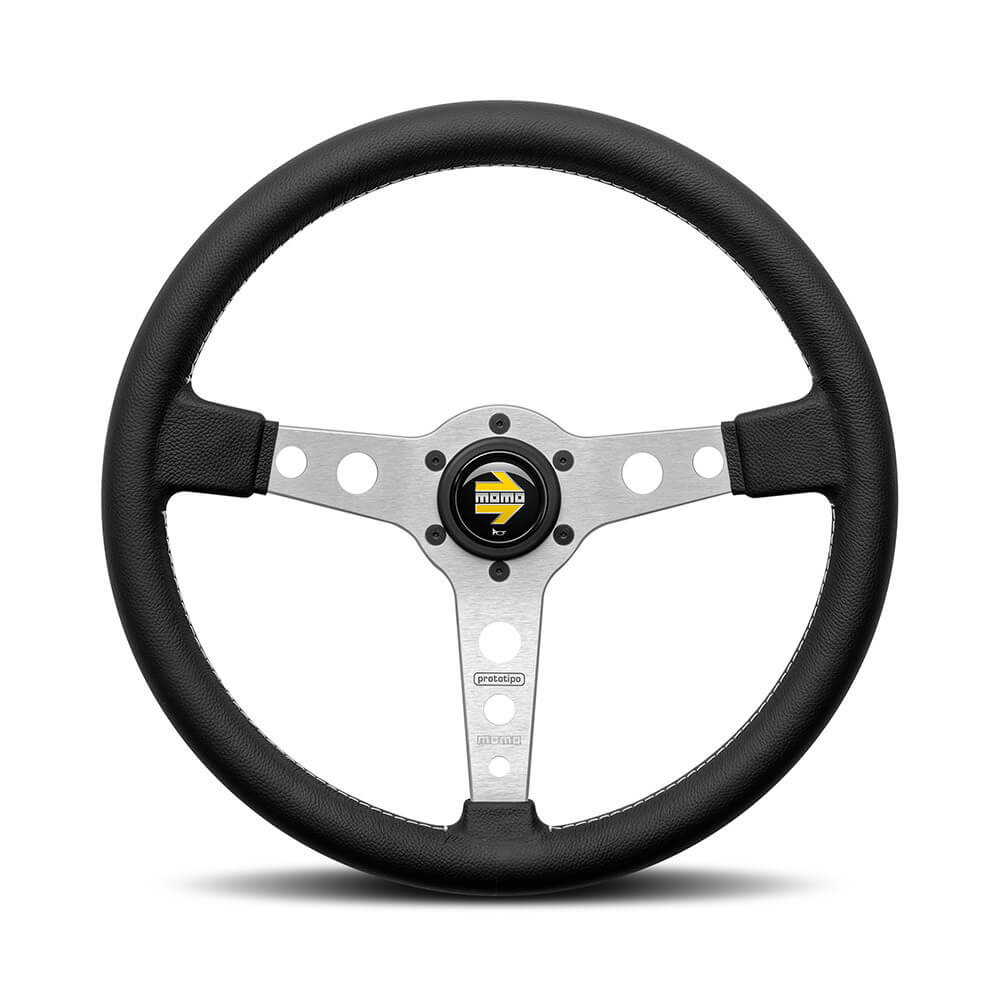
1. MOMO Retro
The one that suits the car best. 360mm, black leather with white stitching on brushed aluminium spokes, and MOMO describe it as period correct for classic European cars, which a Defender very much is. Forty millimetres of dish brings it towards you a little, and in a car where the column is nearly upright that is more welcome than it sounds. It is the dearest of the five.
2. MOMO Prototipo 370mm
The Prototipo in its bigger size. 370mm rather than the 350 most people know it in, which for a Defender is the right way round. Shallow dish, black leather, white stitching, and it has been in the MOMO range long enough that it is not going to date.
3. Sparco 345
The smallest of the five and the one to take if you want the steering a little quicker. 350mm, semi dish, a choice of trims, and the push horn comes with it. Sparco build it for saloon and rally use, so it is a firmer and more businesslike thing than the two MOMOs above.
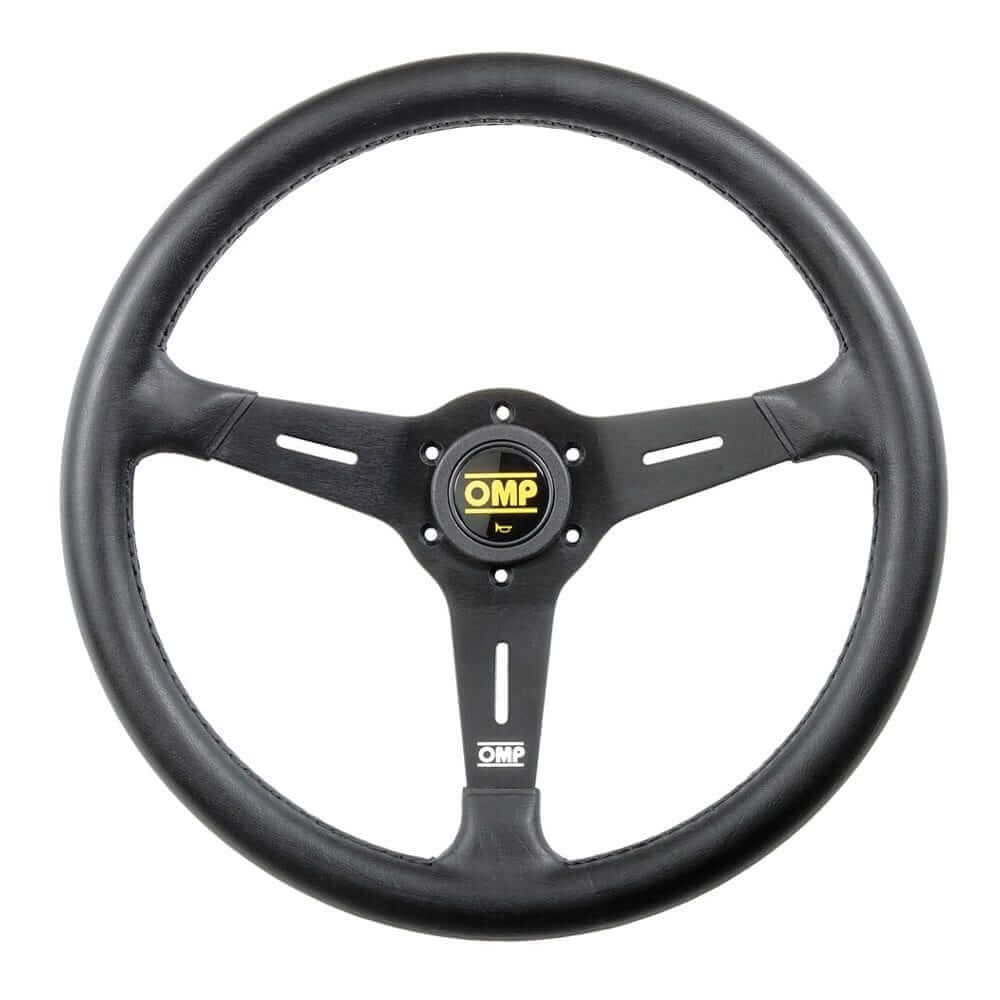
4. OMP Sand
The obvious one, and the least expensive here. OMP build the Sand as an off road wheel: 380mm across, flat faced, with a polyurethane grip rather than leather or suede. Polyurethane is the right call in a Defender, because it does not mind wet hands, gloves, mud or a car that lives outside. If you only look at one of these, look at this one.
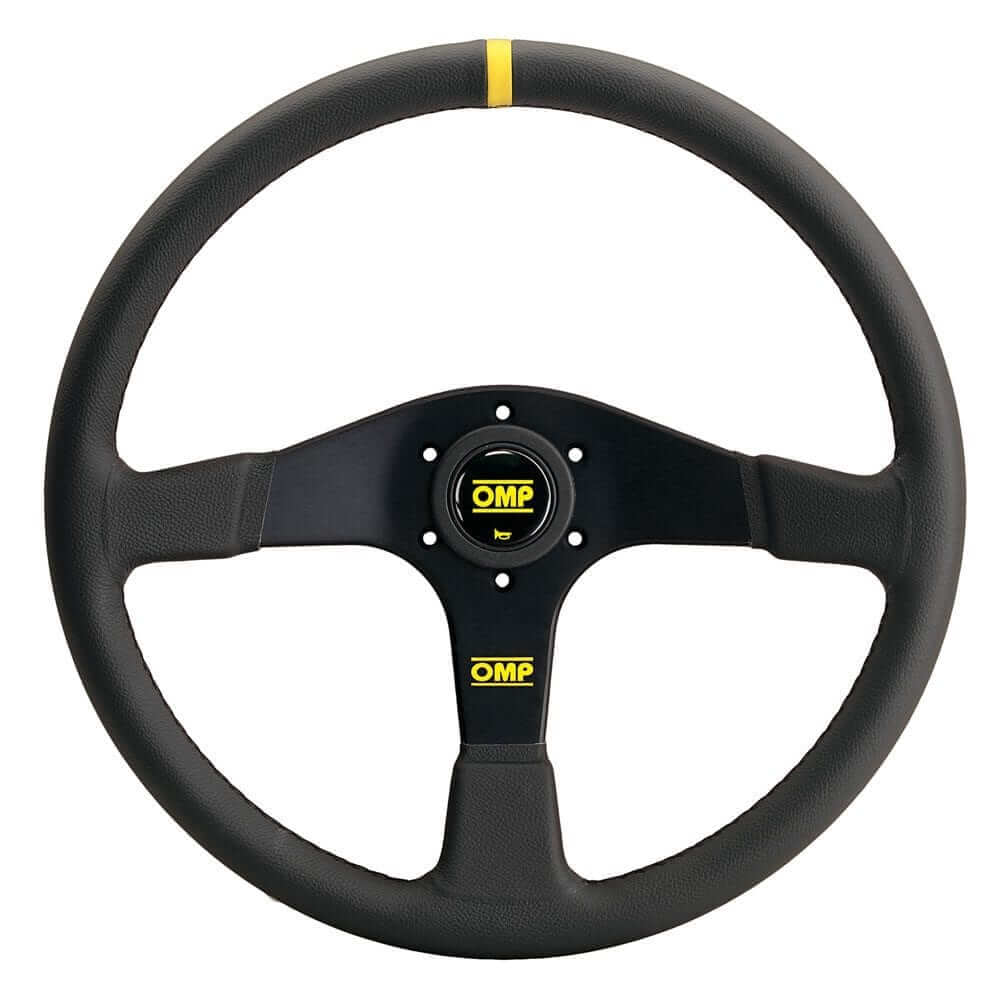
5. OMP Velocita 380
The same 380mm as the Sand with a suede grip instead. Suede has more bite in the dry and looks better in a tidy interior, so this is the one for a Defender that has been restored rather than worked. Same size, different life.
-
From £297.59 Incl. VATFrom £247.99 Excl. VAT Select options This product has multiple variants. The options may be chosen on the product page
-
From £182.40 Incl. VATFrom £152.00 Excl. VAT Select options This product has multiple variants. The options may be chosen on the product page
How much effort does each size ask for?
Every rim below is drawn at true relative size, 0.6 px per mm, measured against the 380mm wheels on the left. The percentages are leverage rather than a measured figure: effort at the rim rises as the wheel gets smaller, because your hands sit closer to the centre. On a heavy vehicle with slow steering that is not a small thing.
baseline
approx 3% more effort
approx 6% more
approx 9% more
Quick release, and whether you actually need one
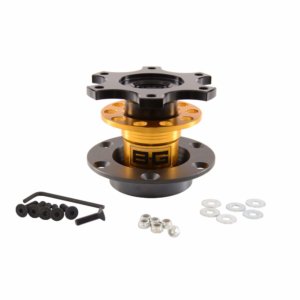
A quick release sits between the boss kit and the wheel and lets you lift the wheel off the column. On a Defender the reason that matters is getting in.
The door aperture is narrow, the sill is high, and the wheel sits close to your chest with the column nearly upright. Lifting it off turns an awkward climb into an easy one, and that counts for more again if the car has a cage or a bucket seat in it. Security is the other reason people give, and it is a weaker argument than it used to be.
If the car is standard inside and you are happy getting in and out of it, you do not need one.
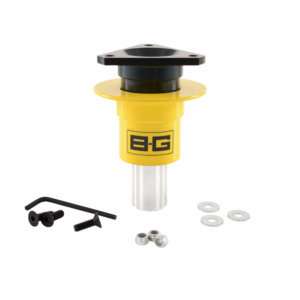
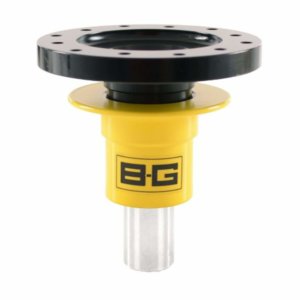
Weld-on units are cheaper, but the column has to be machined, so that is a job for someone who has done it before. Bolt-on units cost more and go straight on. The B-G universal is drilled for both common patterns, so it will move to another car later.
-
From £118.80 Incl. VATFrom £99.00 Excl. VAT Select options This product has multiple variants. The options may be chosen on the product page
-
From £143.40 Incl. VATFrom £119.50 Excl. VAT Select options This product has multiple variants. The options may be chosen on the product page
The spacer that sets the reach
A small part that solves the one complaint everybody has about this driving position.
The Defender column is nearly vertical, so a new wheel lands more or less where the old one was, which is close to you. B-G’s alloy spacers go between the boss kit and the wheel and push it out in fixed steps, so the reach becomes something you set rather than something you accept.
They come in several lengths, and they are drilled for both 6x70mm and 6x74mm. That second part is the useful bit: it means a 6x70mm wheel will go onto a 6x74mm boss and the other way round, which saves the day if you have inherited a hub with the car.
It is the least expensive thing on this page and one of the more noticeable.
-
From £33.60 Incl. VATFrom £28.00 Excl. VAT Select options This product has multiple variants. The options may be chosen on the product page
Fitting it
An hour if the wheel comes off cleanly, in this order:
- Battery disconnected first, so the horn behaves when it all goes back together
- Original wheel off, then the boss kit onto the column splines. This is the moment to count them if you have not already
- Mark the column and the wheel before the centre nut comes off, so the new wheel goes back on straight
- The horn wiring passes through the boss kit, so there is nothing to cut
- Spacers, if you are using them, go between the boss kit and the wheel
- Torque the centre nut properly and check the wheel sits straight with the road wheels straight before you drive it
If you would rather we did it, we fit these in-store.
What I would actually buy
For a working Defender: the MOMO hub for your column and the OMP Sand. Polyurethane, 380mm, and it does not care what the weather is doing.
For a tidy one: the same hub and the MOMO Retro, with a B-G spacer if the reach needs setting. It looks like it came with the car.
For one that gets driven hard on the road: the Sparco 345 at 350mm, the quickest of these, and a quick release if there is a cage in it.
Final thoughts: count first, then choose
Every other car on this site starts with the wheel. A Defender starts with the column, because there are two of them and they look alike. Get the wheel off, count the splines, and the rest of this page opens up. Thirty six means the MK5607. Forty eight means the MA5805 or the MK5602 depending on the year. After that the wheel is entirely your choice, because all of it shares the same 6x70mm pattern.
The other thing I would say is not to go too small. A Defender is heavy and the steering is slow, and 350mm is about as far down as I would go before parking starts to feel like work.
Working out those combinations is my job here, so if you are not sure which column you have, email us with the year and the body style and I will tell you which hub to order. I am Cameron, by the way.