Call Garreth, Cameron & CallyAI: 0115 9893488

Free UK shipping on orders over £100.00 FREE gifts on checkout

Useful Links
Your Account

Talk to us

Garreth, Cameron & CallyAI · Mon to Fri
Call 0115 989 3488Free advice on your build
Thanks, that’s with us. We reply the same working day.
That didn’t send. Please give us a call instead.

Useful Links

Quick Access

Want to chat?

Call Garreth, Cameron, CallyAI
Today On: 0115 9893488
Click Here For Our Contact Form
Buy gift vouchers today


How To Choose FIA Race Boots: Approvals, Sizing And Pedal Feel

Of all the racewear we sell, boots are the item people are most surprised by. They expect them to be about fire protection, which they are, and they discover that the reason everybody who has worn a pair keeps wearing them is the sole. A three millimetre sole between your foot and the pedal tells you things a trainer simply cannot.

The buying decision goes the same way as gloves though: approval first, because that is where people buy the wrong thing, then size, then the bit you will actually notice every time you drive.

Open boot of an estate car in a race paddock loaded with a kit holdall, plain white helmet, overalls and gloves
The item most people add last, and the one they wish they had bought first.

Which approval do you need

Same three routes as gloves, and the same trap: they all look like race boots.

What the listing saysWhat it is forExamples on our shelves
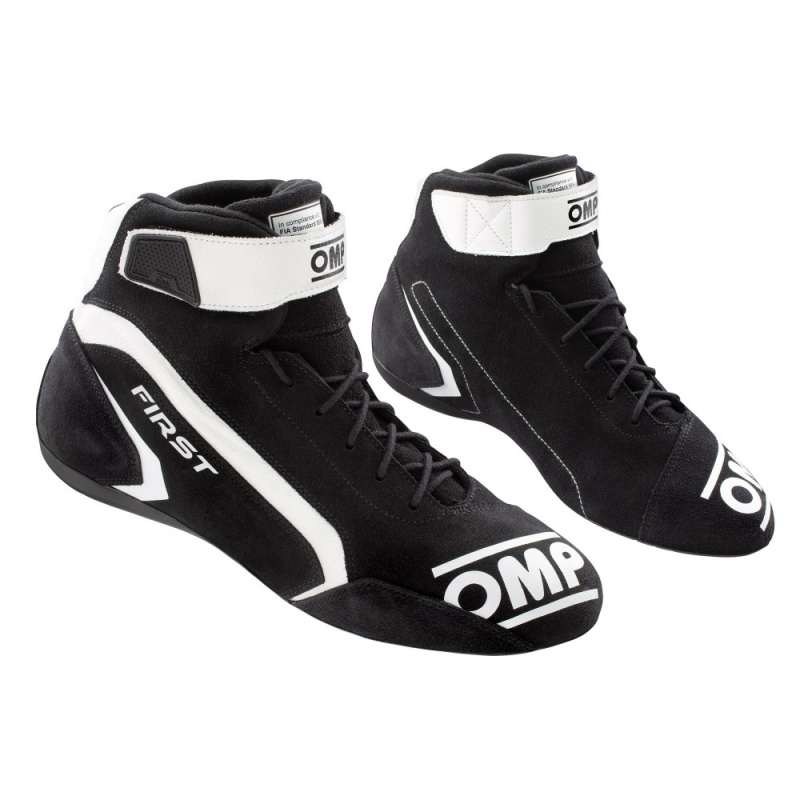
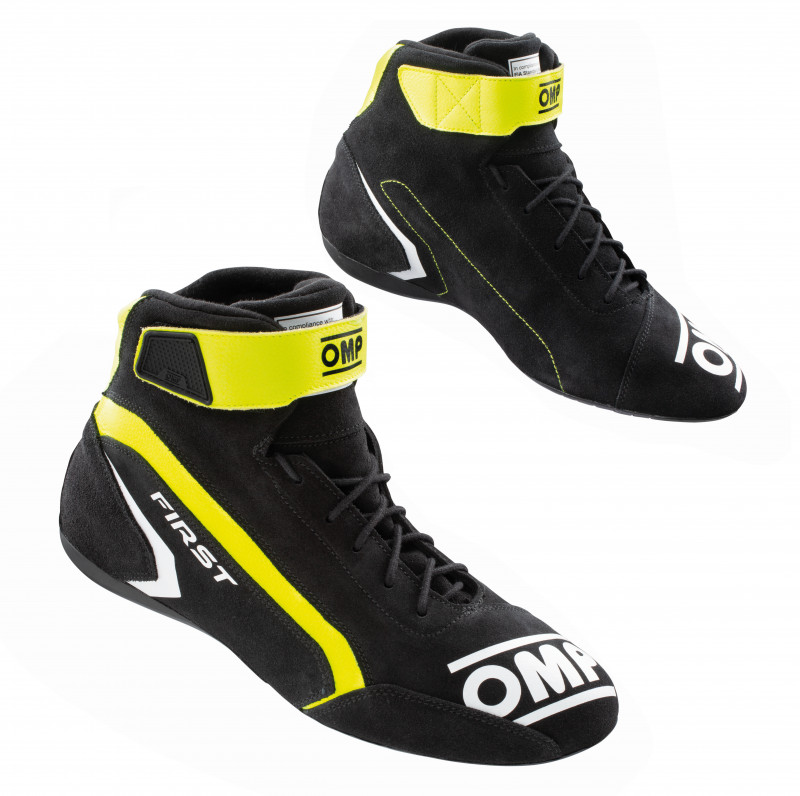
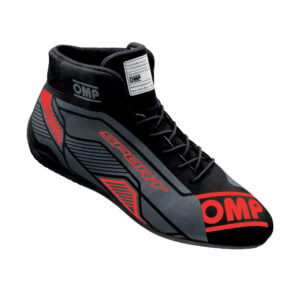
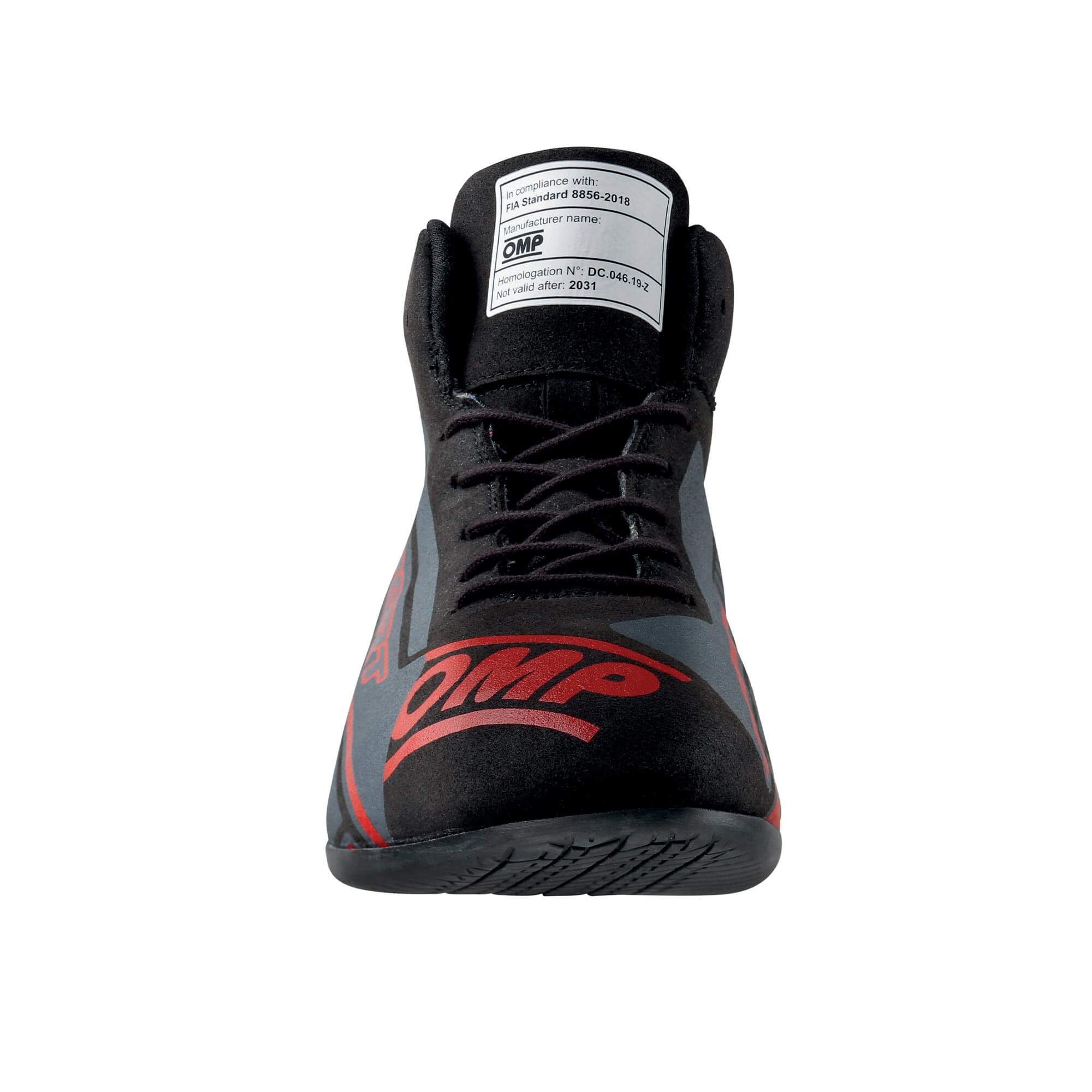
FIA 8856-2018Car racing, and the standard UK club car competition asks forOMP Sport, OMP First, OMP Tecnica, OMP One Evo X, Sparco Slalom+
FIA 8856-2018 and SFI 3.3/5Dual homologated, useful if you also run under American rulesSparco Slalom+
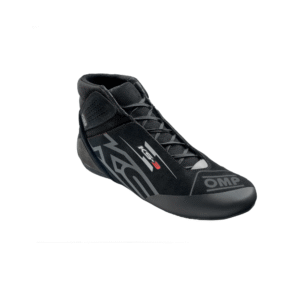
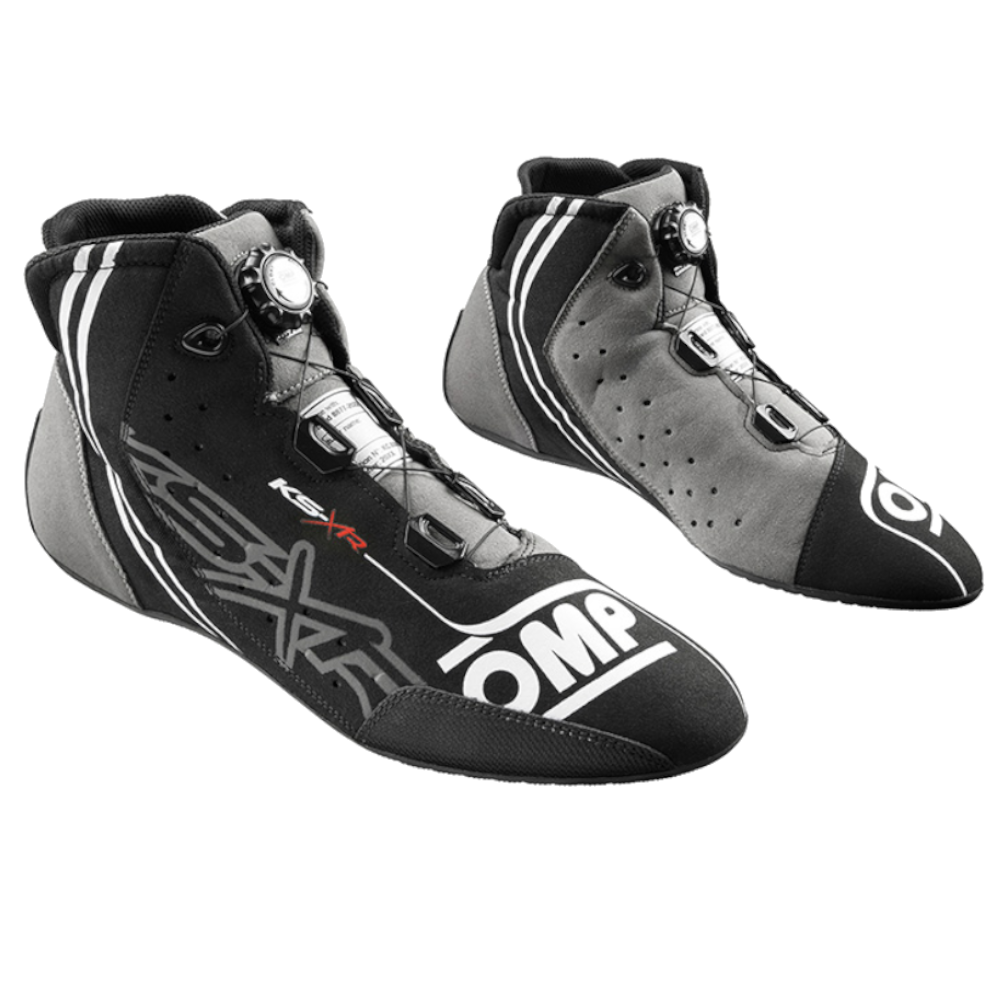
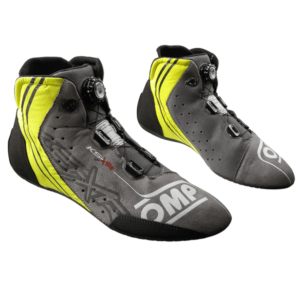
FIA 8877-2022Karting, the FIA standard for karting protective clothingOMP KS-XR
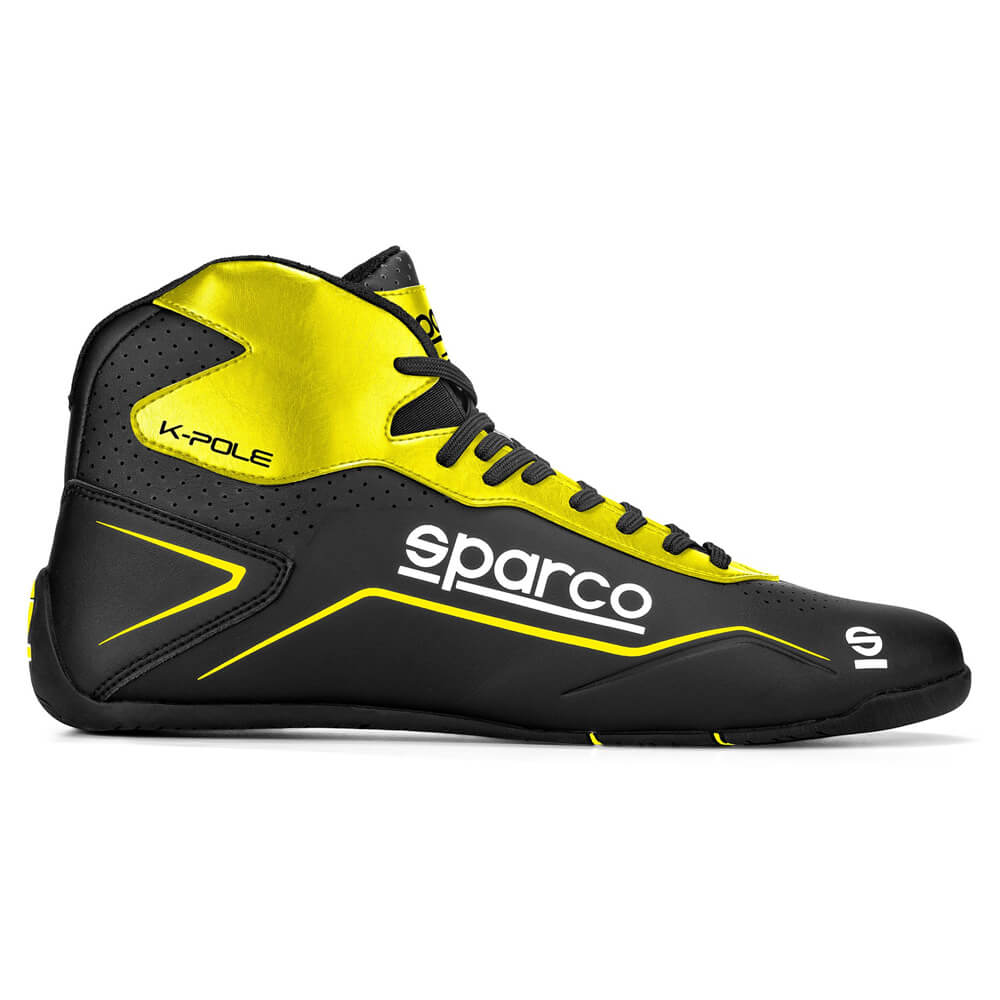
Non-FIA or Non-CIKPractice, wet weather karting, and events with no homologation requirementSparco K-Pole, OMP KS-3

One extra category worth knowing about, because it catches co-drivers and crew out. Boots like the OMP One TT are sold as mechanics and co-driver boots and carry FIA 8856-2018, so a co-driver who needs homologated footwear is covered by them without buying a driving boot with a thin competition sole they do not want to stand around in all day.

The regulations name the standard, we do notYour class decides which of these you need. If the wording in your regulations is ambiguous, tell us the championship when you ring and we will read it with you before you spend anything. Buying a beautiful pair of boots against the wrong standard is an expensive way to learn this.

UK or EU, and why both appear

Unlike gloves, boots are sized numerically, and our listings carry both scales together: UK 3.5 with EU 36, UK 4 with EU 37, UK 5 with EU 38, and up through the range. That is deliberate, because the manufacturers are Italian and the conversions are not always the ones you would expect from high street shoes.

Two things worth knowing before you pick a number. Race boots are cut narrower than road shoes, because the whole point is a close fit inside a footwell where you want to feel the pedal, not swim about inside the boot. And most people find they take their normal size or, occasionally, a half size up if they intend to wear a thick fireproof sock.

Our honest advice is the same as with helmets: order against the chart on the specific listing, not against the size in your trainers, and if you are between two, ring us. We would far rather have a two minute conversation than process a return, and on the boots we sell most we know which way they run.

The sole, and pedal feel

This is the part nobody expects to care about and everybody ends up talking about afterwards.

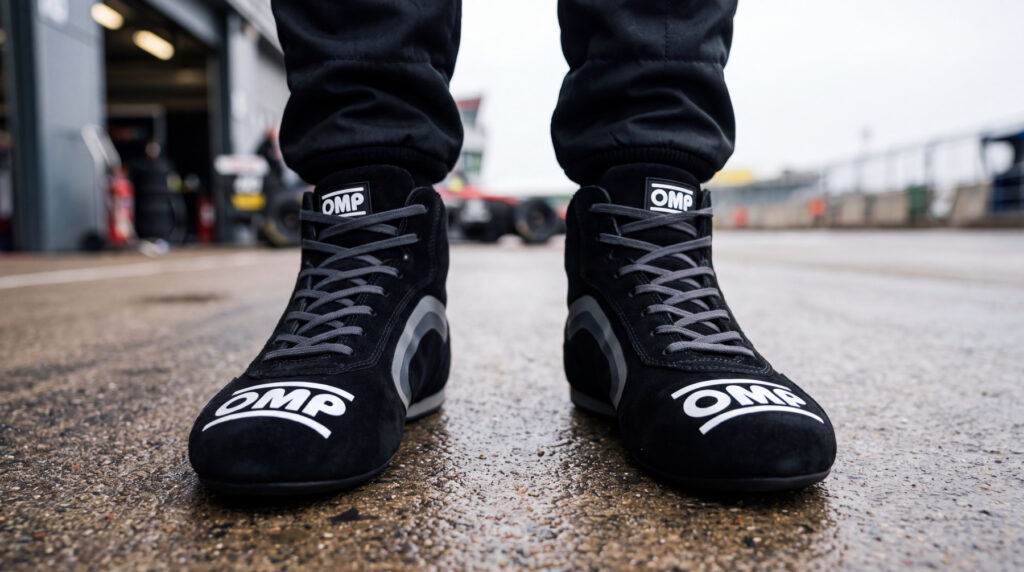
A race boot has a thin, flexible sole that wraps slightly up the heel, so you can pivot on the ball of your foot and feel where the brake pedal is in its travel. A road shoe has a thick, cushioned, wide sole designed for walking, which does the opposite of all of that: it insulates you from the pedal and it catches on the edge of the brake when you go for a heel and toe downshift. The first time somebody drives in proper boots, the comment is nearly always about how much more precisely they can brake.

Up the range you are buying less bulk and more feel. The materials change too: suede is the traditional choice and grips the pedal face well, while perforated leather constructions higher up the range are lighter and breathe better on a hot day. None of that changes the approval, which is a pass or fail, so this is comfort and feel money, not safety money.

If you have not bought boots yet and you are doing your first track day, this is genuinely the item we would move up your list, and the first track day kit guide explains where it sits against everything else.

Karting boots are separate

Karting has its own FIA standard for protective clothing, 8877-2022, and the FIA publish the approved products on their Technical List number 101. Before that standard arrived, karting boots and gloves had no karting-specific FIA homologation at all, which is why so much older advice on this subject is now wrong.

On our shelves that means kart boots split into two: those carrying FIA 8877-2022, such as the OMP KS-XR, and those listed as Non-FIA or Non-CIK, such as the Sparco K-Pole and the OMP KS-3, which are practice and wet weather boots. Both have their place. Which one your class requires is in your regulations, and the same goes for the gloves.

Kart boots also sit higher on the ankle than most car boots, which is what you want when your feet are out in front of you in an open kart.

The range, entry to top

Prices include VAT and were correct on 13 August 2026.

BootApprovalPrice inc VATWhere it sits
Sparco K-Pole KartNon-FIA£82.20Practice and wet weather karting
OMP KS-3 Kart 2026Non-CIK, Non-FIA£84.00Club and practice karting
OMP Sport RaceFIA 8856-2018£116.40The entry into FIA car racing
Sparco Slalom+ RaceFIA 8856-2018 and SFI 3.3/5£122.40Dual homologated, leather and suede
OMP First RaceFIA 8856-2018£141.60The club racing default
OMP One TT Co-DriverFIA 8856-2018£182.40Co-driver and mechanics, homologated
OMP KS-XR KartFIA 8877-2022£231.60Karting to the current FIA standard
OMP Tecnica RaceFIA 8856-2018£231.60Lighter build, better feel
OMP One Evo X RaceFIA 8856-2018£300.00Perforated leather, near the top

The gap that matters on this table is between row two and row three. Everything above the OMP Sport is homologated to the car racing standard; everything below it is not homologated at all. If your regulations say FIA, £116.40 is where your shopping starts.

Common questions

Can I just wear trainers?

For a track day, check your organiser's rules; many will allow it and we would still suggest the thinnest soled shoes you own. For competition where the regulations call for homologated footwear, no. And once you have driven in proper boots you will not want to go back, because the pedal feel is the real difference rather than the fire rating.

What size do I order?

Our listings carry UK and EU sizes together, starting at UK 3.5 and EU 36. Race boots are cut narrower than road shoes, so order against the chart on that specific listing and allow for a fireproof sock if you wear one. Most people take their normal size. If you are between two, ring us, because we know which models run small.

Do karting boots need a different approval?

Karting has its own FIA standard for protective clothing, 8877-2022, with the approved products published on FIA Technical List 101. We stock kart boots both to that standard and as Non-FIA practice boots. Your class regulations decide which you need, so read those before ordering.

What is SFI 3.3/5 on the Sparco Slalom+?

SFI is the American standards body, and that boot carries both the FIA and the SFI homologation. For UK club racing the FIA 8856-2018 approval is the one that matters. The dual approval is useful if you also compete under rules that name SFI.

Is there a boot for a co-driver or for the crew?

Yes, and it is a genuinely different product. Boots like the OMP One TT are built as mechanics and co-driver boots but still carry FIA 8856-2018, so you get the homologation without a thin competition sole you have to stand in all day.

What do I gain going up the range?

Less bulk, better feel and lighter materials, moving from suede to perforated leather constructions at the top. What you do not gain is a higher grade of approval, because the homologation is a pass or fail. Spend on fit first, then on feel.

What we would buy

First pair for club car racing: the OMP Sport at £116.40 if the budget is tight, the OMP First at £141.60 if it is not. Both are FIA 8856-2018 and either will transform how precisely you can brake compared with a trainer.

Doing longer stints, or you have driven in boots before and want the difference: the Tecnica at £231.60. Karting to the current FIA standard: the KS-XR at £231.60, or a Non-FIA practice boot from £82.20 if your class does not require homologation and you are still finding your feet.

And if you are buying the set at once, do the boots and the gloves together against the same regulations, with the suit as the anchor. It is one conversation and it stops you buying two of anything.

Final thoughts: the sole is the bit you will notice

The approval decides whether you can compete. The sole decides whether you enjoy it. Get the first from your regulations and the second from a pair that actually fits.

The range is under racing boots, with the karting boots in their own section. Ring 0115 9893488 with your class and your normal shoe size and we will get it right first time, or come and try a pair on in the showroom by appointment.

What our customers say

Free UK Shipping

On all orders above £100

In-Store Shopping

Try before you buy

Easy Delivery Tracking

Aftership Tracking Updates