The organiser rule comes before our shortlist
There is no single UK track-day helmet approval accepted by every venue and organiser. Get the written requirement, then pick a helmet that fits your head and suits your car.
An earlier version of this page grouped track day helmets as casual or karting equipment and left it there. Some organisers accept exactly that. Others specify standards, condition, full-face designs or extra equipment, and a category name on a website has no bearing on what they will let you use.
Product category names are retail navigation. The organiser and the venue decide what can be used in their session, and they are the only ones who can answer it for your booking.
Get the helmet wording in writing
Four questions, sent before you spend anything. Save the reply with the booking.
Give them the specifics
The date, the venue, the session type and the car. A novice sighting session and an open pit lane day at the same circuit can carry different requirements.
Ask which approvals they accept
ECE 22-06, Snell, FIA, or a named list. This is the question that decides which half of our range you are shopping in.
Ask about open face
Some organisers allow it in a closed car and not in an open one. Some do not allow it at all. Ask specifically rather than assuming a general answer covers you.
Ask about age and condition
A few organisers put a limit on helmet age or refuse anything without a legible label, which matters most if you are buying used.
We sell the helmets, we do not run the day. Two organisers at the same circuit in the same month can and do publish different requirements, so the only answer that protects you is the one in writing from the people running your session.
Every helmet on this page is ECE 22-06, and none of them is FIA
ECE 22-06 is the current European road and motorcycle helmet standard, and it is a genuinely demanding one: rotational impact testing, multiple impact points, and a visor and retention test. It is what the whole track day and karting helmet market is built on, and it is the reason a good helmet at this end costs under a hundred pounds rather than three hundred.
What it is not is FIA homologation. If your organiser asks for FIA 8859 or Snell SA, nothing on this page answers that, and buying one anyway is money spent twice. That is the whole reason the question above comes first.
The practical dividing line is competition. Track days, test days and karting are usually ECE territory. The moment you enter something with a competition licence attached, sprints, hillclimbs, circuit racing or a rally, you are into the FIA-homologated range instead.
Twelve helmets, and the ones we hand people first
Laid out cheapest first. There is no bad helmet in this row, only ones that suit different cars and different heads.
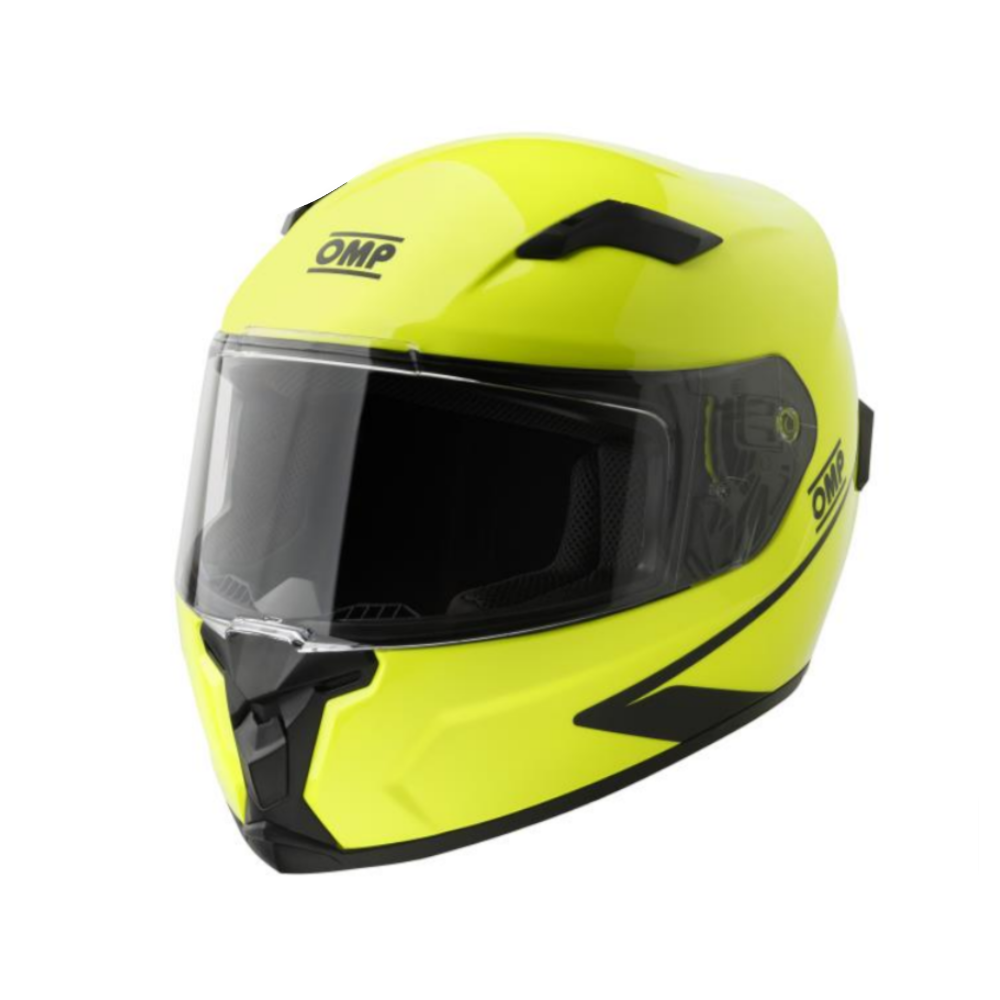
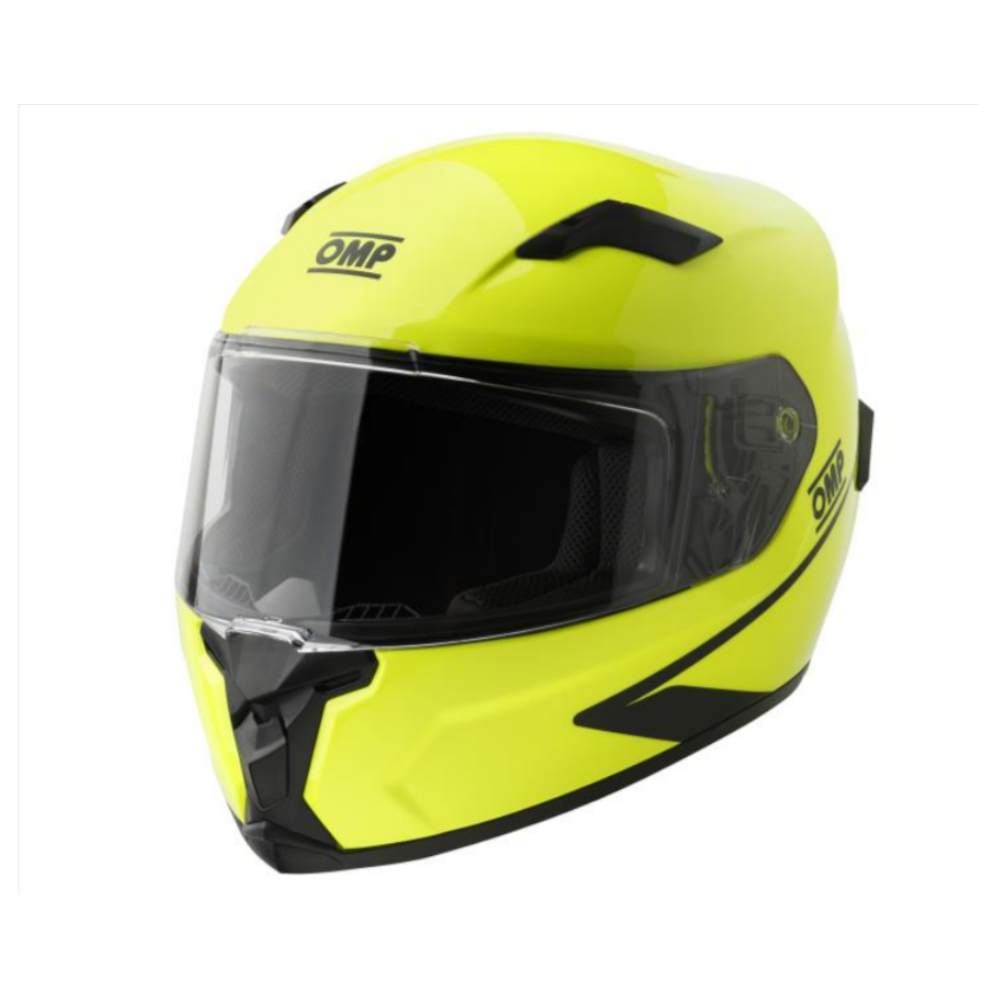
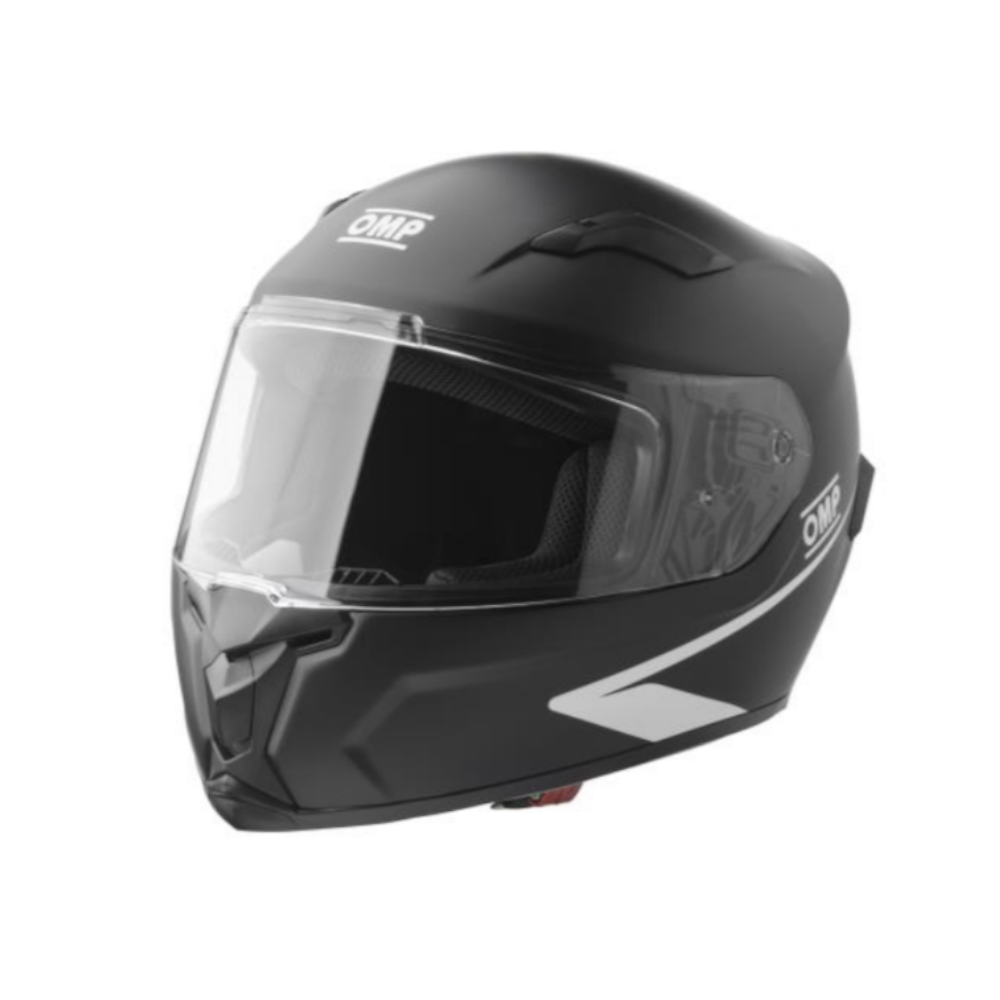
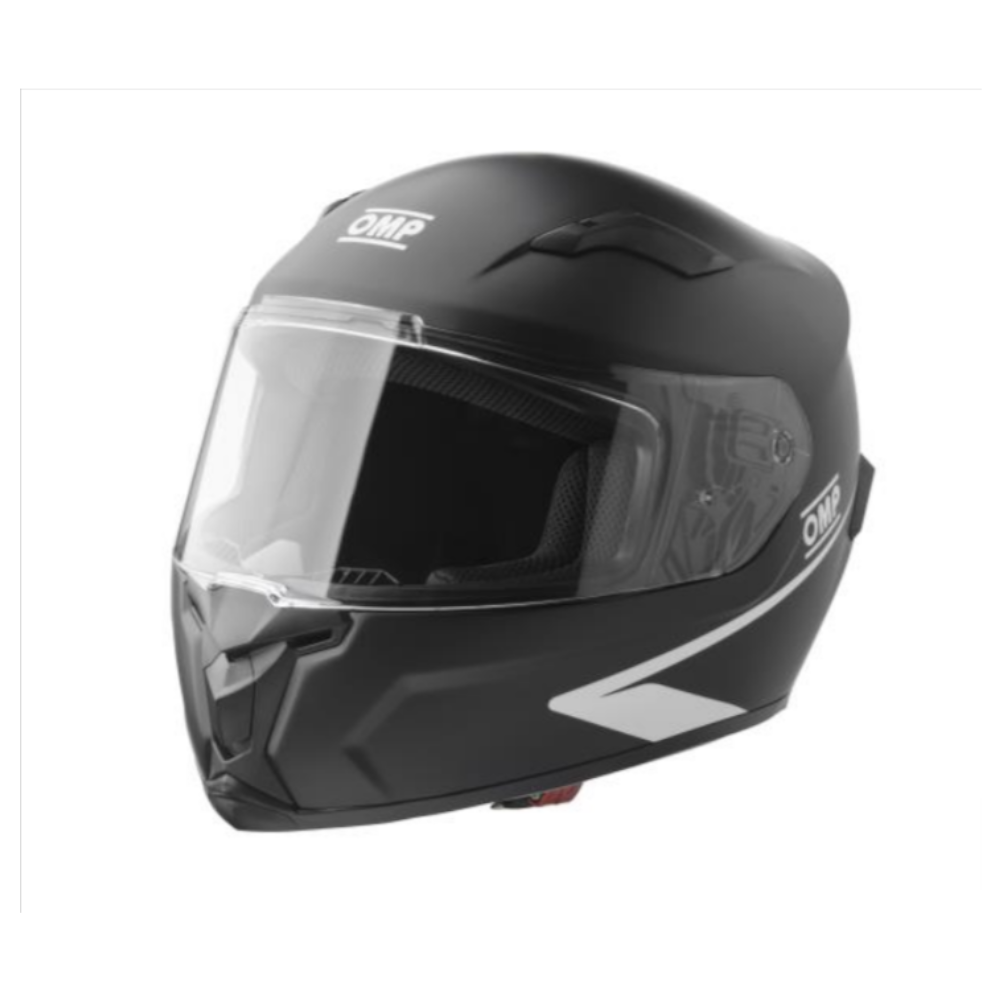
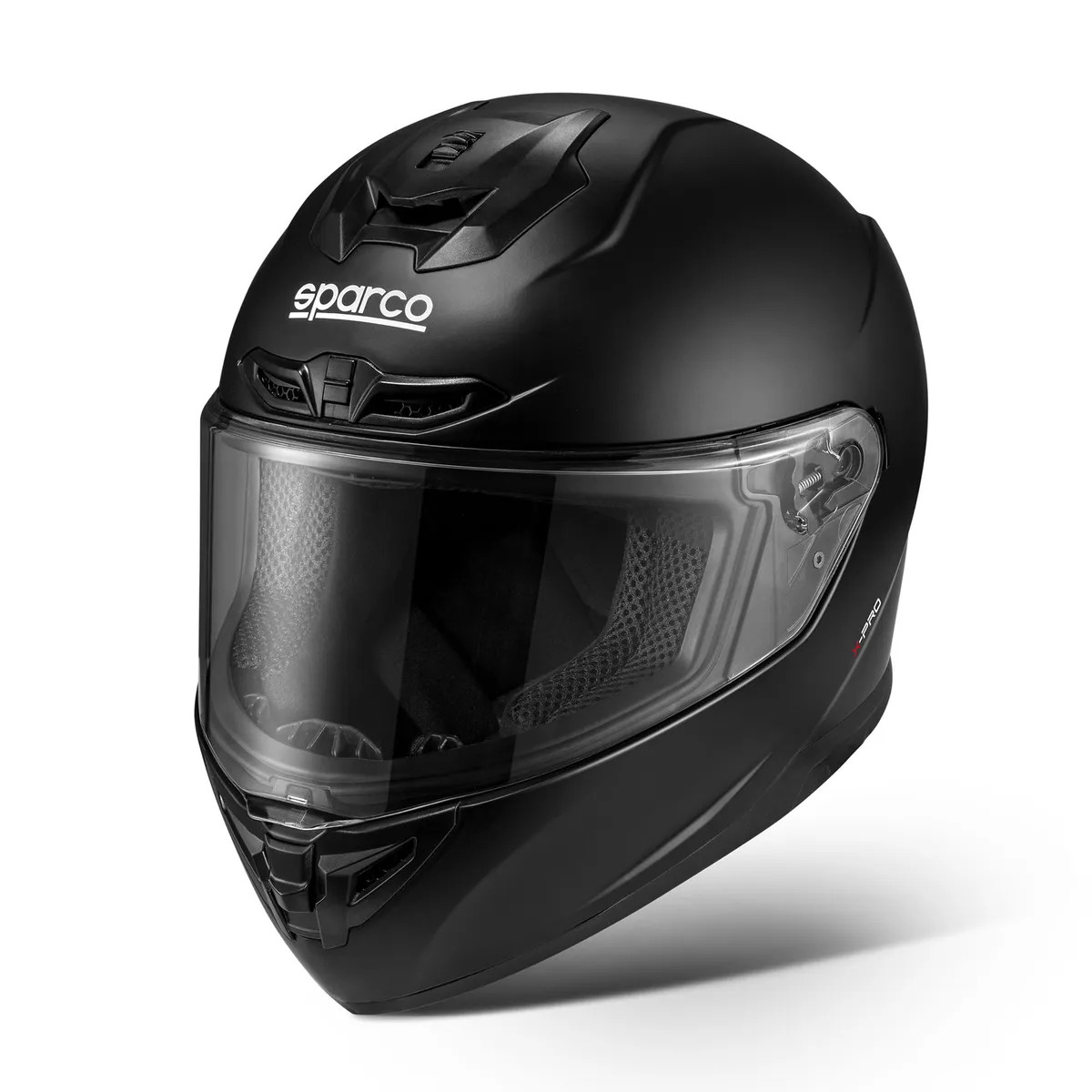
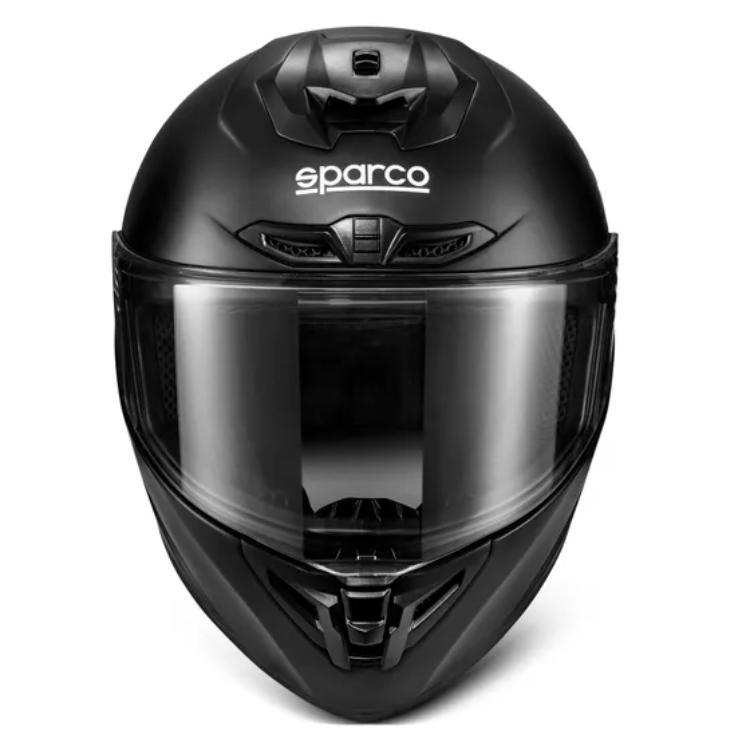
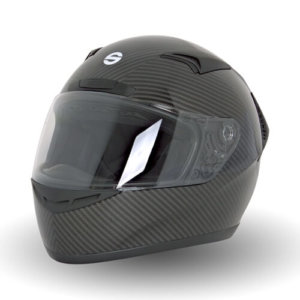
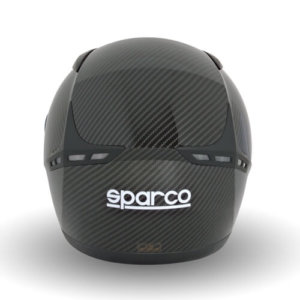
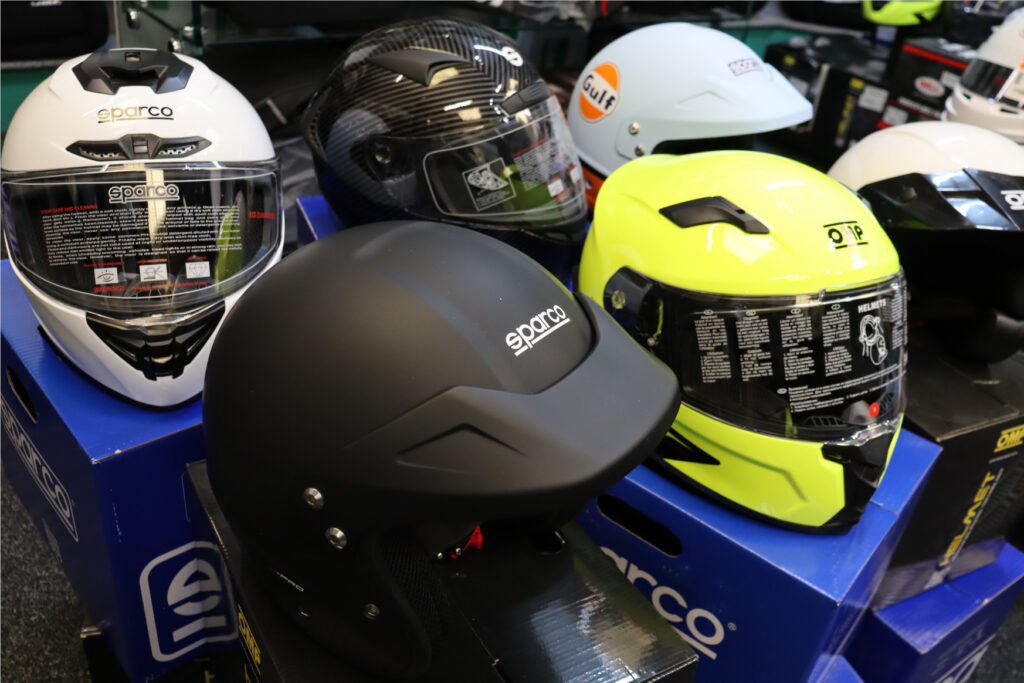
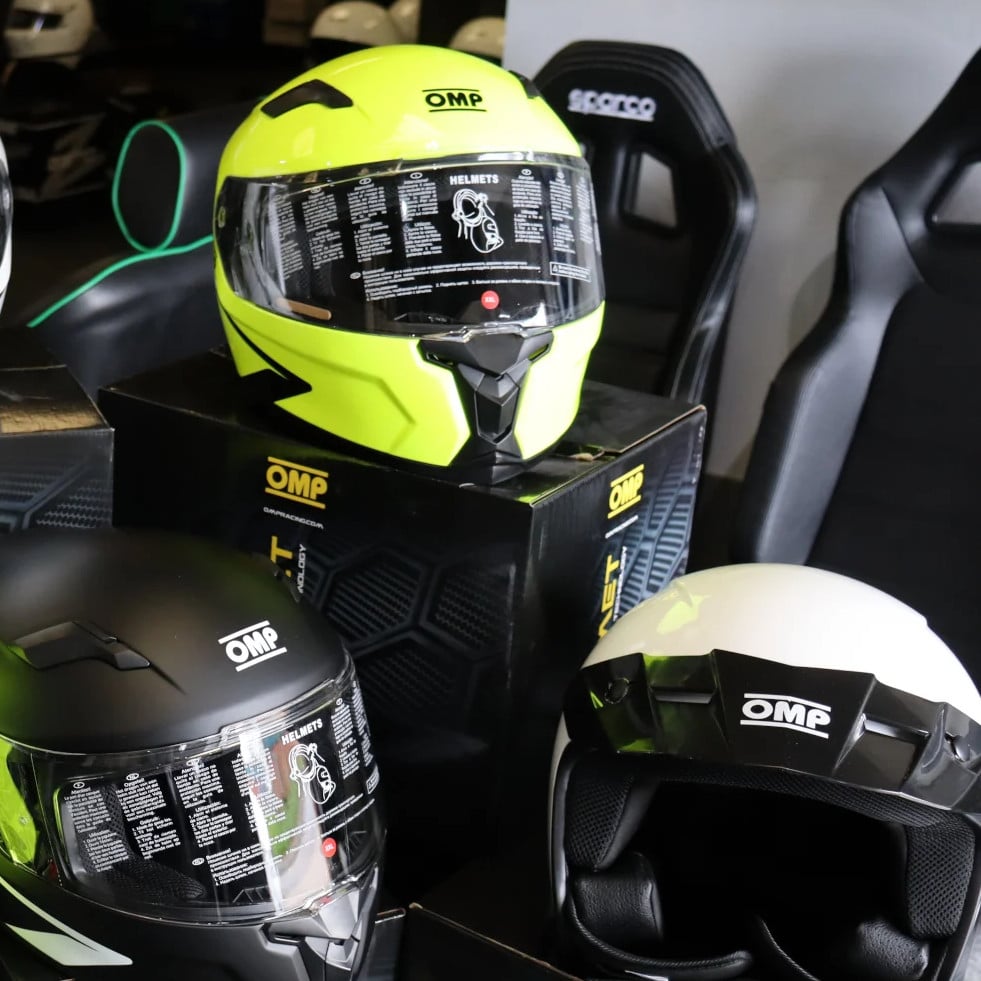
Closed face. The Sparco X-Pro is the one that leaves the shop most often, and at its price it is hard to argue with: clean shell, decent ventilation channels, sizes S to XXL. The OMP Circuit Evo 2 is its opposite number, an ABS shell built around airflow, and it comes in white, matt black or fluorescent yellow with a size run that starts smaller at XS. The Sparco Club X1 Carbon is the step up, a carbon shell that you notice most in the last twenty minutes of a long session when your neck has stopped thanking you for anything heavier.
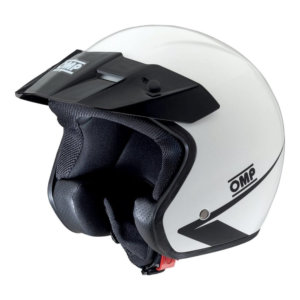
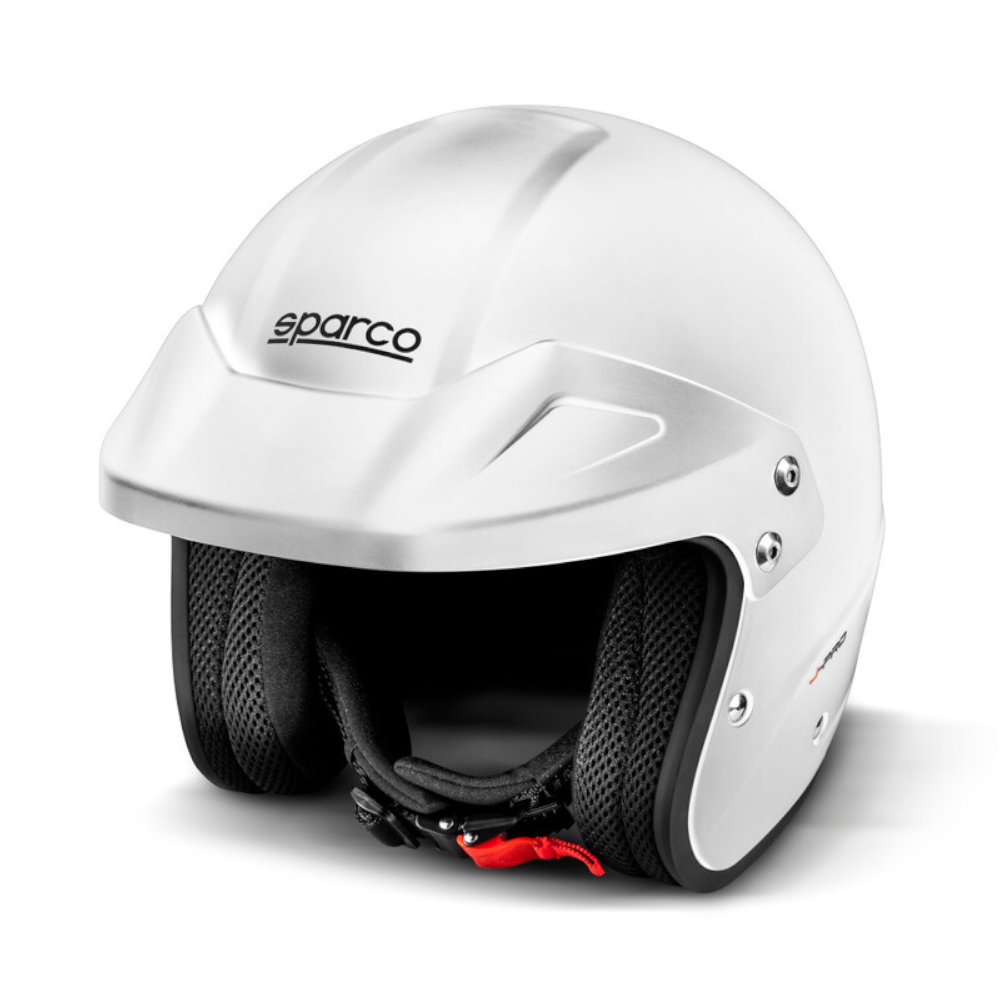
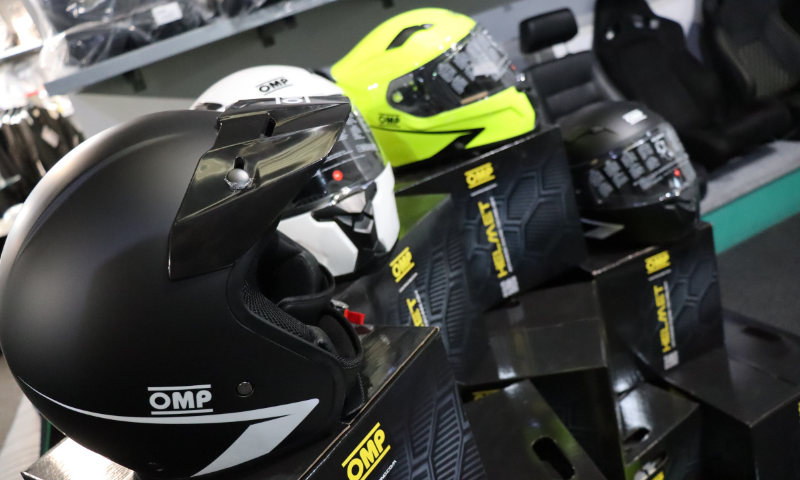
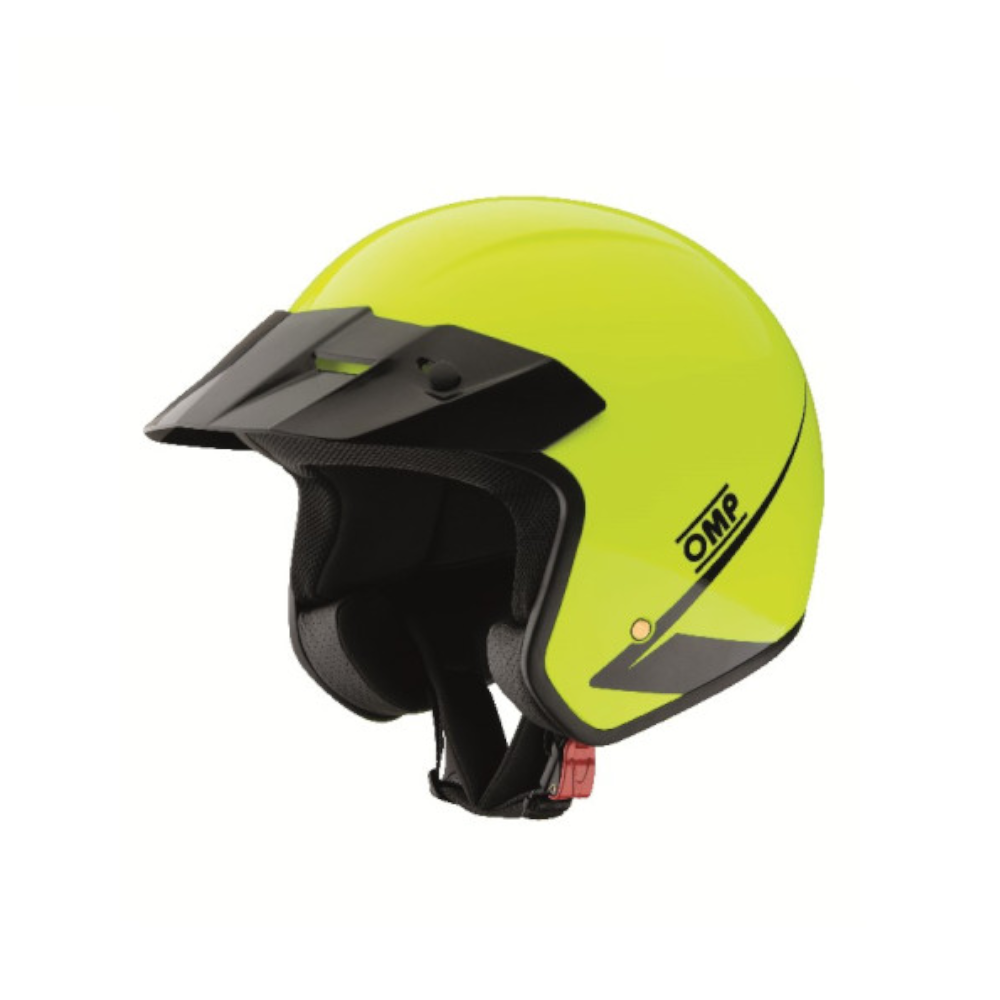
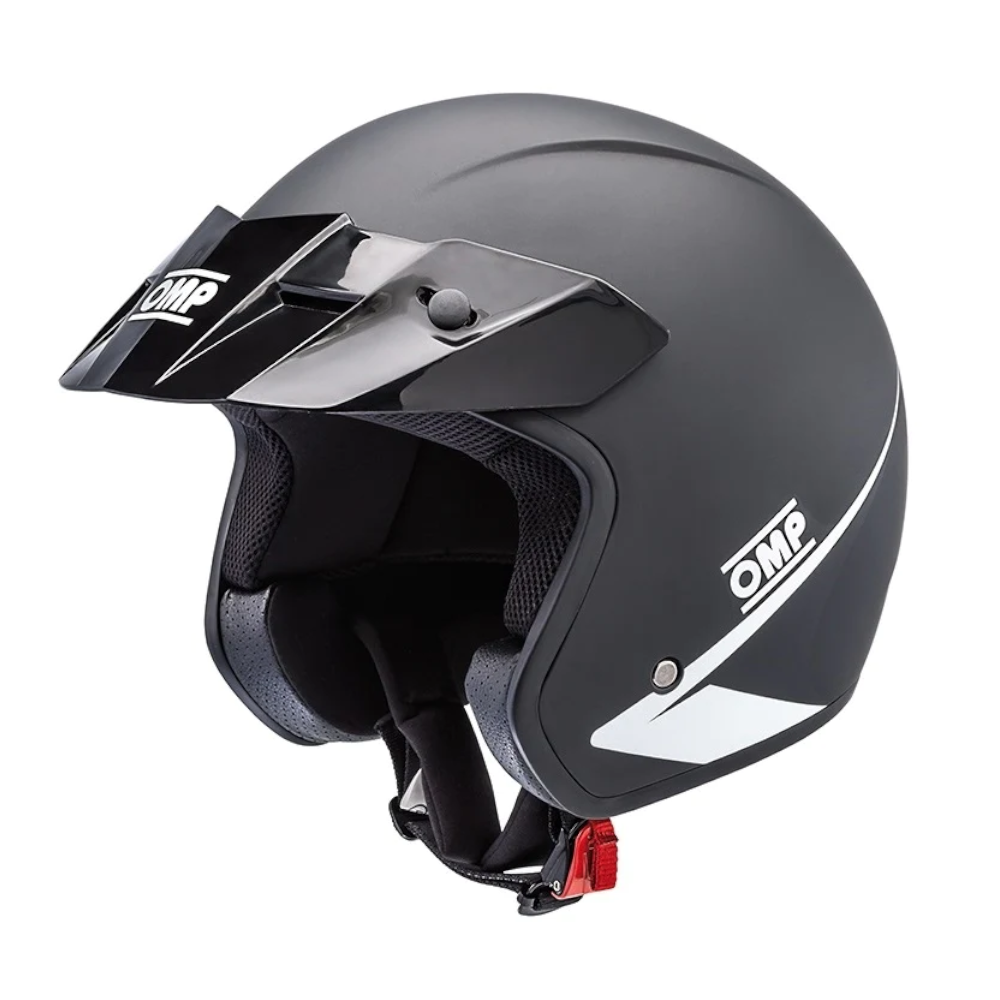
Open face. The OMP Star is the simplest thing here and the cheapest, and for a closed car on a summer day it is all the helmet a lot of people want. The Sparco J-Pro is the karting favourite, and it is the one to have if you are being coached, because you can actually hold a conversation in the pit lane without taking it off.
The ones with a livery on. The Gulf J-Pro and the Martini Racing J-Pro are the standard J-Pro underneath, same shell and same approval, wearing two of the better known liveries in the sport. The Martini X-Pro does the same for the closed-face X-Pro and is new since we first wrote this guide. You pay about twenty pounds for the paint, which seems fair enough.
-
From £74.00From £74.00 Select options This product has multiple variants. The options may be chosen on the product page
-
From £74.00From £74.00 Select options This product has multiple variants. The options may be chosen on the product page
-
From £74.00From £74.00 Select options This product has multiple variants. The options may be chosen on the product page
-
From £84.50From £84.50 Select options This product has multiple variants. The options may be chosen on the product page
-
From £105.00From £105.00 Select options This product has multiple variants. The options may be chosen on the product page
-
From £105.00From £105.00 Select options This product has multiple variants. The options may be chosen on the product page
Open face and closed face solve different problems
| Closed face | Open face | |
|---|---|---|
| Closed car | Yes | Yes |
| Open car or convertible | Yes | Not suitable, the face is exposed |
| Debris and stone protection | Full face and chin | Eyes and face exposed |
| Ventilation | Channelled through the shell | Better, it is open |
| Talking to an instructor | Muffled, most people lift the visor | Easy |
| Glasses | Fiddly to put on once the helmet is down | Straightforward |
| Works with every car you might driveTHE DECIDER | Yes | No |
| In our range | X-Pro, Circuit Evo 2, Club X1 Carbon, Martini X-Pro | Star, J-Pro, Gulf J-Pro, Martini J-Pro |
If you only ever drive one closed car, either style works and open face is more pleasant on a hot day. If there is any chance of a convertible, a passenger ride in something open, or a car with the roof out, buy closed face and be done with it. That one row is why we sell more closed-face helmets than open ones to people who are not karting.
Competition plans change the sensible purchase
The awkward version of this is the driver who buys an ECE helmet in March, enjoys three track days, enters a sprint in September and buys a second helmet. It happens often enough that it is worth asking yourself the question now, while you are only spending once.
If sprints, hillclimbs, circuit racing or rallying are anywhere on the horizon, look at an FIA 8859-2024 helmet instead. It costs more, it is heavier in the hand, and it will still be accepted at every track day you were going to do anyway. Our guide to the current FIA helmet standard covers what is accepted and what actually expires.
If competition is genuinely not on the cards, the helmets on this page are the right buy and there is no sense paying for a homologation nobody is going to ask you for.
A loose helmet is not a bargain
Measure round the head above the eyebrows first, then treat that number as a starting point rather than an answer, because the brands here size differently and their internal shapes differ more than their size charts suggest. Sparco and OMP will not necessarily agree on what a medium is.
Fasten the chin strap properly and then try to move the helmet with both hands. It should move your scalp rather than rotate on your head. Leave it on for ten minutes: the pressure point on your forehead that you did not notice at first is the one that ruins the third session. Check vision to the sides, check it with your glasses if you wear them, and check it with the balaclava you actually use, because a balaclava is worth most of a size.
On used helmets, we would rather you did not. You cannot see an impact that has crushed the liner, and you cannot verify how it was stored. If the label is missing or unreadable, walk away whatever the price.
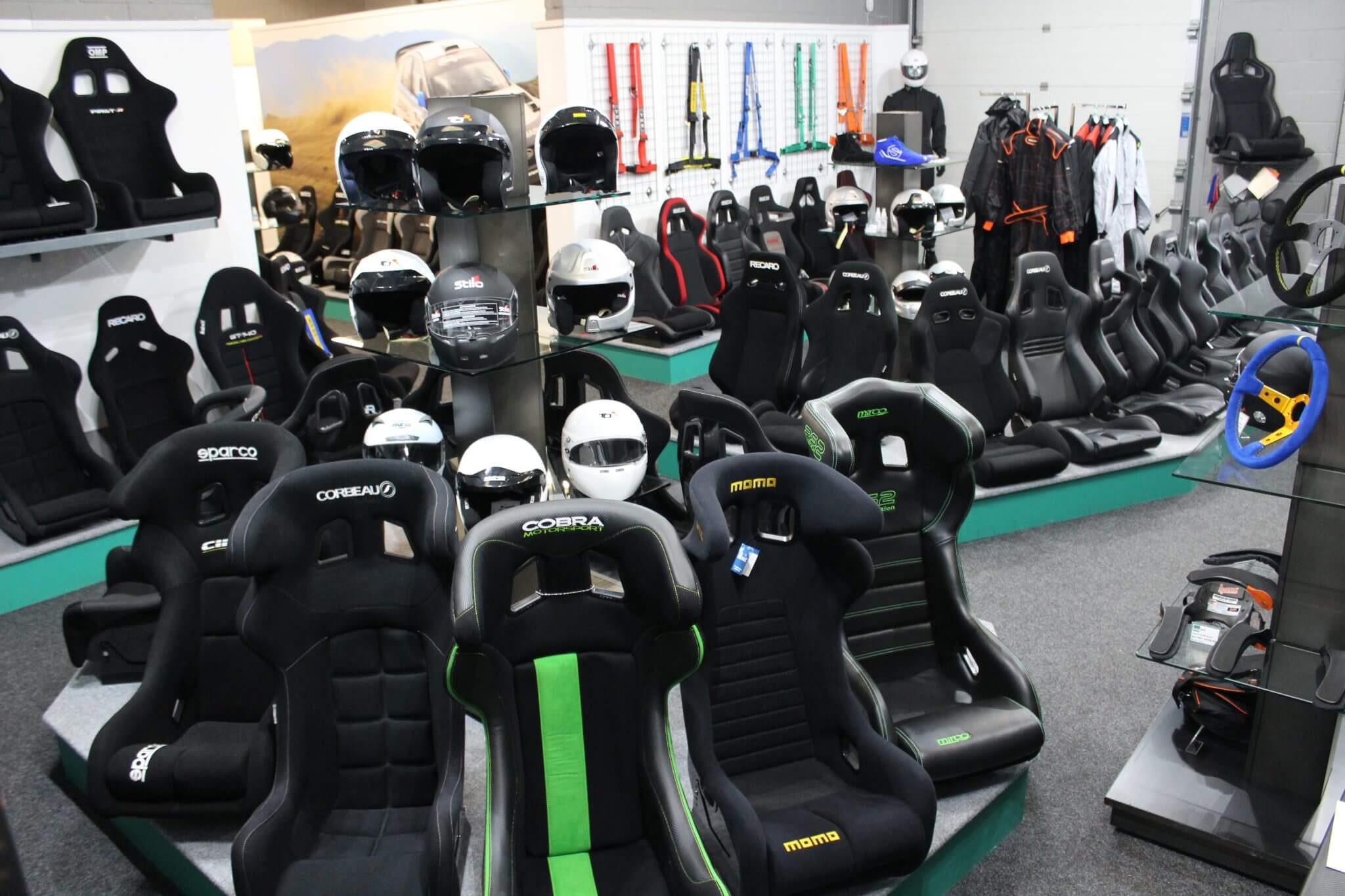
All twelve are on display in the showroom in their colour options, so it is a fitting session rather than a guess.
Track day helmet questions
Do I need an FIA helmet for a UK track day?▾
Usually not. Most organisers accept an ECE 22-06 helmet for a non-competitive track day, but it is their call and it varies. Ask for the accepted standards for your event and car before buying.
What approval do the helmets on this page carry?▾
ECE 22-06, the current European helmet standard. None of them is FIA homologated, so if your organiser or series names an FIA standard you need the FIA range instead.
Can I use a motorcycle or karting helmet?▾
Only if the organiser explicitly accepts its standard and design. Many of these helmets are sold for both karting and track use, which is not the same as every organiser accepting them.
Is open face allowed?▾
It depends on the organiser, the venue and the cockpit. Open cars are often treated differently from closed ones. Ask about your specific car.
Should I buy a used helmet?▾
We would not. Impact damage crushes the liner without marking the shell, and you cannot verify storage history. If you cannot confirm the identity and condition, do not rely on it.
Can I fit a camera or drill the shell?▾
No. Drilling or bonding anything to the shell voids the approval. Use a mount that does not modify the helmet, or a system the manufacturer supplied as an integral part of it.
Which one would you buy?▾
For a closed car with no competition plans, the Sparco X-Pro. If you are on track often enough to notice the weight, the Club X1 Carbon. If a sprint entry is likely within a year, skip this page and buy FIA.
We will match it to helmets that fit
Include the car, whether the cockpit is open or closed, whether you wear glasses or run an intercom, and anything you might enter next season. Then book enough time to try several shapes properly, because that is the part that decides it.
Browse helmetsBook the showroomContact us