Call Garreth, Cameron & Jack: 0115 9893488

Free UK shipping on orders over £100.00 & FREE gifts on checkout

Your garage NewAdd your car and see the parts that fit
Useful Links
Your Account

Talk to us

Garreth, Cameron & Jack · Mon to Fri
Call 0115 989 3488Free advice on your build
Thanks, that’s with us. We reply the same working day.
That didn’t send. Please give us a call instead.

Useful Links

Quick Access

Want to chat?

Call Garreth, Cameron, Jack
Today On: 0115 9893488
Click Here For Our Contact Form
Buy gift vouchers today


Free UK delivery over £100
Klarna available at checkout
Established 2003, Nottingham showroom
Call the team: 0115 989 3488
You've unlocked two free gifts All two are in your basket at no charge.
  • Gift box
  • GSM Performance Customer Car Colouring Book Edition 1

Mechanical Vs Electrical Fire Extinguishers: What Is The Difference And Which To Choose?

Fire extinguisher guide

A plumbed-in fire extinguisher system is a bottle fixed in the car, piped to nozzles that point into the cockpit and the engine bay. When it is fired, it floods those areas with extinguishant. The big choice when you buy one is how it is fired: by a pull cable, which is a mechanical system, or by a switch, which is an electrical system.

Both work well when they are fitted and maintained properly. This guide explains how each one works, what fitting involves, the FIA lists they appear on, and how we would choose between them.

  • Mechanical systems fire from a pull cable; electrical systems fire from a switch
  • Both types need a driver trigger inside and an external trigger for marshals
  • Both come in versions on FIA Technical List 16, and some electrical systems are on Technical List 52 (FIA 8865-2015)
  • The mechanical version of the same OMP or Sparco system costs less than the electrical one
  • Neither type is maintenance free, and both need servicing to the maker's schedule
  • Your championship's rules decide what you need, so read them first
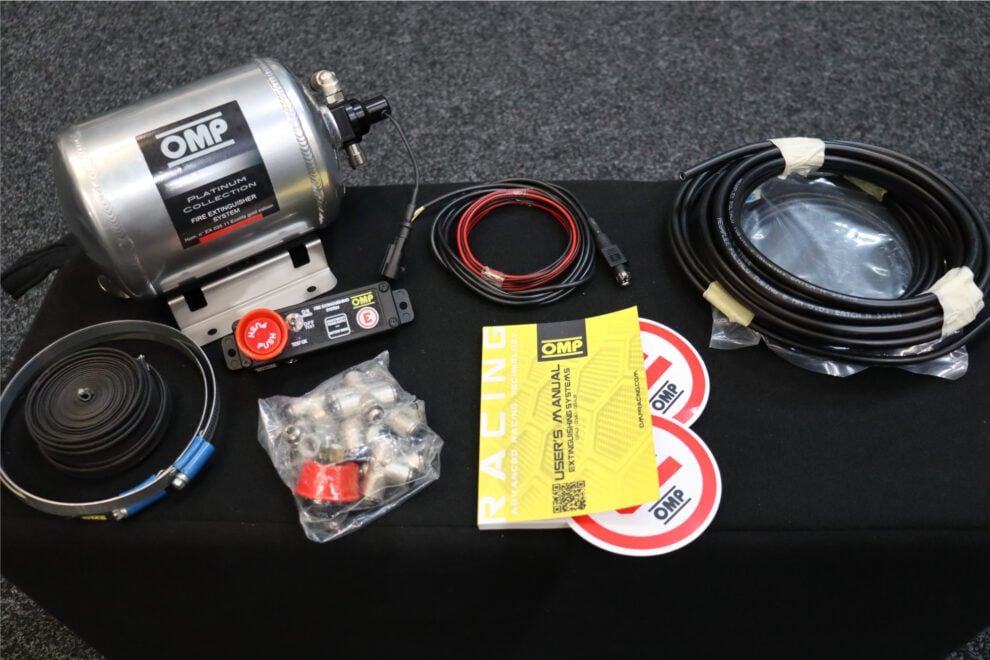
An OMP Platinum Collection electrical fire extinguisher kit laid out on a black cloth: alloy bottle, control box with push button, wiring, pipe, fittings, stickers and manual
Everything in the box of an OMP electrical system: bottle, control box, wiring, pipe, fittings and manual.

How each type fires

A mechanical system has a valve on the bottle with a lever. A steel cable runs from that lever to a pull handle in the cockpit, and a second cable runs to an external handle, usually near the circuit breaker. Pulling either handle opens the valve and the bottle discharges through the pipes and nozzles. Nothing about it depends on the car’s electrics.

An electrical system replaces the cables with wiring. A control unit sits between a button in the cockpit, an external button for the marshals and an electrically fired valve on the bottle. The control unit has its own power source or a specified supply, depending on the system, and a test indicator lets you check the circuit without discharging the bottle.

On either type, the driver must be able to fire the system while sitting in the seat with the harness done up and the steering wheel on. The external trigger has to be marked so a marshal can find it quickly.

The extinguishant is the same whichever way it is fired. The OMP SST systems, for example, use a clean gas agent (FK-5-1-12) that leaves no residue and does not conduct electricity.
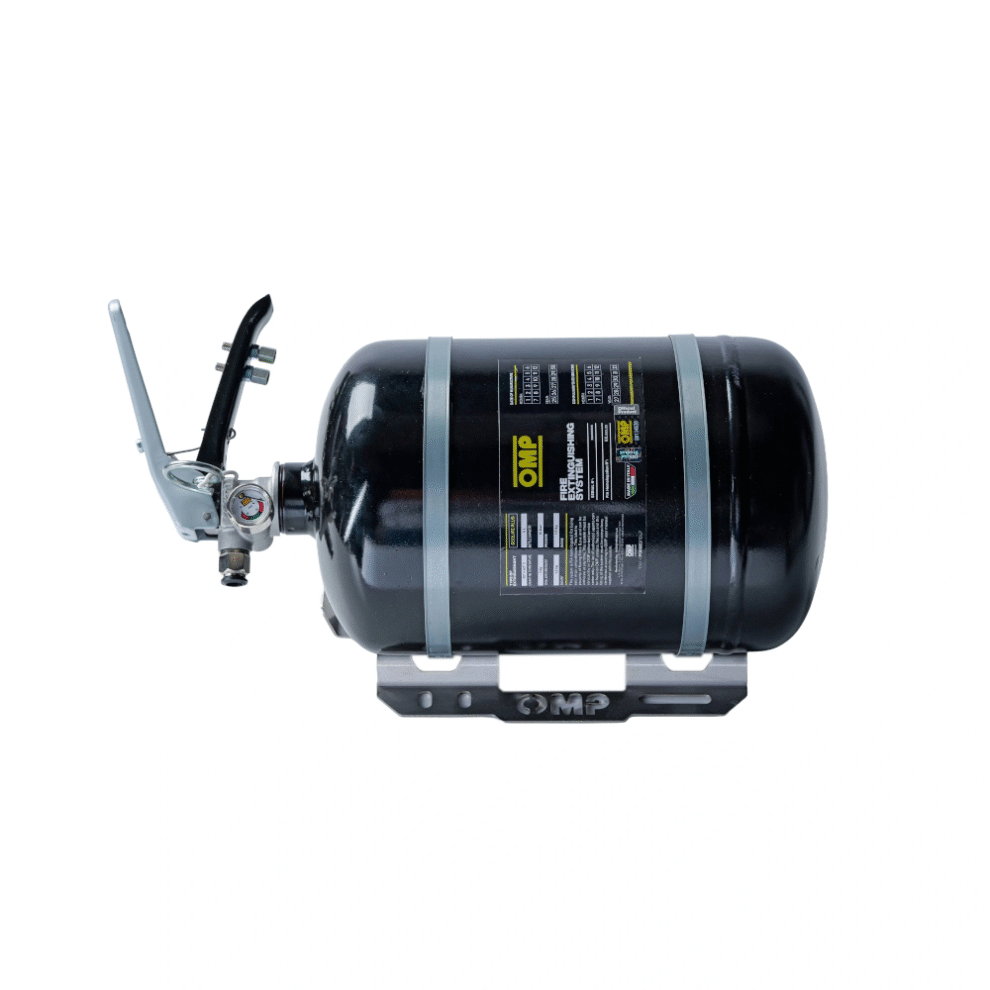
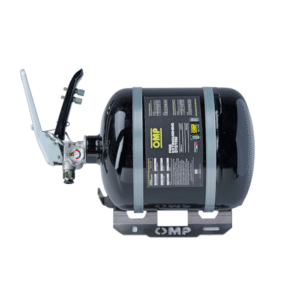
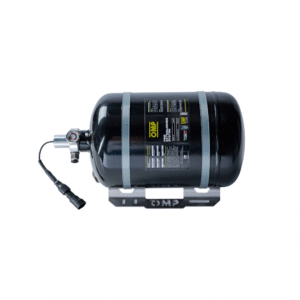
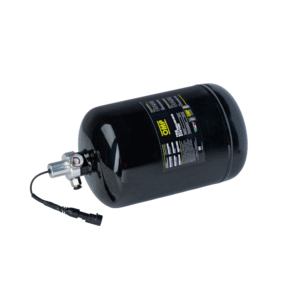
A black steel OMP mechanical fire extinguisher bottle on its bracket, with the pull lever on the valve head
An OMP SST7 mechanical bottle. The cables attach to the lever on the valve head.

What fitting involves

With a mechanical system, the work is in the cables. Plan where the internal and external handles will go and how the cables will run before you drill any bottle mounts. Keep to the minimum bend radius in the instructions, because tight bends add friction and can stop the valve moving through its full travel. Support the outer cable along its length and keep it away from heat and sharp edges.

An electrical system is usually tidier to route, because wiring bends more easily than a cable. The trade-off is that the control unit, switches and wiring all have to be fitted, armed and checked properly. Use the switches supplied with the kit: a generic dash button may not give the guarded or momentary action the system needs.

Garreth’s advice for either type is to fit it as the instructions say, and not to improvise with parts from another kit.

FIA approvals

The FIA keeps lists of homologated systems. Technical List 16 covers plumbed-in systems approved to the older 1999 standard. Technical List 52 covers systems approved to FIA 8865-2015, the newer standard. They are not interchangeable, so a system on List 16 does not meet a rule that asks for 8865-2015.

Mechanical and electrical systems both appear on List 16. The 8865-2015 systems we list, such as the Sparco 8865 and the OMP CESAL4, are electrical. Our guide to FIA fire extinguisher homologations goes through the lists in detail.

MechanicalElectrical
How it firesPull cable to a lever on the valveSwitch, control unit and wiring
Relies on powerNoYes, its own source or a specified supply
FittingCable routing and bend radius matter mostTidier routing; unit and switches must be armed and checked
ChecksHandle travel and cable conditionTest indicator, without discharging
FIA listsTechnical List 16Technical List 16 or List 52 (8865-2015)
CostLower for the same bottleHigher for the same bottle

Cost and servicing

Across the OMP and Sparco systems we list, the mechanical version of a system costs less than the electrical version with the same bottle. The difference is the control unit, switches and wiring.

Neither type looks after itself. Mechanical cables can corrode, kink or work loose, so check the handle moves the valve through its full travel. Electrical systems need their test checked to the maker’s schedule. Both need servicing by the manufacturer or an appointed agent, with the service markings kept legible. Our guide to servicing a motorsport fire extinguisher covers where to send it.

Which one to choose

Start with the rules. There is no single requirement for every competition car: it depends on the discipline, the class and the event, so read the current regulation that applies to your car. If it asks for FIA 8865-2015, that narrows the choice to a List 52 system straight away.

If the rules allow either, a mechanical system is simpler and costs less, and it suits a car with basic electrics or a historic car. An electrical system suits a car where the cable run would be long or awkward, or where the build already has a neat, well-planned wiring loom.

A mechanical system fires from a pull cable, and an electrical system fires from a switch through a control unit and wiring.

It needs a power supply, which is either the system’s own source or a specified supply, depending on the system.

No. List 16 covers the older 1999 standard and List 52 covers FIA 8865-2015, and they are not interchangeable.

Yes. Across the OMP and Sparco systems we list, the mechanical version costs less than the electrical one with the same bottle.

No. Use the non-discharge checks and service schedule from the maker, and never test by discharging the bottle.

💬
Our viewRules first, then the trigger

Check which FIA list your championship asks for, then choose the system you can fit and check properly.

📞
Not sure which you need?Send us your regulations

Tell us the car and the championship, and we will help you find a system that matches the rules.

What our customers say

Loading reviews...
Free UK Shipping

On all orders above £100

Showroom

Try before you buy, by appointment

Delivery Tracking

Updates by email and text