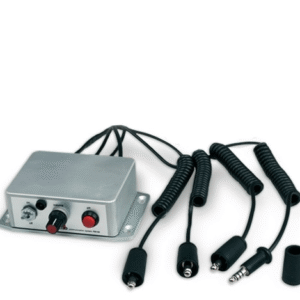
The ZeroNoise Pit-Link GSM ClearVoice (part 6100048) is a two-seat Fearless-class intercom with a Bluetooth link to a phone, so the pit can talk to the car.
The driver and co-driver ports work the same way as on the Fearless ClearVoice, with ClearVoice noise processing. A phone paired over Bluetooth carries the pit’s call into both helmets, and the push-to-talk lead lets the driver hold a button to speak to the pit. There is a 3.5 mm radio in and out, a camera output, CAN-bus and the ZeroNoise app. It has no ROAD and STAGE modes.
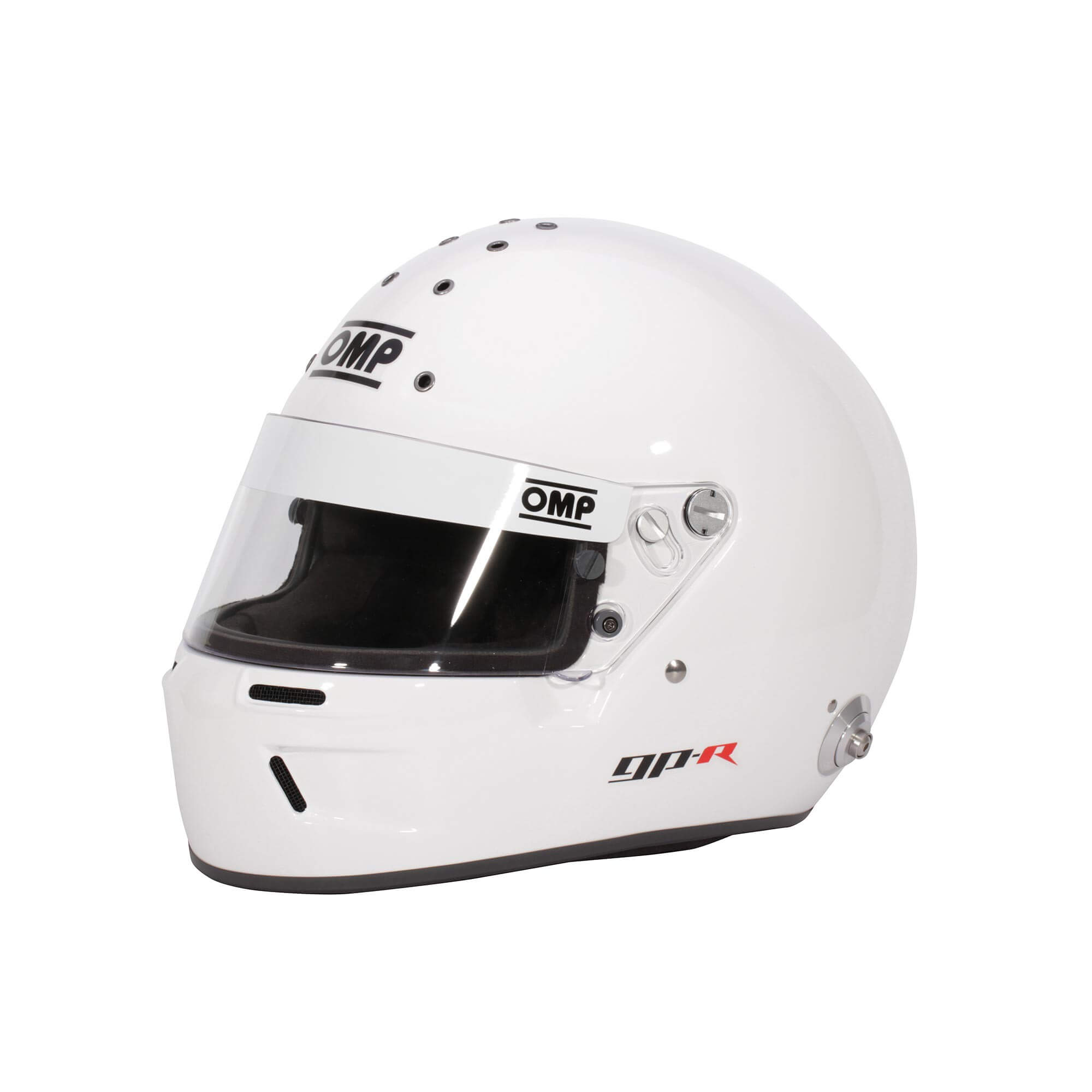
The leads are 4-pin Nexus, in the gender you choose. Male leads plug straight into a female Nexus socket: every Bell rally intercom helmet, the Sparco Flux RJ-i, Flux RJ-i Carbon and Prime RJ-i Supercarbon, and the OMP J-Rally. Female leads take a male Nexus plug: the ZeroNoise helmet kits, and Stilo WRC-type helmets through the Stilo AC0204.2 lead.
Which helmets does this amplifier work with?
Any helmet or headset with a 4-pin Nexus connection, as long as the lead gender matches. Order male leads for a female Nexus socket: every Bell rally intercom helmet, the Sparco Flux RJ-i, Flux RJ-i Carbon and Prime RJ-i Supercarbon, and the OMP J-Rally. Order female leads for a male Nexus plug: the ZeroNoise helmet kits, and Stilo WRC-type helmets through the Stilo AC0204.2 lead. For a driver and co-driver on different genders, choose the one male, one female option. It does not take the 6.35 mm Valiant headsets.
What do I need for a complete working setup?
An amplifier like this one, a wired kit in each helmet, and the leads that join them. If you are starting from nothing, send us your helmet models and whether you want music, phone, or radio in the mix, and we will quote the full setup rather than leaving you to guess at parts.
What does the Bluetooth side do?
It pairs the intercom with a phone, so you can take calls and hear navigation through the helmets, which is why these units are popular for road rallies and touring events as well as competition. Driver and co-driver still talk over the wired side, which is what keeps the speech clear at speed.
Is it loud enough for a race car?
These systems are designed around exactly that problem: a straight-cut gearbox and open exhaust are why sound-deadened headsets and speech-focused amplification exist. Set microphone placement right against the lips and you will hold a conversation at full noise. If your car is unusually loud, ask us about the higher-output units.