Alpinestars Radar V2 Shoes And ZX Evo V3 Balaclava: Same Approval, Different Jobs
Two new Alpinestars pieces landed with us for 2026, and on paper they look like they belong in completely different parts of the catalogue. One is a mechanics shoe. One is a balaclava. I am Cameron, and I look after racewear here at GSM Performance, so these are both things I have had out of the box and on the shelf.
What connects them is the label. Both carry FIA 8856-2018, the same clothing standard that covers a top-flight race suit, and both add the American SFI 3.3 on top. That sounds like it settles the question of what they are for. It does not, and that gap is worth ten minutes of your time before you order either one.
Here is the thing about FIA 8856-2018. It is a clothing standard, not a job description. It tells you an item has been tested for flame resistance and has passed. It does not tell you whether the item suits what you actually do on a Sunday.
The Radar V2 and the ZX Evo V3 make that point better than anything else we have taken in this year, because one of them is built for a job most people buy the wrong shoe for, and the other one quietly changed shape between generations in a way you would not spot from a product listing.
What FIA 8856-2018 actually covers
FIA 8856-2018 is the current standard for protective clothing for drivers, and it runs across the lot: suits, underwear, balaclavas, socks, gloves and shoes. So a mechanics shoe and a race boot can sit under the same four numbers, and so can a balaclava that covers your whole face and one with an open front.
The standard sets minimums for the fabric and the construction. For balaclavas, the part you can see in frontal projection when it is worn has to be at least two layers of 180 grams per square metre. What it does not say is how big the face opening should be. That is left to the manufacturer, and it is exactly where two approved balaclavas can turn out to be genuinely different products.
Approval answers one question: will this resist fire to a tested level. Everything else, the sole thickness, the ankle height, the size of the face opening, is a design decision, and those decisions are what make a piece of kit right or wrong for you.
If you want the full picture of which items you are actually required to wear and when, we went through the 2026 Motorsport UK rules class by class in our hillclimb and sprint racewear guide.
The Radar V2 Mechanics Shoes
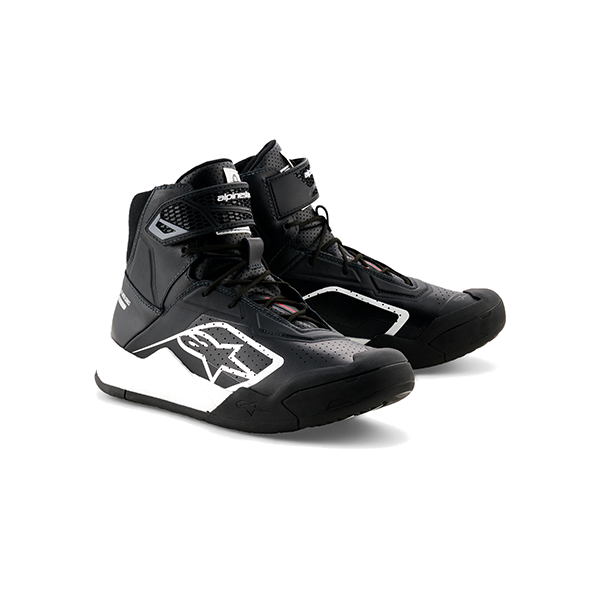
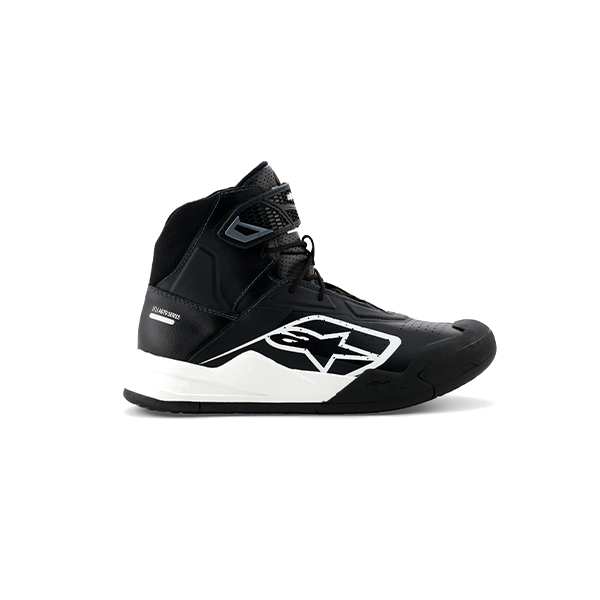
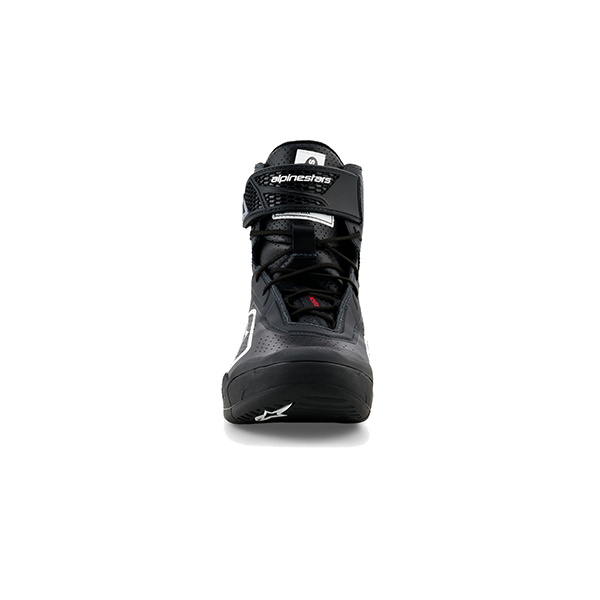
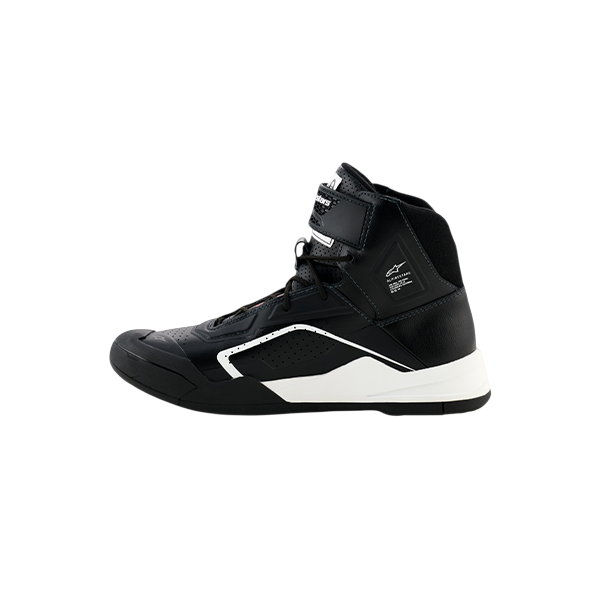
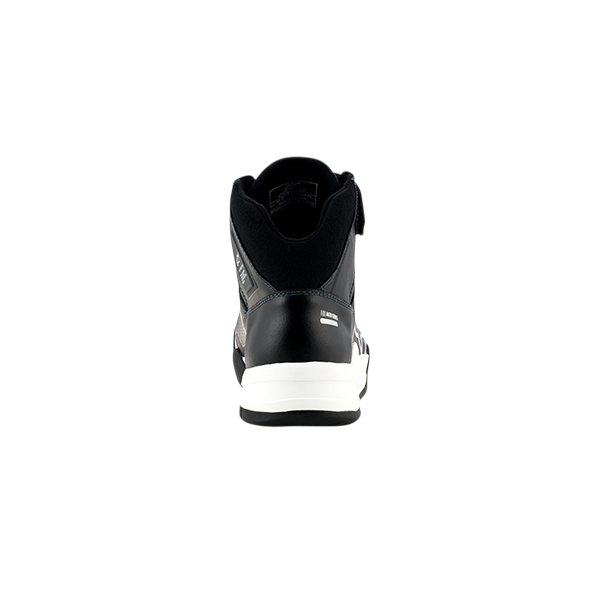
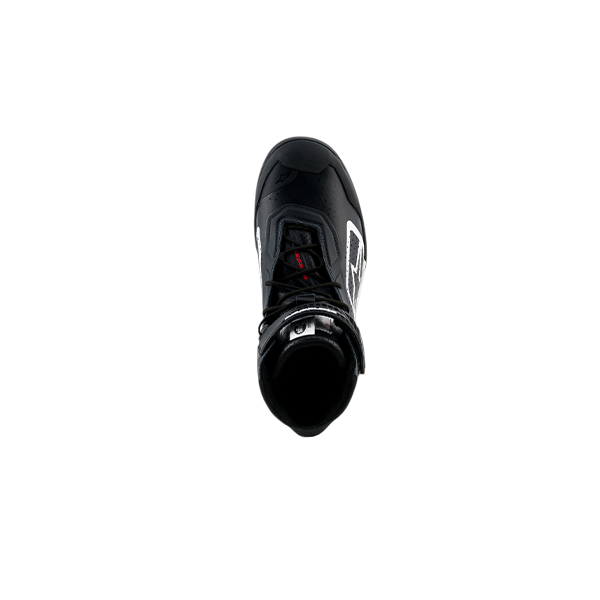
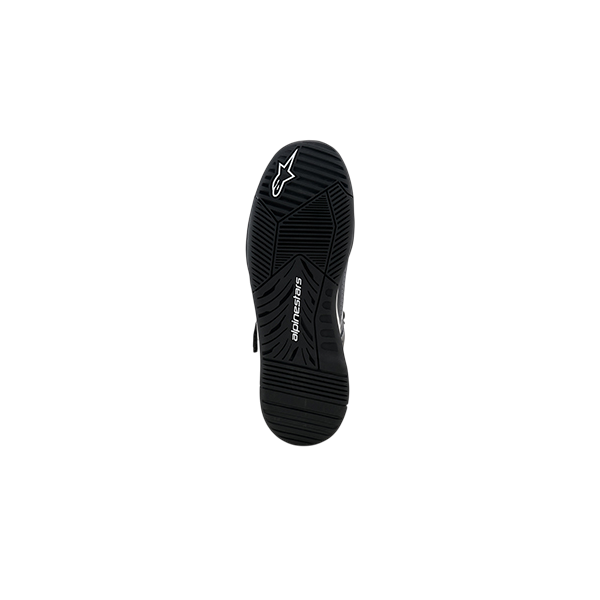
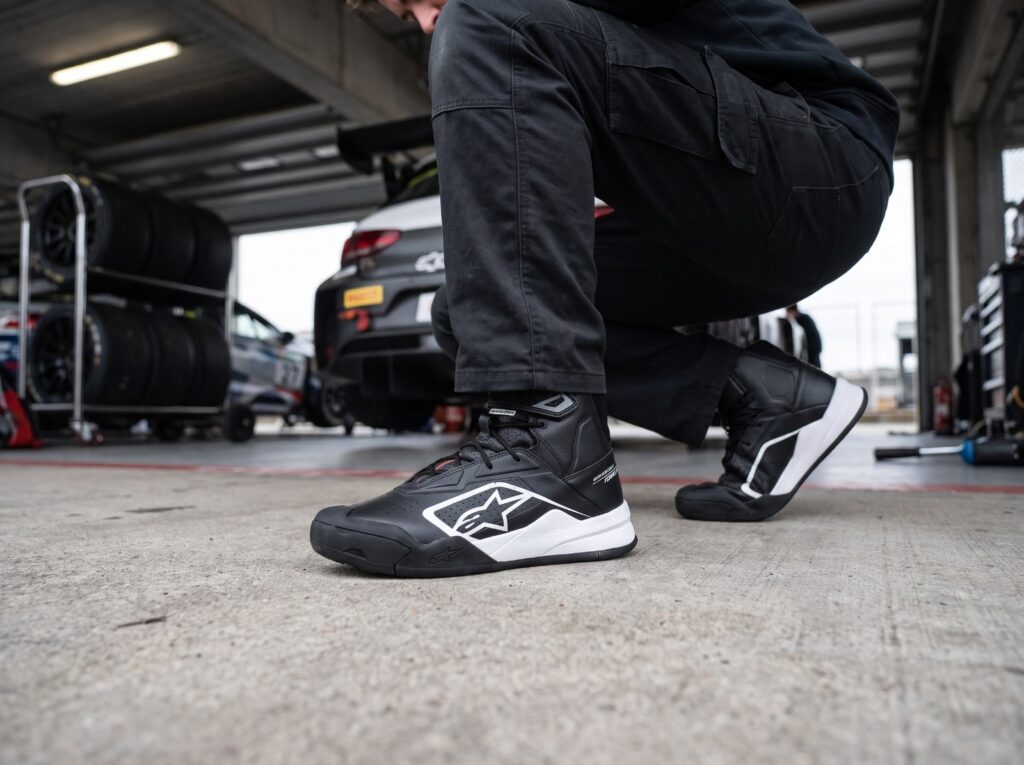
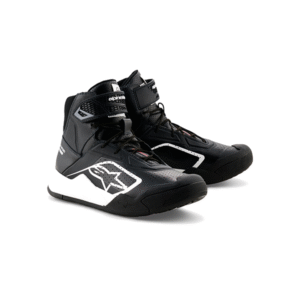
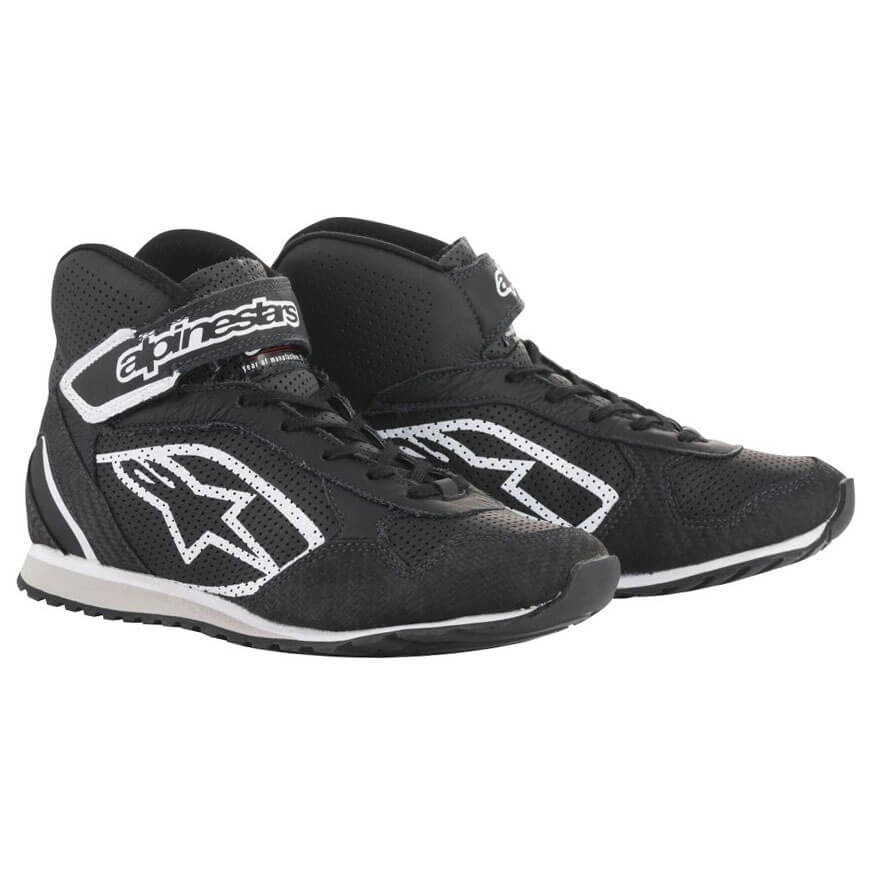
Alpinestars developed the Radar line with pit crews in Formula 1, NASCAR and IndyCar, and you can see it the moment you pick a pair up. The sole is thick, wide and heavily lugged, with the rubber wrapping up over the toe. There is a hook and loop strap over the top of the laces, perforated panels through the side, and a padded collar that sits high at the sides and drops away at the back of the heel.
Every one of those decisions is about standing up. A pit lane or a garage floor is smooth, often polished, and frequently has something slippery on it. You are on your feet for hours, kneeling, getting up, changing direction quickly, and occasionally putting a foot somewhere hot. So you want grip, cushioning, ankle support and a lining that will not melt.
Key features
- Leather upper with reinforced heel, ankle and toe zones
- Fire-resistant aramidic lining, FIA 8856-2018 and SFI 3.3
- Alpinestars high-grip rubber compound sole for smooth and oily floors
- Cushioned mid-sole and ergonomic heel counter to cut fatigue on long days
- Perforated panels for airflow
- Low rear ankle collar and TPR ankle support for movement
- Dual closure, laces plus a hook and loop strap
- UK 5 to UK 14
Now the part I would rather say up front. Do not buy these to drive in. They carry driver-grade approval, so nothing about the label is stopping you, but a race boot is designed to do the opposite job: a thin, narrow, smooth sole so you can feel the pedals through your foot and slide between them without catching. The Radar V2 has a thick grippy sole precisely because a mechanic needs one. Put that on a pedal box and you lose the feel you were paying for.
The people who get the most out of these are crew, and co-drivers. That second group catches people out, so it gets its own section.
-
From £237.60 Incl. VATFrom £198.00 Excl. VAT Select options This product has multiple variants. The options may be chosen on the product page
The co-driver exception
A co-driver sits in the car, in the fire, wearing the same suit and helmet as the driver. What they do not do is operate the pedals.
That makes them the one person in the car who is better off in a crew boot than a race boot. They want a substantial sole, proper grip for jumping out onto a wet verge and getting to a jack, and comfort for hours of sitting still. Slim race boots give them nothing they need and take away things they do.
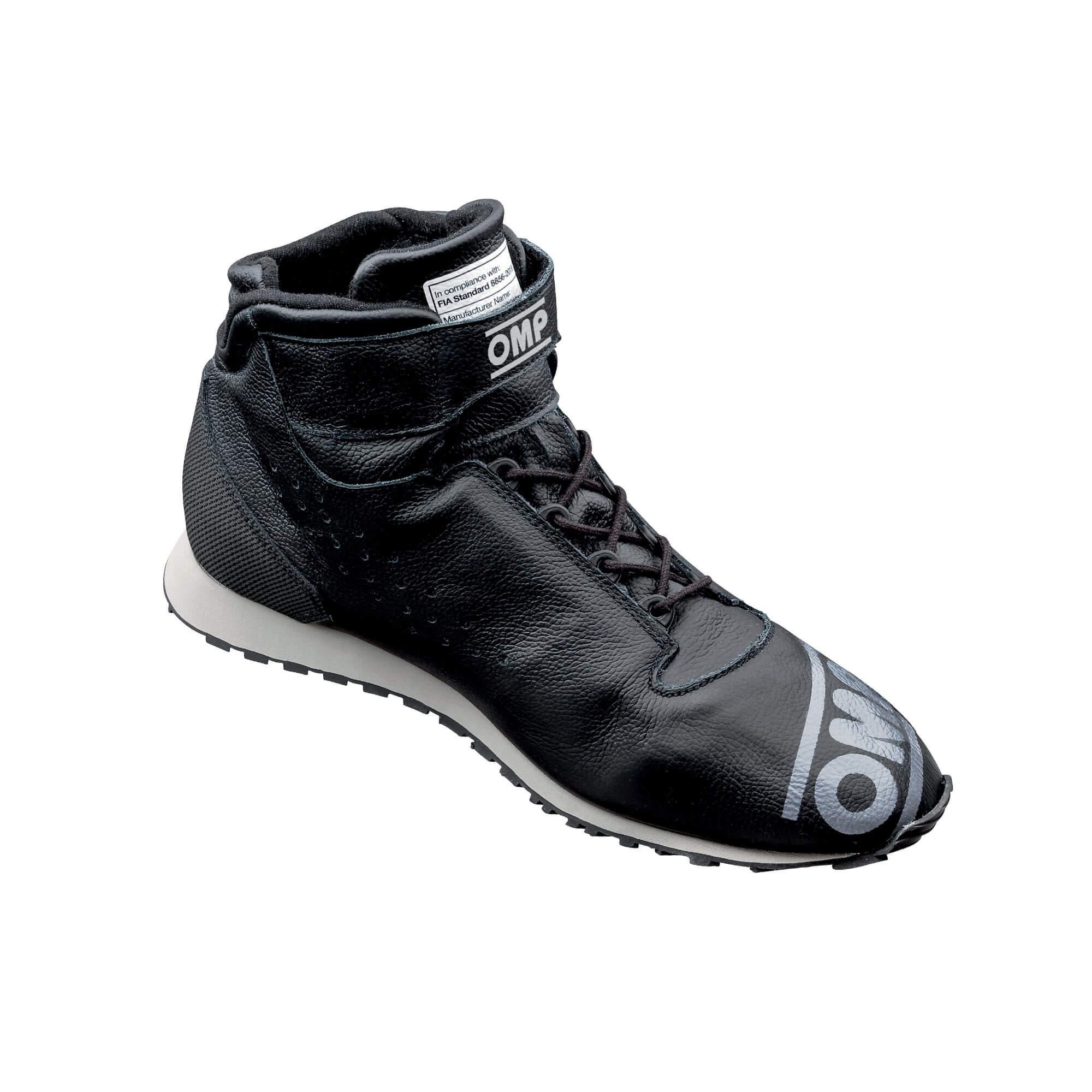
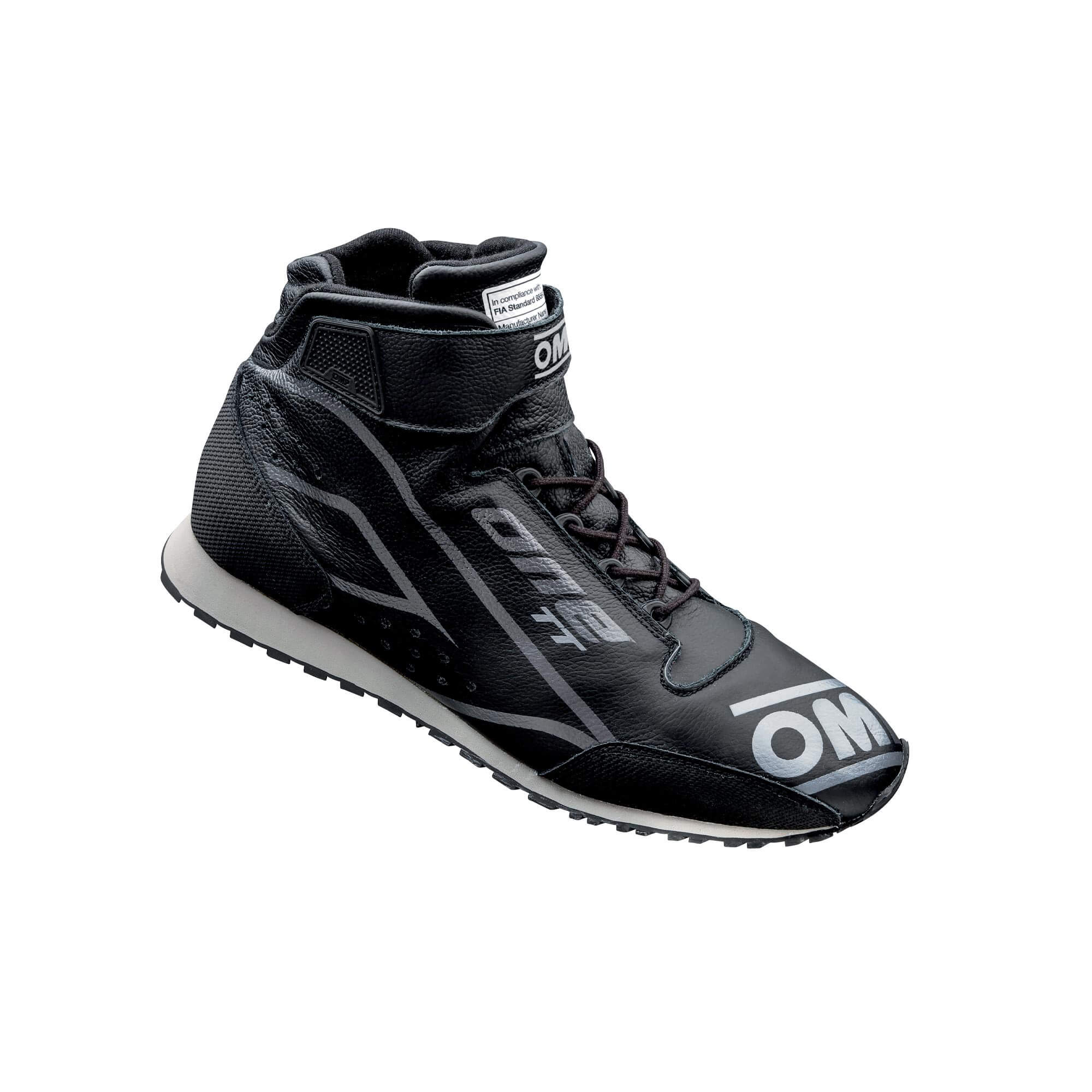
Alpinestars and OMP both build for this explicitly. The Radar Co-Driver boot is the higher-cut suede version of the same idea, and OMP’s One TT is the equivalent from the other side of the aisle. If you are co-driving, look at those before you look at anything with a thin sole.
Here is how the crew and co-driver footwear we stock lines up. I have left prices out on purpose, because they move and the live prices are on the product cards below.
| Model | Approval | Cut | Upper | Best for |
|---|---|---|---|---|
| Alpinestars Radar V2 | FIA 8856-2018, SFI 3.3 | Shoe | Leather | Pit crew and garage, long days standing |
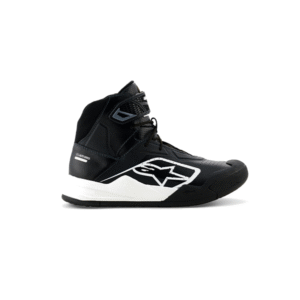
| Alpinestars Radar Co-Driver | FIA 8856-2018 | Boot | Suede | Co-drivers wanting more substantial footwear |
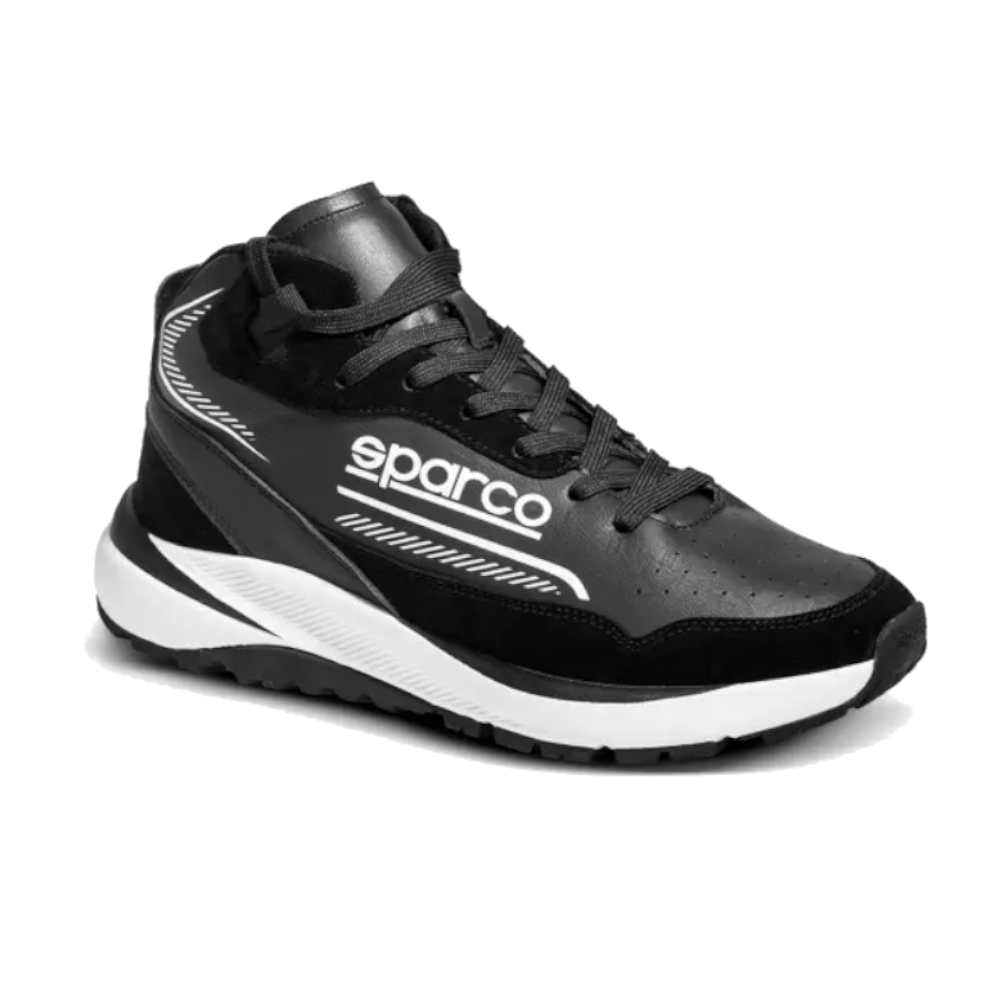
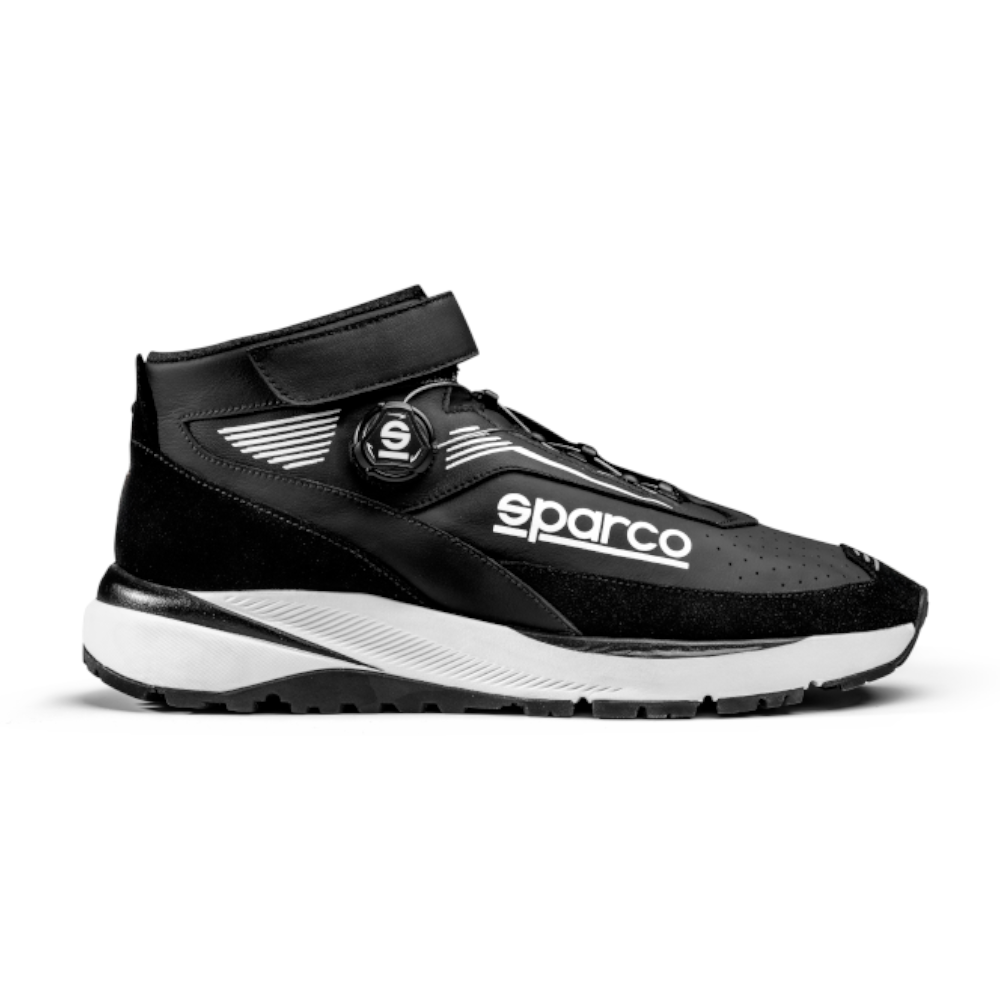
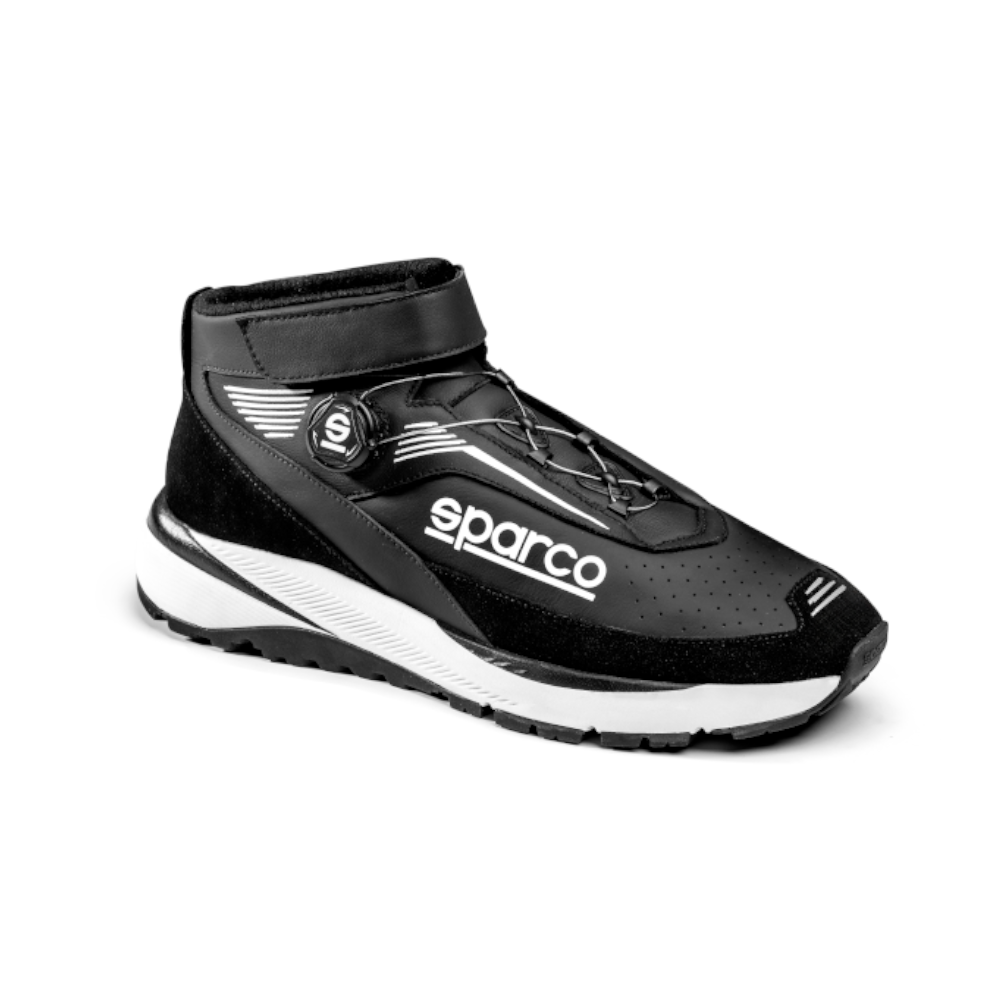
| Sparco Chrono | FIA 8856-2018, SFI 3.3/5 | Shoe | Leather | Crew who want an SFI ticket as well |
| Sparco Fast | FIA 8856-2018 | Shoe | Leather | Shock-absorbing sole, designed with mechanics |
| OMP One TT | FIA 8856-2018 | Boot | Leather | Mechanics and co-drivers, substantial sole |
-
From £200.40 Incl. VATFrom £167.00 Excl. VAT Select options This product has multiple variants. The options may be chosen on the product page
-
From £216.00 Incl. VATFrom £180.00 Excl. VAT Select options This product has multiple variants. The options may be chosen on the product page
-
From £226.80 Incl. VATFrom £189.00 Excl. VAT Select options This product has multiple variants. The options may be chosen on the product page
-
From £182.40 Incl. VATFrom £152.00 Excl. VAT Select options This product has multiple variants. The options may be chosen on the product page
The ZX Evo V3 Balaclava, and the thing that changed
This is the one I would have got wrong if I had not had both generations side by side on the counter.
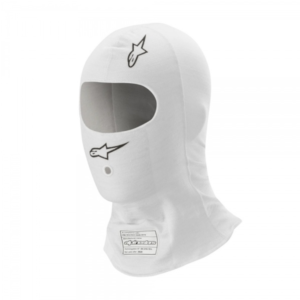
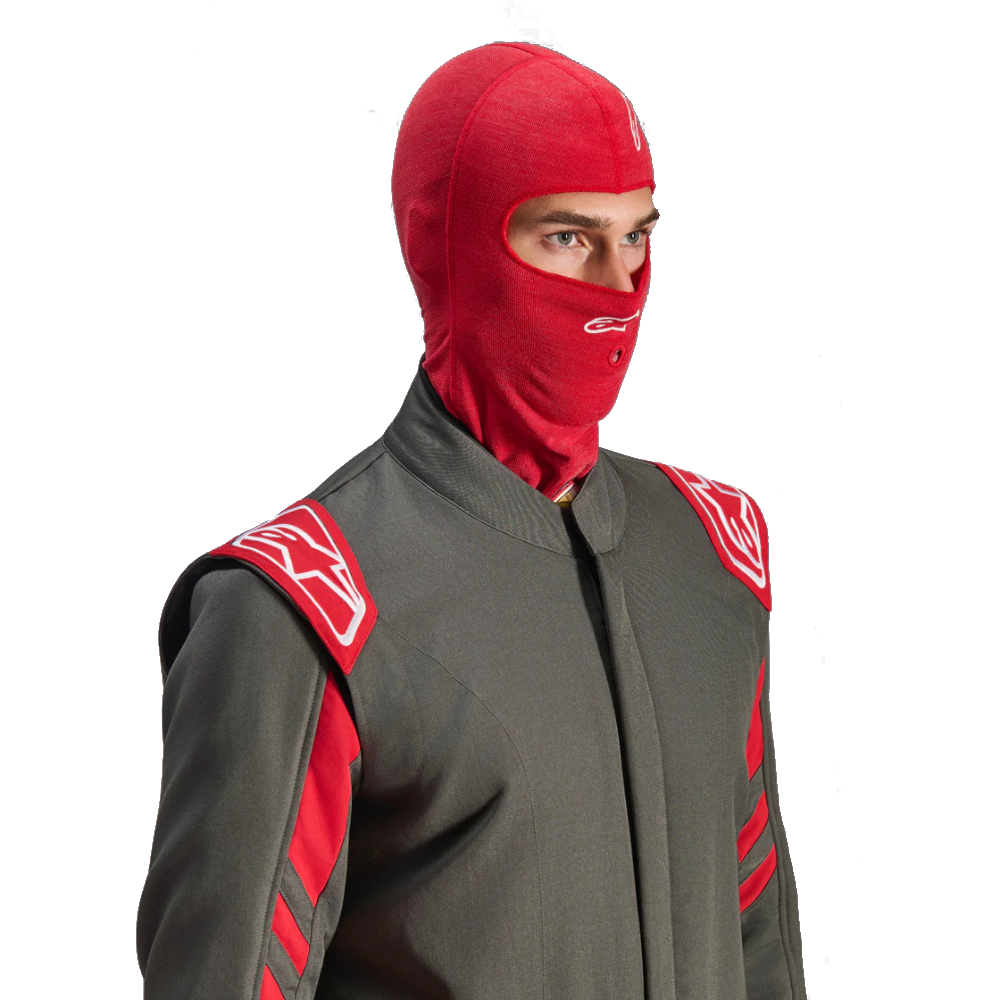
The ZX Evo V2 balaclava has an open face. One large rounded aperture, the shape most people picture when they think of a race balaclava, with your eyes, nose and a good part of your cheeks exposed to the inside of the helmet.
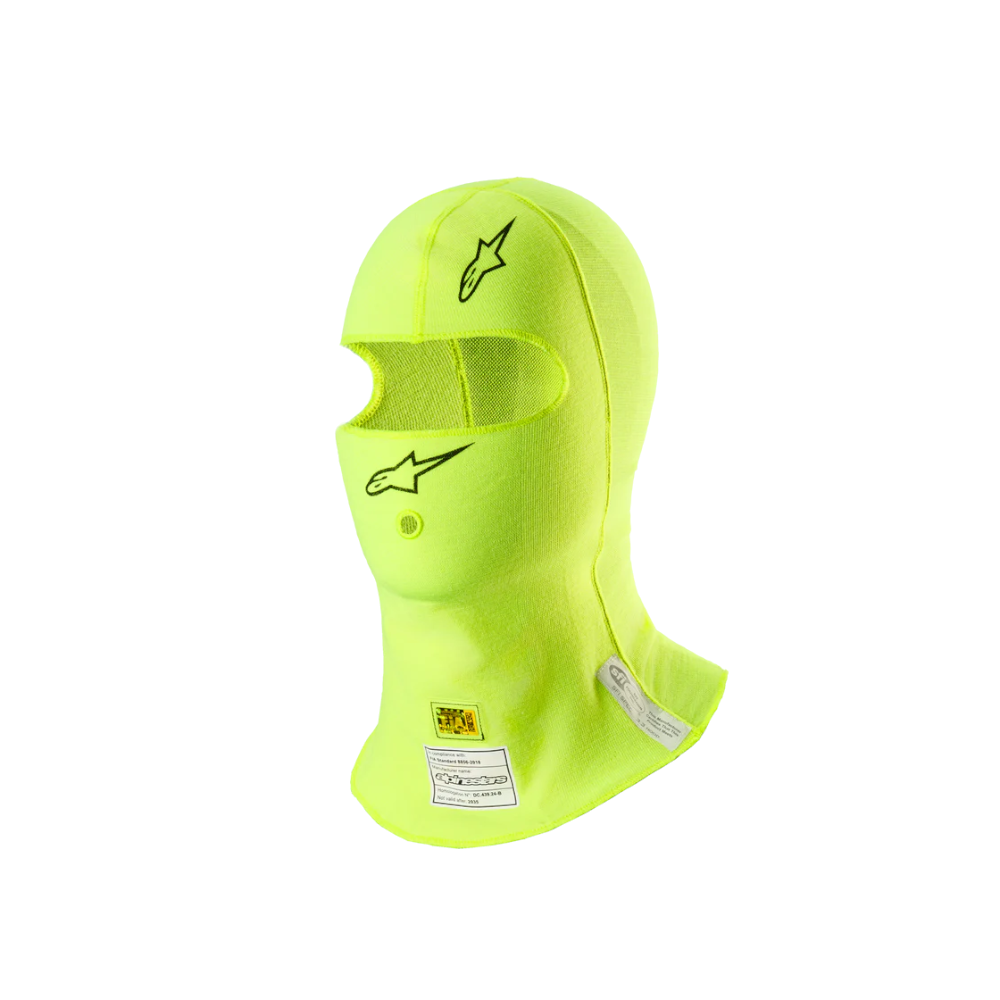
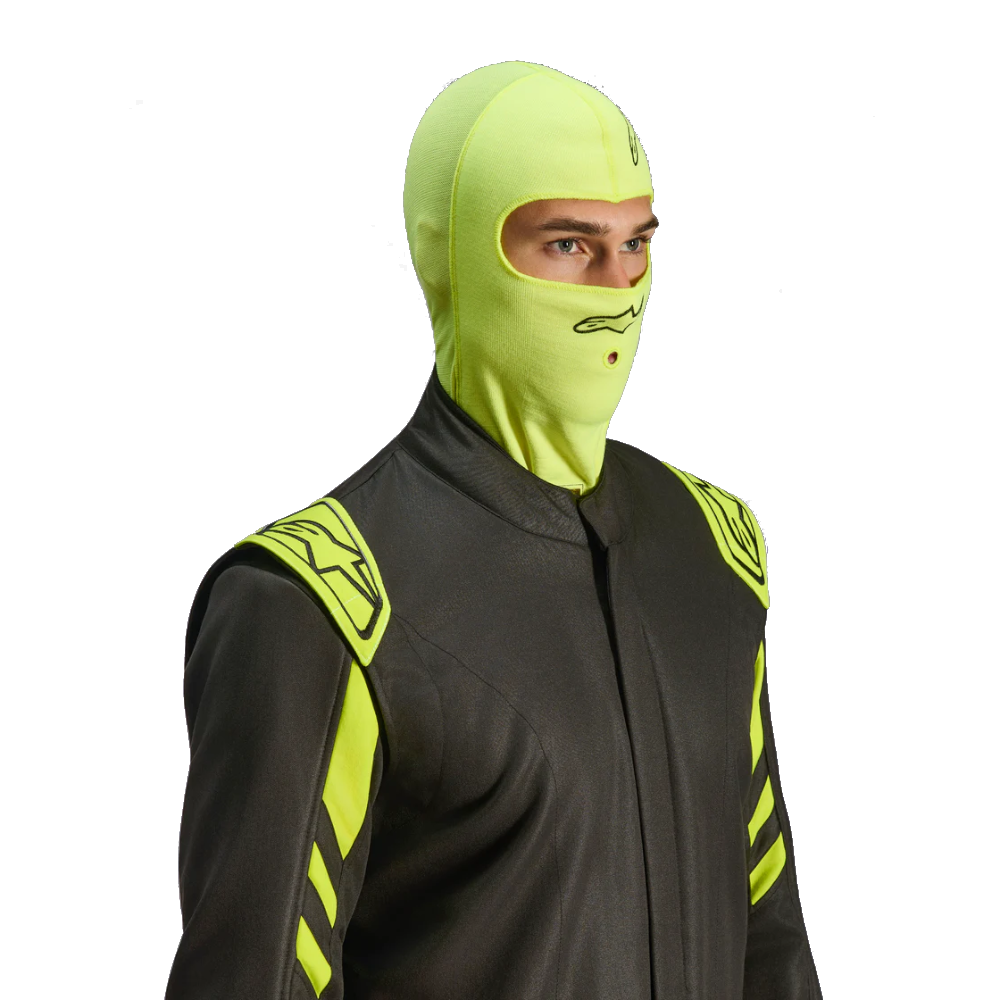
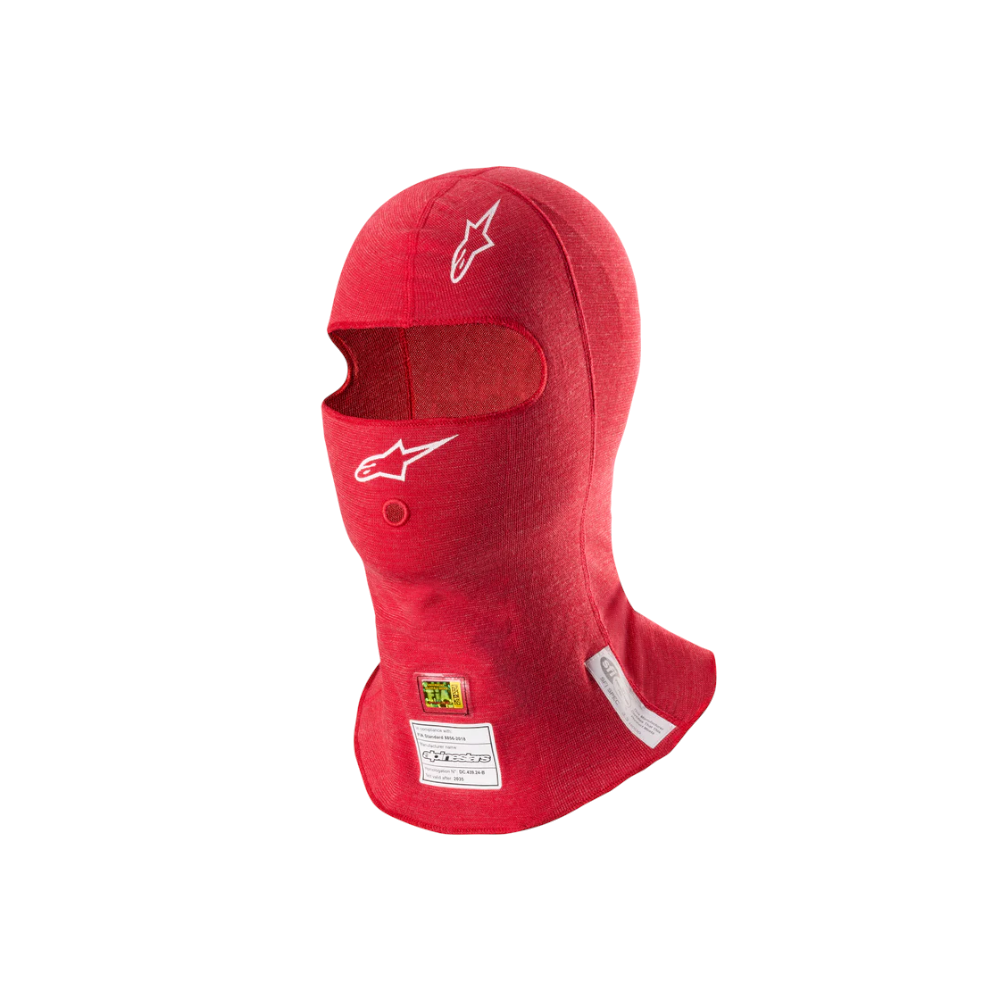
The ZX Evo V3 is not that. It has a narrow horizontal eye slot. Your nose and mouth sit behind a double-layer fabric panel, with a small round port lower down for a drink tube. Side by side they are obviously different pieces of kit, but on a product listing they are one version number apart, and I would put money on people reordering the V3 expecting the V2 and being surprised by what turns up.
Neither cut is more legal than the other. Both hold FIA 8856-2018. What changes is coverage and feel.
Left: the 2026 ZX Evo V3 with its narrow eye slot. Right: the ZX Evo V2 with the older open-face aperture. Same range, same approval, different amount of fabric across your face.
-
From £72.00 Incl. VATFrom £60.00 Excl. VAT Select options This product has multiple variants. The options may be chosen on the product page
Key features
- Lenzing FR viscose with added elastane, naturally flame resistant with stretch
- 205 grams per square metre fabric with a double-layer face area
- Flat seam construction to cut pressure points under a tight helmet
- Open knit at the mouth and back for airflow
- Hydration port so you can take a drink tube without removing it
- FIA 8856-2018 and SFI 3.3
- One size
Eye slot or open face
The honest answer is that it depends on your helmet and your head, and anyone who tells you one is simply better is selling you something.
Go for an eye slot if you run a full-face helmet and you want the most fabric between your face and a fire. More of your frontal projection is covered, which is the direction the rules have been moving. It sits well under a closed helmet because the helmet is holding everything in place anyway.
Go for open face if you run an open-face helmet, where an eye slot has nothing to sit against and will move about. Also consider it if you wear glasses, if you find a slot claustrophobic, or if you are the sort who overheats and wants more air on your face. There is no shame in it and plenty of very quick people use them.
One practical point whichever you buy. The rules want a balaclava long enough to tuck inside your overalls or your undergarment around the neck, and to stay there whichever way you turn your head. Try that at home before your first event, not in the assembly area.
And read the label. FIA clothing carries a homologation number and a “not valid after” date printed on the tag, and that date runs from manufacture rather than from the day you bought it. Worth a look on anything you are buying second hand.
-
From £69.60 Incl. VATFrom £58.00 Excl. VAT Select options This product has multiple variants. The options may be chosen on the product page
-
From £78.00 Incl. VATFrom £65.00 Excl. VAT Select options This product has multiple variants. The options may be chosen on the product page
-
From £67.20 Incl. VATFrom £56.00 Excl. VAT Select options This product has multiple variants. The options may be chosen on the product page
The rest of the ZX Evo V3 range
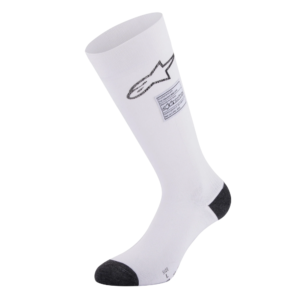
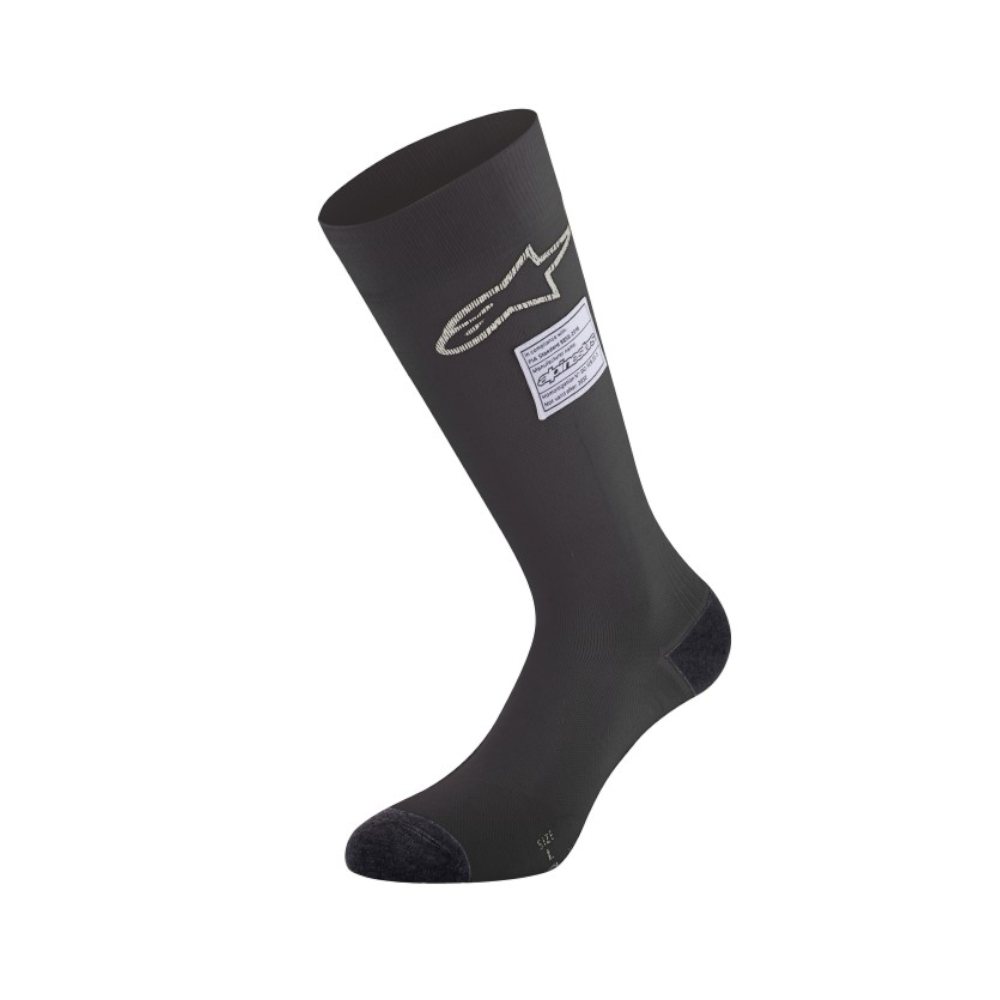
If the balaclava is going under a suit, the top and bottoms from the same range are worth a look, both FIA 8856-2018. Underwear is not compulsory at UK speed events and I will not pretend it is, but it is the layer that does the most for the least money once you are already wearing a suit.
One thing to watch if you are buying the range as a set. Alpinestars’ version numbers do not run in step across every garment, so the number on the socks will not necessarily match the number on the top. Buy on the approval printed on the label rather than on the version number in the name.
-
From £138.00 Incl. VATFrom £115.00 Excl. VAT Select options This product has multiple variants. The options may be chosen on the product page
-
From £176.40 Incl. VATFrom £147.00 Excl. VAT Select options This product has multiple variants. The options may be chosen on the product page
-
From £46.80 Incl. VATFrom £39.00 Excl. VAT Select options This product has multiple variants. The options may be chosen on the product page
What I would actually buy
If you are crew, or you spend your weekends in the garage rather than the seat, the Radar V2 is the one I would point you at. The grip and the cushioning are the whole point, and the FIA and SFI approvals mean it is the same shoe whether you are at a test day or a national event.
If you are a co-driver, go up to the Radar Co-Driver boot or the OMP One TT for the extra height and the more substantial sole.
If you are the driver, buy a proper race boot for the car and, if you also work on it, keep a crew shoe for the garage. Two pairs sounds indulgent until you have tried to feel a brake pedal through a lugged sole.
On the balaclava, the V3 is a genuinely good piece of kit provided the eye slot is what you want. If you run an open-face helmet, or you already know you prefer an open front, the V2 is still on the shelf and still approved, and I would rather sell you that than have you send the V3 back.
Final thoughts: read the job, not just the label
The label is the start of the conversation, not the end of it. FIA 8856-2018 on a shoe and FIA 8856-2018 on a balaclava mean the same thing about fire and nothing at all about whether the item suits your job. A pit crew shoe and a race boot are built to opposite briefs. Two balaclavas one version apart can have completely different amounts of fabric across your face.
If you are not sure which side of any of those lines you fall on, ring us and ask for me. Tell me what you drive, what you do at an event and what helmet you wear, and I will tell you which of these is right and, just as often, which one is not.